


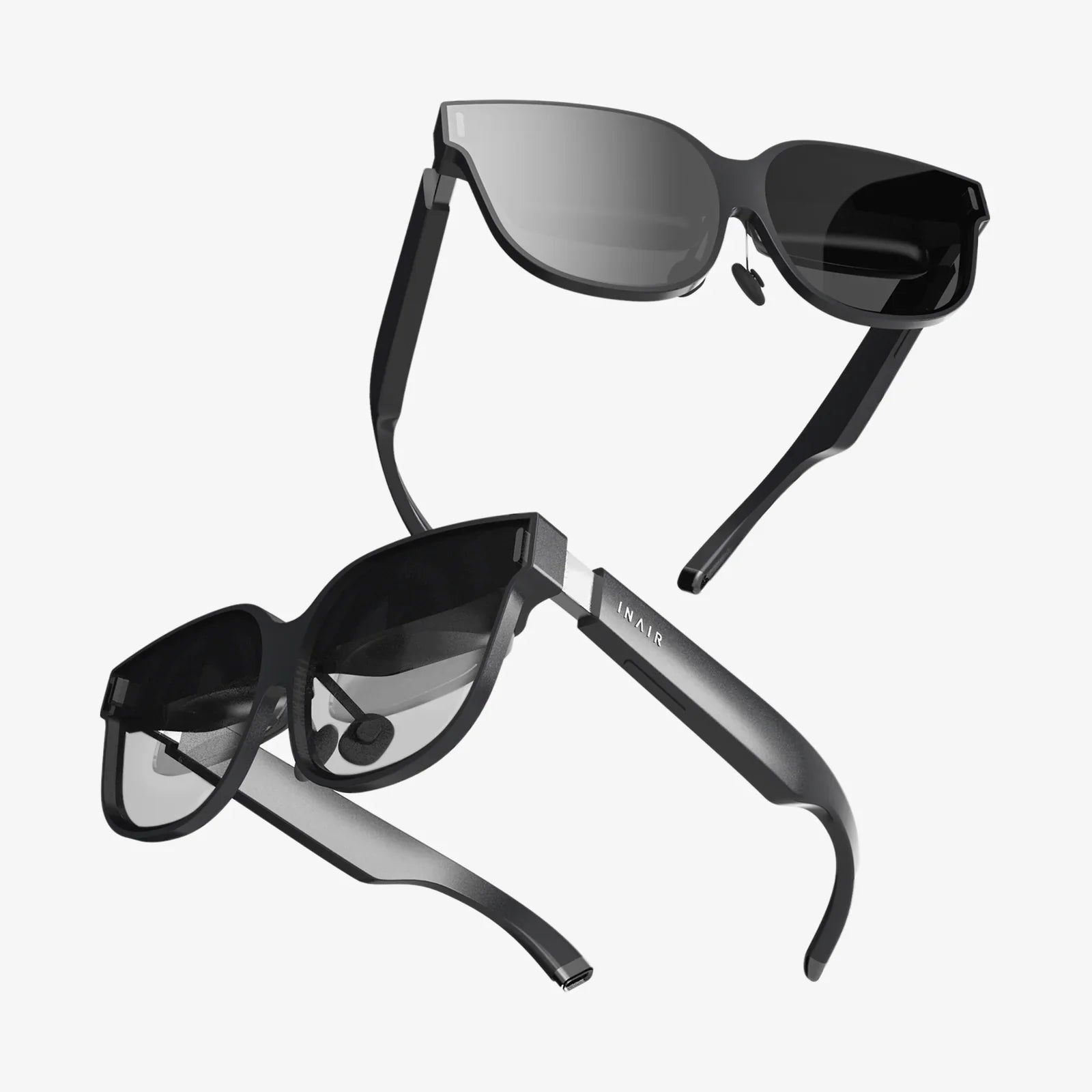
Imagine a world where information doesn't live on a device in your hand, but floats seamlessly in your field of vision, accessible with a glance, a word, or a touch to your temple. The data you need, the directions to your destination, the translation of a foreign street sign—all are overlaid onto the reality you're already seeing. This is the promise, the potential, and the profound shift offered by smart sunglasses with an integrated screen. This isn't science fiction; it's the next frontier in wearable technology, and it's closer to your face than you think.
Beyond the Frame: Deconstructing the Technology
At first glance, a pair of these advanced spectacles might look like a sleek, modern pair of shades. But hidden within the familiar form factor lies a dense ecosystem of sophisticated technology, all working in concert to create a seamless augmented reality (AR) experience.
The Optical Heart: Waveguides and Microdisplays
The true magic, the core innovation that makes this entire category possible, is the optical engine. Unlike a virtual reality headset that blocks out the world, the goal here is to superimpose digital imagery onto the real world. This is primarily achieved through two key components:
- Microdisplays: Tiny, high-resolution screens, often based on OLED or MicroLED technology, are housed within the arms of the glasses. These are the source of the digital light, generating the crisp text, icons, and images that will be projected into your eye.
- Waveguide Optics: This is the clever part. The light from the microdisplay is channeled into a transparent combiner lens—the lens you look through—via a process called in-coupling. Once inside the lens, this light "bounces" along a specially engineered waveguide through a series of partial mirrors or diffraction gratings (a process called out-coupling), directing it precisely into your pupil. The result is a bright, sharp digital image that appears to be floating in space several feet to several yards away, all while remaining completely see-through.
The Sensory Suite: More Than Meets the Eye
To be truly "smart," these sunglasses are packed with an array of sensors that allow them to understand both you and your environment:
- Cameras: High-resolution cameras enable a multitude of functions, from capturing photos and videos from a first-person perspective to enabling computer vision. This allows for features like real-time translation of text, object recognition, and navigation overlays.
- Microphones: An array of microphones facilitates clear voice commands and call functionality, using beamforming technology to isolate your voice from ambient noise.
- Inertial Measurement Units (IMUs): These sensors, including accelerometers and gyroscopes, track the precise movement and orientation of your head. This is crucial for anchoring digital objects in space, ensuring a stable AR experience that doesn't drift or jitter as you move.
- Ambient Light Sensors: These automatically adjust the brightness of the displayed image and the tint of photochromic lenses to ensure optimal visibility in any lighting condition, from a bright beach to a dimly lit room.
Processing Power and Connectivity
All this data needs to be processed in real-time. While some devices may offload heavier computations to a paired smartphone, higher-end models contain a dedicated system-on-a-chip (SoC) within the frame itself. This miniature computer handles the complex tasks of running the operating system, interpreting sensor data, and rendering graphics. Connectivity is handled through Bluetooth and Wi-Fi, linking the glasses to your phone, your home network, and the wider internet, ensuring a constant flow of information.
A World of Applications: More Than Just Notifications
The initial temptation is to view these devices as a hands-free way to see smartphone notifications. While that is a basic function, their potential applications stretch far beyond, poised to revolutionize numerous aspects of our daily lives.
Navigation and Exploration
Imagine walking through a dense, unfamiliar city. Instead of constantly looking down at your phone, giant, floating arrows appear on the sidewalk in front of you, guiding your every turn. Points of interest are highlighted as you glance at them, displaying reviews or historical information. For professionals, this extends to overlaying blueprints or schematics onto a physical worksite, showing exactly where to install wiring or place structural components.
Enhanced Productivity and Remote Assistance
For field technicians, the implications are enormous. A repairperson could have a schematic or instruction manual pinned within their view while keeping both hands free to work. A remote expert could see exactly what they see and draw annotations directly into their field of vision, guiding them through a complex procedure step-by-step. This "see-what-I-see" capability drastically reduces errors and improves efficiency.
Fitness and Performance
For athletes and fitness enthusiasts, smart sunglasses could provide a constant, unobtrusive stream of biometric data—heart rate, pace, power output, lap times—without ever needing to break form to check a watch or bike computer. A runner could follow a pace beacon, while a cyclist could have their power zone and navigation displayed right on the road ahead.
Accessibility and Translation
This technology has the power to break down barriers. Real-time translation could be transformative, allowing a user to look at a restaurant menu, a street sign, or even another person speaking, and see a direct translation overlaid in their native language. For individuals with hearing impairments, real-time speech-to-text transcription could be displayed directly in their glasses, making conversations fluid and natural.
Content Creation and Immersive Storytelling
The first-person perspective offered by the built-in cameras opens up new avenues for content creation, from capturing life's moments without a barrier to creating immersive tutorials and documentaries. For entertainment, the glasses could be used to play games that interact with the real world or to watch a movie on a virtual giant screen while on a plane or train.
The Inevitable Challenges: Navigating the Hurdles
For all its promise, the path to mainstream adoption of smart sunglasses is fraught with significant technical, social, and ethical challenges that must be addressed.
The Form Factor Conundrum
The ultimate challenge is balancing performance with aesthetics and comfort. Early prototypes were often bulky, heavy, and generated significant heat. The goal is to condense a powerful computer, a battery, and a complex optical system into a package that is as light, comfortable, and stylish as conventional eyewear. Battery life remains a primary constraint, with most current designs offering only a few hours of active use, necessitating frequent charging.
The Social and Privacy Dilemma
This is perhaps the most significant hurdle. The ability to record video and audio discreetly raises profound privacy concerns. The concept of the "glasshole"—a person being intrusive or creepy by recording others without consent—is a social stigma that the entire category must overcome. Clear social norms and technological solutions, like a very obvious recording indicator light, will be essential for public acceptance. Furthermore, the constant collection of first-person visual and auditory data presents massive data security and ownership questions.
The Digital Divide and Accessibility
As with any advanced technology, cost will be a major barrier to entry. The sophisticated components and R&D required mean the first generations will be premium products, potentially exacerbating a digital divide. Furthermore, the technology must be inclusive, accommodating a wide range of facial structures, vision prescriptions (likely through custom inserts), and usability needs.
Gazing Into the Crystal Ball: The Future of Face-Worn Computing
The current iterations of smart sunglasses are merely the first step. The trajectory of this technology points toward a future where they become as ubiquitous as smartphones are today.
We can expect rapid advancements in waveguide technology, leading to wider fields of view, full-color displays, and eventually the ability to render complex 3D objects. Battery technology will improve, perhaps through more efficient systems, solar-charging coatings on the lenses, or even kinetic energy harvesting from movement. Artificial intelligence will become the central nervous system, moving from simply displaying information to proactively offering contextually relevant insights and predictions based on what you see and hear.
Further out, the distinction between the digital and physical may blur entirely. Your glasses could recognize everyone you meet, displaying their name and last conversation topic. They could analyze your surroundings for potential hazards, highlight the healthiest options on a menu, or teach you how to play a song by projecting the guitar chords directly onto your instrument. The interface will evolve from touch and voice to perhaps even subvocalization or direct neural inputs, making interaction as effortless as thought itself.
The ultimate goal is not to distract us from the real world, but to enhance our perception of it—to augment our reality with a layer of useful, timely, and empowering information. Smart sunglasses with a screen represent the most logical and human-centric step towards that future, moving computing from our pockets and into our periphery, and in doing so, fundamentally changing our relationship with technology itself. The next great computing platform won't be held in your hand; it will be worn on your face, and it will change everything you see.
Share:
Future of AR and VR: A Deep Dive into the Next Digital Revolution
Why Use Augmented Reality: The Invisible Revolution Reshaping Our World