


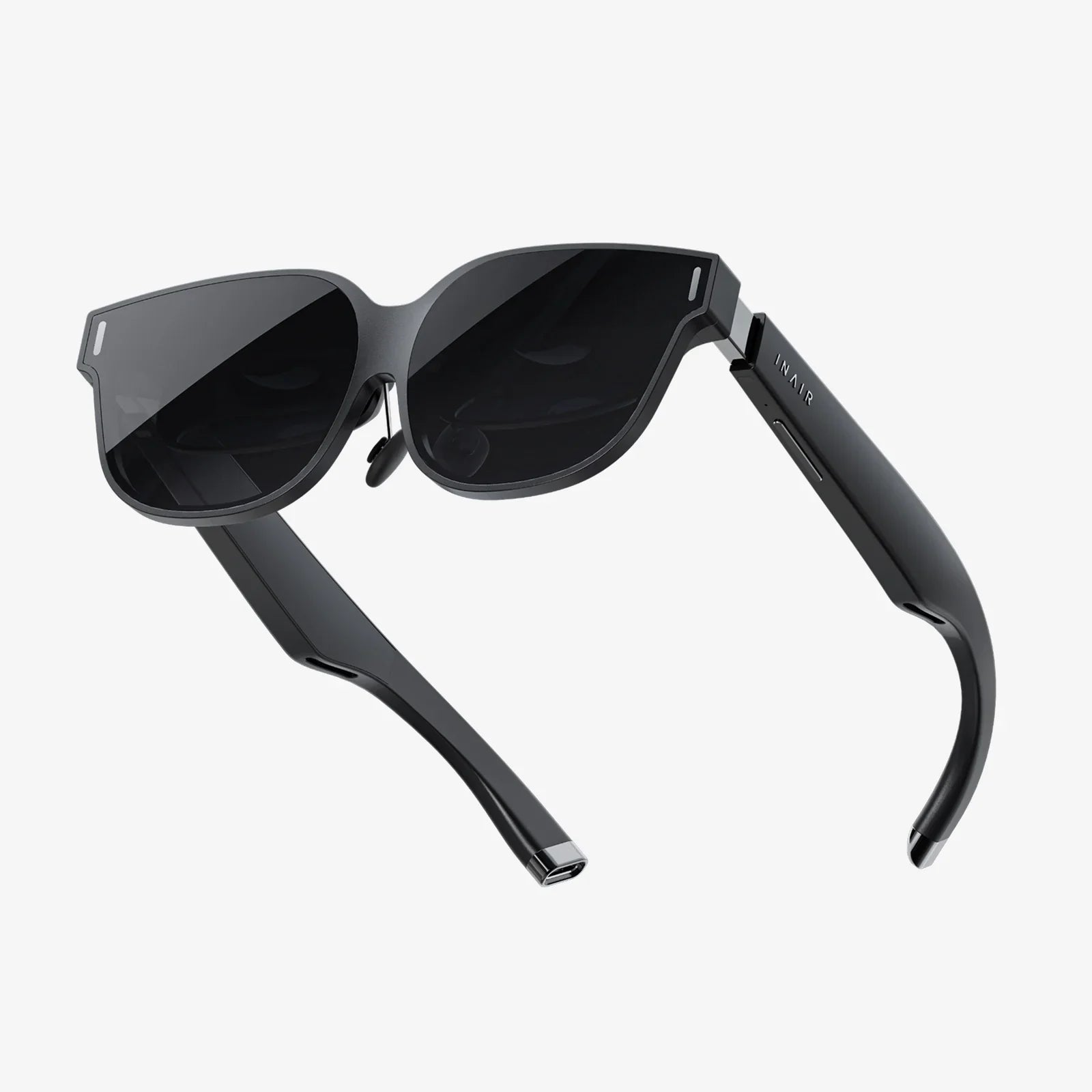
- by wangfred
Smart VR Headset: The Ultimate Portal to Immersive Digital Realities
- by wangfred
Imagine slipping on a device, no larger than a pair of ski goggles, and instantly being transported. Your dreary living room dissolves, replaced by a front-row seat at a concert across the globe, a meticulously recreated historical battlefield, or a collaborative digital workspace where colleagues from every continent stand beside you as lifelike avatars. This is no longer the stuff of science fiction; it is the present-day promise of the modern smart VR headset. This technological marvel is rapidly shedding its image as a mere gaming peripheral and emerging as the most compelling portal to the next iteration of human-computer interaction, poised to reshape everything from entertainment and education to how we connect and work.
The magic of a smart VR headset is not magic at all, but the result of a sophisticated symphony of hardware and software engineering. Unlike its tethered ancestors, a true smart VR headset is a self-contained computer, a feat of miniaturization that packs immense power into an incredibly small and thermally constrained form factor.
At its core lies a system-on-a-chip (SoC), akin to the powerful processors found in high-end smartphones but often optimized for the unique demands of virtual reality. This silicon brain must render two high-resolution displays at a blistering frame rate—90Hz or higher is now standard to prevent motion sickness and maintain the illusion of reality. It simultaneously processes data from a complex array of sensors, runs the operating system, and handles inputs, all while managing power consumption to ensure a reasonable battery life. This relentless demand for more graphical fidelity and complex physics simulations is the primary driver of innovation in mobile processing.
If the processor is the brain, the displays are the retina. Early VR was plagued by the "screen door effect," where users could discern the gaps between pixels, shattering immersion. Modern smart VR headsets employ fast-switching LCD or vibrant OLED displays with resolutions exceeding 4K total, making this effect a relic of the past. However, the display is only part of the visual story. The optical stack, comprising precisely engineered Fresnel or, in more advanced models, pancake lenses, focuses the screen's image to appear vast and distant. These lenses are the crucial bridge between the tiny screens and a convincing, infinite virtual world, and their design is a constant battle against optical artifacts like glare and god rays.
For the virtual world to feel solid and responsive, the headset must know its position in physical space with millimetric precision and low latency. This is achieved through inside-out tracking. A constellation of wide-angle cameras on the headset's exterior continuously scans the surrounding environment, tracking the position of the user's head relative to stationary objects. Inertial Measurement Units (IMUs)—including gyroscopes, accelerometers, and magnetometers—provide high-frequency data on rotational and linear movement, filling in the gaps between camera updates. This fusion of visual and inertial data creates a rock-solid, six-degrees-of-freedom (6DoF) experience, allowing users to lean, dodge, and peek around virtual objects as naturally as they would in the real world.
Hand presence is the next frontier of immersion. Most systems come with 6DoF controllers, tracked by the headset's cameras, which act as virtual hands or tools. The current evolution is towards controller-less interaction. Advanced computer vision algorithms allow the headset's cameras to perform hand-tracking, interpreting the user's real fingers and gestures directly into the virtual environment. This enables intuitive interactions—grabbing, pushing, pointing, and gesturing—that feel incredibly natural. Haptic feedback, through subtle vibrations in controllers or even experimental gloves, provides the crucial sense of touch, completing the sensory feedback loop.
While gaming remains a killer app and a major driver of consumer adoption, the value proposition of a smart VR headset extends far beyond virtual playgrounds. It is becoming a versatile tool with profound implications across numerous sectors.
Imagine a medical student performing a complex dissection, not on a cadaver, but on a hyper-realistic, multi-layered virtual human body that can be practiced upon and reset infinitely. Envision an apprentice mechanic learning to repair a new engine model by overlaying digital instructions and diagrams directly onto the physical machinery in front of them through mixed reality. Smart VR headsets enable experiential learning, allowing users to practice high-risk skills—from surgery to flying a plane to public speaking—in a safe, repeatable, and cost-effective simulated environment. This "learning by doing" in VR leads to significantly higher knowledge retention compared to traditional methods.
The video call rectangle is a poor facsimile for human interaction. Smart VR headsets offer a glimpse into the future of remote work: the collaborative virtual office. Teams can meet in a persistent digital space around a 3D model of a new product design, a architectural blueprint, or a data visualization. Spatial audio allows conversations to happen naturally—you can turn to the person next to you and speak quietly, just like in a real room. The sense of shared presence, of actually being in a meeting with people rather than just talking at them, fosters a level of connection, creativity, and non-verbal communication that flat screens cannot hope to replicate.
VR has successfully cracked the motivation problem inherent in home fitness. Instead of staring at a mirror or a static screen, users can find themselves boxing against cartoon aliens, slashing through rhythm-based cubes with lightsabers, or climbing icy peaks in the Himalayas. The immersive nature of the experience transforms a grueling workout into an engaging adventure, making time fly by. Furthermore, VR is proving to be a powerful tool for mental wellness. Guided meditation apps can transport users to serene beaches or tranquil forests, aiding in stress reduction and mindfulness. Exposure therapy for phobias can be administered safely and controllably within a virtual space.
Entertainment is being redefined from a passive activity to an active experience. With a smart VR headset, your living room becomes a private, infinite cinema with a screen as large as you desire. Social platforms allow you to watch live events and movies with friends' avatars seated next to you, replicating the social experience of a theater. Beyond viewing, you can step into the story. Interactive narratives and immersive 360-degree documentaries place you at the center of the action, fostering a depth of empathy and engagement that traditional media cannot match.
For all its promise, the path to mainstream adoption of the smart VR headset is not without significant hurdles that developers and society must address.
A perfect virtual experience is meaningless if the hardware is uncomfortable to wear. The industry is locked in a battle between power, performance, weight, and battery life. Balancing a powerful processor and large battery against the ergonomic need for a lightweight, well-distributed device is the primary design challenge. Innovations in materials, battery technology, and architectural design (like offloading processing to a companion device) are all being explored to create headsets that users can wear for hours without fatigue.
As we spend more time in immersive digital spaces, questions of identity, privacy, and behavior become paramount. Who owns the data of your movements, gestures, and interactions within a virtual space? How do we prevent the creation of deeply convincing and harmful deepfakes in VR? What constitutes harassment in a virtual environment, and how is it enforced? Establishing a robust ethical and legal framework for the "metaverse" is as important as the technological development itself. Furthermore, the long-term psychological effects of prolonged immersion are still being studied, necessitating a cautious and informed approach.
While several compelling applications exist, the platform is still searching for the undeniable, must-have experience that will drive every household to own a headset, similar to what the spreadsheet did for the personal computer. The growth of the ecosystem is also vital. A healthy platform requires a thriving economy of developers creating diverse and high-quality content, which in turn requires a large enough user base to be sustainable. Breaking this chicken-and-egg problem is a key focus for platform holders.
The current generation of smart VR headsets is impressive, but it represents only the first step. The future trajectory points towards devices that are more powerful, more comfortable, and, crucially, more integrated with our perception of the real world. The next evolutionary leap is towards advanced Mixed Reality (MR). Future headsets will use high-resolution passthrough cameras to blend the virtual and physical worlds seamlessly. Imagine digital sticky notes on your real refrigerator, a virtual monitor floating next to your physical laptop, or a interactive game character hiding behind your actual sofa. This technology, often called the "passport to the metaverse," will not replace the real world but will augment it, overlaying a layer of digital information and functionality onto our everyday reality.
The journey of the smart VR headset is a testament to human ingenuity, compressing supercomputers into wearable visors and crafting new realities from code and light. It has already moved far beyond its gaming roots, offering tangible solutions for training, connection, and creativity. The challenges of comfort, content, and social integration remain, but the pace of innovation is staggering. We are standing at the precipice of a new computing paradigm, one where the digital and physical coalesce, and the smart VR headset is the key that is unlocking the door. The question is no longer if this future will arrive, but how quickly we will choose to step through.
Share:
France Extended Reality Market: A Comprehensive Analysis of Growth, Trends, and Future Potential
VR for iPhone 14: The Ultimate Guide to Unlocking a New Reality