


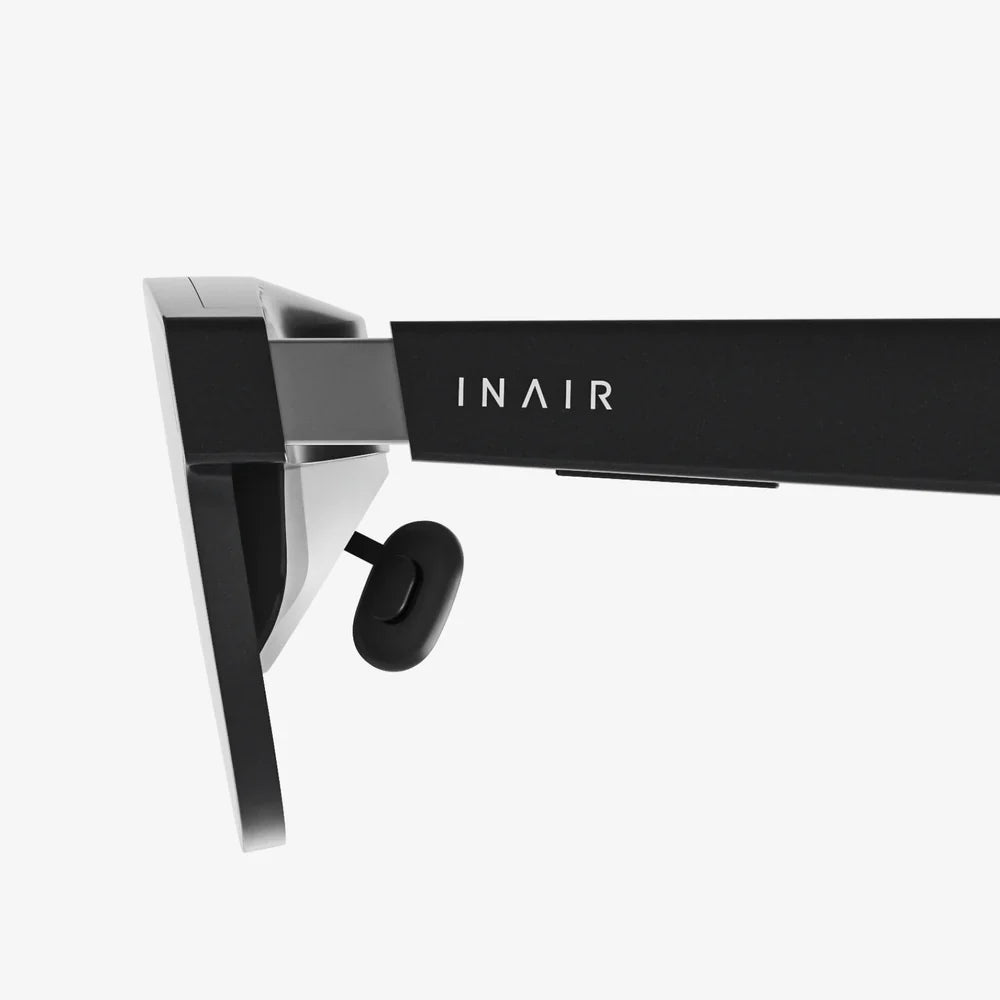
Imagine a world where your environment doesn't just respond to your commands but anticipates your needs, where your tools don't just perform tasks but strategize the most efficient way to complete them. This is no longer the realm of science fiction; it is the emerging reality powered by the smartest tools humanity has ever created. These are not mere gadgets with internet connectivity; they are systems imbued with artificial intelligence, capable of learning, adapting, and making decisions that directly enhance human capability and streamline existence. The evolution from simple automation to contextual intelligence represents a paradigm shift, moving us from a world of manual labor to one of collaborative partnership with the technology we create. The smartest tools are those that fade into the background, working silently and efficiently to elevate our daily lives, our work, and our understanding of the world around us.
The Evolution of Smart: From Connectivity to Cognitive Power
The journey of smart tools began with a simple premise: connectivity. The first wave involved embedding everyday objects with sensors and Wi-Fi chips, allowing them to be controlled remotely via a smartphone. A light switch you could turn off from your office was novel, a thermostat you could adjust from your bed was convenient. But this was intelligence in its most primitive form—reactive and dependent on explicit human instruction.
The second wave, which we are fully immersed in today, is defined by data and machine learning. These tools do not just connect; they collect. They amass vast amounts of data on usage patterns, environmental conditions, and user preferences. This data becomes the fuel for algorithms that learn and predict. The thermostat no longer waits for your command; it learns your schedule and preferred temperatures, adjusting the climate of your home proactively to optimize both comfort and energy efficiency. This shift from reactive to predictive intelligence marks a critical leap. The tool is no longer a passive slave but an active assistant.
We are now entering the third wave: contextual and cognitive intelligence. The smartest tools at the forefront don't just predict your needs in isolation; they understand the context of a situation. They synthesize data from multiple sources—your calendar, the local weather, real-time traffic, your biometrics—to make decisions that are not just efficient but truly intelligent. They move beyond automation into the realm of augmentation, enhancing human decision-making with insights that would be impossible to calculate manually.
The Engine Room: AI, Machine Learning, and the Internet of Things
The intelligence of these tools is not magic; it's built upon a powerful technological trifecta.
Artificial Intelligence (AI) provides the overarching framework for simulating human-like cognition. It's the field of study that enables a machine to perceive its environment, make decisions, and take actions to achieve specific goals. Within AI, subsets like machine learning (ML) and deep learning are the real workhorses. ML algorithms allow a system to learn and improve from experience without being explicitly reprogrammed for every new scenario. They find patterns in the data collected, patterns so complex and nuanced that they escape human observation.
This data collection is made possible by the Internet of Things (IoT), the vast network of physical objects embedded with sensors, software, and other technologies for the purpose of connecting and exchanging data with other devices and systems over the internet. The IoT is the nervous system of the smart tool ecosystem, providing the constant stream of real-world information that the AI brain requires to learn and act. From a simple moisture sensor in a field to a sophisticated lidar array on an autonomous vehicle, these sensors are the eyes and ears of the digital intelligence.
Finally, the rise of powerful, decentralized edge computing allows this processing to happen closer to the source of data. Instead of sending every byte of information to a distant cloud server and waiting for a response, the smartest tools can process critical data locally. This drastically reduces latency, which is essential for applications requiring instantaneous response, such as automatic collision avoidance in a car or real-time adjustment in an industrial robot.
Transforming the Professional Landscape
The impact of these intelligent systems is most profoundly felt in professional environments, where they are revolutionizing entire industries.
In healthcare, smart tools are moving from administrative aids to diagnostic partners. AI-powered imaging software can analyze MRIs and X-rays with a level of precision and speed that can augment a radiologist's work, highlighting potential anomalies and early signs of disease like tumors or micro-fractures that the human eye might miss. Predictive analytics models can analyze a patient's health data to forecast the risk of readmission or the onset of sepsis hours before clinical symptoms manifest, enabling life-saving early intervention.
The industrial and manufacturing sectors are being reshaped by predictive maintenance. Instead of following a rigid schedule or waiting for a machine to break down, smart tools equipped with vibration, thermal, and acoustic sensors monitor the health of equipment in real-time. Their ML algorithms can detect subtle deviations from normal operation that signal an impending failure, scheduling maintenance at the optimal time to prevent costly unplanned downtime and catastrophic breakdowns.
In design and engineering
Agriculture has been transformed into a high-tech endeavor. Smart farming systems use drones with multispectral cameras to monitor crop health across thousands of acres, identifying areas of stress due to pests or lack of water. This data is fed into AI systems that can then command automated irrigation systems to deliver precise amounts of water only where needed, or direct robotic weeders to eliminate invasive plants without herbicides. This precision agriculture boosts yields while dramatically conserving precious resources.
The Intelligent Home and Personal Augmentation
While the industrial applications are powerful, the most personal revolution is happening in our homes and on our persons. The smartest tools here are becoming ambient guardians and invisible butlers.
Modern home security systems exemplify this shift. They have evolved from simple motion detectors and cameras into integrated ecosystems. Using facial recognition, they can distinguish between a family member, a frequent visitor, and an unknown person. They can learn the patterns of the household, recognizing that a motion alert in the middle of the day is normal but the same alert at 3 AM is a critical event. They can even predict potential hazards, like a stove left on for an unusual length of time, and send an alert or automatically shut off the gas supply.
Personal wearables have transcended their step-counting origins. The latest devices are advanced health monitors that can track everything from blood oxygen levels and heart rate variability to electrodermal activity, which can be a marker for stress. Their true intelligence lies in the longitudinal analysis of this data. They don't just tell you your heart rate is 68 BPM; they analyze weeks of data to notify you that your resting heart rate has been trending upward, potentially signaling illness, overtraining, or heightened stress levels, prompting you to take proactive health measures.
Even our kitchens are getting smarter. Ovens can now recognize the food you put inside them—a piece of salmon versus a roast—and automatically cook it to perfection using a library of ideal cooking profiles. Refrigerators with internal cameras can track their contents, learn your consumption habits, and add items to your shopping list before you even realize you're running low, seamlessly integrating with grocery delivery services.
Navigating the Challenges: Ethics, Privacy, and the Human Role
With great power comes great responsibility, and the proliferation of the smartest tools raises significant challenges that society must address.
Data Privacy and Security are paramount concerns. These tools are voracious data collectors, constantly harvesting information about our most intimate habits, preferences, and even our biometrics. This data is incredibly valuable and, consequently, a huge target for malicious actors. Ensuring robust cybersecurity and transparent data usage policies is not a feature but a fundamental requirement. Users must have clear control over their data, understanding what is collected, how it is used, and who it is shared with.
The ethical implications of automated decision-making are profound. When an AI tool makes a recommendation that affects a person's health, finances, or legal status, who is accountable for a wrong decision? The developer, the user, the company that deployed it? The algorithms themselves can also perpetuate and even amplify existing human biases present in their training data, leading to discriminatory outcomes in areas like lending, hiring, and law enforcement. Developing ethical AI frameworks and ensuring algorithmic fairness is a critical and ongoing endeavor.
Finally, there is the question of human agency and skill atrophy. As we delegate more decisions and tasks to intelligent systems, there is a risk that our own skills may diminish. If a navigation app always tells us exactly where to turn, do we lose our innate sense of direction? If a diagnostic AI always suggests the best treatment, does a doctor's diagnostic skill erode? The goal must be to design tools that augment human intelligence rather than replace it, creating a symbiotic relationship where human intuition, creativity, and ethics are combined with machine-powered data analysis and pattern recognition.
The Future is Collaborative: Partnership Between Human and Machine
The trajectory of the smartest tools points toward even deeper integration and more seamless collaboration. We are moving towards a future of ambient computing, where technology recedes into the fabric of our environment, interacting with us through more natural, intuitive interfaces like voice, gesture, and eventually, thought.
The next frontier will be tools that don't just understand context but also intent and emotion. Imagine a system that can detect frustration in your voice and simplify its response, or one that can sense a period of deep focus and automatically mute notifications and dim the lights. Emotional AI, or affective computing, aims to bridge this gap, allowing machines to respond to human emotional states.
Ultimately, the smartest tool is not the one with the most processing power or the longest feature list. It is the one that understands its role as an enhancer of human experience. It is reliable, transparent, and designed with a deep respect for user autonomy. It solves problems we didn't know we had and handles mundane tasks so we can focus on what makes us uniquely human: creativity, connection, and curiosity. The true measure of their intelligence won't be in their complexity, but in their simplicity—their ability to make our lives feel easier, safer, and more fulfilling without ever demanding the spotlight.
The quiet hum of your home adjusting to your presence, the gentle nudge from your watch suggesting a walk after hours of sitting, the seamless logistics of a supply chain you never see—these are the hallmarks of the intelligence now weaving itself into the everyday. This is not a future of cold, domineering machines, but one of empowered living, where technology's greatest achievement is its subtlety, working in concert with us to build a more responsive, efficient, and intuitively supportive world. The smartest tools are those you stop noticing, because they work so perfectly they simply become a part of life itself.
Share:
AI Collaborate: The Future of Human and Machine Partnership in the Workplace
AI Collaborate: The Future of Human and Machine Partnership in the Workplace