


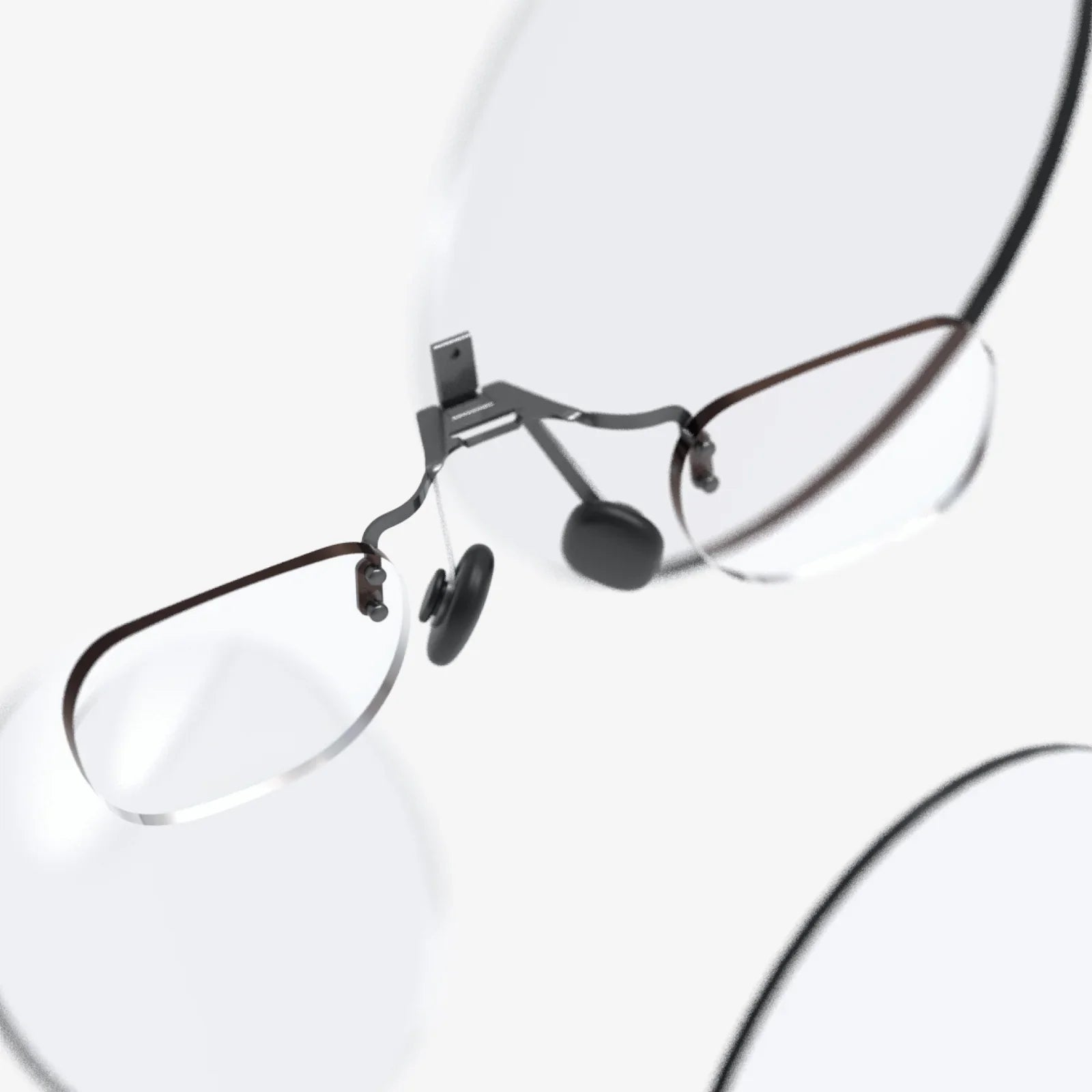
Imagine a world where digital information doesn’t trap you behind a screen but instead, elegantly intertwines with your physical reality, offering guidance, revealing hidden data, and connecting you to a deeper layer of understanding. This is no longer the realm of science fiction; it is the burgeoning reality being built today through the rapid advancement of smartglasses augmented reality (AR) solutions. This technological convergence is poised to redefine human-computer interaction, transforming how we work, learn, and perceive the world around us.
The Architectural Foundation of AR Smartglasses
At their core, smartglasses AR solutions are a sophisticated symphony of hardware and software, designed to project digital imagery and information onto the user’s field of view. Unlike virtual reality (VR), which creates a completely immersive, artificial environment, AR enhances the real world by overlaying contextual data onto it. The magic lies in the seamless integration of several key components.
The optical system is the heart of the experience. Various display technologies, such as waveguide optics or micro-projectors, beam light directly into the user’s eyes, creating the illusion that holographic images are part of the physical space. These images can range from simple text notifications to complex, interactive 3D models. Advanced sensors, including high-resolution cameras, depth sensors, inertial measurement units (IMUs), and microphones, constantly scan the environment. They map the physical space, track the user’s head and eye movements, and understand voice commands, creating a real-time digital twin of the surroundings.
This sensory data is processed by powerful, miniaturized chipsets that handle the immense computational load of simultaneous localization and mapping (SLAM), object recognition, and rendering graphics. Finally, all this is tied together by intuitive software platforms and development kits that allow creators to build the immersive applications that power entire industries. This complex architecture works in concert to deliver a hands-free, intuitive, and context-aware experience that is fundamentally changing professional paradigms.
Revolutionizing the Industrial and Enterprise Landscape
The most profound impact of smartglasses AR solutions is currently being felt in industrial and enterprise settings, where the technology is delivering staggering returns on investment by enhancing efficiency, safety, and accuracy.
In manufacturing and complex assembly, technicians are using AR-guided workflows. Instead of constantly glancing back and forth between a physical product and a paper manual or a stationary monitor, digital instructions are superimposed directly onto the components they are assembling. Animated arrows point to exact attachment points, torque values display next to bolts, and safety warnings highlight potential hazards in real-time. This not only drastically reduces errors and training time for new employees but also significantly accelerates the entire assembly process. Remote expert assistance is another game-changer. A field service engineer facing a novel problem can live-stream their point-of-view to a senior expert thousands of miles away. The expert can then annotate the engineer’s real-world view with arrows, circles, and text, guiding them through the repair procedure as if they were standing side-by-side. This slashes travel costs, reduces equipment downtime from hours to minutes, and democratizes expertise across a global workforce.
The design and prototyping phase has also been transformed. Architects and engineers can visualize full-scale 3D models of their designs on an empty construction site, allowing them to identify spatial conflicts and design flaws before a single foundation is poured. Similarly, in logistics and warehousing, AR solutions can display optimal picking routes, highlight items on shelves, and show inventory data, supercharging the efficiency of order fulfillment centers. The ability to access and interact with digital information without using their hands allows workers to operate more naturally and safely, making complex tasks feel simpler and more intuitive.
Transforming Healthcare and Medical Practice
The healthcare sector is embracing smartglasses AR solutions with immense potential for improving patient outcomes and medical training. In surgical settings, surgeons can have vital patient statistics, pre-operative scans like MRI or CT imagery, and monitoring data projected within their line of sight without breaking sterility by looking away to a screen. This allows for more precise and informed decision-making during critical procedures.
Medical training and education are being revolutionized. Students can explore detailed, life-size 3D holograms of human anatomy from every angle, gaining a deeper understanding than textbooks or 2D screens could ever provide. They can practice procedures on virtual patients, receiving instant feedback in a risk-free environment. Furthermore, these devices enhance telemedicine, allowing a remote specialist to visually guide a local practitioner through an examination or a procedure, expanding access to specialized care in rural or underserved areas. The technology also aids in vein detection for nurses, overlaying a map of a patient’s vasculature onto their skin to make IV insertion quicker and less painful. This fusion of the digital and physical is creating a new standard of care that is more informed, less invasive, and highly efficient.
The Future of Retail, Navigation, and Everyday Life
Beyond the factory floor and the operating room, smartglasses AR solutions are gradually seeping into consumer and daily life applications, promising to reshape retail, navigation, and social interaction.
The retail experience is poised for a major shift. Imagine trying on clothes, glasses, or makeup virtually from the comfort of your home, seeing how a new piece of furniture would look and fit in your living room, or getting detailed product information and reviews simply by looking at an item on a shelf. AR turns every space into a potential showroom and empowers consumers with unprecedented levels of information. Navigation will evolve from staring at a phone map to following digital signposts and directions overlaid onto the streets in front of you, making exploring a new city an immersive and intuitive experience. Historical sites could come alive with recreations of ancient events, and museums could display exhibits with interactive informational layers.
On a social level, the concept of the "metaverse" or spatial computing envisions a future where our digital and physical social lives merge. Persistent digital art could be placed in public parks, and friends could leave virtual notes for each other in specific locations. While the consumer market faces higher hurdles for adoption—including aesthetics, battery life, and social acceptance—the trajectory is clear: AR aims to become an invisible, ubiquitous layer of utility and connection over our world, eventually replacing the smartphone as our primary gateway to digital information.
Navigating the Challenges on the Horizon
Despite the exciting potential, the path to widespread adoption of smartglasses AR solutions is not without significant obstacles. A primary concern is privacy. Devices equipped with always-on cameras and sensors that continuously scan environments raise legitimate questions about data collection, surveillance, and consent. Robust ethical frameworks and transparent data policies will be non-negotiable for public trust.
Social acceptance is another major hurdle. For technology to be adopted en masse, it must be socially unobtrusive. This necessitates designs that are indistinguishable from regular eyewear—lightweight, comfortable, and stylish. Early bulky prototypes are giving way to more refined designs, but achieving the perfect blend of power, battery life, and social subtlety remains the industry's holy grail. Furthermore, the potential for digital distraction and addiction in an always-on, augmented world is a serious consideration that developers and society must address proactively. Finally, creating a unified and interoperable AR ecosystem, where digital objects and experiences can be shared across different platforms and devices, is a critical technical challenge that must be solved to realize the full vision of a pervasive AR layer.
The journey of smartglasses AR solutions is just beginning, but its impact is already being profoundly felt. From empowering frontline workers with superhuman knowledge to granting surgeons x-ray vision, this technology is augmenting human capability in ways once thought impossible. It represents not a distraction from our reality, but a deeper, richer, and more informed engagement with it. The future is not about escaping into a digital world; it’s about bringing the power of the digital world into ours, and it will be seen through a new lens.
Share:
Augmented Reality Statistics: The Data Behind the Digital Revolution Reshaping Our World
Is Augmented Reality AI? The Symbiotic Future Unfolding Before Our Eyes