


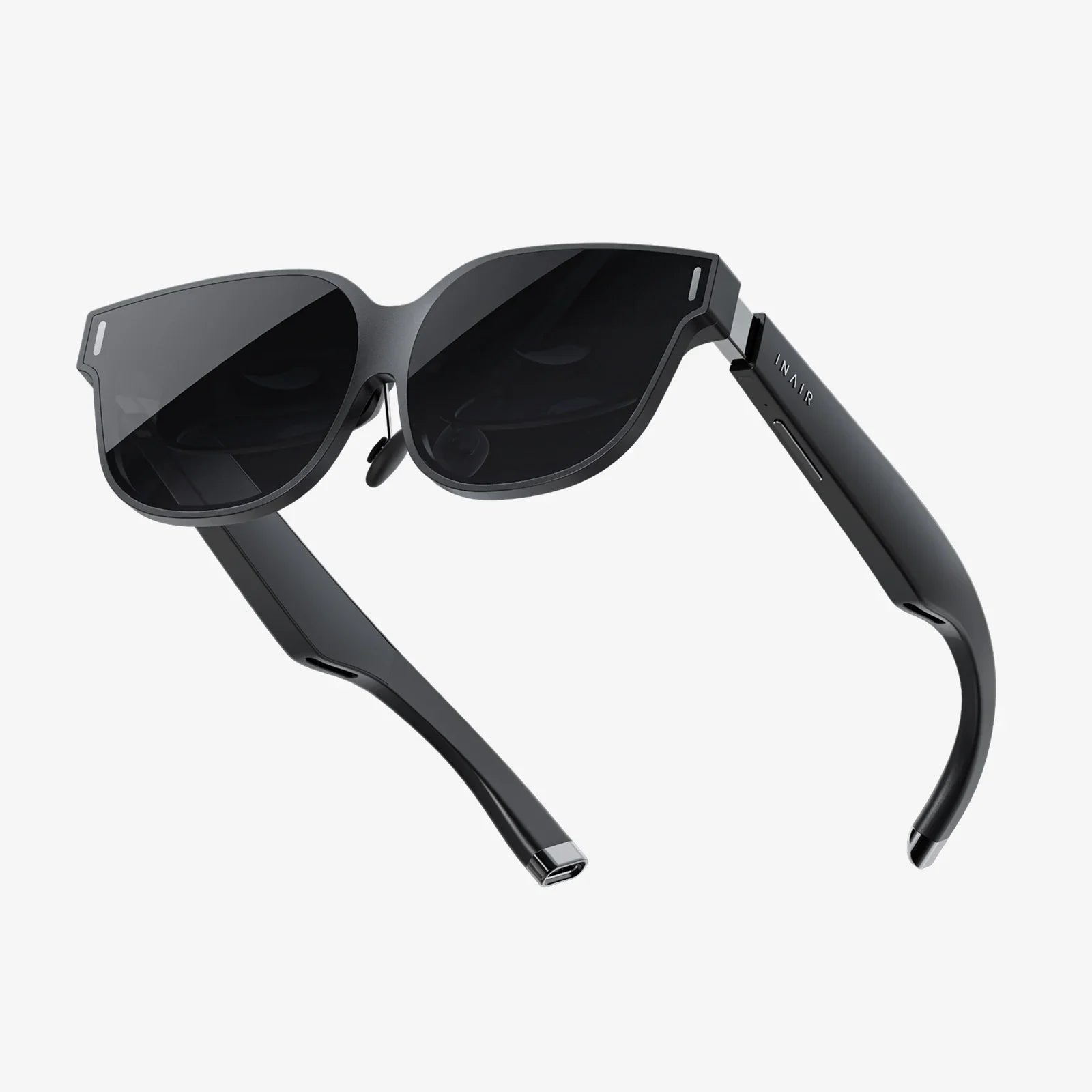
Imagine a world where the line between the digital and the physical doesn't just blur—it vanishes. Where information doesn't live on a screen but is painted onto the very fabric of reality. Where you can learn, play, and connect in ways that were once the sole domain of science fiction. This future isn't decades away; it's already here, waiting in your pocket, ready to be unlocked with a simple pair of lenses. The convergence of the smartphone, augmented reality, and virtual reality glasses is not merely a technological trend; it is the dawn of a new sensory experience, a fundamental shift in how we perceive and interact with our world.
The Foundation: The Smartphone as a Powerhouse
To understand this revolution, we must first appreciate the unassuming hero at its core: the modern smartphone. This device is far more than a communication tool; it is a compact supercomputer, a veritable Swiss Army knife of sensors and processing power. It contains high-resolution cameras capable of capturing the world in intricate detail, sophisticated inertial measurement units (IMUs) that track movement and orientation with precision, powerful GPUs that render complex graphics in real-time, and always-on connectivity to a global network of information. For years, we have interacted with this power through a flat, touch-sensitive pane of glass. But this interface is a bottleneck, constraining the vast potential of the technology within. The next logical step, the key to unlocking this potential, is to move the interface from our hands to our eyes, transforming the smartphone from a device we look at into a lens we look through.
Augmented Reality: Overlaying the Digital on the Physical
Augmented reality (AR) is the technology that seamlessly blends digital content with the user's real-world environment. Unlike virtual reality, which creates a completely immersive, synthetic world, AR enhances reality by superimposing computer-generated images, sounds, and other sensory information onto our view of the physical world. The magic of AR lies in its ability to understand context. Through a process called simultaneous localization and mapping (SLAM), the smartphone's camera and sensors scan the environment, identifying surfaces, objects, and their spatial relationships. This allows digital objects to not only appear in your room but to interact with it—a virtual character can hide behind your real sofa, a digital tape measure can accurately span the length of your wall, and informational annotations can hover precisely over a museum exhibit or a complex engine part.
Virtual Reality: The Ultimate Escape
At the other end of the spectrum lies virtual reality (VR). Where AR adds to reality, VR replaces it entirely. By blocking out the physical world and replacing it with a convincing, computer-generated simulation, VR glasses offer the ultimate form of immersion. This technology transports users to entirely new worlds, from the depths of the ocean to the surface of Mars, or places them in the center of a cinematic story or a heart-pounding game. The experience is powered by a combination of high-resolution displays placed mere centimeters from the eyes, precise head-tracking technology, and spatial audio that makes sounds feel like they are coming from specific points in the virtual space. Traditionally, this required a powerful, standalone computer to run. However, the smartphone has democratized this experience, providing the necessary display and processing power in a single, accessible device.
The Hybrid Hero: Smartphone-Powered AR/VR Glasses
This is where the magic truly happens—at the intersection of all three technologies. Smartphone-powered AR/VR glasses are a category of head-worn devices that use a slotted smartphone as their brain and display. The user inserts their phone into a holder on the headset, which then uses lenses to project the phone's screen into a wide-field-of-view image for each eye. The phone's own sensors—its gyroscope, accelerometer, and often the camera—are used to track the user's head movements, creating the immersive experience. This elegant solution solves two major problems: cost and accessibility. Instead of requiring expensive, dedicated internal processors and displays, these glasses leverage a device consumers already own, dramatically lowering the barrier to entry for immersive technologies.
Transforming Industries and Experiences
The practical applications of this hybrid technology are vast and are already beginning to reshape numerous fields.
Education and Training
Imagine history students not just reading about ancient Rome but walking through a digitally reconstructed Forum, seeing the buildings rise around them. Medical students can practice complex surgical procedures on detailed holographic patients, making mistakes without consequence. Mechanics can see a holographic overlay of an engine's components, with arrows and instructions guiding them through a repair. This hands-on, visual learning leads to dramatically improved retention and understanding.
Remote Collaboration and Assistance
A field technician faced with a malfunctioning piece of equipment can don their glasses and share their live view with an expert thousands of miles away. The expert can then draw arrows, highlight components, and pull up schematics that appear anchored to the machine itself, guiding the technician through the fix step-by-step. This "see what I see" capability revolutionizes remote work, making distance irrelevant for complex physical tasks.
Retail and Design
Before you buy a new piece of furniture, you can see a full-scale 3D model of it in your actual living room, ensuring it fits and matches your décor. You can try on virtual clothes, glasses, or makeup without ever stepping into a changing room. Architects and interior designers can walk clients through photorealistic renders of unbuilt spaces, allowing for changes and iterations before a single brick is laid.
Navigation and Contextual Information
Walking through a new city, arrows and directions can be painted onto the sidewalk in front of you. Looking at a restaurant could bring up its menu and reviews floating beside its entrance. Historical landmarks could have informational placards and even period-accurate recreations visible only through your glasses, turning the entire world into an interactive museum.
Challenges and the Road Ahead
Despite the exciting potential, the path forward is not without its obstacles. Current smartphone-powered glasses often suffer from limitations in field of view, graphical fidelity, and tracking accuracy compared to high-end, dedicated systems. Battery life is a constant concern, as running AR/VR applications is intensely demanding on the smartphone's processor. Furthermore, designing intuitive and natural user interfaces for a hands-free, gaze-controlled experience remains a significant challenge. Beyond the technical hurdles, there are profound questions about social acceptance—walking around in public with glasses on may feel isolating or odd—and critical issues surrounding data privacy, as these devices have the potential to capture an unprecedented amount of information about our lives and environments.
A Glimpse into the Future
The current generation of smartphone-dependent glasses is widely seen as a crucial stepping stone. The ultimate goal is a sleek, lightweight pair of glasses, not unlike standard eyeglasses, that are capable of high-fidelity AR and VR entirely on their own. These future devices will need to overcome significant hurdles in miniaturizing processing power, developing advanced waveguide displays, and creating all-day battery solutions. They will likely leverage technologies like 5G and edge computing to offload heavy processing to the cloud. The smartphone will evolve from being the literal engine inside the headset to being a companion device—a trusted personal computer in your pocket that manages identity, data, and connectivity for your AR glasses, which will become the primary screen through which you interact with the digital world.
The fusion of the smartphone, augmented reality, and virtual reality glasses is quietly building a bridge to a future we’ve only dreamed of. It’s a future where our digital and physical lives are no longer separate, but are woven together into a single, enhanced experience. This isn’t just about new games or flashy filters; it’s about fundamentally expanding human potential—how we learn, work, create, and connect. The portal to this new layer of reality is no longer a fantastical concept; it’s being built today, and it’s waiting for you to take it out of your pocket, place it before your eyes, and take that first step through.
Share:
Best Products for Virtual Office: The Ultimate Guide to a Seamless Remote Workspace
Best Products for Virtual Office: The Ultimate Guide to a Seamless Remote Workspace