


Imagine a world where your digital life flows as effortlessly as a conversation, where the device in your hand, on your desk, or perched on your nose is merely a window into a seamless, intelligent ecosystem tailored precisely to your needs. This is no longer the realm of science fiction. The modern technological landscape, defined by the powerful quintet of smartphones, tablets, notebooks, desktops, and the emerging frontier of augmented reality (AR) glasses, offers an unprecedented opportunity to craft a personalized digital experience that amplifies your productivity, creativity, and connection. The key is no longer in owning the most powerful single device, but in understanding how these distinct technological pillars can work in concert, creating a symphony of silicon and software that is far greater than the sum of its parts.
The Pocket-Sized Powerhouse: The Smartphone as Your Digital Heart
It all starts here. The smartphone has evolved from a simple communication tool into the undeniable centerpiece of most people's digital lives. It is the device we are never without, a constant companion that acts as a remote control for our world. Its primary strength lies in its ubiquity and immediacy. It captures our memories through its camera, connects us to our social networks, manages our schedules, and provides instant access to the world's information.
But its role in the broader ecosystem is even more critical. The smartphone often serves as a central authentication hub, confirming our identity for other devices. It can act as a mobile hotspot, providing internet connectivity for a tablet or notebook. With cloud synchronization, a task begun on a desktop computer can be reviewed and edited on a smartphone during a commute. It is the trigger for smart home devices, a digital wallet, and a portable media library. In the context of AR glasses, the smartphone frequently provides the necessary processing power or data connection, acting as a compact engine for immersive experiences. Its value is not just in what it does alone, but in how it empowers every other device you own.
The Versatile Performer: The Tablet's Realm of Consumption and Creation
Occupying the unique space between the smartphone's portability and the notebook's productivity, the tablet has carved out its essential niche. For years, it was dismissed as merely a consumption device—perfect for browsing the web, watching videos, or reading. While it excels in these areas, its evolution into a legitimate creation tool has solidified its place in the ecosystem.
With powerful processors and sophisticated stylus support, modern tablets are formidable digital canvases for artists, note-takers, and designers. They have become the go-to device for students to annotate lectures and for professionals to mark up documents. Their larger screen real estate, compared to a smartphone, makes them ideal for media consumption, video calls, and casual gaming. The tablet's true ecosystem power is revealed in its ability to serve as a secondary display for a notebook, extending the desktop workspace wirelessly. It can also function as a dedicated control panel for music production or video editing software running on a more powerful machine. It is the flexible, tactile bridge between the intimate smartphone and the powerful traditional computer.
The Workhorse Unchained: The Notebook's Mobile Productivity
The notebook computer represents the pinnacle of portable productivity. It is the device we take to meetings, coffee shops, and on business trips—a full-fledged computer that can be folded up and carried away. Its defining characteristic is the integration of a physical keyboard, making it the undisputed champion for any task involving significant text input, coding, or data entry.
Modern notebooks blur the lines between mobility and power. Ultra-thin models offer all-day battery life for those constantly on the move, while larger mobile workstations contain components rivaling some desktops for graphic designers, video editors, and engineers. The notebook's role in the ecosystem is one of a primary mobile command center. It leverages the cloud for file access and synchronization, connects to wireless peripherals, and can project to larger displays when docked. It is the device that can do almost everything a desktop can do but from anywhere, making it the workhorse for the modern, flexible workforce.
The Foundation of Power: The Desktop's Unmatched Performance
If the notebook is the mobile command center, the desktop computer is the fixed headquarters. For raw, unadulterated power, upgradeability, and sustained performance, the desktop remains unmatched. Free from the constraints of miniaturization and battery life, desktop systems can incorporate larger, more powerful processors, superior cooling solutions, multiple high-end graphics cards, and vast amounts of storage and memory.
This makes the desktop the ideal engine for the most demanding tasks: high-resolution video rendering, complex 3D modeling and simulation, scientific computing, and high-frame-rate gaming. Its role in a multi-device ecosystem is often that of a central server or a powerhouse station. It can host large shared storage drives accessible by every other device on the home network. It can handle the heavy lifting for a project, while lighter editing and review are done on a notebook or tablet. For many, the desktop is a dedicated, focused environment for deep work, free from the portability distractions of other devices. It is the bedrock upon which ambitious digital projects are built.
The Future on Your Face: AR Glasses and the Next Interface
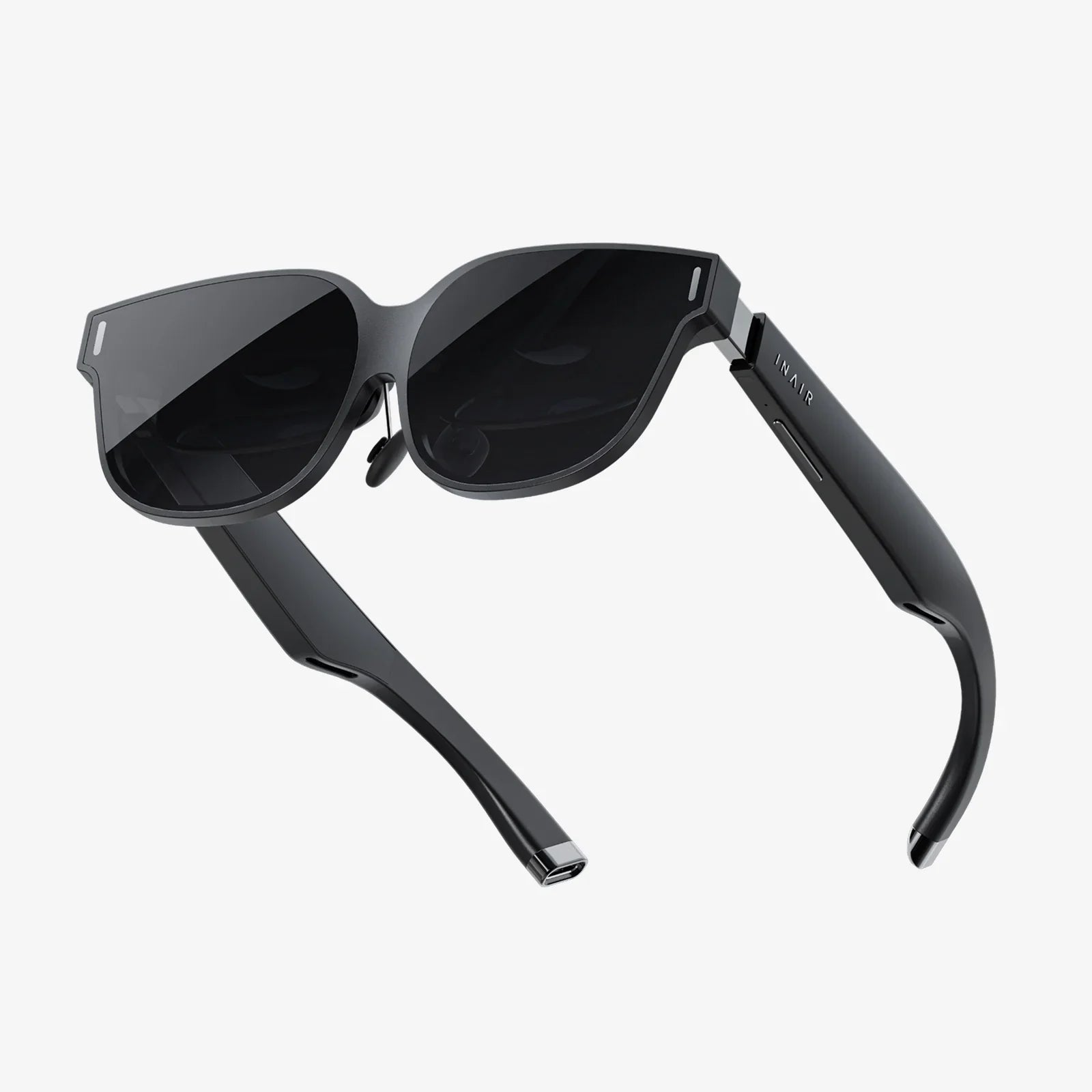
Emerging from the realm of conceptual prototypes, AR glasses are poised to become the next fundamental pillar of personal computing. Unlike virtual reality, which seeks to replace your reality, augmented reality aims to enhance it by overlaying digital information and objects onto the physical world. This represents a paradigm shift in human-computer interaction.
The potential applications within a device ecosystem are staggering. Imagine repair instructions for a machine hovering over the machinery itself, navigation arrows painted onto the road as you walk, or a virtual colleague appearing as a hologram in your living room during a video call. AR glasses could act as a spatial display, allowing you to arrange virtual screens from your notebook or desktop around you in 3D space, turning any room into a boundless workstation. They could receive notifications from your smartphone without requiring you to look down at a screen. The success of AR glasses will not be in replacing the smartphone or computer, but in becoming the primary lens through which we interact with the digital layer of our world, seamlessly connecting and controlling all the other devices in our ecosystem.
Weaving the Tapestry: Building Your Cohesive Ecosystem
Owning these devices is one thing; making them work together harmoniously is another. The magic of a modern ecosystem lies in interoperability, largely driven by cloud services and unified operating systems. Cloud storage ensures that a file saved on a desktop is instantly available on a smartphone or tablet. Universal clipboard features allow you to copy text or an image on one device and paste it on another. Task continuity lets you start writing an email on your phone and finish it on your notebook without missing a beat.
This seamless integration extends to peripherals. Wireless earbuds can seamlessly switch audio sources from a phone call to a movie on a tablet. A stylus purchased for a tablet might work as a precise input device on a compatible notebook. This interconnectedness reduces friction and cognitive load, allowing the user to focus on the task rather than on managing technology. The choice of platform plays a significant role here, as deeper integration is often found within a single software ecosystem. However, cross-platform tools and services are increasingly making it possible to create a cohesive experience even with devices from different manufacturers, as long as they are built on open standards.
Choosing Your Arsenal: Aligning Technology with Purpose
Not every user needs every device. The art of building a personal tech ecosystem is in carefully selecting the tools that best serve your individual needs, workflow, and budget. A university student might thrive with a powerful notebook for writing papers and a tablet for note-taking and textbook reading, using a smartphone for communication on the go. A graphic designer might rely on a high-end desktop for rendering, a notebook for client meetings, and a premium tablet with a stylus for sketching concepts. A casual user might find their needs entirely met by a smartphone and a tablet, using a public cloud service for occasional document access.
The considerations are vast: processing power required for your applications, the importance of portability, preferred screen sizes for different tasks, and budget constraints. The goal is to avoid redundancy. There is little point in owning a high-end desktop and an equally powerful notebook if your work never requires you to leave your desk. Conversely, sacrificing power for portability can lead to frustration if your mobile device cannot run necessary software. The optimal setup is a tailored combination where each device has a defined and purposeful role, complementing the others to cover all computational needs without overlap.
Gazing Forward: The Invisible, Ambient Future of Computing
The trajectory of personal computing is clear: it is moving away from isolated devices and towards ambient, contextual, and intelligent experiences. The lines between smartphones, tablets, notebooks, and desktops will continue to blur as cloud computing advances, allowing even lightweight devices to harness immense remote processing power. We are moving towards a world where the device itself becomes less important than the service it provides.
In this future, AR glasses (or their more advanced successors like neural interfaces) could become the primary interface. Instead of sitting down at a specific physical machine, your powerful desktop in the cloud could be accessed through any screen or projected directly into your field of view by your glasses. Your smartphone might cease to be a slab of glass in your pocket and instead become distributed across your wearable devices. The ecosystem will become less about syncing files between gadgets and more about a persistent, personalized digital agent that accompanies you, manifesting through the most appropriate interface for the moment—whether that's a large desktop display for deep work, a tablet for drawing, or AR holograms for collaboration. The five pillars will not disappear; instead, they will evolve, merge, and become even more deeply interwoven into the fabric of our daily lives.
This is the promise held within the interconnected world of smartphones, tablets, notebooks, desktops, and AR glasses—a promise of technology that doesn't demand our attention but effortlessly empowers our intentions. The journey to a perfect personal ecosystem is uniquely yours to design, one informed decision at a time. Will your next device be a standalone purchase, or will it be the missing piece in a symphony of seamless productivity waiting to be conducted?
Share:
AR Authoring Tools: Democratizing the Creation of Immersive Experiences
What Are the Advantages and Disadvantages of Virtual Reality - A Deep Dive into the Digital Frontier