


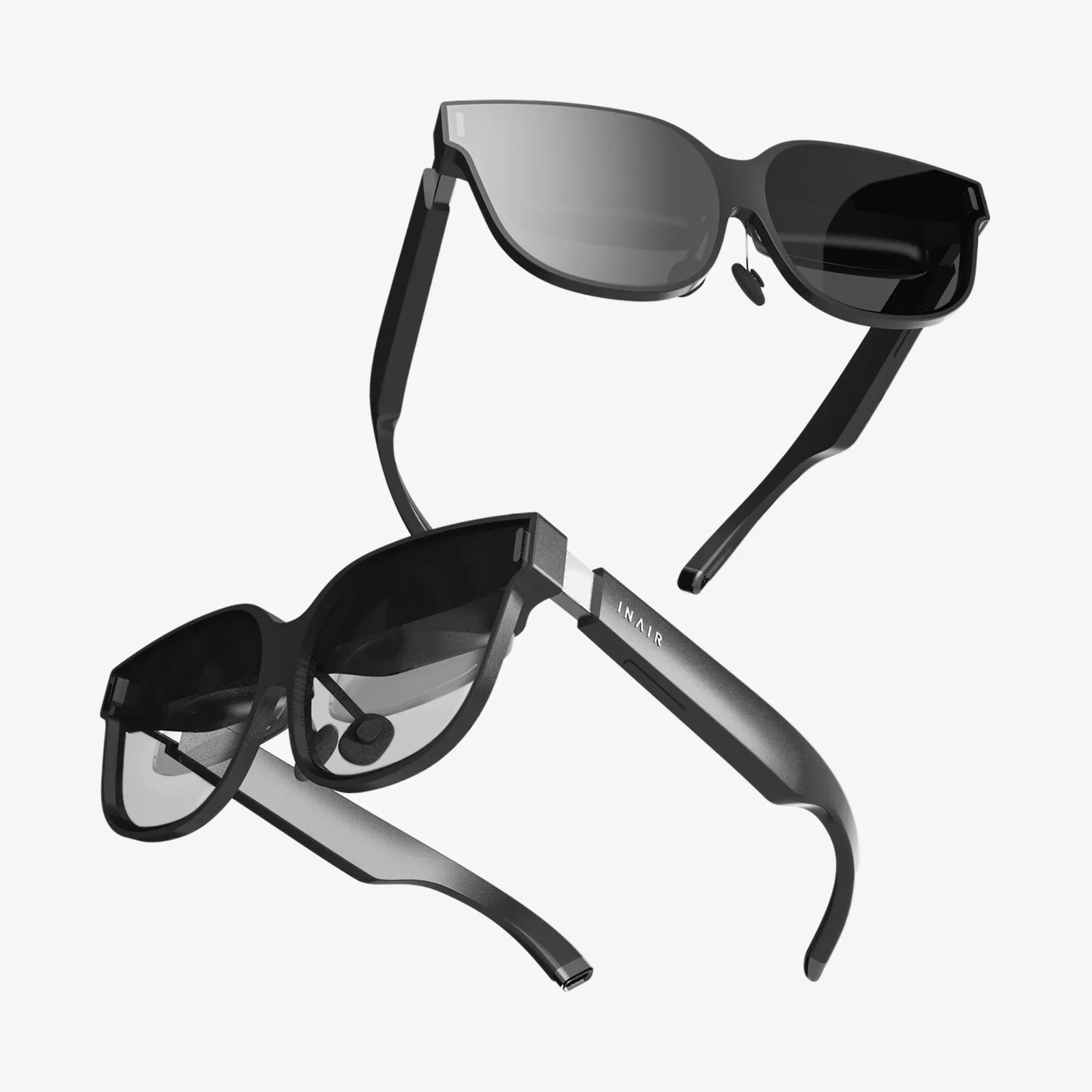
Imagine a world where the line between your thoughts and the digital universe blurs, where information doesn’t live on a screen in your pocket but is elegantly overlaid onto the reality you see. This is no longer the stuff of science fiction; it is the imminent future being unlocked by a new class of wearable technology: SmartVision AI glasses. These devices promise to be the most personal and intuitive computers we have ever known, moving computing from something we hold to something we are. They represent a fundamental shift in human-computer interaction, and their arrival signals a change so profound it will redefine how we work, learn, navigate, and connect.
The Architectural Marvel: Deconstructing the Technology
At their core, SmartVision AI glasses are a symphony of advanced hardware and sophisticated software, all miniaturized into a form factor designed for all-day wear. The magic lies in the seamless integration of several key components.
The Eyes: Advanced Optical Systems
The primary interface is a high-resolution, transparent display system. Unlike virtual reality headsets that immerse you in a completely digital environment, these glasses use waveguide or holographic optics to project digital images directly onto the lenses. This allows the user to see both the real world and the digital overlay simultaneously, a concept known as augmented reality (AR). The quality of this display is paramount—it must be bright enough to be visible in daylight, high-resolution enough to render text sharply, and positioned correctly to feel natural to the eye.
The Brain: Onboard Artificial Intelligence
The term "AI glasses" is not mere marketing hyperbole. An integrated, specialized processing unit acts as the neural engine. This is not a simple microprocessor; it is a powerhouse designed for one primary task: processing a massive influx of visual and auditory data in real-time. It runs complex machine learning models for object recognition, spatial mapping, and natural language processing. This onboard AI is what transforms the glasses from a passive display into an active, intelligent assistant. It allows the device to understand what you are looking at, where you are, and what you might need, all without a constant, lag-inducing connection to a remote cloud server.
The Senses: A Suite of Sophisticated Sensors
To perceive the world as you do, the glasses are equipped with an array of sensors. High-definition cameras capture the user's field of view, while depth sensors (like LiDAR) and inertial measurement units (IMUs) work together to create a precise 3D map of the surrounding environment. This spatial awareness allows digital objects to be anchored to physical locations. Microphones capture audio for voice commands and ambient noise analysis, while bone-conduction speakers provide private audio feedback without blocking out environmental sounds, which is crucial for safety and situational awareness.
Beyond Novelty: Transformative Applications Across Industries
The true power of this technology is revealed not in tech demos, but in its practical, life-changing applications. The potential use cases span nearly every facet of modern life.
Revolutionizing Professional Fields
In industrial and technical settings, SmartVision AI glasses are poised to become indispensable tools. A field engineer repairing a complex piece of machinery can see schematic diagrams, step-by-step instructions, and torque specifications overlaid directly onto the components they are working on, their hands remaining free and clean. A surgeon could have vital signs, 3D anatomical models from pre-op scans, and critical alerts in their peripheral vision without ever looking away from the patient. An architect could walk through a physical construction site and see the digital building model perfectly aligned with the unfinished structure, identifying potential clashes before they become costly errors.
Redefining Accessibility and Navigation
For individuals with visual impairments, this technology can serve as a powerful visual aid. The AI can identify and audibly describe people, objects, text, and currency notes. It can highlight curbs, detect obstacles, and read signs aloud, providing a new layer of independence and confidence. For everyone else, navigation moves beyond a blue dot on a map. Directional arrows can be painted onto the street, the name and rating of a restaurant can appear above its door, and public transit schedules can pop up as you glance at a bus stop.
The Future of Learning and Communication
Education becomes an immersive, interactive experience. A student studying astronomy can point their glasses at the night sky to see constellations mapped out with detailed information. A history student walking through a city can see historical photographs and events superimposed on their modern locations. Language barriers begin to crumble, as real-time translation of spoken conversation can be displayed as subtitles, and foreign text on a menu or sign can be instantly translated and overlaid in your native language.
The Inevitable Challenges: Navigating the Ethical and Social Minefield
With such transformative power comes immense responsibility. The widespread adoption of always-on, camera-equipped AI glasses strapped to our faces presents a thicket of ethical, social, and legal dilemmas that society is woefully unprepared to address.
The Privacy Paradox
This is the single greatest concern. If everyone is potentially wearing a recording device, the concept of public anonymity evaporates. The ability to secretly record conversations, identify strangers through facial recognition, or surreptitiously capture data creates a dystopian scenario of perpetual surveillance. Robust and clear regulations must be established regarding data collection, storage, and usage. Features like a prominent recording indicator light and geofencing that disables recording in sensitive areas like bathrooms and locker rooms are not just features; they are ethical necessities. The question of who owns the data collected—the user, the manufacturer, or third-party app developers—must be answered with absolute clarity and user control at the forefront.
The Social Contract and Etiquette
How will this technology impact human interaction? If someone is wearing these glasses during a conversation, are they fully present, or are they reading emails, looking up your online profile, or recording you? The potential for distraction and social rudeness is significant. New social norms and etiquette will need to emerge, much like the now-common practice of not placing your phone on the table during a meal. The term "SmartVision rudeness" could easily enter the lexicon to describe the act of prioritizing digital overlays over real human engagement.
Safety and Security in an Augmented World
Safety concerns, particularly around distracted walking or driving, are paramount. While the hands-free nature is a benefit, the potential for cognitive overload is real. Digital advertisements and notifications could become dangerously intrusive. Furthermore, the devices themselves become a high-value target for cyberattacks. A compromised device could feed users malicious misinformation, misdirect them, or spy on them without their knowledge. Security must be baked into the hardware from the ground up, not bolted on as an afterthought.
The Road Ahead: From Prototype to Paradigm Shift
The journey to mainstream adoption of SmartVision AI glasses is not without its hurdles. Current limitations in battery life, field of view, and computational power are significant, but they are engineering challenges, not fundamental dead ends. They will be solved through advancements in low-power chipsets, more efficient display technology, and innovative power solutions.
The ultimate goal is a device that is so lightweight, comfortable, and socially acceptable that it becomes as ubiquitous as a smartphone. The killer application may not be one single app, but the convergence of countless subtle integrations that make daily life incrementally easier, richer, and more efficient. The transition will likely be gradual, starting in enterprise and specialized fields before trickling down to consumer applications as the technology matures and the price decreases.
The path forward requires a collaborative effort. Technologists must prioritize user privacy and ethical design. Policymakers must work to create sensible regulations that protect citizens without stifling innovation. And as a society, we must engage in an open and ongoing dialogue about the world we want to build with this technology. The choices we make today will shape the augmented reality of tomorrow.
We stand at the precipice of the next great platform shift, looking at a future where the digital and physical are no longer separate realms. SmartVision AI glasses are the key that will unlock this merged reality, offering a glimpse of a world where knowledge is instantaneous, assistance is ambient, and our potential is limited only by our imagination. The device in your pocket changed everything; the device on your face is poised to change even more, weaving intelligence into the very fabric of your perception and forever altering what it means to see.
Share:
Best Portable Gaming Computer - The Ultimate Guide to High-Performance Play Anywhere
AI Hardware Companies Are Redefining the Future of Computing