


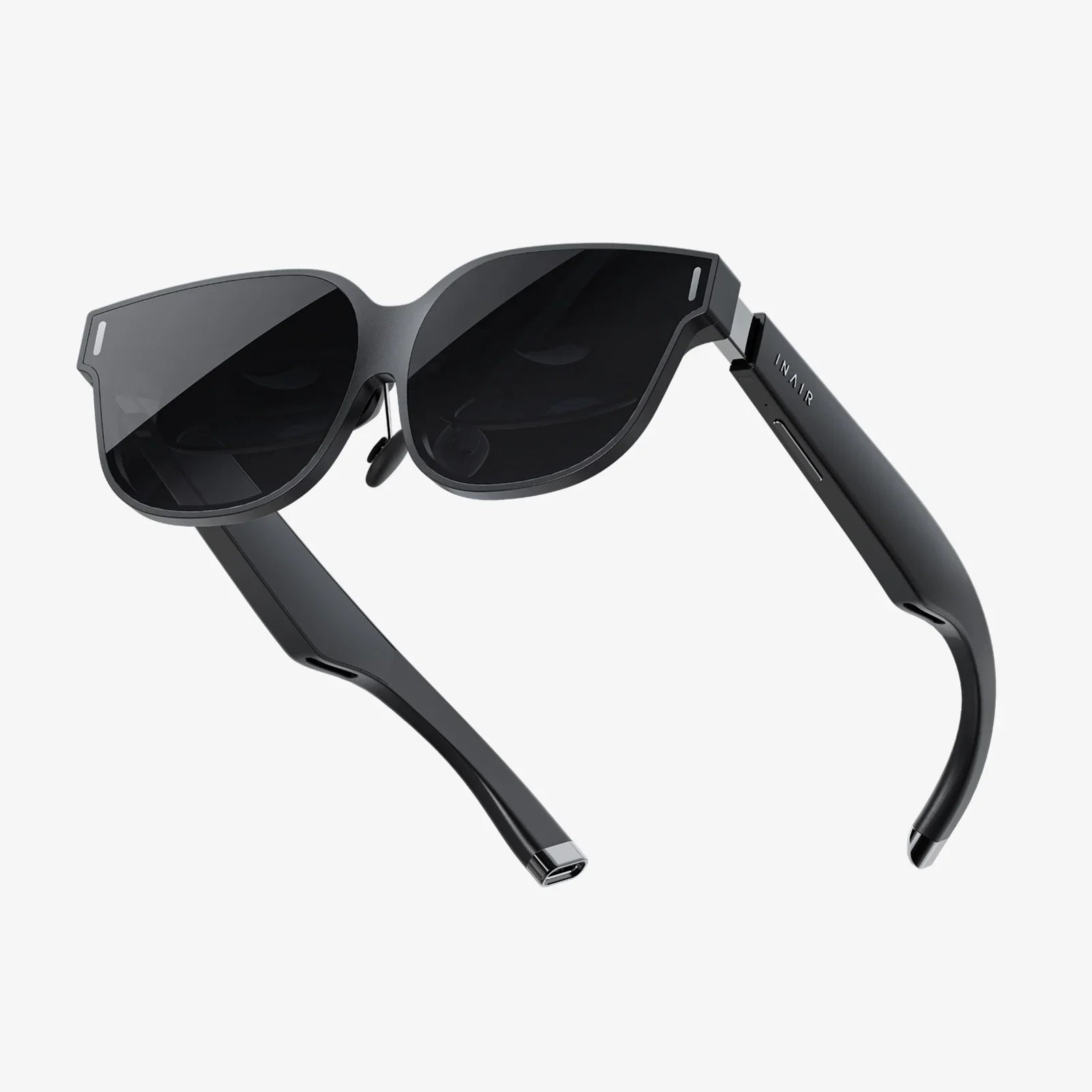
Imagine the inky blackness of the void giving way to the swirling violet and crimson hues of a distant nebula, not on a screen, but all around you. Feel the instinctual, primal awe as a gas giant rises to fill your entire field of view, its stormy bands so close you could almost touch them. This is no longer the stuff of science fiction or flat, detached screen-gazing; this is the new reality ushered in by the integration of comprehensive virtual reality support into sophisticated space simulation software. It represents a fundamental paradigm shift, moving astronomy and cosmic exploration from an intellectual exercise into a full-body, visceral experience that redefines our understanding of scale, wonder, and our own place in the cosmos.
The Evolution of the Digital Planetarium
For decades, space simulation software has been a powerful tool for astronomers, educators, and enthusiasts alike. These programs have evolved from simple star charts into breathtakingly detailed digital universes, meticulously crafted using real scientific data from missions and observatories. They allowed users to travel millions of light-years, to witness the birth of stars and the collision of galaxies, all from the comfort of their desk. Yet, a barrier always remained: the screen itself. The universe was something observed, a magnificent picture under glass, but it lacked a sense of true presence. The experience, while intellectually stimulating, was ultimately confined to a rectangle in front of you.
The advent of consumer-grade virtual reality technology promised to shatter that barrier. Early adopters and developers quickly recognized the immense potential of VR as the ultimate vehicle for space exploration. The core tenets of VR—immersion, presence, and scale—align perfectly with the experiential goals of space simulation. It was a match made in the heavens. Integrating robust VR support was the necessary key to unlock this potential, transforming a observational tool into a personal spaceship for the mind.
Beyond a Feature: A New Philosophy of Exploration
True VR support is far more than a simple compatibility mode or a stereoscopic 3D view. It is a holistic approach to design and interaction that fundamentally changes the user's relationship with the simulation. It begins with native engine-level integration, ensuring buttery-smooth performance and low latency, which are absolutely critical to maintaining immersion and preventing the motion discomfort that can quickly shatter the illusion of floating in space.
This deep integration allows for a complete reimagining of the user interface and controls. Menus and data readouts are no longer plastered on the screen; they become interactive holograms floating in your cockpit or attached to your virtual wrist. You don't click a button to engage a hyper-speed jump; you might physically reach out and grab a thruster lever or input coordinates on a virtual keypad. This shift to natural, intuitive motion controls empowers the user, fostering a sense of agency and mastery over the spacecraft that is simply impossible with a keyboard and mouse.
The Unparalleled Power of Cosmic Scale
Perhaps the single most profound gift of VR support is its ability to convey the true, mind-bending scale of the universe in a way that bypasses the intellect and strikes directly at the gut. Human brains did not evolve to comprehend astronomical distances or the size of celestial bodies. We can read that Jupiter is 11 times the diameter of Earth and intellectually understand that fact, but we cannot truly feel it.
VR makes the abstract terrifyingly and beautifully concrete. Flying from the pale blue dot of Earth out to the rings of Saturn becomes a journey that feels like it takes time and effort. Witnessing a star like Betelgeuse, which would engulf the orbit of Mars, appear before you is an experience that can evoke a deep and humbling sense of vertigo. You don't just see the scale; you are enveloped by it. You cran your neck to see the top of a galactic whirlpool, and your body understands, in a visceral way, the sheer immensity of what you are witnessing. This is educational and emotional revelation in its purest form.
A Classroom Without Walls
The educational implications of this technology are staggering. VR support transforms space simulation from a teaching aid into a field trip vehicle. Imagine a lesson on the solar system where students don't look at diagrams of planetary orbits but instead stand in the center of a perfectly scaled model, watching the planets revolve around them at their correct relative speeds. They can walk on the barren, cratered surface of Mercury, feel the oppressive, acidic atmosphere of Venus, or watch the dual suns set on a hypothetical exoplanet.
This experiential learning fosters a deeper, more lasting connection to the material. It sparks curiosity and wonder in a way a textbook never could. Complex concepts like orbital mechanics, gravitational pull, and the life cycle of stars become intuitive because they can be observed and interacted with from a first-person perspective. It democratizes access to the universe, giving every student with a headset the opportunity to stand on the Martian plains or float above the Pillars of Creation.
The Future is Presence
As VR technology continues to advance, the potential for space simulation grows exponentially. The future of this synergy points towards even greater levels of immersion. Haptic feedback suits could allow users to feel the subtle vibrations of their ship's engines or the pressure of a gravity well. Improved eye-tracking could enable foveated rendering within the headset, allowing for even more stunningly detailed visuals where you are directly looking, making entire galaxies feel even more real.
Furthermore, the development of shared, persistent virtual spaces could lead to the ultimate achievement: multi-user cosmic exploration. The ability to share these awe-inspiring moments with others, to point out a unique nebula to a friend floating beside you in the virtual void, adds a powerful social dimension to the experience. We are moving towards a future where anyone can not just learn about the universe, but truly experience it together, forging a new collective connection to the cosmos.
We stand on the precipice of a new age of discovery, not because our telescopes are getting more powerful—though they are—but because our ability to step inside the data they provide is now a reality. This is the ultimate promise of virtual reality support in space simulation: it is the bridge between human curiosity and the infinite universe, a personal and profound journey that begins the moment you put on the headset and leaves you forever changed by the grandeur of what you have witnessed. The final frontier is no longer out of reach; it's waiting for you to look up, and step through.
Share:
Companies Making AR Glasses: The Architects of Our Augmented Future
Best AI to Use for Business: A Strategic Guide to Unlocking Growth and Efficiency