


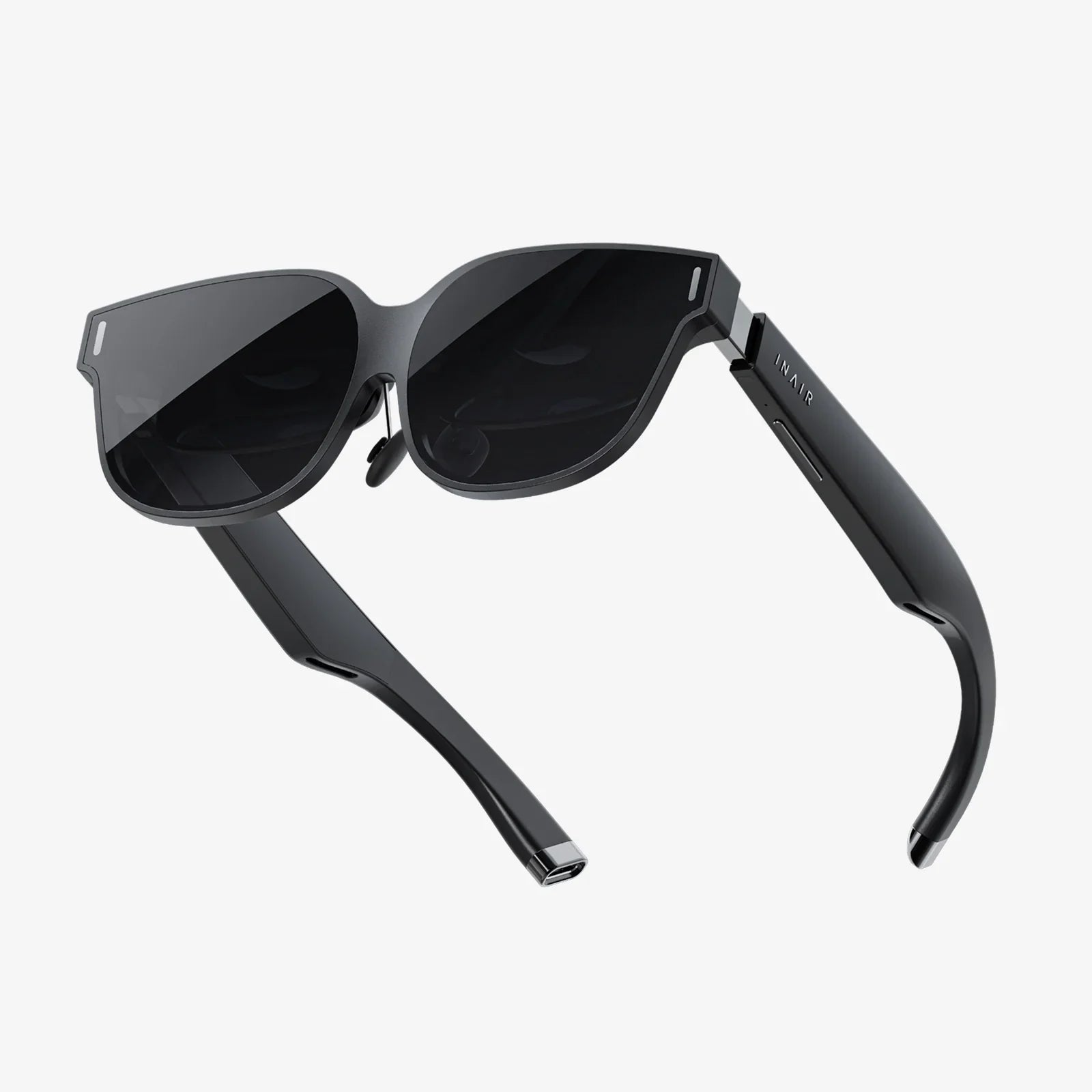
Imagine gazing upon the curvature of the Earth, a mesmerizing tapestry of blue and white set against the profound blackness of the cosmos. Now, imagine that view is not just seen but augmented. Critical mission data, navigational charts, or the vital signs of a fellow astronaut are seamlessly overlaid onto your visor, turning a simple observation into an interactive, information-rich experience. This is the promise and the evolving reality of space glasses—a technology born from necessity that is set to redefine the limits of human vision and cognition, both in orbit and here at home.
From Goggles to Genius: The Evolution of Eyewear Beyond Our Atmosphere
The journey of eyewear in spaceflight began not with augmentation, but with pure, unadulterated protection. The first astronauts needed visors that could shield their eyes from unfiltered solar radiation, from micrometeroids moving at projectile speeds, and from the extreme temperature swings encountered in vacuum. These early designs were marvels of material science, utilizing polycarbonate layers and specialized coatings to create a robust barrier against a hostile environment. They were, in essence, highly sophisticated goggles.
The paradigm began to shift as missions grew longer and more complex aboard space stations. The need for astronauts to have constant access to vast amounts of information—procedural manuals, system schematics, communication feeds—became apparent. Fumbling with bulky, floating binders or trying to read from a fixed screen while performing a delicate repair was inefficient and potentially hazardous. Engineers and scientists began to ask a pivotal question: what if the information could come to the astronaut, directly within their line of sight?
The Anatomy of Modern Space Glasses: More Than Meets the Eye
Today's conceptualizations and prototypes of space glasses are complex wearable computers. Their design integrates several cutting-edge technologies into a single, streamlined form factor intended for use inside a pressurized capsule or station, or integrated into an extravehicular activity (EVA) helmet.
The Optical Heart: Waveguide and Display Technology
At the core of any augmented reality system is the method of projecting digital imagery onto the real world. For space glasses, this often involves waveguide technology. Thin, transparent glass or plastic substrates use microscopic gratings to bend light, projecting images from a small projector module at the temple directly into the user's eye. This creates the illusion that crisp, bright text, diagrams, and videos are floating in space several feet away, all while allowing the wearer to see their physical surroundings perfectly.
Sensing the Environment: A Suite of Perceptual Tools
For the overlay to be meaningful and stable, the glasses must understand the world around them. This is achieved through a sophisticated array of sensors:
- Inward-facing eye-tracking cameras: These monitor the user's gaze, allowing for intuitive control (e.g., selecting a virtual button by looking at it) and ensuring the displayed image is always in focus.
- Outward-facing depth sensors and cameras: These map the 3D environment, enabling digital objects to be "locked" to physical surfaces. An astronaut could place a virtual instruction manual next to a real-life control panel, and it would stay there as they move their head.
- Inertial Measurement Units (IMUs): These track the precise movement and orientation of the head, crucial for stabilizing the augmented overlay against motion.
Processing Power and Connectivity: The Brain Behind the Lenses
All this data requires significant onboard processing, handled by miniaturized, radiation-hardened computing modules. These systems must be incredibly powerful yet energy-efficient, as every watt of power is a precious resource on a spacecraft. They also maintain a constant, robust wireless link to the station's or ship's main computer network, pulling data in real-time.
Mission-Critical Applications: How Space Glasses Empower Exploration
The theoretical applications for this technology in space are vast and transformative, touching nearly every aspect of an astronaut's work.
Augmented Reality for Maintenance and Repair (ARM)
This is perhaps the most immediate and valuable use case. An astronaut wearing space glasses approaches a malfunctioning life support system. Instead of consulting a physical manual, the glasses recognize the component via computer vision. Instantly, animated arrows and diagrams overlay the actual machinery, highlighting the specific valves to check and providing step-by-step torque specifications. Warnings could flash if a tool is being used incorrectly. This "see-what-I-see" capability also allows experts on Earth to see the astronaut's view and provide remote guidance, drawing virtual annotations directly into the astronaut's field of vision.
Enhanced Scientific Research and Discovery
During geological studies on the Moon or Mars, a scientist could look at a rock formation and immediately see spectral analysis data overlaid on it, identifying mineral compositions in real-time. Biological experiments could be annotated with growth metrics and historical data, providing instant context. This turns the entire environment into an interactive database.
Training and Simulation On the Fly
While extensive training happens on Earth, unexpected situations arise. Space glasses can generate immersive, high-fidelity simulations for emergency procedures, allowing crews to practice a complex docking maneuver or medical emergency in a virtual environment overlaid onto their actual quarters, without consuming physical resources.
Physiological Monitoring and Telemedicine
Subtle sensors could monitor pupil dilation, blink rate, and other biomarkers to assess an astronaut's cognitive load and fatigue. During a medical event, a crew medic could have diagnostic protocols and real-time vital signs displayed, while a surgeon on Earth could guide them through a procedure with virtual cues.
The Formidable Challenges of Designing for the Final Frontier
Creating technology for space is unlike any other engineering endeavor. The challenges are immense and non-negotiable.
- Radiation Hardening: Cosmic radiation can fry delicate electronics and cause "bit flips" in computer memory, leading to system failures. All components must be designed to withstand this constant bombardment.
- Microgravity Considerations: Everything is designed for a world without weight. The glasses must be extremely light, perfectly balanced to be comfortable without resting on the nose and ears in the same way, and must not have any small parts that could become dangerous floating debris if detached.
- Reliability and Redundancy: There are no quick returns for repair. Systems must be fail-safe, often with built-in redundancies. A glitch during a critical spacewalk could be catastrophic.
- Power and Thermal Management: Processing large amounts of data generates heat, which is very difficult to dissipate in a vacuum. The system must do this efficiently while sipping minimal power from the spacecraft's limited supply.
The Inevitable Spin-Off: How Space Glasses Will Transform Life on Earth
The technological advancements driven by the extreme demands of space exploration have a long and storied history of benefiting humanity. Space glasses are poised to be the next great spin-off, revolutionizing numerous terrestrial fields.
In complex surgery, a surgeon could see a patient's MRI data overlaid directly onto their body, guiding incisions with sub-millimeter accuracy. In advanced manufacturing and assembly, technicians could receive wiring diagrams overlaid onto an aircraft's frame, drastically reducing errors and training time. For field service engineers repairing wind turbines or cell towers, remote experts could guide them with virtual arrows and notes from thousands of miles away. The applications in education, architecture, and navigation are equally profound.
Furthermore, the research into longer-lasting, smaller power sources, more durable and lightweight materials, and more intuitive human-computer interfaces will ripple through the consumer electronics industry, leading to better, safer, and more powerful devices for everyone.
The Future Lens: What Comes Next?
The development of space glasses is not the end goal, but a stepping stone. Researchers are already looking beyond glasses to more integrated systems. Concepts for smart contact lenses with embedded displays are being explored, which would offer an even more seamless experience. Further out, we may see the development of direct neural interfaces, where information is perceived visually without the need for a physical display at all—a true merger of human and machine cognition.
Each step in this evolution will be tested and proven in the ultimate proving ground: space. The lessons learned in building systems that must function perfectly in the most unforgiving environment imaginable will pave the way for their safe and effective adoption on Earth.
The view from space has always humbled and inspired humanity. Soon, that view will be sharper, richer, and filled with a layer of understanding we once only dreamed of. The next time you look up at the night sky, consider that the astronauts of tomorrow won't just be looking back; they'll be interacting with a universe of data, their vision enhanced by the silent, sophisticated intelligence of their space glasses, turning the void into a canvas for human achievement.
Share:
HCI Definition: The Complete Guide to Human-Computer Interaction
Best Price for Virtual Reality Headset: Your Ultimate Guide to Smart Savings