


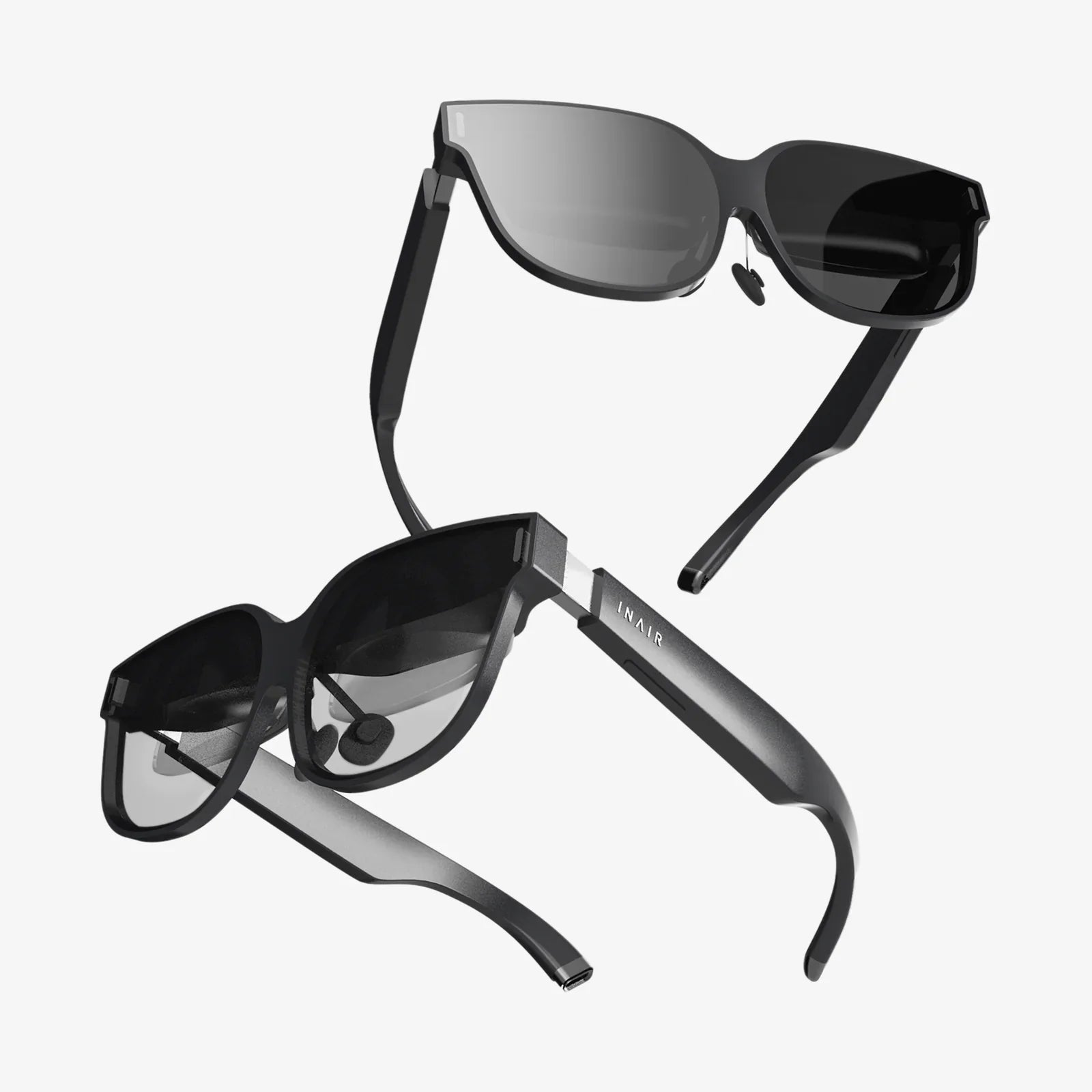
Imagine the sensation of rain falling precisely around you, hearing each droplet land on leaves to your left, splash on the pavement ahead, and trickle into a gutter somewhere behind your right shoulder. This isn't a memory of a walk in a storm; it’s the promise of spatial audio, a technological revolution that is fundamentally changing how we experience sound. For decades, audio playback has been largely two-dimensional, confined to the left and right of our heads. But a new era is dawning, one where sound is a three-dimensional entity, a sphere of auditory information that you can step inside. This deep dive into spatial audio comparison isn't just about specs and codecs; it's about understanding the tools that are crafting the future of immersion, making every listening experience feel less like playback and more like presence.
The Foundation: What Exactly Is Spatial Audio?
Before we can compare, we must define. At its core, spatial audio is an umbrella term for a collection of technologies designed to recreate a three-dimensional sound field around a listener's head. The goal is to mimic how we hear sounds in the real world, complete with direction, distance, and even the acoustic properties of the environment. It’s the difference between hearing a helicopter and feeling like it’s circling directly above you.
The magic of human hearing is based on incredibly subtle cues our brains have evolved to interpret. Key among these are:
- Interaural Time Difference (ITD): The minute difference in time it takes for a sound to reach your left ear versus your right ear.
- Interaural Level Difference (ILD): The slight variation in the intensity or volume of a sound between your ears, as your head casts a "shadow."
- Spectral Cues: The way our outer ears (pinnae) subtly filter sounds, changing their frequency content based on whether they come from above, behind, or in front of us.
Spatial audio technologies work by artificially replicating these cues through headphones or a multi-speaker setup, tricking our brains into perceiving sounds originating from specific points in space.
The Technological Pillars: A Comparison of Core Approaches
Not all spatial audio is created equal. The landscape is populated by different methodologies, each with its own strengths, weaknesses, and ideal use cases. A meaningful spatial audio comparison must dissect these core approaches.
1. Object-Based Audio
Think of this as the modern, dynamic approach. Instead of encoding audio for specific speaker channels (left, right, center, etc.), object-based audio treats individual sounds as distinct "objects" within a three-dimensional space. Each sound object is tagged with metadata that describes its intended location (e.g., coordinates X, Y, Z) and how it should behave.
How it works: The audio track contains the raw sound data (the sound of a bird chirping) and its metadata (this bird is 30 feet away, 45 degrees to the right, and 20 degrees above the listener). The playback device—a soundbar, a receiver, or a pair of headphones—then uses its processing power to render these objects based on its specific capabilities. If you have a 5.1.4 system, it will position the bird accurately across those speakers. If you're using headphones, it will use a head-related transfer function (HRTF) to binaurally render the sound.
Key Advantage: Incredible adaptability. The same audio mix can scale seamlessly from a massive theater system to a simple pair of headphones, always striving to recreate the intended spatial effect.
2. Channel-Based Audio with Spatial Extensions
This is the evolution of traditional surround sound. Formats like 5.1, 7.1, and the newer immersive formats like 5.1.2 or 7.1.4 fall into this category. They are based on a fixed number of audio channels, each assigned to a physical speaker location.
How it works: The audio is pre-rendered for a specific speaker configuration. The "2" or "4" in 5.1.2 denotes height channels, adding a vertical dimension that traditional surround sound lacked. This was the first major step beyond the flat, horizontal plane of audio.
Key Advantage: Proven reliability and widespread compatibility. For home theater enthusiasts with a dedicated speaker setup, a well-calibrated channel-based system can provide a powerfully immersive and consistent experience.
3. Binaural Audio
This is the oldest and most pure form of spatial audio, designed exclusively for headphones. Binaural recordings are made using a dummy head with microphones placed in the ears. This captures all the natural ITD, ILD, and spectral cues that a real person would experience at that location.
How it works: It’s a recording technique rather than a post-processing technology. When you listen to a true binaural recording on headphones, you hear exactly what the dummy head heard, creating an unnervingly realistic sense of space and direction.
Key Advantage: Potentially the most natural and convincing spatial experience on headphones, as it uses real-world acoustic capture rather than algorithmic simulation.
The Role of the HRTF: Your Personal Audio Fingerprint
At the heart of most headphone-based spatial audio rendering is the Head-Related Transfer Function. An HRTF is a complex mathematical model that describes how sound is transformed by the unique shape of your head, torso, and outer ears before it reaches your eardrums. It's your personal acoustic fingerprint.
This is a critical point in any spatial audio comparison. Many implementations use a "generic" HRTF, averaged from measurements of many people. For some listeners, this works wonderfully. For others, it can cause issues—sounds might not feel accurately placed, or the "virtual space" might feel unnatural. The future of spatial audio lies in personalized HRTFs, created by scanning a user's ears with a phone's camera or through a calibration process, promising a perfect, tailor-made sonic experience for every individual.
The Content Ecosystem: Where to Experience Spatial Audio
A technology is only as good as its content. The spatial audio landscape is rapidly expanding across media.
Music
Spatial audio is breathing new life into music listening. Artists and mixing engineers can now place instruments and vocals in a 360-degree sphere around the listener. A guitar can feel like it's coming from the far left, while backing vocals swirl gently overhead. It allows for a more artistic and immersive presentation of music, moving beyond the stereo "wall" and creating a sense that you are in the room with the performers.
Film and Television
This is where spatial audio, particularly object-based formats, truly shines. The rustle of leaves in a forest surrounds you. The roar of a T-Rex vibrates from above and behind. Dialogue remains anchored to the screen, while ambient and effects sounds envelop the viewer. It’s no longer just about what’s happening on screen; it’s about being inside the world of the film.
Gaming
In gaming, spatial audio isn't just an enhancement; it's a tactical tool. Accurate positional audio can mean the difference between victory and defeat, allowing players to hear the precise direction of footsteps, reloading sounds, or incoming fire. It deepens immersion, making virtual worlds feel tangibly real and responsive.
Virtual and Augmented Reality
VR and AR are arguably the ultimate application for spatial audio. For a virtual world to feel truly convincing, its audio must be perfectly married to its visuals. If a character speaks to you from your left, you must hear them from your left. The sound of a digital river must flow from the correct location in the environment. Here, low-latency, high-fidelity spatial audio is not a bonus feature—it is essential for maintaining presence and preventing user discomfort.
Beyond the Hype: The Practical Realities and Challenges
As with any emerging technology, there are hurdles to overcome. A honest spatial audio comparison must acknowledge that the experience is not always perfect.
- The Quality of the Mix: A poorly executed spatial mix can be worse than a good stereo mix. Sounds can feel gimmicky or misplaced. The skill of the audio engineer is paramount.
- Listener Variability: As discussed, the generic HRTF problem means your mileage may vary.
- The Hardware Factor: While basic spatial rendering can work on any headphones, higher-quality processors and dedicated high-resolution drivers can deliver a more detailed and stable soundstage.
- Consumer Awareness: Many people listen to spatial audio tracks without realizing it, or without knowing how to best experience it (e.g., not enabling the correct settings).
The Future Soundscape: Where Do We Go From Here?
The trajectory of spatial audio points toward greater immersion, personalization, and accessibility. We are moving towards a world where personalized HRTFs are standard, creating perfect sonic realism for everyone. We can expect advancements in real-time audio processing, allowing even legacy stereo content to be upmixed into convincing spatial sound through sophisticated algorithms. Furthermore, the integration of spatial audio with other sensory technologies, like haptic feedback, will create even more powerful and multi-sensory immersive experiences. The goal is no longer just to listen to audio, but to feel within it.
The battle for sonic superiority is no longer just about clarity and bass response; it's about dimensionality and realism. This spatial audio comparison reveals a field rich with innovation, where the ultimate goal is to dissolve the barriers between the listener and the art. It’s about closing your eyes and believing, if only for a moment, that you are somewhere else entirely. The next time you press play, you're not just starting a song or a movie—you're stepping into a world.
Share:
How to Set Spatial Audio: The Ultimate Guide to Immersive Sound
How to Set Spatial Audio: The Ultimate Guide to Immersive Sound