


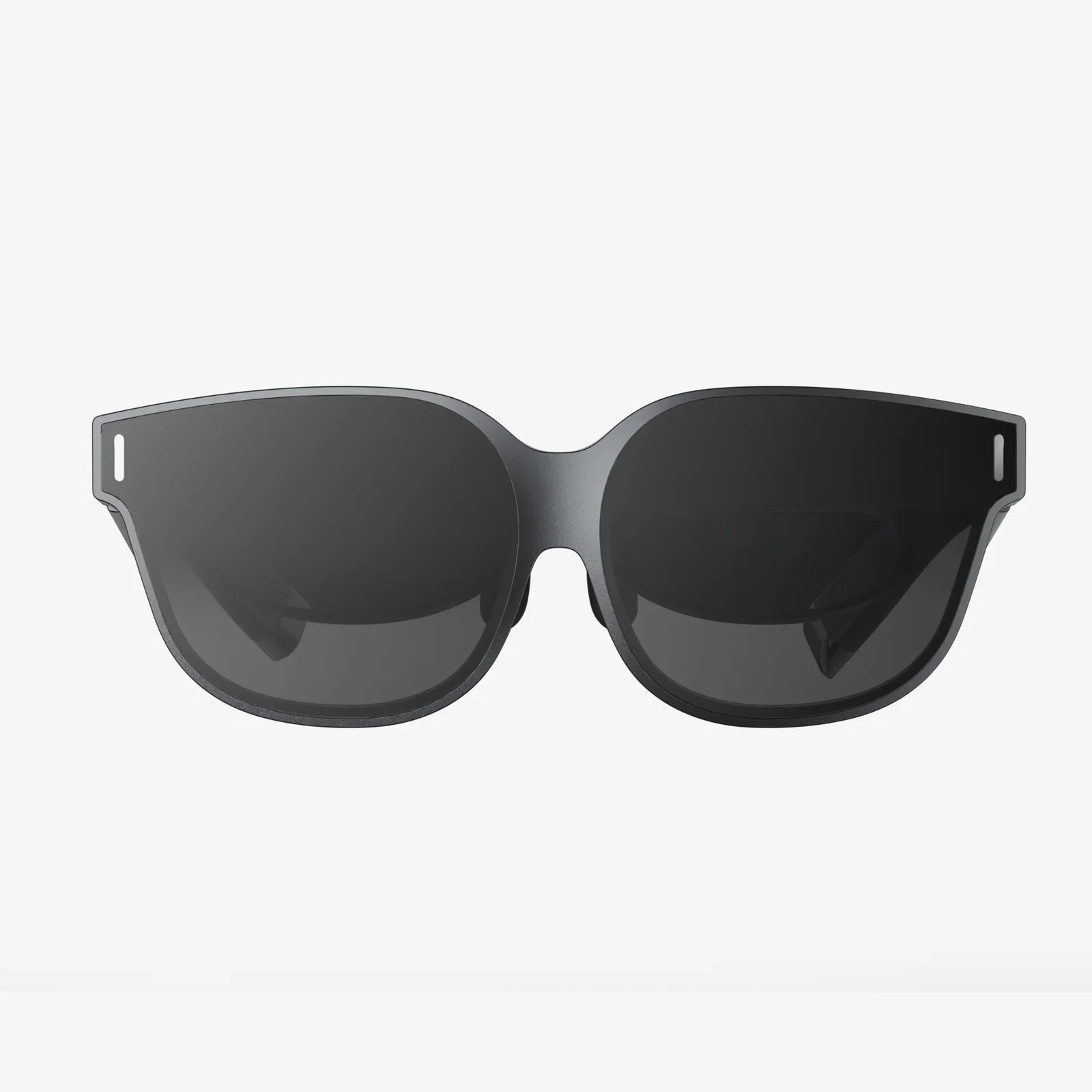
- by wangfred
Spatial Collaborate from Anywhere in AR: The Future of Remote Work is Here
- by wangfred
Imagine walking into your home office, slipping on a pair of sleek glasses, and with a simple voice command, summoning your entire global team into the room with you. Not as flat video feeds on a screen, but as photorealistic avatars, standing around a holographic 3D model of your new product design, gesturing, speaking, and interacting with the digital prototype as if it were physically present. This isn't a scene from a science fiction movie; it is the imminent future of work, powered by the revolutionary convergence of spatial computing and Augmented Reality (AR). The ability to spatial collaborate from anywhere in AR is poised to dismantle the final barriers of remote work, transforming not just where we work, but how we think, create, and solve problems together.
For decades, our primary tools for remote collaboration have been confined to the two-dimensional plane. Email, instant messaging, video conferencing—these technologies were revolutionary in their time, connecting people across vast distances. However, they all suffer from a fundamental flaw: they strip away the rich, contextual, and three-dimensional nature of human interaction and complex work.
Consider a video call. We stare at a grid of faces, struggling to interpret body language and subtle social cues on a compressed video feed. We talk over each other due to latency, a phenomenon aptly named "the mute dance." Most critically, when working on physical objects—be it a new engine component, an architectural blueprint, a surgical procedure, or a piece of art—we are forced to describe these 3D concepts using 2D tools. We share our screens, point with mouse cursors, and say, "Imagine if you could just see it from this angle..." This translation process is inefficient, prone to error, and drains creative energy.
This "flat-screen paradigm" creates a significant collaboration gap. It fails to replicate the intuitive, hands-on experience of gathering around a whiteboard, pointing at a physical prototype, or looking over a colleague's shoulder. Spatial collaborate from anywhere in AR seeks to bridge this gap not by imitating physical presence on a screen, but by transcending it, offering a new medium for collaboration that has its own unique and powerful advantages.
At its heart, spatial collaborate from anywhere in AR is a technology stack that enables multiple users, dispersed across the globe, to share a persistent, interactive, and three-dimensional digital space that is anchored and overlayed onto their physical environment through AR devices.
Let's break down the key components:
This vision of seamless collaboration is built upon several rapidly advancing technological pillars.
The devices themselves are the gateways. Modern AR wearables are becoming lighter, more powerful, and equipped with a suite of sensors. Cameras capture the world, depth sensors (like LiDAR) measure distances to create precise 3D maps, and inertial measurement units (IMUs) track the device's movement and orientation. This sensor fusion creates a comprehensive understanding of the user's physical context, which is the foundational layer for placing persistent digital content.
The heavy computational lifting is done in the cloud. Complex 3D models aren't stored on individual devices; they are streamed from powerful cloud servers. The cloud also acts as the central hub for synchronizing the shared experience. Every action—moving an object, drawing a line, an avatar's gesture—is sent to the cloud and instantly broadcast to every other participant in the session. This requires incredibly low latency networks to avoid the disorienting lag that breaks immersion.
This is the magic that makes digital objects feel real. The system doesn't just see a table; it understands it as a surface. You can place a virtual monitor on it, and it will stay there, even if you walk away and come back later. This persistence means that a collaborative design review doesn't have to end when the call does. The 3D model, along with all the notes and markups made by the team, remains exactly where they left it, waiting for the next session.
Conveying a sense of shared presence is perhaps the greatest challenge and the most important achievement. Early implementations used cartoonish avatars, but the goal is photorealistic codecs that can transmit a user's likeness and expressions in real-time. The ultimate aim is to make it feel like you are standing next to your colleague, able to whisper, make eye contact, and gesture naturally, creating a powerful psychological sense of co-presence that video calls cannot match.
The potential applications for spatial collaborate from anywhere in AR are vast and will redefine workflows in nearly every sector.
Teams can congregate around a full-scale, holographic prototype of a new vehicle or appliance. Engineers can peer inside the model, animate parts to see how they move together, and leave virtual notes pinned to specific components. A designer in Milan can suggest a change to the curvature of a car's bodywork and instantly see it rendered in 3D, rather than waiting days for a new physical model to be fabricated.
Architects, clients, and construction managers can walk through a life-size digital twin of a building before a single foundation is poured. They can change materials on the fly—swapping brick for glass—to see how it affects light and space. This allows for unprecedented stakeholder alignment and can identify potential design clashes or construction issues months ahead of time, saving millions.
Surgeons across the globe can collaborate on complex procedures. A leading specialist could guide a less experienced surgeon through a rare operation by drawing annotations directly onto the patient's anatomy in the operating surgeon's AR view. Medical students could learn anatomy by exploring detailed, interactive 3D holograms of the human body together from their respective classrooms or homes.
A field technician repairing a complex piece of machinery can stream their first-person view to an expert located thousands of miles away. The expert can then see exactly what the technician sees and draw arrows, circles, or instructions directly into the technician's field of view, overlaying precise guidance onto the real-world equipment. This drastically reduces downtime, travel costs, and errors.
While the future is bright, several significant challenges must be addressed before spatial collaborate from anywhere in AR becomes mainstream.
Beyond the practical applications, the deeper impact of this technology is on human connection and the creative process. It promises to restore the serendipity and nuance of in-person collaboration that remote work has historically lacked. The spontaneous idea sparked by seeing a colleague's puzzled expression, the energy of a brainstorming session where ideas physically take shape in the air between participants, the ability to build a shared understanding not through description, but through shared experience—these are the intangible benefits that could lead to a new renaissance of innovation.
It also holds the potential to create a more equitable global workforce. Talent will no longer be limited by geography. A world-class engineer in a remote village will have the same access to collaborative tools and experiences as one in a metropolitan tech hub, truly democratizing opportunity.
The office of the future won't be a building you commute to; it will be a digital space you step into, a persistent layer over reality that you customize and share. It will be a place where the best minds, regardless of their physical location, can come together to build, design, and solve the world's most complex problems in ways we are only beginning to imagine. The tools to spatial collaborate from anywhere in AR are not just changing the game; they are creating an entirely new playing field, and it's one without borders.
Share:
Basis Wearable Devices: The Foundational Shift in Personal Health and Data-Driven Living
Based AI: The Paradigm Shift Powering the Next Generation of Intelligence