


Imagine a world where digital information doesn’t live trapped behind a glass screen but flows seamlessly into your physical environment, responding to your gestures, understanding your context, and enhancing your every action. This isn’t a distant sci-fi fantasy; it’s the imminent future being built today through the powerful convergence of spatial computing and augmented reality. This technological synergy promises to be as transformative as the personal computer and the smartphone, fundamentally rewriting the rules of how we interact with technology and with each other.
The Foundational Concepts: Defining the Duo
While often used interchangeably, spatial computing and augmented reality are distinct yet deeply interconnected concepts. Understanding their relationship is key to grasping the scope of this revolution.
Augmented Reality (AR) is the most visible and user-facing layer of this ecosystem. It is a technology that superimposes a layer of digital information—be it images, text, or 3D models—onto a user’s view of the real world. The goal of AR is not to replace reality but to supplement it, providing additional context, information, and entertainment. Think of navigation arrows painted onto the road through your car’s windshield or a virtual dinosaur stomping through your living room.
Spatial Computing, on the other hand, is the broader framework that makes advanced AR possible. It is the umbrella term for the processes and technologies that enable a computer to enter and operate within a three-dimensional world. It’s the behind-the-scenes magic that allows a device to understand the geometry of a room, track its own position within that space, and anchor digital objects so they appear stable and realistic. Spatial computing involves a complex orchestra of technologies:
- Computer Vision: Allowing machines to “see” and interpret the visual world.
- Simultaneous Localization and Mapping (SLAM): Enabling a device to map an unknown environment while simultaneously tracking its location within it.
- Depth Sensing: Using LiDAR, radar, or stereoscopic cameras to perceive depth and distance.
- Edge Computing: Processing this immense amount of spatial data in real-time, often on the device itself to minimize latency.
In essence, if AR is the beautiful, immersive experience, spatial computing is the indispensable engine and operating system that powers it. You cannot have compelling, persistent AR without sophisticated spatial computing.
The Architectural Pillars of the Spatial Stack
Building this bridge between the digital and physical requires a robust technical architecture. Several key components work in concert to create a convincing and useful spatial experience.
1. Environmental Understanding
The first task for any spatial device is to comprehend its surroundings. Using a combination of cameras and sensors, it scans the environment to create a dense 3D mesh—a digital twin of the physical space. This mesh understands not just walls and floors, but also recognizes objects like tables, chairs, and sofas. This allows digital content to interact realistically with the physical world; a virtual ball can roll under a real table and come to rest against a real wall.
2. Persistent World-Locking
Early AR experiences were fleeting. You could view a digital object through your phone, but if you walked away and came back, it was gone. Spatial computing introduces persistence. Digital objects can be “pinned” to specific real-world coordinates. Leave the room, return an hour later, and your virtual notes are still floating above your desk, or your virtual artwork remains on your wall. This creates a sense of stability and reliability, making the digital elements feel like a true part of your environment.
3. Intuitive Human Input
The mouse and keyboard are ill-suited for a 3D world. Spatial interfaces are moving towards more natural forms of interaction:
- Hand and Eye Tracking: Advanced cameras allow users to manipulate digital objects with pinch, grab, and pull gestures. Eye tracking can be used for selection, making interfaces feel telepathic.
- Voice Commands: Speaking to your environment becomes a primary way to summon information and control devices.
- Spatial Anchors: Users can place content for others to find later, creating a shared layer of information over locations.
Transforming Industries: The Practical Applications
The potential of spatial computing and AR extends far beyond gaming and filters. They are poised to revolutionize nearly every sector of the economy.
Revolutionizing Design and Manufacturing
In industrial design and architecture, spatial tools are a game-changer. Engineers can project full-scale 3D models of machinery onto a factory floor before it’s built, identifying potential assembly issues or spatial conflicts. Architects can walk clients through a photorealistic, life-size holographic rendering of a building, allowing them to experience the flow of space and light before a single brick is laid. This reduces prototyping costs, accelerates iteration, and improves final outcomes.
The Future of Medicine and Surgery
Surgeons can use AR overlays during procedures to see critical information like patient vitals, ultrasound data, or 3D reconstructions of tumors directly in their field of view, without looking away from the operating table. Medical students can practice complex procedures on detailed holographic anatomy, and physical therapists can use guided AR movements to help patients with rehabilitation exercises at home.
Reimagining Retail and E-Commerce
Spatial computing will erase the final barrier to online shopping: the inability to try before you buy. Consumers will be able to see how a new sofa looks in their actual living room, at the correct scale and under their lighting conditions. They can “try on” watches, glasses, and makeup virtually. This not only enhances consumer confidence but also drastically reduces return rates for retailers.
Empowering the Remote Workforce
The concept of remote collaboration is elevated from flat video calls to shared 3D workspaces. Colleagues from across the globe can appear as life-like avatars in your room to collaborate on a 3D model, troubleshoot a physical prototype, or brainstorm on a virtual whiteboard that feels tangibly present. This preserves the nuance and context of in-person collaboration in a way 2D screens never could.
The Challenges on the Horizon
For all its promise, the path to a ubiquitous spatial future is fraught with significant hurdles that must be addressed.
Technical Hurdles: Hardware and Processing
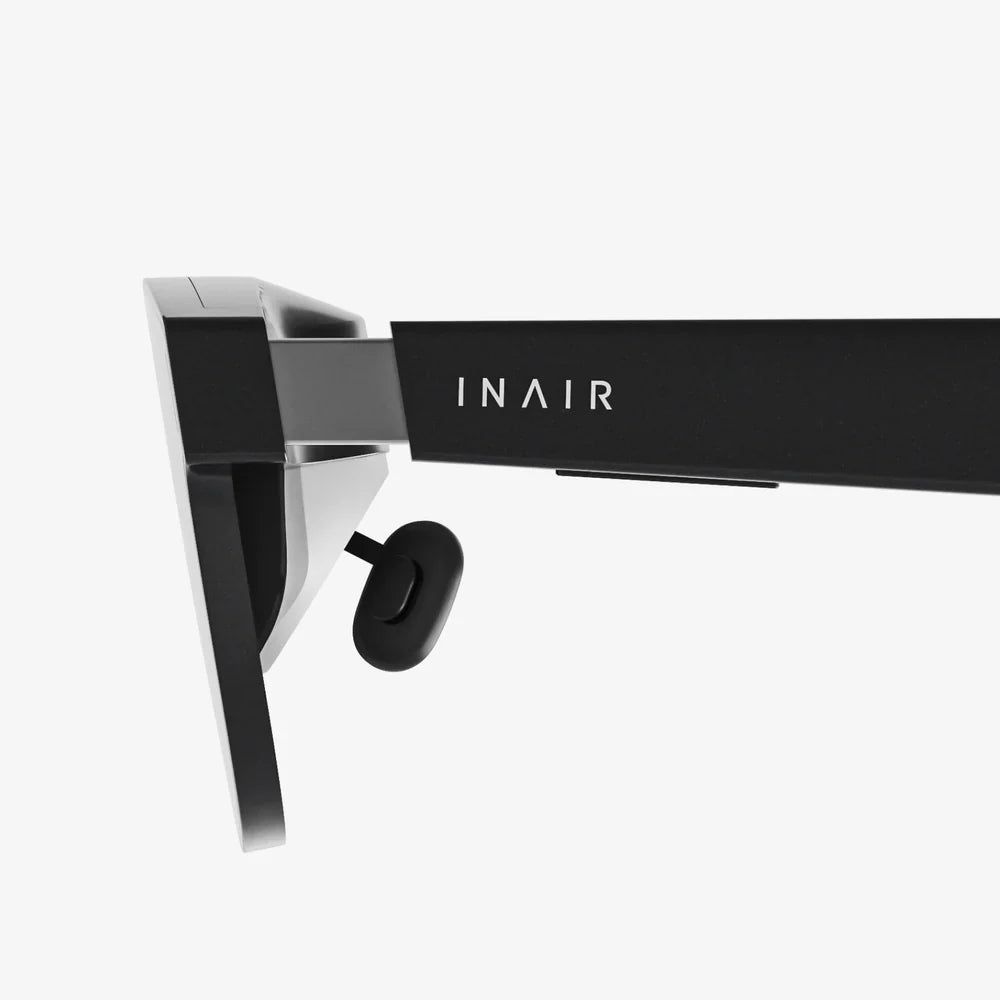
Creating devices that are powerful, socially acceptable, and comfortable to wear for long periods remains a monumental challenge. They need to be lightweight, have all-day battery life, offer high-resolution displays, and possess immense processing power to handle real-time spatial mapping—all without overheating. We are still years away from a pair of AR glasses that look and feel like ordinary eyewear.
The Privacy Paradigm
This is perhaps the most critical challenge. Spatial devices, by their very nature, are data collection machines. They have continuous cameras and microphones scanning your most intimate spaces: your home, your office, your life. The potential for misuse of this data is staggering. Robust, transparent, and user-centric data policies are not an optional add-on; they are a prerequisite for public adoption. The question of who owns the spatial data of your home is one that society will need to answer.
The Social Acceptance Hurdle
Introducing technology into the middle of human social interaction is always delicate. Will talking to menus in a restaurant or gesturing in the air during a meeting be seen as productive or profoundly antisocial? Navigating the etiquette of these new interfaces and ensuring they augment human connection rather than degrading it will be a gradual cultural process.
The Future is Spatial
The trajectory is clear. The next major computing platform will not be something we look down at, but something we look through. It will be an ambient, contextual layer that enhances our perception and amplifies our abilities. We will move from a world of information at our fingertips to one of context at a glance. The line between the digital and the physical will blur to the point of irrelevance, creating a new blended reality where our intentions are understood and our environment is responsive. The convergence of spatial computing and augmented reality is not just about new gadgets; it’s about forging a new, more intuitive, and deeply integrated relationship with the technology that shapes our lives.
The door to a world where your workspace floats in the air, your teacher appears as a hologram at your desk, and your memories are preserved not in photos but in immersive, replayable moments is already beginning to creak open. The tools to map, understand, and augment our reality are here, and they are advancing at a breathtaking pace. The next great digital leap won't happen on a screen you hold; it will happen all around you, transforming every room, every street, and every task into a potential canvas for imagination and efficiency. Are you ready to step through?
Share:
AR and VR Display Market: A Deep Dive into the Optics Shaping Our Digital Future
Mixed Reality App Glasses: The Invisible Computer Reshaping Reality