


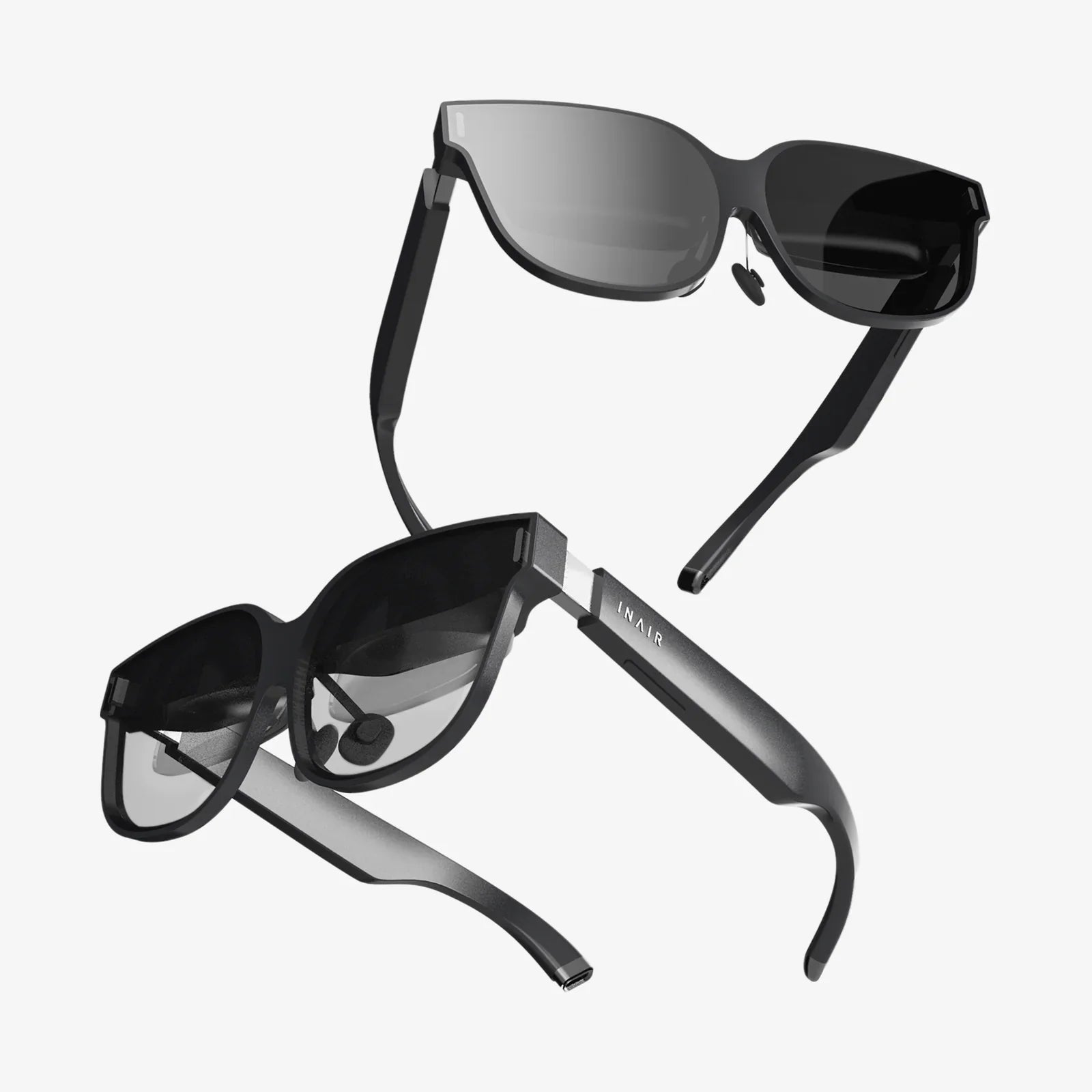
Imagine a world where information doesn't live on a screen in your hand but is woven into the very fabric of your reality. Where directions appear as glowing arrows on the pavement, historical figures narrate their stories as you walk through a city, and a complex engine you're learning to repair is holographically projected onto your workbench, its inner workings animated and labeled. This is not a distant science fiction fantasy; it is the imminent future being built today through the powerful convergence of spatial computing, augmented reality (AR), and virtual reality (VR). This technological trinity is poised to become the next foundational computing platform, dissolving the barriers between the digital and the physical in ways that will fundamentally redefine human experience.
Demystifying the Trinity: Beyond the Acronyms
To understand where we are going, we must first clarify the terms often used interchangeably but which represent distinct, yet deeply interconnected, concepts.
Virtual Reality (VR) is the most immersive of the three. It functions as a destination technology. By donning a headset, you are fully transported to a completely digital, computer-generated environment. The physical world is replaced, blocked out, and your senses are convinced you are somewhere else—scaling Mount Everest, walking on Mars, or battling dragons in a fantasy realm. VR is primarily about presence and immersion in a simulated world.
Augmented Reality (AR), by contrast, is an overlay technology. It does not seek to replace your world but to enhance it. Digital information—images, text, 3D models—is superimposed onto your view of the physical environment through lenses or screens. The goal is to make the digital feel present in your space, like a persistent app pinned to your wall or an animated character hiding behind your sofa. AR adds a layer of context and data onto reality.
Spatial Computing is the overarching framework that makes advanced AR and VR possible. It is the invisible engine. If AR and VR are the experiences, spatial computing is the set of technologies that understand and interact with the space around you. It encompasses the ability of a device to map a room in 3D, understand surfaces, track the position of your hands and eyes, and anchor digital objects persistently so they don't drift or float. It’s the intelligence that allows a digital chair to convincingly sit behind your physical table, occluded by it, as if it were really there. Spatial computing is the bridge that connects the binary world of data to the analog world of atoms.
The Architectural Pillars of the Spatial Revolution
Building this bridge requires a sophisticated stack of technologies working in concert. The magic of a seamless spatial experience rests on several critical pillars.
1. Perception and Mapping: The Digital Nervous System
At the heart of every spatial device is a suite of sensors—cameras, LiDAR (Light Detection and Ranging), depth sensors, and inertial measurement units (IMUs). These act as the system's eyes, constantly scanning the environment. Sophisticated algorithms process this sensor data in real-time to create a dense 3D mesh or point cloud of the room. This process, often called simultaneous localization and mapping (SLAM), allows the device to understand not just what the world looks like, but its precise geometry and the device's own position and movement within it. This digital twin of the physical space is the canvas upon which all AR experiences are painted.
2. Interaction Paradigms: Beyond the Touchscreen
The point-and-tap interface of the smartphone era is ill-suited for a 3D world. Spatial computing demands new forms of interaction that feel more natural and intuitive.
- Hand Tracking: Advanced computer vision allows devices to see and understand the intricate movements of your hands and fingers, enabling you to push, pull, rotate, and grab digital objects as if they were physical. Pinching to select and gesturing to navigate menus becomes the new default.
- Eye Tracking: By knowing precisely where you are looking, systems can create incredibly intuitive interfaces. Menus can appear where you glance, depth of field can blur elements you aren't focusing on for added realism, and social interactions in VR can feel more natural as avatars make genuine eye contact.
- Voice Control: Speaking to your digital assistant becomes even more powerful when it can contextually understand what you're looking at or manipulating. "Show me the specifications for this part" or "Move this model to the center of the table" are natural commands in a spatial context.
3. Processing Power and The Edge-Cloud Continuum
Processing the immense amount of data from sensors and rendering complex 3D graphics in real-time is computationally monstrous. Early systems were tethered to powerful PCs, but the true potential of spatial computing lies in freedom and mobility. This is being solved through a combination of ultra-efficient, specialized chipsets designed for on-device AI processing and the power of the cloud. Complex simulations or vast datasets can be rendered remotely and streamed to a lightweight headset, promising high-fidelity experiences without being weighed down by a supercomputer on your face.
Transforming Industries: The Practical Applications
While consumer entertainment often grabs headlines, the most profound early impacts of spatial computing are being felt in enterprise and professional fields.
Revolutionizing Design and Manufacturing
In architecture and industrial design, spatial tools are a game-changer. Instead of viewing 3D models on a 2D screen, designers and engineers can step inside their creations at a 1:1 scale. They can walk through a building's design before a single brick is laid, identifying spatial conflicts and evaluating ergonomics in a way blueprints cannot convey. On the factory floor, assembly line workers can have complex wiring diagrams or repair instructions overlaid directly onto the machinery they are working on, reducing errors and drastically cutting training time.
The Future of Medicine and Healthcare
Surgeons are using AR to project CT scans and 3D models of a patient's anatomy directly onto their body during procedures, essentially giving them X-ray vision to improve precision and safety. Medical students can practice complex surgical procedures on hyper-realistic virtual patients, gaining valuable muscle memory without risk. Furthermore, VR is proving to be a powerful therapeutic tool for treating phobias, PTSD, and chronic pain, by placing patients in controlled, immersive environments.
Reimagining Remote Collaboration and Training
Spatial computing promises to make video calls obsolete. Instead of seeing faces in boxes on a screen, remote collaboration can take place in a shared virtual space. Colleagues from across the globe can appear as lifelike avatars in a virtual meeting room, or even as holograms in your physical office, all able to interact with the same 3D models and data visualizations. This "telepresence" creates a sense of shared space and context that flat screens cannot match, making complex collaborative tasks far more effective.
Navigating the Chasm: Challenges on the Horizon
For all its promise, the path to a ubiquitous spatial future is not without significant obstacles.
The Hardware Conundrum: Form Factor and Accessibility
Today's most powerful headsets are still too bulky, expensive, and have limited battery life for all-day use. The holy grail is a device with the computing power of a high-end headset in a form factor resembling a pair of everyday eyeglasses. Achieving this requires breakthroughs in display technology (like micro-LEDs), optics (like holographic lenses), and battery efficiency. Until hardware becomes socially acceptable and comfortable for prolonged use, mass adoption will remain elusive.
The Software Ecosystem: Building the Spatial Web
Hardware is nothing without software. We are in the very early days of developing the operating systems, development tools, and design languages for spatial interfaces. How do we design intuitive menus that live in 3D space? How do we create a persistent "spatial web" where digital content is anchored to specific locations for anyone to see? Establishing these standards and building a rich ecosystem of applications is the next great challenge.
The Privacy Imperative: A World Under Constant Scan
This technology introduces profound privacy concerns. A device that is constantly scanning and mapping your home, your office, and every environment you enter collects an unprecedented amount of intimate data. It sees your possessions, hears your conversations, and understands your behavior patterns. Who owns this data? How is it stored and used? Preventing a dystopian future of perpetual surveillance will require robust, privacy-first design principles, transparent user controls, and potentially new legal frameworks. The industry must build trust, not just products.
A Glimpse into the Next Decade
As these challenges are gradually overcome, the line between the digital and the physical will continue to blur. We will move from interacting with isolated apps to living within a continuous spatial stream of information and entertainment. Our digital identities and assets, currently locked away on personal devices, will become persistent elements of our shared environment. The way we socialize, learn, work, and play will be mediated through this new layer of reality, offering unparalleled opportunities for connection, creativity, and understanding.
The revolution won't arrive with a bang, but as a slow, steady seep. It begins with a mechanic seeing a holographic tutorial, a surgeon visualizing a patient's anatomy, or a family sharing a virtual vacation from across continents. It’s the silent, steady construction of a new layer of reality, one that promises to be as transformative as the advent of the personal computer or the smartphone. The door to this new dimension is now open, and we are all stepping through.
Share:
Spatial Computing AR VR Developments Reshaping Our Digital and Physical Worlds
Touchless Touch Screen User Interface: The Future of Human-Computer Interaction is in the Air