


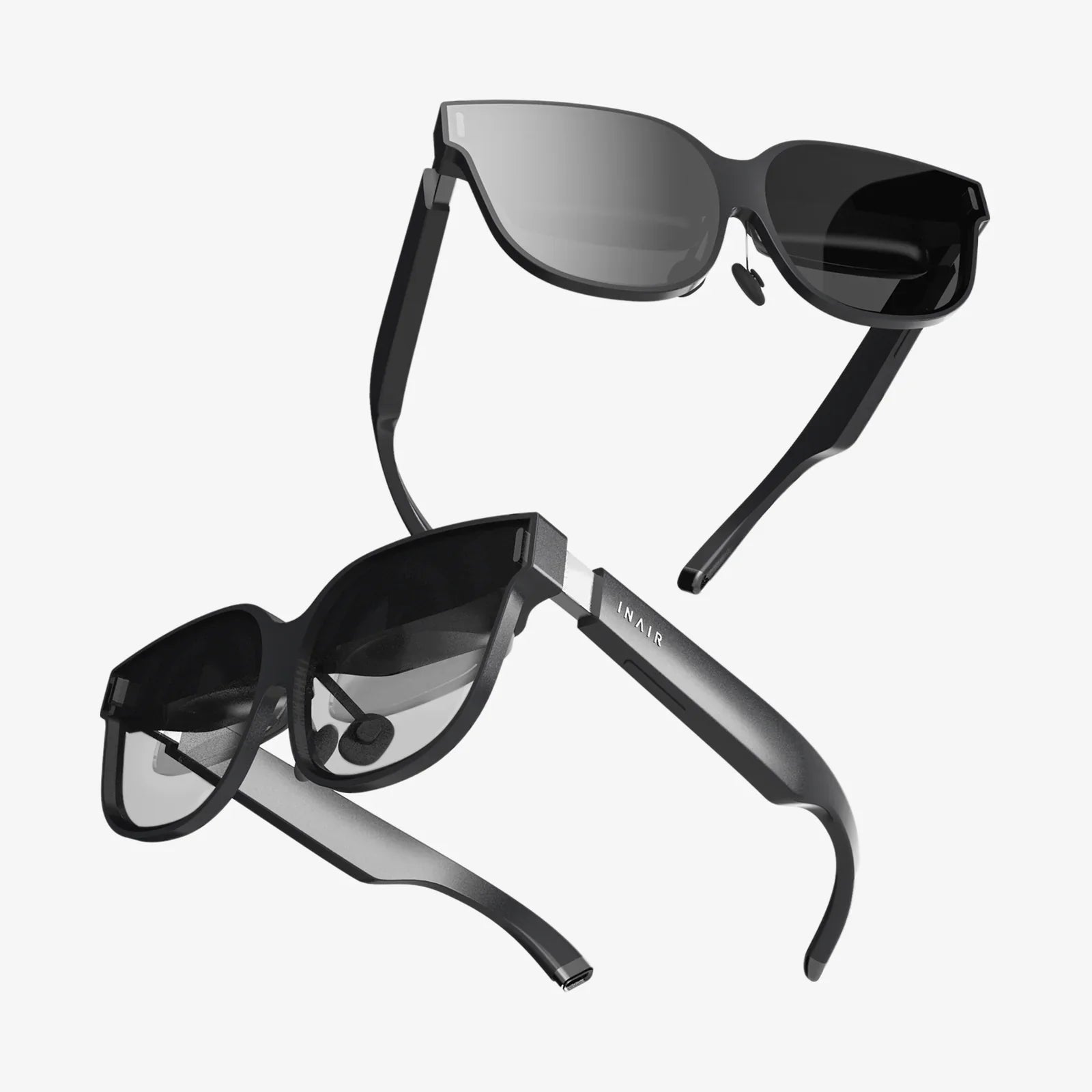
Imagine a world where information doesn't live on a screen but flows into the very fabric of your environment, where digital and physical realities intertwine so seamlessly that the boundary between them dissolves. This isn't a scene from a science fiction novel; it's the imminent future being built today by pioneers in spatial computing design. The news from this frontier is not just about new hardware; it's a fundamental reimagining of human-computer interaction, promising to unlock unprecedented levels of creativity, productivity, and connection. The revolution is here, and it’s happening not in the cloud, but in the space all around us.
Beyond the Screen: Defining the Spatial Design Paradigm
To understand the latest news in spatial computing design, we must first move beyond thinking of it as merely "3D design" or "augmented reality overlays." Spatial computing is a foundational shift. It refers to the practice of designing digital experiences that exist within and interact with the three-dimensional space of the user. Unlike traditional screen-based design, which is bounded and finite, spatial design is infinite, contextual, and embodied.
The core principle is that the user, not the device, becomes the center of the experience. The digital world orientates itself around the person, respecting their physical space, their gaze, their gestures, and even their intent. This demands a new design lexicon. Concepts like proximity, occlusion, scale, and spatial audio become critical tools. A notification doesn't just pop up on a screen; it might gently pulse on the wall next to you. A tutorial doesn't appear in a modal window; a friendly digital avatar might demonstrate a task on your actual physical workbench.
The Breaking News: Key Trends Dominating the Conversation
The field is evolving at a breakneck pace. Staying current with spatial computing design news means tracking several converging trends that are shaping the industry's direction.
1. The Rise of Passthrough AR and Blended Realities
Early AR was primarily experienced through smartphone cameras, a limited and often clunky proxy. The biggest news is the rapid maturation of high-fidelity video passthrough technology. This allows users to wear a headset and see their real world through high-resolution cameras, with digital content composited seamlessly on top. For designers, this is a game-changer. It allows for truly blended experiences where digital objects can convincingly hide behind physical furniture (occlusion), cast realistic shadows, and respond to real-world lighting conditions. The design challenge shifts from creating a purely virtual world to expertly weaving digital threads into the rich tapestry of the user's existing environment.
2. The Standardization of Interaction Models
In the early days of any computing paradigm, interaction is a wild west. Remember the myriad of mouse-driven interfaces in the 80s? Spatial computing is now undergoing its own standardization process, and this is major news for designers and developers. A consensus is emerging around gaze-and-pinch (using eyes to look and a subtle pinch gesture to select) as a fundamental input method. This provides a reliable, intuitive, and accessible baseline for interaction. News from platform developers increasingly focuses on refining these core interaction models, providing robust SDKs that handle the complex math of hand-tracking and environmental understanding, freeing designers to focus on the user experience rather than the underlying technology.
3. The Primacy of User Comfort and Safety
Perhaps the most critical news is the industry's growing emphasis on user comfort, both physical and psychological. Early VR earned a reputation for causing motion sickness and disorientation. Spatial computing design news now heavily features research and best practices on comfort-mode design. This includes techniques like visual anchors (stable reference points in the user's view to reduce simulator sickness), careful management of virtual locomotion, and clear spatial audio cues to direct attention naturally. Furthermore, the ethical implications are huge. Designing experiences that can overlay digital content onto people and private spaces demands a new level of responsibility. News outlets are increasingly covering the development of ethical frameworks to prevent harassment, protect privacy, and ensure these powerful tools are used for good.
4. The Tools Ecosystem Explodes
The software used to create these experiences is advancing just as quickly as the hardware. The news from the tooling front is one of rapid democratization and power. Traditional 3D modeling and game engines have become incredibly powerful for spatial design, with dedicated plugins and workflows for authoring AR and VR content. Furthermore, new native spatial design tools are emerging, offering intuitive, drag-and-drop interfaces for prototyping experiences directly in 3D space. This lowers the barrier to entry, allowing UX/UI designers from a 2D background to more easily transition into spatial design, a crucial development for scaling the creation of content.
Designing for Context: The New UX Imperative
In a 2D world, context is limited—are you on a train? At your desk? In a meeting? Spatial computing design must be hyper-aware of context because the digital experience is directly superimposed onto it. The news here is the development of sophisticated contextual awareness systems.
An application needs to understand the user's environment. Is it a cramped apartment or a wide-open warehouse? Is the user sitting, standing, or moving? Is it day or night? Is the user alone or with others? The design must adapt accordingly. A spatial computing news app might deliver headlines as a subtle ticker in your peripheral vision during a busy morning, but transform into an immersive, expansive data visualization when you sit down at your desk and have time to focus. This dynamic, context-sensitive UX is the holy grail and represents the cutting edge of design thinking in this field.
The Invisible Interface: A Goal and a Challenge
The ultimate goal of much spatial computing design news is the pursuit of the "invisible interface." The ideal experience feels less like using a computer and more like enhancing your own innate abilities. Instead of navigating menus, you might simply look at your smart lamp and a dimmer slider appears next to it. Instead of searching for a recipe, the instructions could materialize right on your kitchen counter, guiding your hands.
This pursuit is redefining the role of the designer. It requires a deep understanding of human psychology, ergonomics, and even architecture. The news isn't just about what we can add to reality, but what we can remove—how we can strip away the clumsy intermediaries of mice, keyboards, and touchscreens to create a more direct and intuitive connection between human intention and digital action.
The Ethical Frontier: News That Demands Attention
No discussion of spatial computing design news is complete without addressing the profound ethical questions it raises. This technology will record, analyze, and overlay data onto our most intimate spaces—our homes, our offices, our cities. The design decisions made today will set powerful precedents.
- Privacy: How much environmental data should a device be allowed to collect and process? Designing for privacy-by-default is a major topic.
- Attention & Addiction: If information can constantly surround us, how do we design for focus and prevent overwhelming cognitive load?
- Digital Decay: What happens when digital graffiti is left on a public building? Or when an AR game object blocks a crucial real-world sign? Designing for the persistence and management of digital content in shared spaces is an unsolved challenge.
- Accessibility: How do we ensure these immersive experiences are available to people with different physical abilities and neurotypes? This is a vibrant and essential area of design research.
The most responsible news in the industry focuses on these questions, advocating for a human-centric approach that prioritizes well-being over engagement metrics.
Looking Ahead: The Next Wave of Spatial Computing News
As we look to the horizon, the news will likely be dominated by a few key developments. The integration of Artificial Intelligence will be massive. AI can power real-world understanding, allowing devices to not just map a room but identify objects within it—"see" a chair, a table, a coffee cup. This unlocks a new level of context-aware interaction. Furthermore, generative AI could allow users to design their own spatial experiences through natural language prompts.
Another major news cycle will be the development of more social and collaborative experiences. The true power of spatial computing may be realized when multiple people can share the same blended reality, collaborating on 3D models, watching immersive media together, or simply socializing as digital avatars in a physical space. Designing these shared experiences, with realistic avatars and intuitive social cues, is the next great frontier.
Finally, the miniaturization of technology will be crucial. The news of lighter, more comfortable, and eventually glasses-like form factors will be the catalyst for mass adoption, pushing designers to create experiences for all-day use that feel less like a tool and more like a natural extension of the self.
The stream of spatial computing design news is a torrent of innovation, a signal from the future that is rapidly becoming our present. It tells a story of a field maturing from a technological novelty into a profound discipline that will redefine how we work, learn, play, and connect. The most exciting headline is yet to be written—not on a page, but in the world around you.
Share:
Digital Interactive Touch Screen Display: The Future of Engagement and Collaboration
Are Virtual Meetings Here to Stay? The Future of Work and Connection