


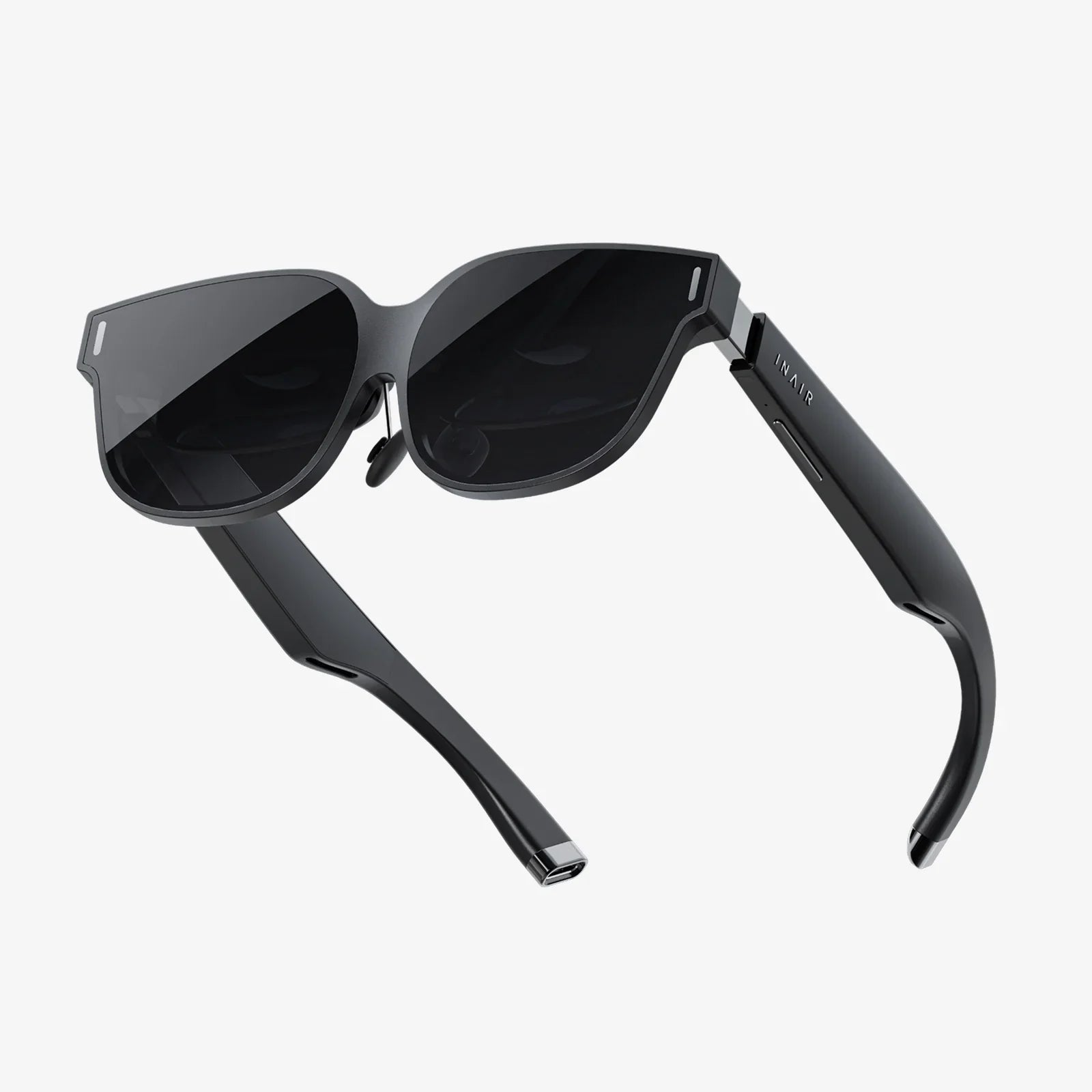
Imagine a world where digital information isn't confined to a flat screen but is woven seamlessly into the fabric of your physical reality, responding to your gestures, your voice, and the very space around you. This is the promise of spatial computing, a revolutionary paradigm shift that is already transforming how we work, learn, heal, and play. The following examples are not distant science fiction; they are active, powerful applications reshaping our present and defining our future.
The Foundation: Understanding Spatial Computing
Before diving into the myriad of spatial computing examples, it's crucial to define the term. Spatial computing is an umbrella concept that encompasses the technologies and processes that enable computers to enter and interact with the human world in three dimensions. It's the fusion of the physical and digital, creating a hybrid space where data is not just viewed but experienced. This is achieved through a combination of hardware and software, including sensors, cameras, depth scanners, and sophisticated algorithms that map, understand, and contextualize the environment. Unlike traditional computing, which requires us to adapt to its 2D language, spatial computing adapts to ours, making interaction more intuitive and natural.
Revolutionizing Design and Architecture
One of the most compelling spatial computing examples is its application in design and architecture. Professionals are no longer limited to blueprints and 3D models on a monitor.
- Immersive Prototyping: Architects and engineers can project full-scale, holographic models of buildings, vehicles, or products into an empty room. They can walk around the design, inspect it from every angle, and even step inside to assess spatial relationships and ergonomics long before a single physical resource is expended.
- Collaborative Design Reviews: Teams distributed across the globe can meet in a shared virtual space, interacting with the same 3D model simultaneously. They can make annotations that are anchored to specific components, discuss changes in real-time, and achieve a consensus that is difficult to replicate through video calls and screen shares.
- Urban Planning: City planners can overlay proposed infrastructure projects—like a new bridge or public transit line—onto a real-world model of the city. This allows for the analysis of sightlines, traffic flow, sunlight exposure, and community impact with unprecedented clarity.
Transforming Manufacturing and Maintenance
The industrial sector has been an early and enthusiastic adopter of spatial computing, leveraging its power to enhance efficiency, safety, and precision.
- Assembly Line Guidance: Technicians on complex assembly lines, such as in aerospace or automotive manufacturing, can wear see-through displays that project digital instructions, diagrams, and warnings directly onto their field of view. This hands-free guidance reduces errors, accelerates training, and improves safety by highlighting potential hazards.
- Remote Expert Assistance: When a machine breaks down in a remote location, a field technician can use a spatial computing device to stream their live view to a senior expert thousands of miles away. The expert can then draw arrows, circles, or annotations that appear anchored to the actual machinery, guiding the technician through the repair process step-by-step, drastically reducing downtime and travel costs.
- Digital Twins: Factories are creating hyper-realistic digital replicas, or "twins," of their entire production lines. These virtual models are fed real-time data from IoT sensors, allowing managers to monitor performance, run simulations, and diagnose problems within the spatial context of the virtual factory, optimizing operations before implementing changes in the physical world.
Redefining Healthcare and Medicine
The impact of spatial computing on healthcare is profound, offering new tools for diagnosis, treatment, and medical training that were once unimaginable.
- Surgical Planning and Navigation: Surgeons can use patient-specific scans (CT, MRI) to generate interactive 3D holograms of a patient's anatomy. They can practice complex procedures on this hologram before ever making an incision. In the operating room, these holograms can be registered and overlaid onto the patient's body, acting as an X-ray vision tool that guides instruments with sub-millimeter accuracy.
- Medical Education and Training: Medical students can move beyond textbooks and cadavers to explore detailed, life-sized holograms of the human body. They can dissect virtual organs, visualize complex physiological processes like blood flow, and practice diagnostic and surgical techniques in a risk-free, repeatable environment.
- Physical Therapy and Rehabilitation: Patients recovering from injuries can engage in gamified therapy exercises within immersive environments. Spatial computing tracks their movements, provides real-time feedback on form, and adjusts the difficulty of tasks dynamically, making rehabilitation more engaging and data-driven.
Enhancing Retail and E-Commerce
The retail landscape is being reshaped by spatial computing, bridging the gap between online shopping and the in-store experience.
- Virtual Try-On and Preview: Customers can use their smartphone or a dedicated device to see how a piece of furniture would look and fit in their living room, how a new shade of paint would transform their walls, or how a pair of glasses or makeup would look on their own face. This reduces purchase uncertainty and minimizes returns.
- Immersive Showrooms: Automotive companies and luxury brands are creating virtual showrooms that customers can explore from home. They can configure a car's color and trim, walk around it, and even sit in the driver's seat of the virtual model, all from their couch.
- In-Store Navigation and Information: Shoppers in large physical stores can use an app to navigate directly to the items on their list. By pointing their device at a product, they can access rich digital information, see reviews, check for compatible items, or even see a holographic demonstration of the product in action.
Creating the Future of Work and Collaboration
The concept of the office is being redefined through spatial computing, enabling a new era of remote collaboration that feels tangibly present.
- Virtual Workspaces: Instead of a grid of faces on a video call, teams can join a persistent virtual meeting room as photorealistic avatars. They can share 3D models, interact with virtual whiteboards, and have side conversations with a natural sense of proximity and presence that flat screens cannot provide.
- Data Visualization: Data scientists, financial analysts, and researchers can step inside their data. Complex datasets can be transformed into interactive 3D graphs, networks, and structures that they can walk around and manipulate with their hands, revealing patterns and insights that are hidden in 2D spreadsheets.
Powering Training and Simulation
From hazardous environments to high-stakes scenarios, spatial computing provides a safe and effective training ground.
- Emergency Response Drills: Firefighters can train in digitally simulated burning buildings where the fire dynamics are realistic and change in response to their actions. Soldiers can rehearse missions on a virtual replica of the actual terrain they will be operating in.
- Aviation and Flight Simulation: Pilots can train in highly realistic virtual cockpits that mimic not just the controls but the full sensory experience of flight, preparing them for rare and dangerous scenarios without any real-world risk.
The examples of spatial computing are a testament to a fundamental shift in our relationship with technology. We are moving from passive consumers of information on a glass slate to active participants in a digitally-augmented world. This is not merely an incremental improvement; it is a new language of interaction that promises to dissolve the barriers between our ideas and their realization, our questions and their answers, our digital tools and our physical intent. The convergence is already here, and its potential is limited only by our imagination.
Share:
Types of Mixed Reality: A Comprehensive Guide to the Blended Universe
Mobile Office Productivity: Mastering the Art of Working from Anywhere