


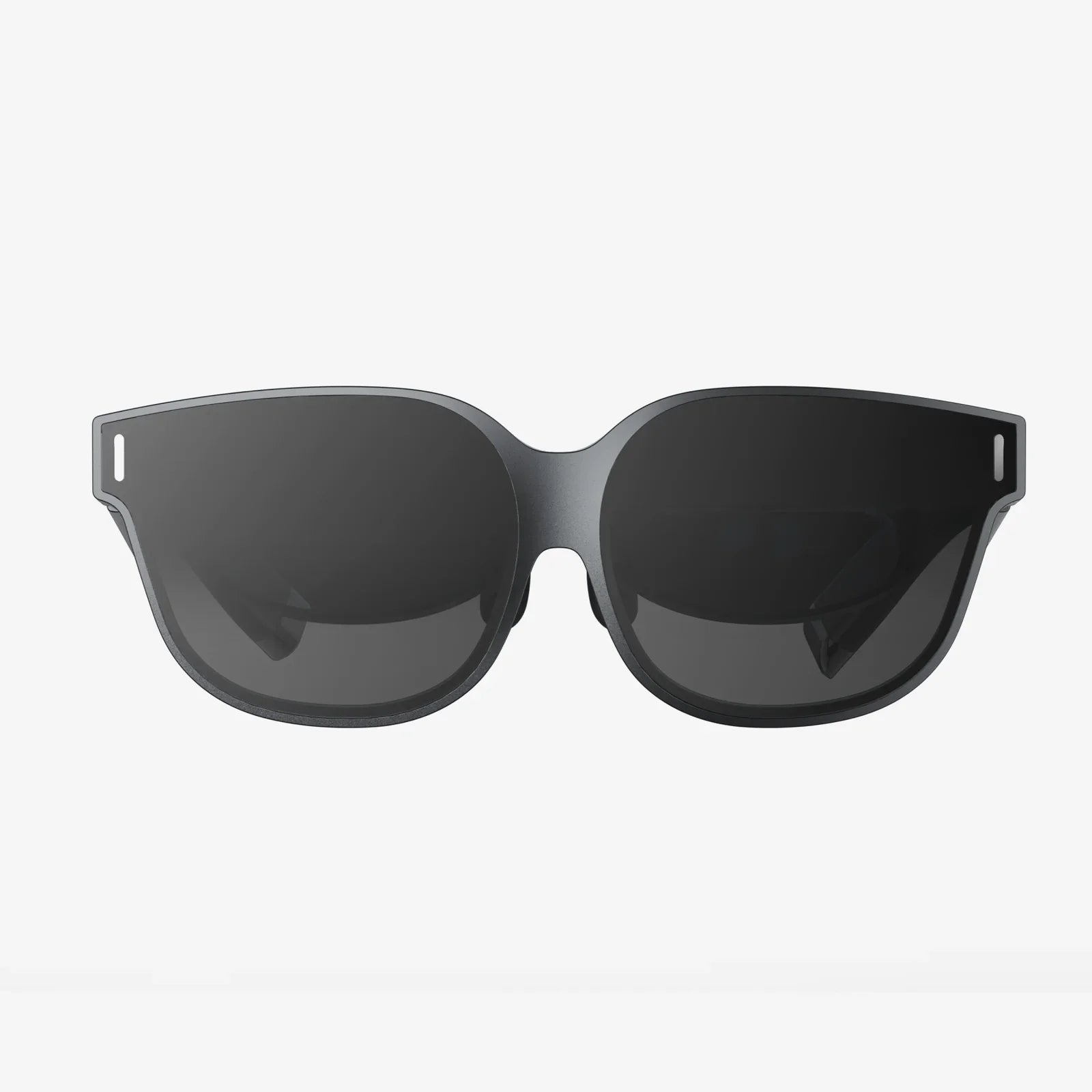
- by wangfred
Spatial Computing Explained: Bridging Our Digital and Physical Worlds
- by wangfred
Imagine a world where digital information doesn't live trapped behind a glass screen but flows freely into the space around you, interacting with your reality as naturally as a chair or a table. This isn't science fiction; it's the emerging paradigm of spatial computing, and it's poised to revolutionize everything from how we work and learn to how we connect and create. The line between the physical and the digital is beginning to blur, and understanding this shift is key to navigating the next chapter of technological evolution.
At its simplest, spatial computing is the practice of using digital technology to create, manipulate, and interact with information that is anchored to, and aware of, the physical space around us. It's an umbrella term that encompasses a spectrum of technologies including augmented reality (AR), virtual reality (VR), and mixed reality (MR), but it goes far beyond them. While AR overlays graphics onto your view and VR immerses you in a synthetic world, spatial computing is the foundational framework that makes these experiences possible and meaningful.
Think of it as the operating system for the next internet—the spatial web. Traditional computing understands clicks, taps, and scrolls. Spatial computing understands gestures, gaze, voice commands, and, most importantly, the three-dimensional world. It enables devices to see, hear, and interpret their environment, allowing for a dialogue between human, machine, and space.
This seamless merging of realities doesn't happen by magic. It's powered by a sophisticated stack of interconnected technologies that work in concert to digitize the world and place information within it.
The first step for any spatial computing system is to perceive the environment. This is achieved through a suite of sensors:
Raw sensor data is useless without interpretation. This is where advanced algorithms and artificial intelligence come into play. Through a process called simultaneous localization and mapping (SLAM), the device constructs a map of an unknown environment while simultaneously tracking its own location within that map.
Beyond just mapping, AI-driven computer vision algorithms classify what the sensors are seeing. They can identify floors, walls, ceilings, tables, chairs, doors, and even specific objects. This allows the digital content to interact intelligently with the physical world—for example, a virtual character can realistically sit on your real sofa, or a digital monitor can appear to be firmly placed on your physical desk.
Once the environment is understood, the system must render digital content and display it to the user in a convincing way. This happens through two primary mediums:
Keyboards and mice are ineffective in a 3D space. Spatial computing introduces intuitive new forms of interaction:
While consumer entertainment is a major driver, the true transformative potential of spatial computing lies in enterprise, industry, and practical daily life.
Engineers and designers can now prototype and interact with 3D models at full scale before a single physical part is built. A car designer can walk around a life-size hologram of a new vehicle, examining every curve and detail. Factory technicians can see assembly instructions overlaid directly onto the machinery they are repairing, reducing errors and training time dramatically.
Surgeons can use AR overlays to visualize a patient's anatomy—such as CT scans or blood vessels—superimposed directly onto their body during an operation, providing x-ray vision. Medical students can practice complex procedures on detailed holographic patients. It also offers powerful tools for physical therapy and cognitive rehabilitation.
Spatial computing makes remote collaboration feel truly present. Instead of a grid of faces on a flat screen, colleagues from around the world can appear as life-like avatars in your room, or you can be transported into a shared virtual workspace. You can collectively brainstorm on a 3D model, annotate the air with ideas, and interact with data in a shared spatial context, breaking down the barriers of distance.
Imagine trying out a new sofa in your living room before you buy it, or seeing how a new shade of paint would look on your walls. Spatial computing enables virtual try-ons for clothes, glasses, and makeup, and allows for the precise placement of virtual furniture and appliances in your home, revolutionizing e-commerce and reducing return rates.
For all its promise, the path to mainstream adoption of spatial computing is not without significant hurdles.
Device form factor remains a challenge—glasses need to become as lightweight, comfortable, and socially acceptable as everyday eyewear. Battery life is another major constraint, as the processing and sensor requirements are immense. Finally, achieving photorealistic graphics that blend perfectly with reality in real-time requires immense, and currently unavailable, computing power.
These devices are, by their very nature, data collection machines. They are continuously scanning and digitizing our most intimate spaces—our homes and offices. This raises profound privacy questions. Who has access to this spatial data? How is it stored and used? Establishing clear, transparent, and user-centric data policies is not just a feature; it is an absolute prerequisite for public trust and adoption.
As digital content becomes increasingly entangled with our physical reality, we must grapple with new social norms. How do we interact with someone who is partially immersed in a digital world? There are also risks of misinformation, digital vandalism, and new forms of addiction. The potential for creating a more accessible world for people with disabilities is enormous, but it must be designed with intention and inclusivity from the ground up.
We are standing at the precipice of a new computing era. The transition from command-line interfaces to graphical user interfaces (GUIs) in the 1980s democratized computing and brought it to the masses. The shift to spatial computing promises a similar seismic shift, moving us from a 2D, screen-bound experience to a 3D, context-aware, and embodied one.
In the coming years, we can expect our digital and physical lives to become increasingly interwoven. The devices will shrink, the experiences will become more compelling, and the applications will become more essential. The internet will cease to be a destination we visit and will instead become a layer seamlessly integrated into our reality.
The door to a world where information is spatial, intuitive, and contextually aware is now open. This isn't just about cooler gadgets or more immersive games; it's about fundamentally augmenting human capability and redefining our relationship with technology itself. The journey into this blended reality is just beginning, and its ultimate shape will be defined by the choices we make today.
Share:
Virtual Reality Apps Glasses: A New Lens on Reality and Human Potential
Virtual Reality Glasses: A Portal to New Realities and the Future of Human Experience