


- by wangfred
Spatial Computing Research News Today: The Next Frontier in Human-Computer Interaction
- by wangfred
Imagine a world where the digital and physical realms are no longer separate, but seamlessly intertwined; where information isn't confined to a screen but is woven into the very fabric of your environment, accessible with a glance or a gesture. This is the promise of spatial computing, and today's research is pushing this boundary further and faster than ever before. The field is exploding with innovations that read less like science and more like science fiction, heralding a fundamental shift in how we will work, learn, and connect. The future is not on the horizon—it's being built in laboratories around the world right now, and the implications are nothing short of revolutionary.
At its core, spatial computing is an umbrella term for processes and tools that capture, process, and interact with 3D data and spaces. It represents a fundamental evolution from traditional computing. Where personal computing was defined by the keyboard and mouse interacting with a 2D desktop, and mobile computing by the touchscreen, spatial computing uses the entire environment as its interface. It leverages a suite of technologies—including augmented reality (AR), virtual reality (VR), mixed reality (MR), computer vision, and artificial intelligence—to understand physical space and allow digital content to interact with it meaningfully.
This paradigm shift is powered by several key technological pillars. Advanced sensor suites, including LiDAR, depth sensors, and high-fidelity cameras, act as the "eyes" of the system, continuously mapping the geometry, objects, and lighting of a room. Simultaneous Localization and Mapping (SLAM) algorithms process this sensor data in real-time to understand the device's position within the space and anchor digital objects persistently. Finally, machine learning models classify objects (is that a chair, a wall, or a person?), understand gestures, and enable natural language commands, making the interaction intuitive and human-centric.
One of the most astounding areas of spatial computing research news today involves moving beyond hand controllers and voice commands to a more direct connection: the brain. Researchers at several leading institutions are making significant strides in non-invasive brain-computer interfaces (BCIs). Using advanced electroencephalography (EEG) caps or functional near-infrared spectroscopy (fNIRS), these systems can interpret neural signals associated with intent.
Recent studies have demonstrated users controlling complex AR interfaces—selecting menus, manipulating virtual objects, or navigating data visualizations—using only their brainwaves. This isn't mere telekinesis; it's a sophisticated translation of motor cortex activity. For instance, a user thinking about moving their left hand might trigger a "select" command. This research holds profound implications for accessibility, offering new modes of interaction for individuals with physical disabilities, and could eventually become a seamless, hands-free standard for all users.
Furthermore, spatial systems are beginning to integrate real-time biometric feedback. By using built-in sensors to monitor a user's pupil dilation, heart rate variability, and facial expressions, the system can infer cognitive load, emotional state, and focus. Today's research is exploring how this feedback loop can be used adaptively. An educational application could detect a student's confusion and automatically present information in a different way. A collaborative design tool could sense rising frustration during a complex task and suggest a break or offer assistance.
While consumer applications often grab headlines, some of the most impactful spatial computing research news today is emerging from industrial and enterprise settings. The concept of the "digital twin"—a perfect, real-time digital replica of a physical object, process, or system—is being supercharged by spatial computing.
Researchers are developing systems where engineers and designers can don a headset and step inside a full-scale, interactive 1:1 model of a new jet engine or a factory floor layout. They can walk around the digital asset, inspect it from every angle, and simulate its performance under extreme stress conditions long before a single piece of physical material is ever procured. This drastically reduces prototyping costs, accelerates iteration cycles, and uncovers potential design flaws that might be missed on a 2D screen.
On the factory floor, spatial computing is enabling what experts call the "industrial metaverse." Maintenance technicians wearing AR glasses can see superimposed schematics, torque values, and animated repair instructions overlaid directly onto the malfunctioning machinery in front of them. They can collaborate remotely with an expert on another continent who sees their exact field of view and can draw annotations into their shared reality. Research is focused on improving the accuracy of object recognition, the stability of digital overlays on moving parts, and the latency of remote collaboration to make these interactions flawless and truly mission-critical.
The healthcare sector is witnessing a remarkable transformation driven by spatial computing research. In surgical applications, the technology is moving from a novel tool to an integral part of the operating theater. Today's research focuses on integrating real-time patient data from CT and MRI scans directly into the surgeon's visual field. A surgeon can look at a patient and see beneath the skin, with critical structures like tumors, arteries, and nerves highlighted with perfect alignment. This "X-ray vision" enhances precision and minimizes risk.
Medical training is also being revolutionized. Traditionally, students learn anatomy from textbooks and cadavers. Spatial computing allows them to explore a hyper-realistic, interactive human body in 3D. They can "hold" a beating heart, peel back layers of muscle, or walk through a detailed model of the human circulatory system. This immersive, hands-on learning leads to dramatically improved knowledge retention and spatial understanding of complex biological systems.
Furthermore, spatial computing is proving to be a powerful tool in mental health treatment. Researchers are using controlled VR environments to conduct exposure therapy for patients with phobias or PTSD in a safe and calibrated manner. For patients undergoing painful procedures or dealing with chronic pain, immersive VR experiences provide a powerful cognitive distraction, reducing perceived pain levels and anxiety. New studies are exploring the use of serene, nature-based virtual environments to manage stress and promote mindfulness and recovery.
Despite rapid progress, spatial computing research faces a significant hurdle: creating digital content that feels truly present and believable in our physical world. Researchers refer to this as overcoming the "uncanny valley of space." It's not just about visual fidelity; it's about physical behavior. A virtual object must respect the laws of physics. It must cast a correct shadow based on the room's real light sources, it should be occluded correctly when a real person walks in front of it, and it needs to have a perceived weight and inertia.
Today's research is tackling this through advanced physics engines and real-time environment analysis. Systems are getting better at understanding the material properties of surfaces—knowing that a digital ball should bounce on a wooden floor but not on a carpet—and simulating accurate lighting and reflections. The goal is photorealistic and physically consistent rendering in real-time, a immense computational challenge that is being met through more efficient algorithms and specialized processing hardware.
As this technology advances, spatial computing research news today is increasingly accompanied by serious ethical inquiries. The very nature of these systems requires them to be constantly aware of their surroundings, which means they are, by design, data collection powerhouses. They continuously capture detailed 3D maps of our homes, offices, and public spaces. They see what we see, and with biometric sensors, they may soon know how we feel about what we see.
This creates an unprecedented privacy challenge. Who owns the digital map of your living room? Could motion data captured in a private space be used to infer sensitive activities? How do we prevent persistent biometric surveillance? Researchers in ethics and computer science are now working in tandem to develop privacy-by-design frameworks for spatial computing. This includes exploring techniques like on-device processing (where data never leaves the headset), differential privacy (adding statistical noise to aggregated data), and clear, user-centric controls over what data is collected and how it is used. Establishing robust ethical guidelines and regulations is not an afterthought; it is a critical prerequisite for the widespread and responsible adoption of this technology.
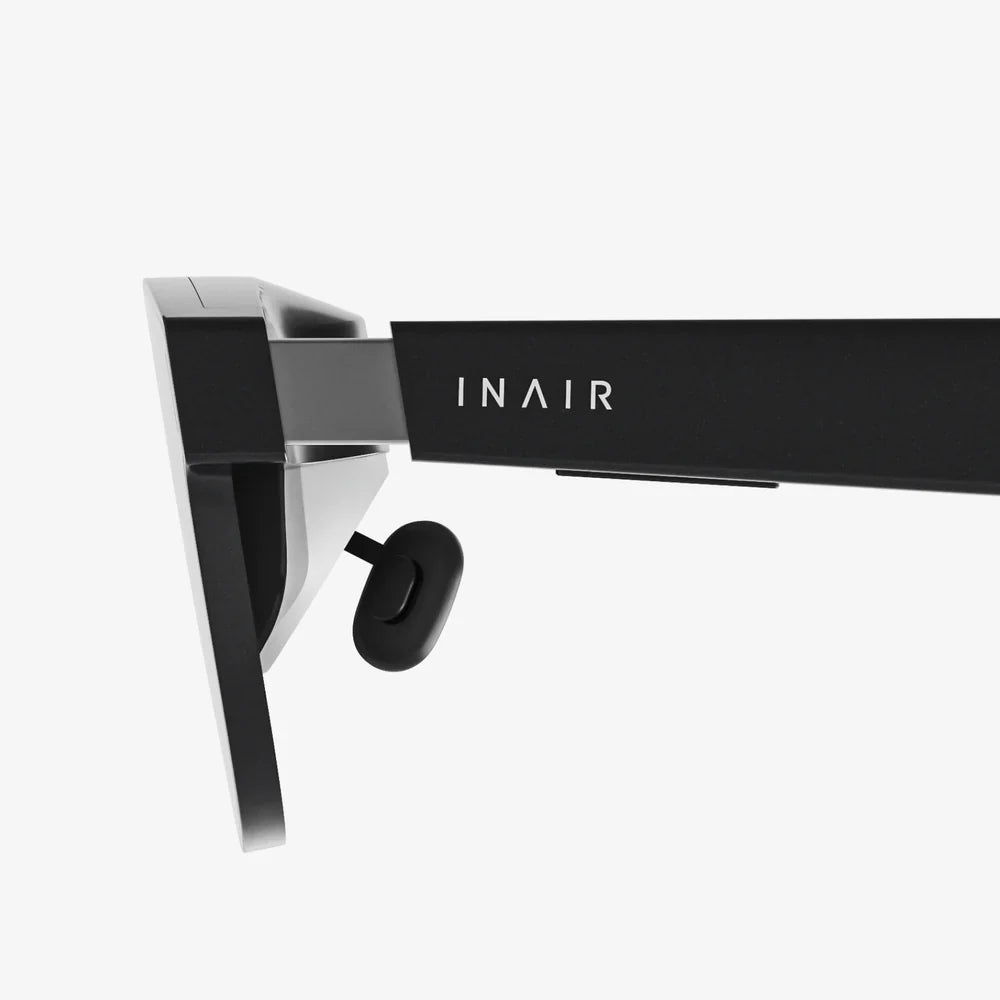
The ultimate goal of much of today's research is to make the technology itself disappear. Current headsets, while powerful, are often bulky, have limited battery life, and can cause user fatigue. The next frontier lies in miniaturization towards more socially acceptable form factors, ultimately aiming for something akin to a standard pair of eyeglasses.
This requires breakthroughs in several areas: ultra-low-power displays, more efficient processing architectures, and advanced battery technology. Research into photonic chips, which use light instead of electricity, and holographic display techniques promises a path to thinner, lighter, and more power-efficient devices. The success of spatial computing hinges on this miniaturization; the technology must become a comfortable and unobtrusive part of our daily lives to achieve its full potential as a pervasive, always-available tool.
From neural control and life-saving medical applications to the reshaping of global industries, the landscape of spatial computing is vibrant and accelerating at a breathtaking pace. The research emerging today is not merely iterative; it is foundational, laying the groundwork for a future where our interaction with technology is as natural and intuitive as interacting with the world itself. The boundary between what is real and what is digital is dissolving, creating a new hybrid reality that will redefine human experience in the 21st century and beyond.
The devices that will deliver this fused reality are already moving from clunky prototypes to sleek, wearable form factors, and the software is evolving from novelty apps into sophisticated platforms that are reshaping billion-dollar industries. This isn't a distant dream for a future generation; the core technologies are being refined and deployed now, setting the stage for a societal shift as profound as the advent of the smartphone or the internet itself. The question is no longer if this future will arrive, but how quickly we can adapt to its possibilities and navigate its challenges to harness its power for human progress.