


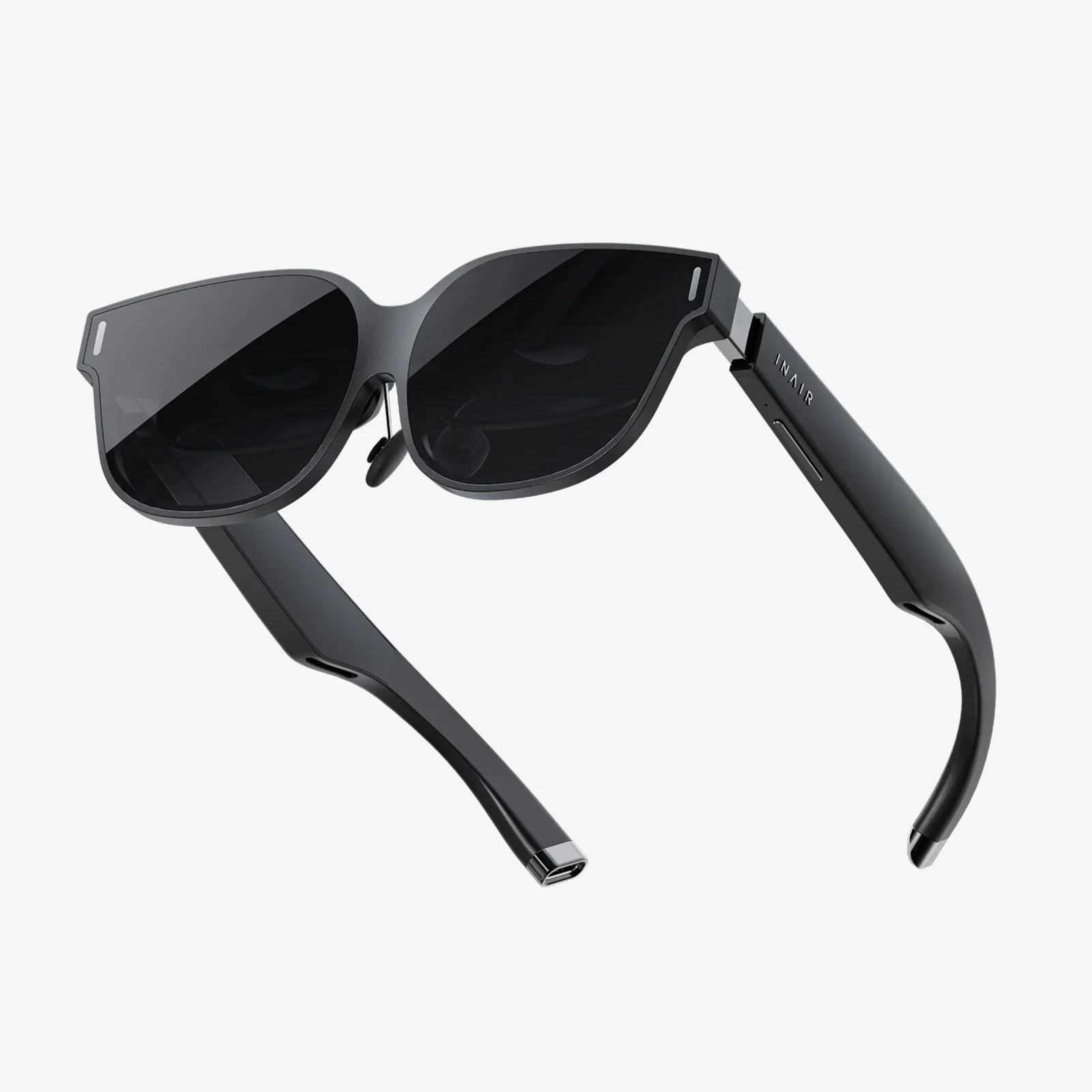
The digital and physical worlds are colliding in ways once confined to science fiction, and the latest spatial computing updates news reveals an industry accelerating at breakneck speed towards a truly blended reality. This isn't just about putting on a headset; it's about redefining the very fabric of how we interact with information, each other, and our environment. From the subtle integration of contextual data into our daily commute to the complete re-imagining of remote collaboration, spatial computing is poised to become as fundamental as the smartphone. The recent flurry of announcements, developer toolkits, and enterprise adoption signals a pivotal moment—the transition from a niche fascination to a mainstream technological pillar. The updates hitting the news now are the foundation upon which the next decade of digital life will be built, making it essential to understand not just the flashy hardware, but the profound software and ethical layers being constructed beneath the surface.
The Hardware Leap: Beyond the Headset
While the core concept of spatial computing is platform-agnostic, recent hardware advancements are the tangible engines powering this revolution. The latest generation of devices showcases a significant maturation, moving beyond clunky prototypes to sophisticated wearables designed for prolonged use.
One of the most significant updates has been the dramatic improvement in visual fidelity and passthrough technology. Early devices often presented a grainy, laggy view of the real world. The newest systems utilize high-resolution cameras and powerful processors to deliver a near-seamless color video feed of the user's surroundings. This high-fidelity passthrough is the critical bridge that allows digital objects to feel authentically placed in a user's space, enabling everything from precise virtual model placement for an architect to reading a physical textbook while having digital annotations appear beside it.
Furthermore, form factor and comfort have seen notable innovation. The industry is diverging into two distinct paths: powerful, all-in-one devices that offer maximum immersion for shorter sessions, and increasingly sleek, lightweight glasses aimed at all-day productivity and contextual information overlay. News from leading research and development labs points to advancements in micro-OLED displays, pancake lenses for slimmer profiles, and novel battery solutions—including potential belt-worn packs and swappable cells—to distribute weight and extend usage.
Perhaps the most underrated yet crucial hardware update lies in sensor fusion and spatial mapping. Modern devices are equipped with a sophisticated array of LiDAR scanners, depth sensors, and high-speed cameras that work in concert to understand a room's geometry, surfaces, and lighting conditions in real-time. This allows for digital content to not only appear in a space but to interact with it realistically—casting accurate shadows, occluding behind physical furniture, and responding to changes in ambient light. This environmental understanding is the silent, invisible hero that makes the magic of spatial computing possible.
The Software Ecosystem: Building the Spatial Web
Hardware is nothing without software, and the most exciting spatial computing updates news revolves around the rapid development of the platforms and tools that will populate this new medium. Developers are being handed increasingly powerful and accessible kits to build the applications of tomorrow.
A major trend is the push towards cross-platform development frameworks. Recognizing that a fragmented ecosystem could stifle innovation, major players are releasing tools that allow developers to build an application once and deploy it across multiple device types and operating systems. This is a critical step towards ensuring a rich and diverse app ecosystem from the outset, preventing the walled gardens that have plagued other tech revolutions. These frameworks handle the complex tasks of spatial mapping, gesture recognition, and physics, letting creators focus on user experience and content.
We are also witnessing the early stages of a standardized "Spatial Web". Similar to how HTTP and HTML created a universal language for the traditional internet, new protocols and file formats are emerging to allow 3D content and experiences to be persistently anchored to locations in the real world. Imagine walking through a city and seeing historical markers, art installations, or restaurant menus pop up—all created by different developers but accessible through a universal browser on your spatial computing device. Updates in this area are laying the groundwork for a shared, collaborative layer of information over our planet.
Finally, the user interface itself is being completely rethought. The paradigm of windows, icons, menus, and pointers (WIMP) is giving way to gesture, gaze, and voice-controlled interfaces. The latest OS updates showcase elegant systems for pinning apps in mid-air, resizing them with a pinch, or dismissing them with a flick of the wrist. Voice assistants are becoming more contextual, understanding not just what you said, but what you're looking at when you say it. This shift represents the most fundamental change in human-computer interaction in forty years.
Enterprise and Industry: The Quiet Revolution
While consumer applications often grab headlines, the most impactful and immediate spatial computing updates news is emerging from enterprise and industrial adoption. Businesses are deploying this technology to solve real-world problems, boost efficiency, and enhance safety, demonstrating a clear return on investment that is fueling further innovation.
In manufacturing and field service, technicians are using spatial computing glasses to access hands-free schematic diagrams, receive remote expert guidance from a colleague who can see their point of view and annotate their reality, and follow step-by-step holographic instructions overlaid directly onto complex machinery. This reduces errors, slashes training time, and minimizes downtime. Updates in this sector focus on ruggedized hardware, ultra-secure data streaming, and integration with existing enterprise IoT and data systems.
The design and architecture industries have been transformed. Teams can now collaborate around full-scale 3D models of buildings or products, walking through them together from different parts of the world. Changes made in a CAD program are instantly reflected in the shared immersive space, enabling a collaborative loop that was previously impossible. Recent software updates have dramatically improved the fidelity and scale of models that can be rendered in real-time, making this practice more accessible and powerful.
Healthcare and medicine represent another frontier bursting with potential. Surgeons are using spatial projections of CT scans to "see inside" a patient before making an incision. Medical students are learning anatomy through interactive 3D holograms instead of cadavers. Therapists are using immersive environments to treat phobias and PTSD. The updates here are not just technological but regulatory, as the industry works closely with medical bodies to ensure these tools meet the rigorous standards required for patient care.
Ethical and Societal Considerations: Navigating the New Frontier
As with any powerful technology, the rapid advancement of spatial computing brings a host of ethical and societal questions that are now dominating serious news analysis. The industry is grappling with these issues in real-time, and the decisions made today will shape our digital future.
The most pressing concern is privacy and data security. These devices, by their very nature, are data collection powerhouses. They have multiple cameras and sensors constantly scanning and analyzing the user's environment. This raises profound questions: Who owns the spatial map of your home? Could this data be used by advertisers, insurers, or law enforcement? How is it stored and secured? Recent news has highlighted a push for "on-device" processing, where spatial data is processed locally rather than sent to the cloud, and the development of clear, user-centric privacy controls that allow individuals to understand and manage what is being collected.
Furthermore, the potential for reality blurring and misinformation is significant. If everyone can anchor their own digital content into shared spaces, how do we distinguish fact from fiction? A malicious actor could place defamatory text over a business entrance or create a convincing but dangerous AR game that leads players into traffic. The industry is exploring digital provenance standards—essentially a certificate of authenticity for AR content—and developing systems for reporting and moderating public spatial experiences.
Finally, the issue of the digital divide looms large. High-cost hardware and the requirement for robust digital literacy could create a new class of "information haves and have-nots." Those with access to spatial computing tools may gain significant advantages in education, employment, and social connection, leaving others further behind. Ensuring equitable access and designing for inclusivity from the beginning is a critical challenge highlighted in forward-looking industry reports.
The Horizon: What's Next for Spatial Computing?
The pace of change is so rapid that today's updates are merely a preview of tomorrow's capabilities. Looking at the trajectory of research and patent filings, several key areas are poised for breakthrough.
Neural interfaces represent a long-term frontier. Instead of using hand gestures or voice, future systems may read faint neuromuscular signals from the wrist or even brainwaves to allow for effortless, silent control of interfaces. This would represent the ultimate step in minimizing the friction between human intent and digital action.
Another area of intense development is photorealistic avatars and volumetric capture. The goal is to move beyond cartoonish representations to digital doubles that are indistinguishable from real human presence, capturing not just appearance but subtle nuances of expression and body language. This would supercharge remote collaboration and social connection, making virtual meetings feel truly authentic.
Finally, the integration with Artificial Intelligence will be the true catalyst. AI will act as the invisible engine, powering context-aware assistants that understand your surroundings and your needs simultaneously. It could automatically generate personalized spatial experiences, translate foreign street signs in real-time, or identify a plant species just by looking at it through your glasses. The fusion of AI's cognitive power with spatial computing's contextual awareness will unlock applications we have yet to even imagine.
The stream of spatial computing updates news is more than just a chronicle of technological progress; it's a live broadcast of the future being assembled piece by piece. This isn't a distant promise—the tools are here, the developers are building, and the foundational shifts are happening now. The next time you see a headline about a new partnership, a software developer kit update, or an enterprise case study, look beyond the specs. You're witnessing the early stages of a fundamental rewiring of human experience, a convergence of the digital and physical that will redefine everything from how we work and learn to how we connect and create. The door to this new reality is now open, and the world is stepping through.
Share:
Virtual Meeting Room VR: The Dawn of a New Collaborative Reality
Head Mounted Display Price - A Deep Dive into the Cost of Immersive Technology