


Imagine a world where the digital and the physical are no longer separate realms, where information doesn't live on a screen but flows seamlessly into your environment, responding to your gaze, your gestures, and the very space around you. This is the promise of the next technological revolution, a future often spoken of in two seemingly similar terms: spatial computing and virtual reality. While they share a technological DNA, they represent profoundly different philosophies for how we, as humans, will interact with machines and data. Understanding the distinction is not just academic; it's about glimpsing the very fabric of our digital future, a future that is already beginning to take shape.
Defining the Realms: Escapism Versus Integration
At its core, the difference between virtual reality and spatial computing is a difference of intent and experience. It is the difference between transportation and augmentation.
Virtual Reality: The Ultimate Escape Pod
Virtual Reality (VR) is an experience of immersion and isolation. Its primary goal is to replace your reality with a simulated one. By donning a head-mounted display that occludes your vision of the physical world, you are visually and audibly transported to a completely digital environment. This environment can be a photorealistic simulation of a real place, a fantastical game world, or a abstract digital space for work or socializing.
The key tenets of VR are:
- Immersion: The feeling of "being there," achieved through stereoscopic 3D visuals, 360-degree head tracking, and spatial audio.
- Isolation: The deliberate blocking out of the physical world to eliminate distractions and sell the illusion of the virtual one.
- Presence: The psychological phenomenon where your brain accepts the virtual environment as real, a state that is the holy grail of VR design.
VR is a destination. You go into VR to play a game, attend a concert, or train for a complex procedure. It is an all-encompassing, dedicated experience.
Spatial Computing: The Invisible Interface
Spatial computing, on the other hand, is not a destination but a layer. It is a technology framework that allows a computer to understand and interact with the three-dimensional space around it. Instead of replacing your reality, it enhances it by blending digital content contextually within your existing environment.
Think of it as the evolution of the user interface. We moved from command lines to graphical user interfaces (GUIs) on screens. Spatial computing is the shift from the confined 2D screen to the infinite canvas of the 3D world. It encompasses a suite of technologies including augmented reality (AR), mixed reality (MR), and the AI and sensor systems that make them possible.
The key tenets of spatial computing are:
- Contextual Awareness: The system understands the geometry of the room, the surfaces, the objects, and even the people within it.
- Persistent Digital Objects: A virtual screen you place on your wall remains there, even after you take the device off and put it back on later.
- Seamless Integration: Digital information is presented as a natural part of the physical world, not as a separate app on a separate screen.
You don't go into spatial computing; you wear it, and it works with you throughout your day.
The Technological Chasm: How They Achieve Their Goals
While both VR and spatial computing headsets may look similar—goggles worn on the face—their internal priorities and technological implementations differ significantly to serve their distinct purposes.
The VR Hardware Paradigm: Total Sensory Control
Since the goal of VR is complete immersion, its hardware is engineered for high performance within a closed loop. The focus is overwhelmingly on:
- High-Resolution Displays: To minimize the "screen door effect" and make the virtual world as crisp and believable as possible.
- High Refresh Rates: Critical for maintaining smooth visuals and preventing motion sickness, often targeting 90Hz, 120Hz, or even higher.
- Precise Inside-Out Tracking: Advanced cameras and sensors map the room not to integrate with it, but to create a safe "guardian" boundary for the user to avoid hitting physical walls and to enable room-scale experiences where you can walk around within the virtual space.
- Specialized Controllers: These are designed to be held in the hand and tracked in 3D space, becoming virtual hands, tools, or weapons within the simulation.
The VR headset is a high-performance engine built to render convincing worlds, often at the cost of being bulky and tethered to a powerful external computer.
The Spatial Computing Hardware Paradigm: Perceiving the Real World
Spatial computing devices are, first and foremost, perception engines. Their primary job is to see and understand the world as you see it. This requires a radically different set of hardware priorities:
- Advanced Sensor Arrays (LiDAR, Depth Sensors, Cameras): A complex array of sensors continuously scans the environment to create a real-time 3D mesh, understanding depth, distance, and the properties of surfaces.
- Transparent Displays or Video Passthrough: Instead of opaque screens, these devices use either optical see-through (semi-transparent lenses that overlay digital images) or high-resolution video passthrough (cameras that feed the real world to the displays, with digital content added on top). This requires incredibly low latency to avoid making the user feel sick.
- On-Device Processing and AI: The immense data from the sensors must be processed in real-time to identify objects, people, and gestures. This demands powerful, integrated chipsets and neural engines for machine learning tasks like hand-tracking and scene understanding.
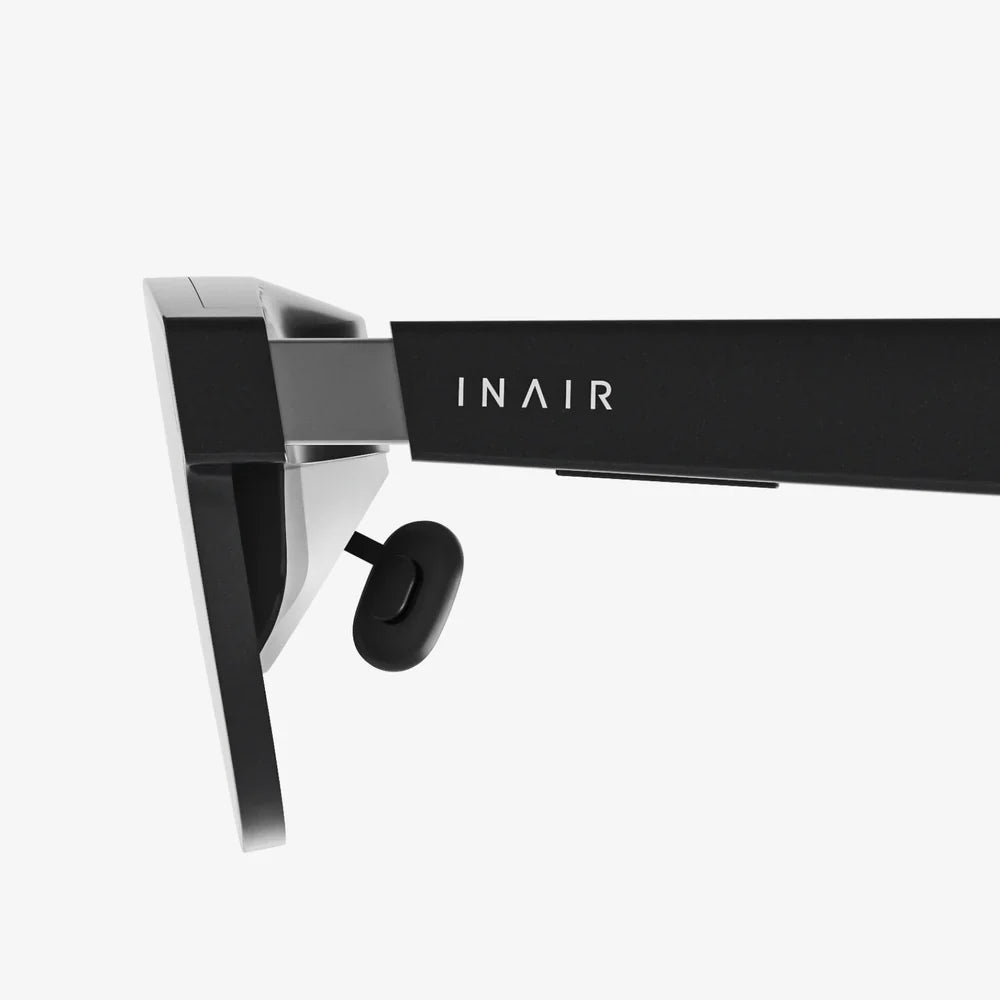
- Battery Life and Form Factor: Because the goal is all-day usability, these devices prioritize efficiency, striving for a glasses-like form factor that is socially acceptable and comfortable for prolonged wear.
The spatial computer is a sensor-packed marvel of contextual awareness, trading raw graphical power for intelligence and integration.
A Tale of Two Use Cases: Applications in the Wild
The philosophical and technological divergence naturally leads to entirely different application landscapes. One creates new worlds; the other enhances our own.
The Virtual Reality Domain: Specialized Immersion
VR excels in applications where total focus and a controlled environment are beneficial or essential.
- Gaming and Entertainment: This is VR's strongest suit. It offers unparalleled immersion, allowing players to step inside their favorite games and experience movies and concerts as if they were truly present.
- Training and Simulation: From training surgeons on virtual procedures to preparing soldiers for combat scenarios or training astronauts for spacewalks, VR provides a safe, repeatable, and cost-effective environment to practice high-stakes skills.
- Therapy and Exposure Treatment: Psychologists use VR to safely expose patients to their fears (like heights, flying, or public speaking) in a controlled, gradual manner.
- Virtual Collaboration and Social Spaces: While still nascent, platforms exist where avatars of people can meet in a virtual boardroom, classroom, or social hall, sharing a sense of physical co-presence that video calls cannot provide.
The Spatial Computing Domain: The Pervasive Layer
Spatial computing's applications are broader and more integrated into the fabric of daily life and work.
- Remote Assistance and Guidance: A remote expert can see what a field technician sees and draw arrows and diagrams directly into their field of view, pointing precisely to the component that needs repair.
- Design and Prototyping: Architects and interior designers can place full-scale 3D models of their designs into an empty physical space. Engineers can examine a digital twin of a complex machine, seeing internal parts and data overlays.
- Contextual Information and Navigation: Walking through a city, historical facts could pop up next to landmarks. Inside a supermarket, you could see recipe suggestions and a path through the aisles to find your ingredients.
- The Future of Work: Instead of multiple physical monitors, a professional could have dozens of virtual screens arrayed around them in their physical workspace, accessible from anywhere.
The Convergence and The Future: A Blended Existence
While it's useful to define them separately, the line between VR and spatial computing is becoming increasingly blurred. The most advanced headsets are now "MR-capable," meaning they can function in both modes. You can put them on and see your physical room with digital windows pinned to your walls (spatial computing), and then with a click, transform your entire environment into a virtual cinema or game level (virtual reality).
This convergence is the true path forward. The same device will be a portal for escape and a tool for productivity. The underlying technology—the ability to understand space—is the foundational layer that enables both. Spatial computing is the broader umbrella term for the technology that allows computers to operate in and understand 3D space. VR is one powerful application of that technology, focused on creating immersive simulations.
The ultimate goal is not to choose between the real and the virtual, but to have the freedom to slide along the spectrum between them as the task demands. This will require even more advanced displays, more intelligent AI, and ultimately, a form factor that is as lightweight and socially normalized as a pair of everyday glasses.
The journey from the glowing rectangle in our pockets to a world alive with digital information is already underway. It's a shift as profound as the move from the command line to the graphical desktop. It won't happen overnight, but the trajectory is clear. We are moving towards a future where computing is not something we go to, but something that is simply there, woven into the very fabric of our reality, enhancing our capabilities, enriching our understanding, and expanding our experiences in ways we are only beginning to imagine. The question is no longer if this future will arrive, but how quickly we will adapt to and shape this new, spatially aware world.
This isn't just about better gadgets; it's about redefining the human-computer relationship itself, moving from interacting with a device to interacting with our world through a device. The next time you hear about a new headset, ask yourself: is it built to help you escape your world, or to help you see it in a whole new light? The answer will tell you everything you need to know about the next chapter of digital life.
Share:
Personalized Spatial Audio: The Ultimate Immersive Sound Experience
Better Digital Workplace: The Ultimate Blueprint for Productivity and Culture