


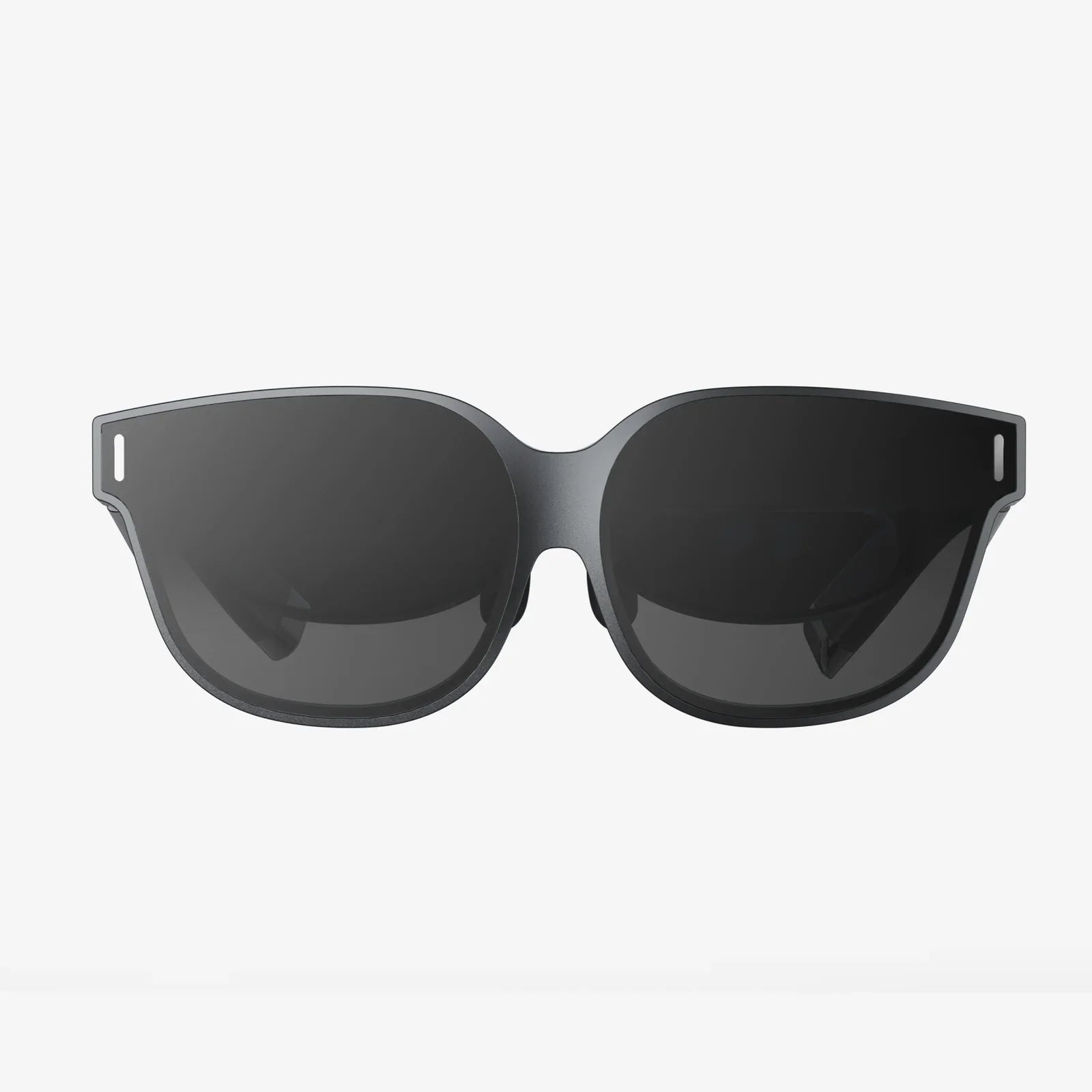
Imagine a world where data isn't confined to spreadsheets and flat screens but exists all around you, occupying physical space and responding to your touch, your gaze, and your voice. This is the promise of spatial visualization—a technological revolution that is fundamentally altering how we perceive, interact with, and understand information. We are standing at the precipice of a new era where the digital and physical realms converge, creating immersive, three-dimensional experiences that promise to enhance human capability in ways previously confined to science fiction.
The Evolution of Perception: From 2D to 3D
Human beings are inherently spatial creatures. Our brains have evolved to navigate a three-dimensional world, processing depth, distance, and relationships between objects with astonishing speed and accuracy. For decades, however, our primary interface with digital information has been frustratingly two-dimensional. The transition from command-line interfaces to graphical user interfaces (GUIs) with windows, icons, and pointers was a monumental leap forward, but it still trapped information on a flat plane.
The journey towards true spatial visualization began with simple 3D modeling software used by architects and engineers. These were specialized tools for specialized tasks. The real shift started with the gaming industry, which poured billions into developing engines capable of rendering complex, real-time 3D environments. This technology then bled into virtual reality (VR) and augmented reality (AR), creating the hardware and software foundation necessary for the spatial computing revolution we see today. We are now moving from Graphical User Interfaces to Spatial User Interfaces (SUIs), where the interface is the environment itself.
How Spatial Visualization Works: Beyond the X and Y Axes
At its core, spatial visualization is about adding the Z-axis to our digital experiences. It involves creating, manipulating, and interpreting data representations that have volume, occupy virtual space, and can be viewed from any angle. This process relies on a sophisticated stack of technologies.
First, there's the capture of spatial data. Technologies like LiDAR (Light Detection and Ranging), photogrammetry, and advanced scanning systems allow us to create precise digital twins of physical objects and environments. These are not just photographs; they are mathematically accurate 3D models built from millions of data points.
Second, there is the rendering engine. Powered by increasingly powerful processors and specialized graphics units, these engines calculate light, shadow, texture, and physics in real-time to create a believable, immersive world. Finally, there are the interaction paradigms. This includes everything from hand-tracking controllers and haptic feedback gloves to eye-tracking and voice commands, all designed to make the manipulation of 3D data feel as natural as picking up a coffee cup.
Transforming Industries: The Practical Power of 3D
The implications of moving from 2D plans to immersive 3D models are profound across nearly every sector of the economy. This is not merely a novelty; it is a tool for solving complex problems with greater efficiency and clarity.
Medicine and Healthcare
In healthcare, spatial visualization is saving lives. Surgeons can now step inside a detailed 3D model of a patient's heart, brain, or vascular system before making a single incision. They can practice complex procedures, identify potential complications, and plan the optimal surgical pathway. Medical students can move beyond textbooks and dissect virtual cadavers from every conceivable angle, gaining a deep, intuitive understanding of human anatomy that was previously impossible to achieve. Radiologists are using AR to overlay 3D scans directly onto a patient's body during procedures, effectively granting them X-ray vision.
Architecture, Engineering, and Construction (AEC)
The AEC industry is being rebuilt on a foundation of spatial data. Architects and clients can don a headset and walk through a full-scale, photorealistic model of a building long before the foundation is poured. They can assess sightlines, test material choices, and identify design flaws that would never be caught on a 2D blueprint. On construction sites, AR glasses can project the digital building model onto the physical space, showing workers exactly where to place a beam or run a conduit, drastically reducing errors and rework.
Urban Planning and Smart Cities
City planners are using spatial visualization to create digital twins of entire cities. These living models incorporate real-time data on traffic flow, energy consumption, population density, and emergency services. Planners can simulate the impact of a new public transit line, visualize shadow patterns cast by proposed skyscrapers, or manage disaster response scenarios in a risk-free virtual environment. This allows for more sustainable, efficient, and resilient urban development.
Education and Research
Education is undergoing a spatial revolution. Instead of reading about ancient Rome, students can walk its streets. Instead of staring at a flat diagram of a molecule, they can hold it in their hands, watching atoms bond and react. Geologists can traverse virtual canyons, and astrophysicists can fly through a simulation of the Milky Way. This experiential learning fosters a deeper, more intuitive form of comprehension, moving from memorization to true understanding.
The Human Brain: Wired for a 3D World
The power of spatial visualization lies in its alignment with human cognition. Our brains possess a remarkable "spatial memory" system. We remember the location of things in physical space far more easily than abstract facts on a page. This is why you might forget a name but remember exactly where you were standing when you met the person. By presenting information spatially, we tap into this innate capability.
Complex data sets that would be overwhelming in a spreadsheet become instantly comprehensible when represented as a 3D landscape. Trends, patterns, and outliers that might be missed in two dimensions suddenly become obvious in three. This reduces cognitive load and allows for faster, more insightful decision-making. It enables a form of "embodied cognition," where we understand something not just intellectually but through the experience of interacting with it.
Challenges on the Horizon
Despite its immense potential, the path to widespread adoption of spatial visualization is not without obstacles. The technology required—high-resolution headsets, powerful computers, precise sensors—is becoming more accessible but still represents a significant investment. There is also a considerable learning curve; designing intuitive and effective spatial interfaces requires a completely new design language that is still being written.
Furthermore, ethical and societal questions loom large. As we create increasingly detailed digital twins of our world and ourselves, issues of data privacy, security, and ownership become paramount. The potential for a new "digital divide" also exists, separating those who have access to these powerful tools from those who do not. Finally, we must be mindful of the physiological effects of prolonged immersion in virtual environments, from eye strain to cybersickness.
The Future is Spatial
Looking ahead, the trajectory is clear: the digital world will continue to become more spatial, more immersive, and more integrated with our physical reality. The concept of the "metaverse," a persistent network of interconnected 3D virtual spaces, is essentially the ultimate expression of spatial visualization. We are moving towards a future where we will not "go online" but will simply "be online," with digital information seamlessly layered over our perception of the real world through lightweight, ubiquitous AR glasses.
Advancements in artificial intelligence will supercharge this evolution. AI will be able to generate complex 3D environments and models on demand, interpret our intentions from subtle gestures, and manage the immense data flows required to make these worlds feel real. The line between creator and consumer will blur, as intuitive tools allow anyone to sculpt in virtual clay, design in virtual space, and share their creations with the world.
The flat screen has been a wonderful window into the digital realm, but it is ultimately a barrier—a pane of glass separating us from the information we seek. Spatial visualization is shattering that glass, inviting us to step through and not just see data, but to stand within it, to walk around it, and to understand it with our entire being. This is more than a new technology; it is a new form of literacy, a new way of seeing, and the next logical step in humanity's endless quest to map, measure, and make sense of the beautiful complexity of our world.
Share:
Most Advanced Wearable Tech: Beyond the Wrist and Into the Future
Most Advanced Wearable Tech: Beyond the Wrist and Into the Future