


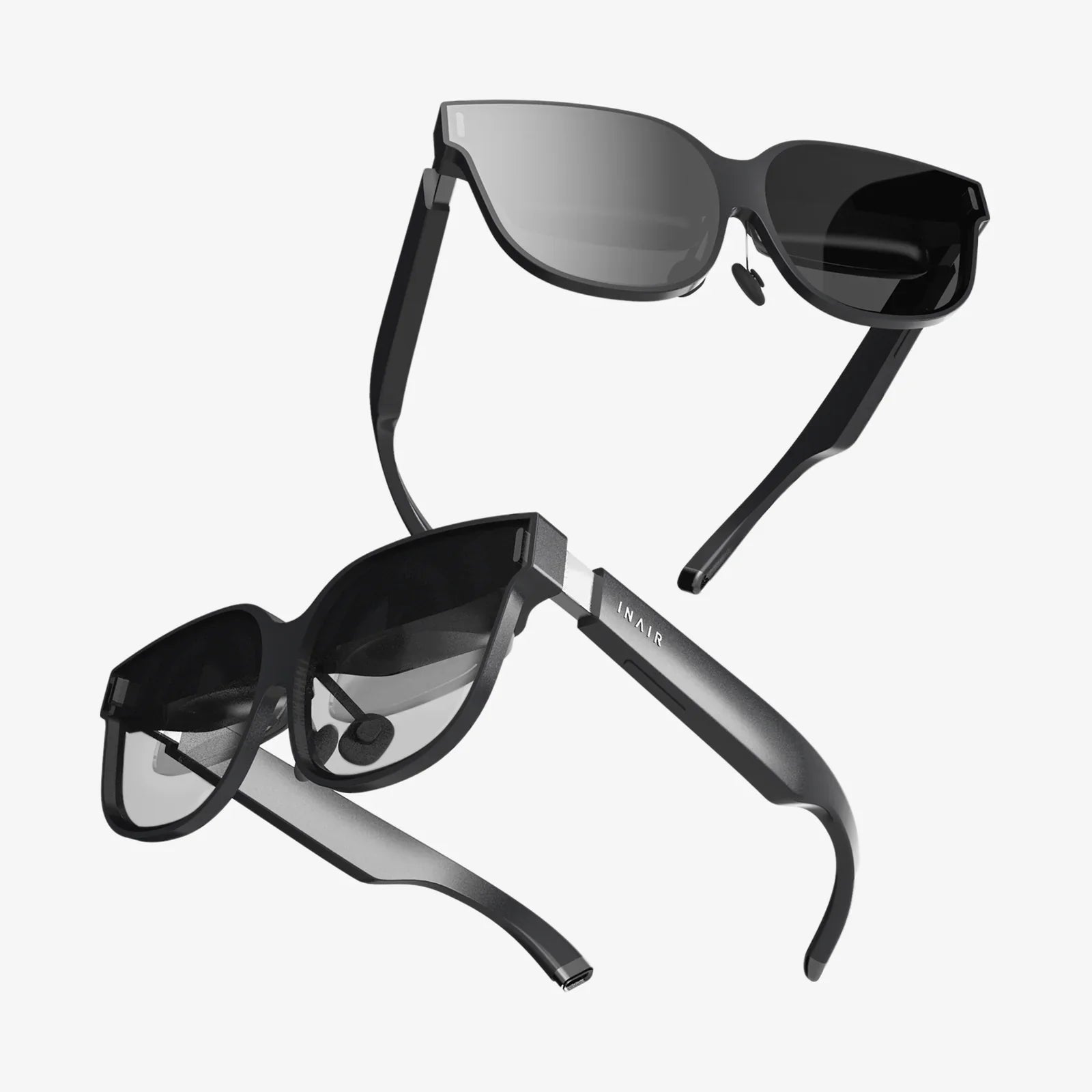
- by wangfred
Spectacles Let You See Augmented Reality: The Future on Your Face
- by wangfred
Imagine walking down a bustling city street, and with a simple glance, the world around you transforms. Restaurant reviews float above their doorways, navigation arrows are painted onto the sidewalk guiding your way, and a message from a friend appears, superimposed over the very building they’re describing. This isn’t a scene from a science fiction film; it’s the imminent future, and it’s being delivered through a familiar, everyday object: spectacles. The era where spectacles let you see augmented reality is dawning, promising to fundamentally reshape our perception of reality itself, merging the boundless potential of the digital realm with the rich tangibility of the physical world.
For decades, our interaction with digital information has been confined to the tyranny of the rectangle. We stare at screens—first on desktops, then on laptops, and now on the smartphones we clutch in our hands. This paradigm, while revolutionary in its own right, creates a barrier. It forces us to look at a device rather than through it to the world beyond. Augmented reality (AR) seeks to shatter this barrier, and spectacles are the perfect vehicle to do it. Unlike virtual reality, which seeks to replace your world entirely, AR aims to enhance it, layering context, information, and imagination directly onto your field of view.
The goal is nothing short of intuitive computing. Instead of searching for information, the information finds you, presented in the context where it is most relevant and useful. This shift from pull to push, from active searching to passive receiving of contextual data, represents one of the most significant changes in human-computer interaction since the graphical user interface.
Creating a pair of spectacles that can seamlessly blend light from the real world with light from a digital projector is a feat of optical engineering. It requires a sophisticated fusion of hardware and software, all miniaturized to fit into a form factor that is comfortable, socially acceptable, and aesthetically pleasing.
At the heart of any AR spectacle is its display system. Several competing technologies are vying for dominance, each with its own advantages.
For digital content to interact with the physical world, the spectacles need to understand that world. This is achieved through a sophisticated array of sensors.
All this sensor data must be processed in real-time. This requires immense computational power, which presents a challenge: fitting a powerful processor and battery into the slim arms of a pair of spectacles. Current solutions often involve a split architecture. Some processing happens on-board for low-latency tasks like tracking, while more complex computations, like object recognition or rendering high-fidelity graphics, can be offloaded to a companion device, like a smartphone, or, in the future, to powerful cloud servers via high-speed wireless connections.
The true power of AR spectacles lies not in the technology itself, but in the profound ways it can augment human capability across nearly every facet of life.
The concept of the "desktop" will be completely redefined. Imagine an architect walking through a construction site, seeing the digital blueprints overlaid perfectly onto the steel framework. A surgeon could have vital signs and 3D anatomical guides visible during a complex procedure without ever looking away from the patient. For a field technician, step-by-step repair instructions could be visually annotated onto the machinery they are fixing. The potential to provide "just-in-time" information, hands-free, will make specialized work safer, more efficient, and more accurate.
Communication will become more spatial and embodied. A video call will no longer be a window on a screen but a life-sized hologram of a person sitting across from you at your kitchen table, able to gesture and interact with your environment. Social media will evolve from a feed you check to an environment you inhabit, with shared digital artifacts and memories anchored to specific locations for you and your friends to discover.
Education will become an immersive experience. History students won’t just read about ancient Rome; they will walk through a digitally reconstructed Forum. Biology students could dissect a virtual frog or watch a human heart pump in three dimensions, floating in the center of their classroom. Museums will come alive, with exhibits explaining themselves. This contextual, experiential learning has the potential to dramatically improve comprehension and retention.
Getting lost will become a thing of the past. Turn-by-turn navigation will be painted onto the street itself. When traveling in a foreign country, street signs and menus could be translated in real-time. In a large airport, your gate number and a path to it would be clearly marked over the concourse. This technology also holds promise for those with visual impairments, potentially highlighting obstacles or reading out text from the environment.
For all its promise, the path to ubiquitous AR spectacles is fraught with significant hurdles that must be overcome.
The current generation of AR spectacles are like the mobile phones of the 1980s—bulky, expensive, and with limited functionality, but hinting at a revolutionary future. The next decade will be defined by rapid miniaturization and integration. We will move from devices that are "spectacles with AR" to ones that are simply "spectacles," with AR as a seamless, invisible function.
Eventually, the technology may become so miniaturized that it can be integrated into standard corrective lenses or even contact lenses, becoming an invisible part of our being. The user interface will evolve from gestures and voice commands to direct neural input, allowing us to control digital elements with a thought. This convergence of human and machine, of biology and technology, is the ultimate destination of this journey.
The day is fast approaching when putting on your spectacles in the morning will be akin to booting up your world. You’ll check the weather by looking out the window, read your messages in the air beside your coffee cup, and join a meeting with colleagues who appear to be sitting around your table. This is the profound promise of a technology that doesn’t seek to distract us from reality, but to make our reality richer, more informed, and more connected than ever before. The spectacles on your face will become the most powerful portal you own, not to a virtual escape, but to a deeper understanding of the world right in front of you.
Share:
XR (AR & VR) Can Be Used For: Transforming Industries and Redefining Reality
Software Used in Augmented Reality: The Invisible Engine Powering a New Digital Layer on Reality