


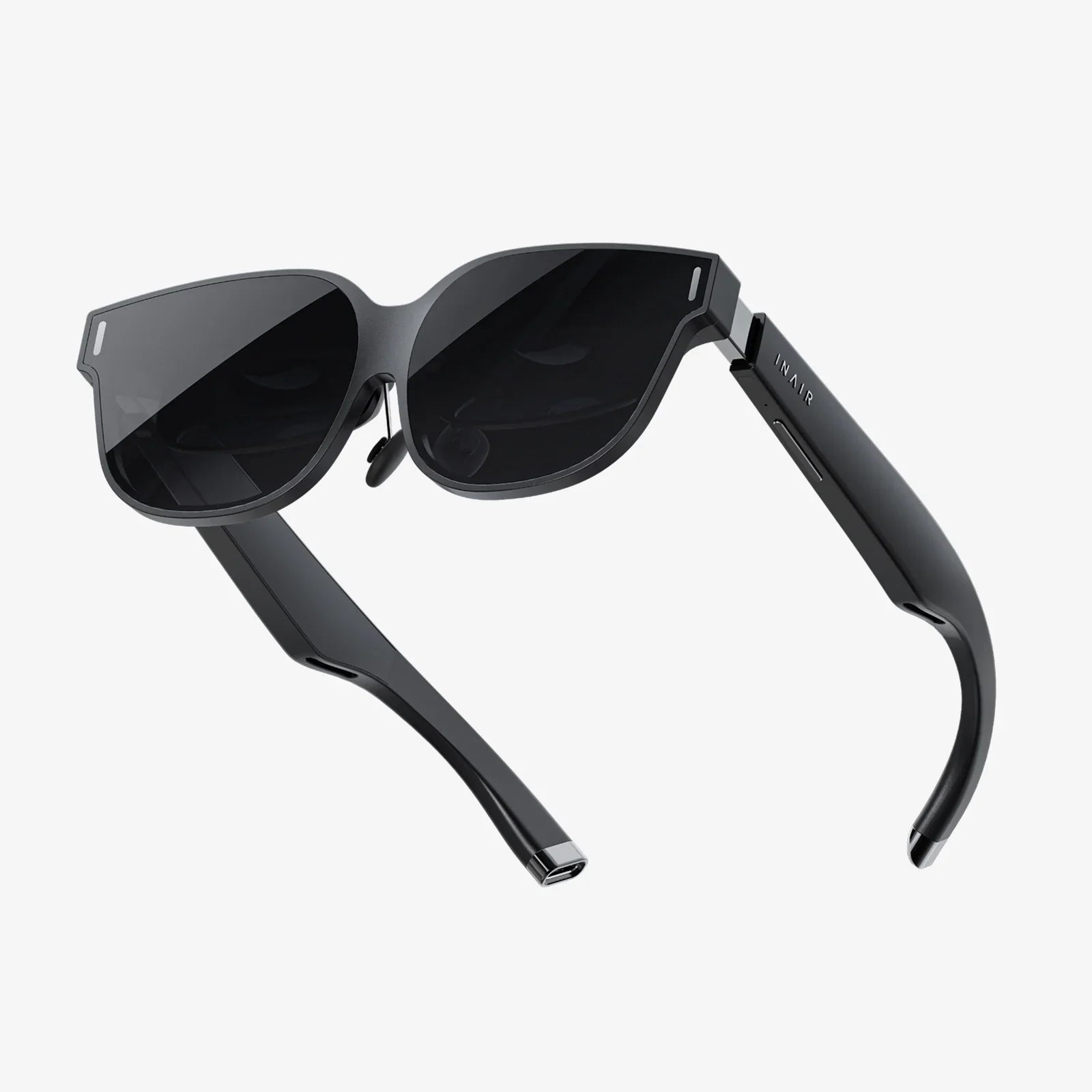
- by wangfred
Standalone AR Glasses: The Unchained Future of Computing is Here
- by wangfred
Imagine a world where information doesn't live on a screen in your pocket or on your desk, but floats seamlessly in the air around you, accessible with a glance and interactable with a gesture. This isn't a scene from a science fiction film; it's the imminent future being unlocked by a revolutionary piece of technology: standalone augmented reality glasses. These devices, untethered from any external hardware, promise to fundamentally redefine our relationship with computing, information, and each other, heralding the dawn of a truly immersive and spatially-aware digital era.
The term "standalone" is crucial and often misapplied. It signifies a complete paradigm shift. Unlike earlier AR systems that relied on a constant, high-bandwidth connection to a powerful smartphone or a desktop computer to handle processing, graphics rendering, and data streaming, standalone AR glasses are a self-contained computing platform. They are, in essence, a wearable computer designed explicitly for spatial computing.
This independence is powered by a sophisticated fusion of miniaturized technologies integrated directly into the eyewear frame:
The real wizardry of standalone AR glasses lies in their ability to perceive and understand the world as you do. This process, known as simultaneous localization and mapping (SLAM), happens continuously and in milliseconds. The sensors capture raw data about the environment, which the onboard processor fuses together. Cameras identify visual features, depth sensors gauge distance, and IMUs track the precise movement and orientation of the glasses themselves.
This processed data creates a persistent, digital twin of your physical space. It understands where the walls, floor, and ceiling are. It can recognize a table and allow you to place a virtual chessboard on it that stays locked in place even if you walk away and return. This persistent understanding is the foundation upon which digital content can be convincingly anchored to the real world.
The display technology, often using waveguides or micro-LEDs, then projects generated light into your eyes, layering images and interfaces onto your field of view. The goal is to achieve a wide field of view, high resolution, and high contrast to make virtual objects appear solid and real, all while maintaining a form factor that is socially acceptable and comfortable to wear for extended periods.
The potential applications for this technology stretch far beyond novelty filters or simple games. Standalone AR glasses are poised to become a ubiquitous tool, transforming every major industry.
For knowledge workers and field technicians alike, the impact will be profound. Imagine an architect walking through a construction site, seeing the digital blueprints overlaid perfectly onto the unfinished structure, identifying potential clashes between systems before they are built. A surgeon could have vital signs, 3D anatomical models, and guidance systems visible during a procedure without ever looking away from the patient. A remote collaborator could appear as a photorealistic hologram sitting in the empty chair next to you, able to interact with and manipulate 3D models you are both reviewing, making distance irrelevant.
Social media will evolve from a feed on a screen to a shared experience in space. You could watch a movie with a friend who lives across the country, with both of you seeing the film play on a virtual big screen on your respective walls, your avatars sitting together on a virtual couch. Live sports could be enhanced with real-time stats floating above the field, and you could choose your camera angle from anywhere in the stadium. Gaming will explode into the physical world, turning your living room into a dungeon to explore or your local park into a battlefield teeming with digital creatures.
On a more mundane but equally powerful level, standalone AR will serve as an invisible guide. Walking through a foreign city, directional arrows can be painted onto the sidewalk, and translations of street signs can appear instantly. In your kitchen, a recipe could be pinned right above your mixing bowl, automatically progressing to the next step as you complete each task. Your calendar for the day could hover by the door as you leave, reminding you of your first meeting.
For this future to become a mainstream reality, significant hurdles must be cleared. The path to perfection is fraught with technical and social challenges.
Looking ahead, the trajectory is clear. The first generation of devices is laying the groundwork, solving core technological problems. The next five to ten years will see rapid iteration: glasses will become lighter, displays brighter and wider, batteries longer-lasting, and interactions more natural.
We will move from a model of occasional use for specific tasks to all-day wear, where the glasses become our primary computing interface, eventually replacing our smartphones, watches, and laptops. They will evolve into a personalized AI assistant that sees what we see, hears what we hear, and provides contextually relevant information exactly when and where we need it, all while staying out of our way.
This is not merely an incremental step in technology; it is the beginning of a fundamental shift in human-computer interaction. It's the move from looking at a device to looking through a device into an enhanced reality. The digital world, which we currently retreat into on our screens, will instead be brought out to enrich our physical world.
The race to perfect this technology is more than a competition between tech giants; it's a collective push towards a new platform, a new internet, and a new way of being. The promise of standalone AR glasses is a world where technology fades into the background, enhancing our human capabilities without isolating us, making us more connected, more knowledgeable, and more efficient, all while leaving our hands free and our eyes up to engage with the real world unfolding around us. The future isn't something we will watch on a screen; it's something we will step into and see all around us.