


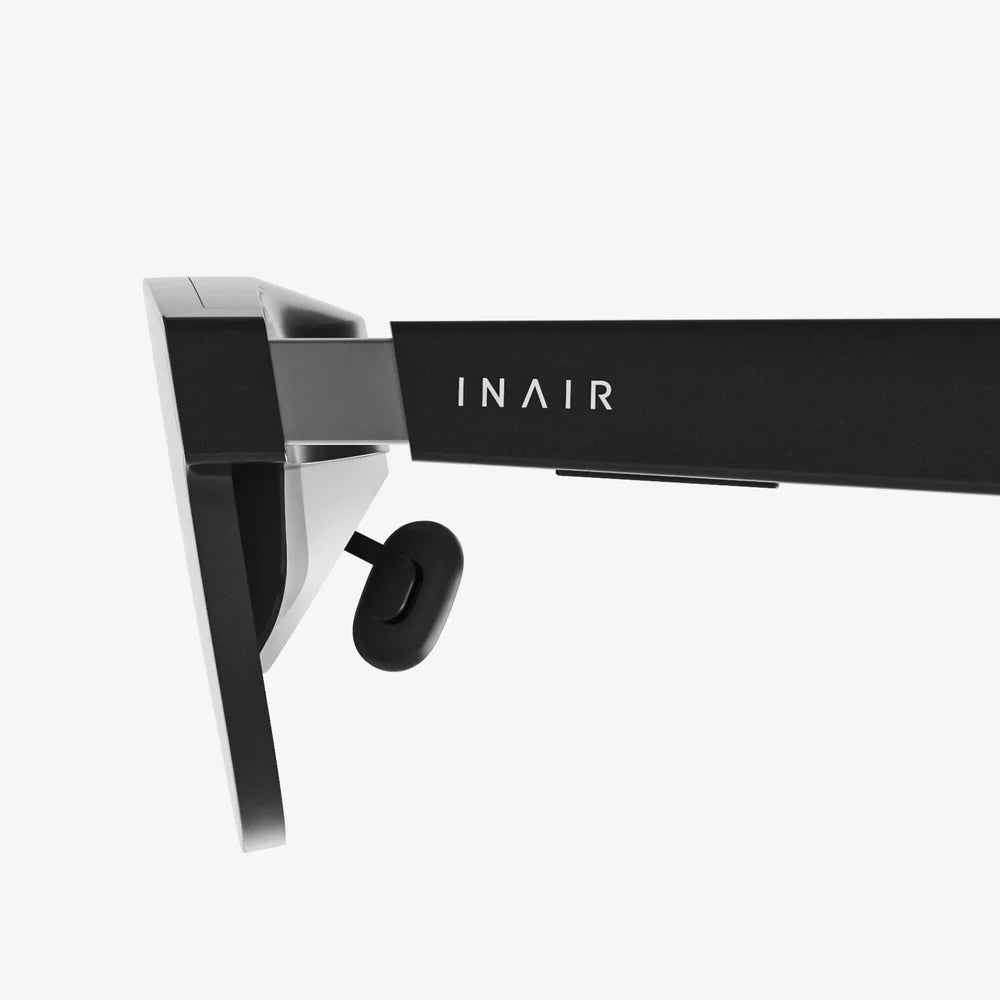
- by wangfred
Tangible Interaction Platform for AR VR: Bridging the Digital and Physical Divide
- by wangfred
Imagine reaching out and feeling the intricate texture of a digital sculpture, turning a virtual knob with the same satisfying click as a physical one, or collaborating with a colleague on a holographic engine model as if you were both standing in the same garage. This is not a distant sci-fi fantasy; it is the imminent future being built today through tangible interaction platforms for AR and VR. This emerging technological frontier promises to shatter the last remaining barrier between our physical reality and the vast digital worlds we are creating, moving us beyond screens and controllers into an era of intuitive, embodied computing. The implications are staggering, poised to revolutionize everything from how we work and learn to how we connect and create.
The journey of how we communicate with machines has been a long and winding road from punch cards to command lines, from the graphical user interface (GUI) to the multi-touch screen. Each leap made technology more accessible, more intuitive, and more powerful. Virtual and Augmented Reality represented a monumental shift, immersing us in digital environments or overlaying information onto our world. Yet, for all their immersive potential, they often relied on a familiar paradigm: the controller. While effective, a gamepad or motion-tracked wand remains an abstraction—a symbolic tool that maps buttons and gestures to actions within the digital realm. It creates a layer of translation between the user's intent and the outcome. Tangible interaction platforms seek to remove this layer entirely. The goal is not to learn a new interface, but to use the interface we were born with: our hands and our innate understanding of physical objects and their properties.
So, what exactly is a tangible interaction platform for AR and VR? It is a unified system comprising hardware and software that enables users to physically manipulate digital content through real-world objects, surfaces, and tools, providing genuine haptic (touch) feedback. It is the synthesis of three core components:
These are the real items a user interacts with. They can be generic, multifunctional objects like cubes, spheres, or tools that can be dynamically reassigned different digital functions. Alternatively, they can be highly specific, custom-made props, like a steering wheel for a driving simulator or a sculpting tool for a digital artist. These objects are often tracked with sub-millimeter precision using inside-out cameras, external sensors, or embedded markers.
This is the heart of the "tangible" experience. Haptics move beyond simple controller rumble to simulate complex sensations like texture, weight, resistance, and even the compliance of a material. This can be achieved through various methods:
This is the intelligent layer that binds the physical and digital together. Advanced software recognizes the physical objects, understands their position and orientation in 3D space, and seamlessly maps them to their digital counterparts. It manages the rendering of digital content in perfect alignment with the physical world and calculates the appropriate haptic feedback in real-time, creating a closed loop of interaction that feels instantaneous and natural.
The power of tangible interaction is not confined to gaming or entertainment. Its ability to make the abstract concrete and the remote immediate has profound applications across the professional spectrum.
In fields like industrial design, architecture, and automotive engineering, the ability to hold a full-scale, holographic model of a new product is a game-changer. Designers can physically assemble and disassemble complex mechanisms, feel the ergonomics of a new handle, and assess the aesthetic proportions of a structure from every angle, long before a single physical prototype is ever built. This drastically reduces development time, cost, and material waste, fostering a more iterative and intuitive creative process.
Tangible platforms can turn any classroom into a hands-on laboratory. Medical students can practice complex surgical procedures on responsive, haptic-enabled virtual tissues, feeling the difference between muscle, bone, and organ. Engineering students can assemble and interact with the inner workings of a jet engine. Chemistry students can manipulate molecular structures, feeling the bonds between atoms. This kinesthetic learning deepens understanding and improves knowledge retention in a way that textbooks and videos simply cannot match.
Current video conferencing is a poor substitute for sharing a physical workspace. Tangible interaction platforms change this dynamic entirely. A team of engineers spread across the globe could all don AR headsets and gather around an identical physical table. A holographic 3D model of a new device would appear on each table, and any one of them could reach in, grab a virtual component, and show the others a proposed modification, with all participants seeing the same action and feeling the same virtual object. This creates a powerful sense of shared presence and context, breaking down the barriers of distance.
For all its promise, building a seamless tangible interaction platform is fraught with technical challenges. Achieving perfect latency—the delay between a user's action and the corresponding visual and haptic response—is paramount. Even a few milliseconds of lag can break the illusion of reality and cause user discomfort. Precise, robust tracking of multiple objects and hands in a large space, without occlusion errors, requires immense computational power and sophisticated algorithms. Furthermore, generating convincing and diverse haptic sensations that go beyond simple vibration is a complex engineering problem involving actuators, materials science, and psychophysics. Finally, creating a universal standard so that physical props and software from different developers can work together seamlessly will be crucial for widespread adoption.
The trajectory is clear: we are moving towards a world where our digital and physical experiences are no longer separate, but fluidly interconnected. Tangible interaction platforms are the key that unlocks this fusion. Future advancements may include systems that can simulate temperature changes, allowing a user to feel the warmth of a virtual sun or the chill of digital ice. They may incorporate biomimicry to create even more realistic virtual textures. As artificial intelligence becomes more integrated, these platforms could become proactive, anticipating user intent and dynamically adapting the digital environment and the haptic feedback to assist in a task. We are standing at the precipice of a new paradigm of computing, one that is fundamentally human-centric.
The gap between clicking a mouse and truly touching a digital object has long been the final frontier in human-computer interaction. That gap is now closing. Tangible interaction platforms for AR and VR are not merely adding a new feature; they are redefining the very nature of our relationship with technology. They promise a future where we are no longer operators on the outside looking in, but active participants within a responsive digital-physical hybrid world. The potential to enhance creativity, turbocharge productivity, and forge deeper human connections is immense. The next evolution of computing won't be on your desk or in your pocket; it will be in your hands, waiting for you to reach out and feel it.