


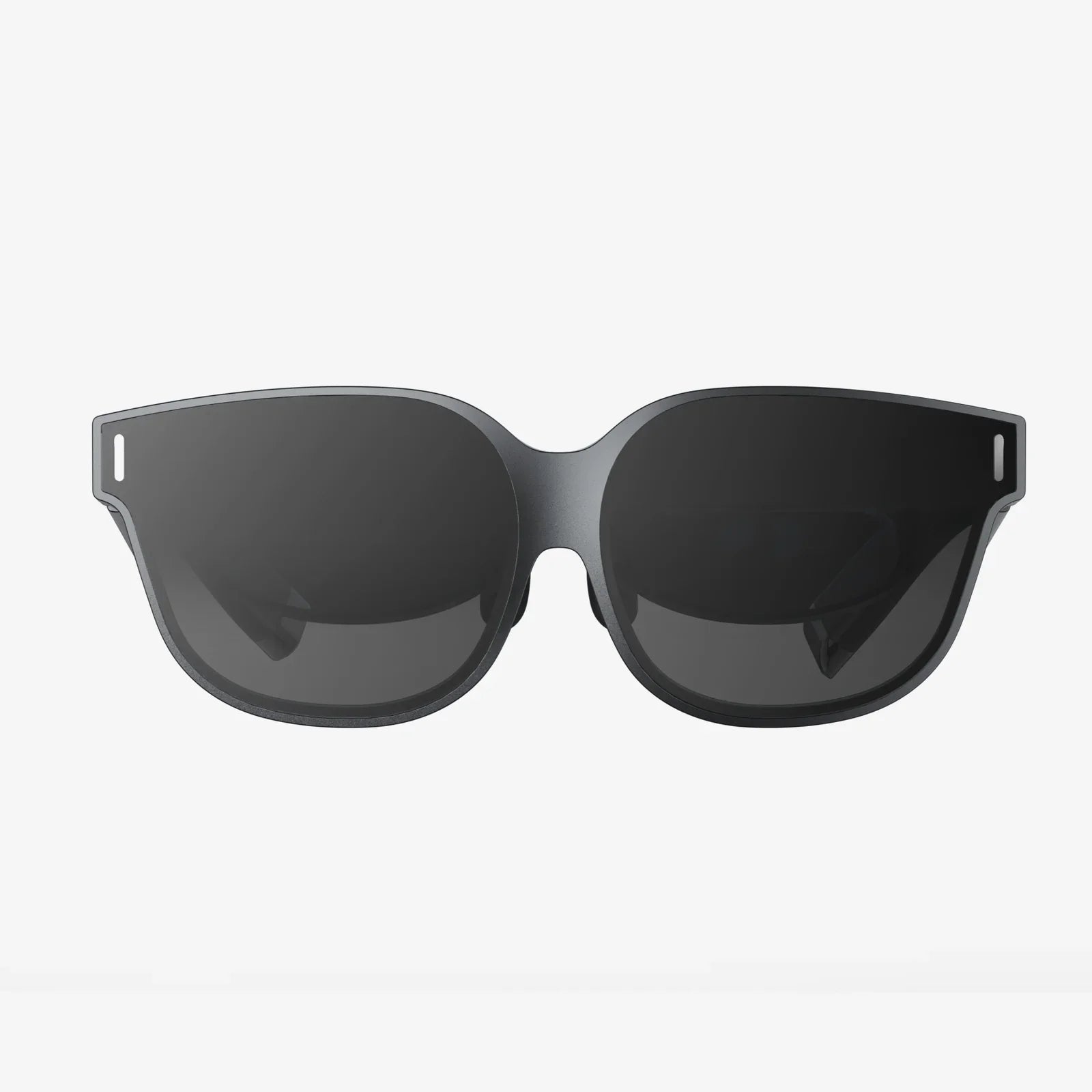
Imagine a world where information flows as effortlessly as sight itself, where digital assistants don't just speak but see what you see, and where the line between the physical and the virtual gracefully dissolves before your eyes. This isn't a distant science fiction fantasy; it's the imminent future being built today, not on our desks or in our palms, but on our faces. The humble pair of glasses, an invention centuries old, is undergoing a radical transformation, poised to become the next foundational computing platform. The era of tech glasses is dawning, and it promises to change everything about how we work, connect, and perceive the world around us.
From Novelty to Necessity: A Brief History of Seeing Tech
The journey of tech glasses has been a turbulent one, marked by spectacular failures, cautious iterations, and gradual, relentless improvement. Early prototypes and consumer releases were often clunky, expensive, and socially awkward, burdened by limited battery life and a lack of compelling software. They functioned more as isolated curiosities than integrated tools, earning a reputation for being solutions in search of a problem. However, beneath the surface of these early missteps, a quiet revolution was taking place. The miniaturization of processing chips, advances in waveguide technology for projecting images onto lenses, improvements in battery efficiency, and the proliferation of high-speed connectivity all conspired to create the perfect storm for a rebirth.
The pivotal shift has been away from the concept of a standalone "super gadget" and towards a philosophy of subtle enhancement. Modern iterations are increasingly focusing on minimalist design, aiming for a form factor that is indistinguishable from traditional eyewear. The goal is no longer to make a user look like a cyborg but to empower them with capabilities that are invisible to everyone else. This focus on discretion and social acceptance is arguably as important a technological hurdle as any engineering challenge, signaling the market's maturation from a playground for tech enthusiasts to a potential mainstream accessory.
Beyond the Hype: The Core Technologies Powering Vision
So, what exactly makes a pair of glasses "smart"? The magic lies in a sophisticated symphony of components working in harmony.
Augmented Reality (AR) Displays
At the heart of most tech glasses is an AR display system. Unlike Virtual Reality (VR), which creates a completely immersive digital environment, AR overlays digital information onto the user's view of the real world. This is typically achieved through one of several methods. Waveguide technology uses microscopic gratings on the lens to bend light from a small projector at the temple, painting images directly into the user's field of vision. Other systems use micro-LEDs or laser beam scanning to achieve a similar effect. The holy grail is a display that offers a wide field of view, high resolution, and bright imagery that remains visible even in direct sunlight, all while consuming minimal power.
Spatial Audio and Microphones
Interaction isn't just visual. Bone conduction audio, which transmits sound waves through the skull bones to the inner ear, allows users to hear notifications, navigation prompts, and music without blocking their ear canals. This keeps them aware of ambient sounds, which is crucial for safety and situational awareness. An array of microphones enables clear voice commands for interacting with digital assistants and making calls, while advanced algorithms work to cancel out background noise and wind interference.
Sensors: The Digital Sixth Sense
Tech glasses are packed with sensors that act as a digital sixth sense, understanding the environment and the user. Accelerometers and gyroscopes track head movement and orientation. Ambient light sensors adjust display brightness. High-resolution cameras capture visual data, while depth sensors (like LiDAR) map the environment in 3D, understanding the distance and dimensions of objects. This sensor fusion creates a rich data stream that allows the device to contextually understand where it is and what the user is doing.
Connectivity and On-Device AI
Seamless connectivity via Bluetooth, Wi-Fi, and cellular links tech glasses to the user's smartphone and the cloud, providing access to a vast reservoir of information and processing power. However, to ensure responsiveness and privacy, an increasing amount of computation is handled by onboard AI chips. This edge computing allows for real-time tasks like live translation, object identification, and gesture recognition without a constant data connection, reducing latency and preserving battery life.
A World Overlaid: Practical Applications Reshaping Industries
The true potential of tech glasses is revealed not in their specifications but in their applications. They are moving beyond concept videos and into real-world use cases that deliver tangible value.
Revolutionizing the Frontline Workforce
Perhaps the most immediate and impactful adoption is happening in industrial and enterprise settings. For a technician repairing a complex machine, tech glasses can overlay animated repair instructions, highlight specific components, and allow a remote expert to see their view and annotate it in real time. This dramatically reduces errors, training time, and downtime. In logistics and warehousing, workers can see optimal picking routes and inventory information hands-free, drastically improving efficiency and accuracy. For healthcare professionals, access to patient vitals, medical records, or even guidance during a procedure can be displayed instantly, improving patient outcomes.
Enhanced Accessibility and Human Connection
For individuals with visual or hearing impairments, tech glasses can serve as powerful assistive devices. Real-time captioning of conversations can be displayed for those who are deaf or hard of hearing, effectively turning the world into a subtitled movie. For the visually impaired, object recognition and navigation assistance can describe surroundings, identify currency, or read text from signs and documents aloud. Furthermore, real-time language translation can break down communication barriers, allowing for more natural conversation between people speaking different languages.
Health and Wellness Monitoring
The unique position of glasses on the head presents a novel platform for continuous health sensing. Sensors could potentially monitor pupillary response, track blink rate to gauge fatigue, or even use spectroscopic techniques to non-invasively measure certain biomarkers. While this area requires rigorous regulatory approval, it points to a future where our eyewear becomes a guardian of our well-being, offering insights that devices on our wrists cannot.
The Future of Content and Creativity
For content creators, tech glasses offer a first-person perspective (POV) that is incredibly immersive and intuitive. Vloggers, athletes, and instructors can capture their point of view without the barrier of a camera. The concept of "spatial computing" also opens new doors for digital art and design, allowing artists to sculpt 3D models in the air or architects to walk clients through a holographic rendering of a building plan long before ground is broken.
The Invisible Dilemma: Navigating Privacy and Social Challenges
The path to widespread adoption is not solely technological; it is fraught with significant ethical and social questions that society must confront.
The most pressing concern is privacy. A device that is always on your face, with cameras and microphones, represents a profound shift in surveillance capability. The potential for constant recording, facial recognition, and data collection about individuals and private spaces is immense. Clear, transparent, and robust rules about data ownership, consent, and usage are non-negotiable. Features like recording indicator lights that cannot be disabled and ethical frameworks built into the operating systems will be critical to building public trust.
Social acceptance is another hurdle. People need to feel comfortable wearing them and being around others who are wearing them. The "creep factor" of not knowing if someone is recording you or looking up information about you is a real social barrier. Manufacturers must prioritize design and social cues that make the technology feel respectful and unobtrusive. Furthermore, the digital divide is a concern; as with any advanced technology, there is a risk that tech glasses could exacerbate inequality, creating a new class of information-haves and have-nots.
Peering Into the Crystal Ball: The Next Decade of Vision
Looking ahead, the trajectory is towards even greater integration and intelligence. We can anticipate contact lenses with basic AR capabilities, moving the technology directly onto the eyeball. Brain-computer interfaces (BCIs) could eventually allow us to control these devices with our thoughts alone. The distinction between the internet and reality will become increasingly blurred as a persistent, interactive digital layer becomes a standard part of our perception.
The ultimate success of tech glasses will not be measured by their technical prowess alone, but by their ability to enhance human capability without diminishing our humanity. They must serve us, not the other way around. They should amplify our senses, augment our intellect, and connect us more deeply to the world and each other, all while respecting the fundamental rights and social contracts that hold society together.
The frames are being designed, the software is being written, and the future is coming into focus. The next time you put on a pair of glasses, take a moment to look around. Soon, that familiar view might hold a universe of new possibilities, quietly waiting for your command. The age of staring at a screen is ending; the age of living within one is about to begin.
Share:
What Does XR Stand For? The Ultimate Guide to Extended Reality
VR for Computer Screen: The Ultimate Guide to Your Virtual Desktop