


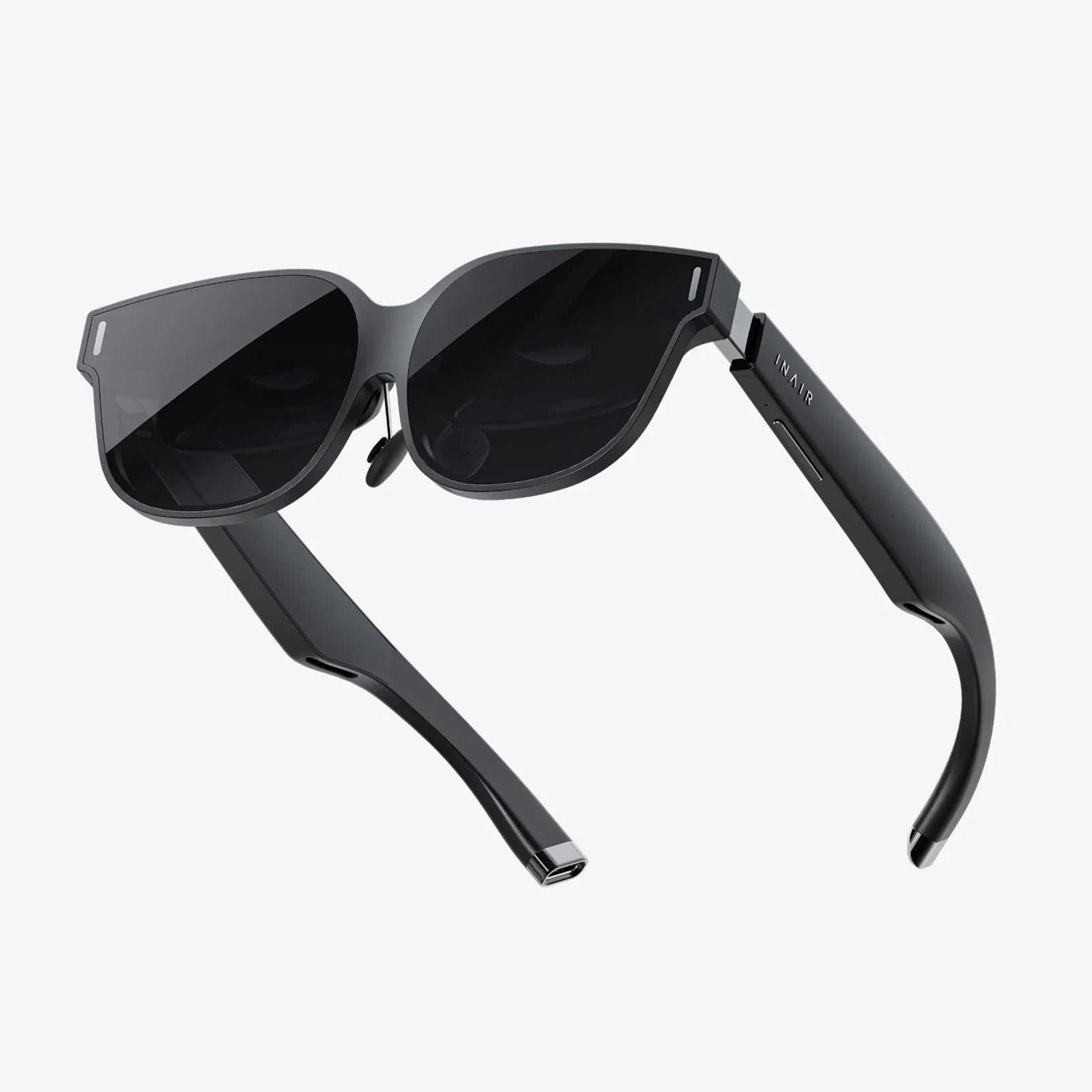
Imagine a world where information doesn't reside on a screen in your hand or on your face, but floats seamlessly in your field of vision, accessible with a glance, a blink, or a thought. This is the extraordinary promise of the technical AR contact lens, a device that represents not merely an incremental step in technology, but a fundamental leap toward a future where the digital and physical universes are inextricably and intuitively fused. This isn't science fiction; it's the bleeding edge of engineering, material science, and biotechnology, converging to create what could be the most personal and powerful computer humanity has ever devised.
The Architectural Blueprint of a Vision
At its core, a technical AR contact lens is a marvel of micro- and nano-engineering. It is a system-on-a-film, demanding an unprecedented level of miniaturization and integration. Unlike head-mounted displays, the real estate is brutally limited to a curved, flexible polymer disc that must rest comfortably on the human eye. The engineering challenges are therefore immense and multifaceted.
The Core Components
The functionality of these lenses hinges on the harmonious operation of several critical subsystems:
- Micro-LED or Laser Diode Arrays: These are the pixels of the display, tiny enough to be embedded in the lens material without obstructing vision. They must be incredibly bright and efficient to project images that are visible in broad daylight yet safe for the sensitive retina.
- Optical Waveguides and Holographic Gratings: This is the lens's projection system. Instead of a bulky lens assembly, light from the micro-LEDs is channeled through microscopic waveguides and bent directly onto the retina using nanoscale diffraction gratings. This creates the illusion of a stable image floating at a certain distance in front of the user.
-
Micro-Sensors: A suite of sensors acts as the lens's eyes and ears. These can include:
- Photodetectors to measure ambient light and adjust display brightness.
- Electro-oculography (EOG) sensors to track eye movement by measuring the corneo-retinal standing potential. This allows for intuitive control—looking at an icon to select it, for instance.
- Biometric sensors to monitor glucose levels in tears (a major application for diabetics) or intraocular pressure for glaucoma patients.
-
Micro-Power Systems: This is perhaps the most significant hurdle. Powering such a dense array of electronics requires a solution beyond conventional batteries. Research is focused on:
- Radio Frequency (RF) Harvesting: Wirelessly drawing minute amounts of power from a dedicated transmitter, likely housed in a companion device like a smartphone or a necklace.
- Solar Energy Harvesting: Using transparent photovoltaic cells integrated into the lens to convert ambient light into power.
- Biochemical Energy Harvesting: An experimental concept involving generating electricity from the body's own biological fluids, such as tears.
- Microprocessor and Wireless Communication: An ultra-low-power chip is needed to process sensor data, manage the display, and handle wireless communication via protocols like Bluetooth or ultra-wideband to connect to the user's personal network of devices and the cloud.
A World Augmented: Transformative Applications
The potential applications for this technology extend far beyond novelty, promising to revolutionize numerous aspects of daily life, healthcare, and industry.
Revolutionizing Healthcare and Assisted Living
This is where technical AR contact lenses may have their most immediate and profound humanitarian impact. Imagine a lens for a diabetic that continuously monitors blood glucose levels from tear fluid, displaying a discrete warning icon if levels become dangerous, all without a single finger prick. For those with macular degeneration or other visual impairments, the lens could act as a real-time enhancement tool, highlighting edges, increasing contrast, or overlaying text with a high-contrast version, effectively serving as a always-on visual aid.
The Ultimate Navigation and Contextual Tool
Forget looking down at a phone for directions. With an AR lens, a subtle path of arrows could be painted onto the real-world pavement, guiding you seamlessly through a complex airport or a foreign city. Look at a restaurant, and its reviews and today's specials materialize next to its sign. Look at a historical monument, and a narrated history begins. This contextual layer of information, available on-demand, would fundamentally change how we interact with and learn about our environment.
Redefining Professional and Industrial Workflows
In fields where hands-free operation is critical, the technical AR contact lens will be a game-changer. A surgeon could see vital signs and 3D anatomical guides superimposed directly on their patient during an operation. A mechanic working on a complex engine could see torque specifications and wiring diagrams overlaid on the components in front of them. An architect could walk through a full-scale 3D model of their building design, making adjustments in real-time. The potential for increasing efficiency, safety, and precision is staggering.
A New Paradigm for Social Connection and Entertainment
Social interactions could be enriched with real-time translation subtitles appearing under a speaking person, or with digital avatars and shared virtual objects in a physical space for gaming and collaborative design. Watching a sports game live could come with real-time stats and replays floating above the field. This technology could dissolve the final barrier to truly immersive mixed reality.
The Inherent Challenges: More Than Just Engineering
The path to a consumer-ready technical AR contact lens is fraught with obstacles that extend beyond the formidable technical hurdles.
The Biological Hurdle: Safety and Comfort
The human eye is an exceptionally delicate and non-negotiable organ. Any device placed on it must be perfectly biocompatible, allowing oxygen to pass through to the cornea to prevent hypoxia. It must maintain sterility and not cause irritation, dryness, or any long-term damage. The materials used must be flexible, non-toxic, and resistant to the protein buildup that occurs naturally in the eye. Ensuring the light projected onto the retina is safe and does not cause聚焦 issues or long-term damage is paramount.
The Computational and Connectivity Conundrum
The lens itself will not be a supercomputer; it will be a ultra-thin client. The intense number-crunching required for complex AR—object recognition, spatial mapping, rendering high-fidelity graphics—will likely be handled by a nearby smartphone or a dedicated wearable computer, with the lens serving as the exquisite display and input mechanism. This demands a robust, low-latency, and high-bandwidth wireless connection that is incredibly power-efficient.
The Privacy and Ethical Minefield
This technology raises profound questions that society is only beginning to grapple with. Always-on eye tracking means the potential for continuous, intimate data collection on what a user looks at, for how long, and their emotional response (via pupil dilation). Who owns this data? How is it stored and used? The potential for subliminal advertising, where ads are directly injected into a user's visual field, is a dystopian nightmare for many. Furthermore, the ability to record video discreetly presents severe challenges to personal privacy and consent. Establishing a strong ethical and legal framework will be as important as the technology itself.
The Social and Psychological Impact
Will constant augmentation of reality lead to a diminished appreciation for the un-augmented world? Could it exacerbate social divides between those who can afford augmentation and those who cannot? There is a risk of cognitive overload and a new form of digital addiction. The societal norms around their use will need to be established—is it rude to wear them during a conversation? Can they be worn while driving? These are non-trivial questions that will shape the adoption of the technology.
Gazing into the Future Trajectory
The development of technical AR contact lenses is following a trajectory similar to other transformative technologies: from clunky, limited prototypes to refined, powerful, and ubiquitous tools. Early iterations will likely be single-purpose, such as a medical lens focused solely on glucose monitoring. Subsequent generations will integrate more features, improving display resolution, battery life, and comfort. The ultimate goal is a multi-functional, all-day wearable that feels no different from a standard corrective contact lens but offers a gateway to a limitless digital layer of reality.
The convergence with other technologies like 5G/6G connectivity, edge computing, and advanced artificial intelligence will be crucial. AI, in particular, will act as the intelligent filter, determining what information is relevant and necessary to display at any given moment, preventing the user from being overwhelmed by a constant data deluge.
The day is approaching when glancing at your wrist to check the time or pulling a device from your pocket to get directions will seem like an archaic quirk of the past. The technical AR contact lens represents the final frontier of wearable technology—the complete and seamless integration of the digital self with our physical perception. It’s a future filled with both incredible potential and significant peril, a testament to human ingenuity that demands careful and conscious stewardship. The choice of how we build and use this technology will determine not just what we see, but ultimately, how we see ourselves.
Share:
Companies Use Virtual Office VR to Revolutionize Remote Work and Collaboration
Best Technology for Virtual Meetings: A Guide to Flawless Digital Collaboration