


- by wangfred
Technology Doesn't Work AR: The Hidden Barriers to Augmented Reality Adoption
- by wangfred
You’ve seen the dazzling concept videos: digital dragons perched on real-world buildings, interactive schematics overlaid on malfunctioning engines, and historical figures walking through the very streets you stand on. Augmented Reality (AR) promises to weave the digital and physical into a single, seamless tapestry, fundamentally altering how we work, learn, play, and connect. The hype is deafening, the potential is staggering, and the marketing suggests it’s just one headset away. But for the vast majority of people, this revolution hasn’t arrived. The stark reality is that, for now, technology doesn't work AR in the way we've been promised. The grand vision is perpetually almost here, stuck in a cycle of prototype purgatory. The question is not about the idea, but the execution. Why does this technology, with such transformative potential, consistently fail to cross the chasm from captivating demo to indispensable tool?
At its core, functional AR is a computational nightmare. It’s not merely about displaying an image; it’s about understanding and interacting with the real world in real-time. This requires a symphony of advanced technologies to work in perfect harmony, and each one presents a formidable hurdle.
For AR to work, a device must perceive the world as we do. This starts with Simultaneous Localization and Mapping (SLAM). SLAM algorithms allow a device to both map an unknown environment and locate itself within that map simultaneously. While SLAM exists, doing it with perfect accuracy on consumer-grade hardware, in dynamic environments with moving people and changing light, is extraordinarily difficult. A miscalculation of a few centimeters can cause a virtual object to drift or float unnaturally, instantly breaking the illusion of immersion.
Furthermore, object recognition is needed to go beyond simple surfaces. An AR system needs to distinguish a chair from a table, understand that a wall is a barrier, and recognize that a flat surface is indeed a floor. This requires immense processing power and massive datasets for training. Current systems often struggle with reflective surfaces, low-light conditions, and repetitive patterns, leading to tracking loss and a frustrating user experience. When the foundational perception is flawed, everything built upon it crumbles.
All this sensing, mapping, and rendering creates a tsunami of data that must be processed instantaneously. A lag of even a few milliseconds between your head movement and the display's update can cause severe motion sickness, a phenomenon known as latency-induced nausea. Pushing high-fidelity, complex 3D graphics at a high frame rate is a task that brings even powerful gaming computers to their knees. To do this on a mobile chipset housed in a lightweight headset or pair of glasses, with severe thermal and battery life constraints, is the central engineering challenge.
There are two potential solutions, each with its own drawbacks. The first is edge computing, where the heavy processing is offloaded to a nearby powerful computer or a smartphone. This, however, tethers the user to another device, sacrificing the freedom and mobility that are core to AR's appeal. The second is cloud computing, where data is sent to remote servers for processing. This introduces network latency, which is utterly destructive to the real-time requirements of AR, and raises significant concerns about data privacy and bandwidth availability.
Even if the software were perfect, it must be delivered through hardware that people are willing to wear. This is perhaps the most visible point of failure. The industry is trapped in a vicious cycle between form factor and functionality.
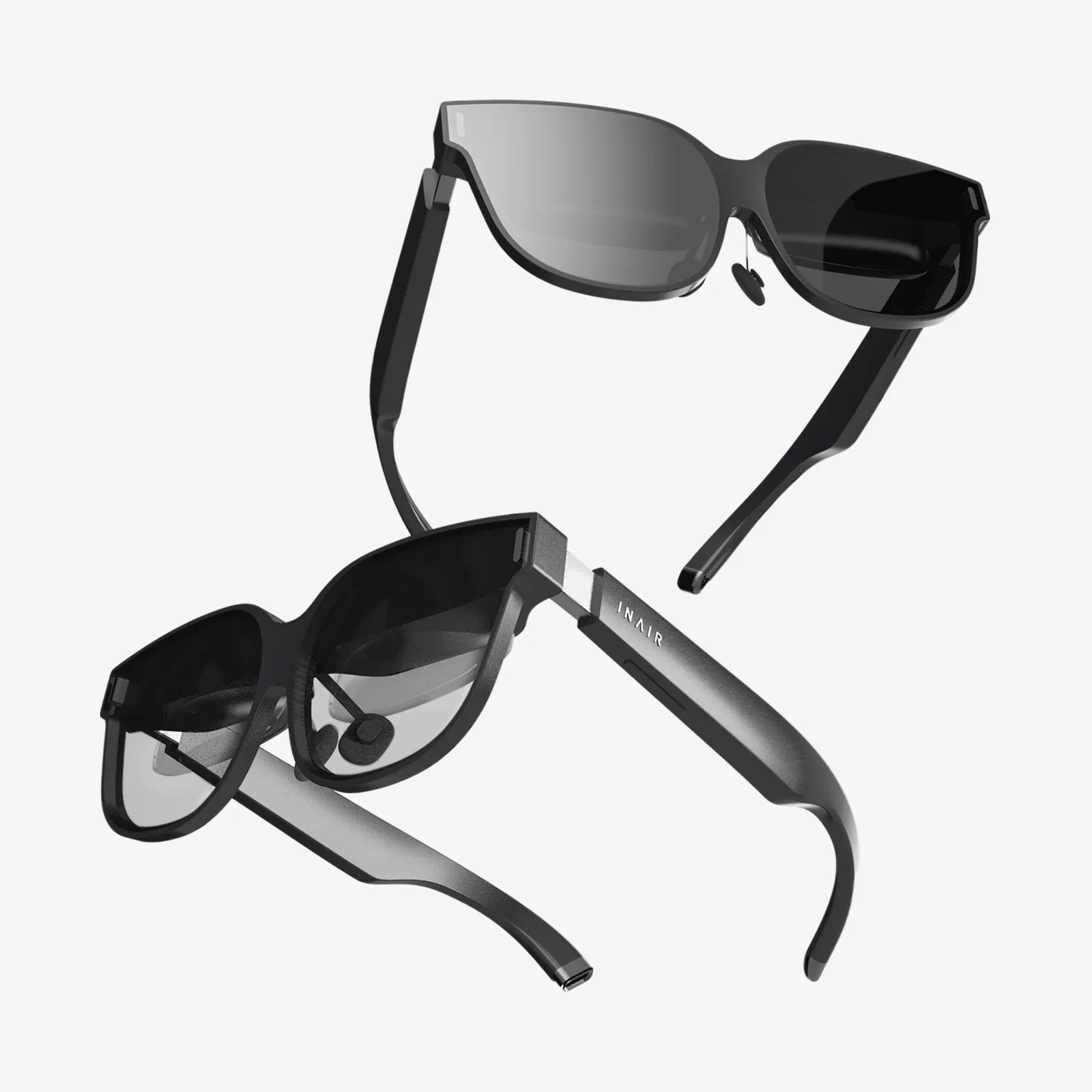
Truly transformative AR should look and feel like a regular pair of glasses—lightweight, stylish, and all-day comfortable. What we have now are often bulky, front-heavy headsets that cause fatigue, isolate the user from their environment, and mark them as an early adopter in the most conspicuous way. Smart glasses that approach a normal form factor, on the other hand, are severely limited in their capabilities, offering little more than simple notifications and basic overlays due to the lack of space for advanced sensors and batteries.
This creates a stark choice for consumers: either accept a powerful but socially awkward and uncomfortable device, or a comfortable but functionally anemic one. For the mass market, neither is an acceptable option. The technology will not work until it becomes invisible, both physically and socially.
Powering the array of cameras, sensors, and displays required for high-end AR is incredibly energy-intensive. Demanding users charge a headset multiple times a day is a non-starter for mainstream adoption. Current battery technology simply cannot provide the necessary energy density in a small enough package to enable all-day use of a powerful, untethered AR device. This fundamental limitation of battery chemistry is a hard stop on the road to ubiquitous AR.
Technology exists to serve humans, and when it conflicts with human biology and psychology, it is the technology that must adapt. AR runs headlong into several deeply ingrained human traits.
We have an innate, subconscious sense of our physical surroundings. When digital objects are placed within this space, our brains have incredibly high expectations for how they should behave. Subtle imperfections—light that doesn’t quite match the ambient lighting, shadows that are slightly off, or objects that don’t interact correctly with physical surfaces (e.g., a virtual ball that doesn’t roll down a real ramp)—trigger a sense of wrongness. This is the spatial equivalent of the "uncanny valley" in robotics. It’s not that the technology is bad; it’s that it’s almost good enough to be believable, and that slight gap is deeply unsettling and prevents true immersion.
Our cognitive bandwidth is limited. AR, by its very nature, adds a layer of information on top of an already complex world. This can quickly lead to sensory and cognitive overload, where the user is overwhelmed by the sheer volume of digital stimuli competing for their attention alongside real-world tasks. Instead of augmenting reality, it can shatter it, creating a chaotic and exhausting experience. Designing intuitive interfaces and information hierarchies that enhance rather than detract from a task is a monumental challenge that remains largely unsolved. The technology fails when it makes simple tasks more complicated.
Beyond the bits and bytes, the most resistant barriers to AR adoption may be social and ethical. Technology exists within a society, and society is pushing back against the unconsidered rollout of pervasive AR.
An always-on AR device is, by definition, an always-on camera and microphone pointed at the world. The privacy implications are dystopian. It enables continuous facial recognition, object tracking, and data collection on an unprecedented scale. Would you feel comfortable speaking to a friend in a café if someone nearby wearing glasses could be recording the entire conversation and identifying you both? The societal norms and robust legal frameworks needed to prevent AR from becoming the ultimate surveillance tool are not yet in place. This isn't a technical bug; it's a foundational feature that society may rightly reject.
AR threatens to create a new kind of digital divide. If critical information, navigation, and social cues are delivered through a digital overlay, those who cannot or will not adopt the technology risk being left behind, unable to fully participate in society. Furthermore, it challenges our concept of a shared reality. If everyone can customize their perception of the world with their own digital filters, what common ground do we have left? Our public spaces could become a cacophony of competing virtual realities, eroding the shared experiences that bind communities together.
This is not a declaration that AR will never work. The potential benefits in fields like medicine, engineering, education, and remote assistance are too great to ignore. But progress requires an honest acknowledgment of these barriers. The path forward is not just faster chips and smaller batteries, though those are necessary. It requires a holistic approach:
The dream of a digital layer perfectly integrated into our physical lives remains one of the most compelling in technology. We are drawn to it because it speaks to a fundamental desire to enhance our reality, to learn and see more. But the journey from a compelling demo to a seamlessly integrated tool is proving to be one of the most complex in modern computing. It’s a marathon, not a sprint, filled with false starts and daunting obstacles. The true breakthrough won’t be a new headset announcement, but the quiet moment, years from now, when the technology finally recedes into the background, working so flawlessly that we forget it's even there—the moment it finally stops not working.
Imagine a world where the line between your intuition and your information vanishes, where knowledge appears not on a screen, but in the world itself, contextually perfect and instantly actionable. The promise is so powerful it’s worth the wait, worth the iterative failures, and worth the intense scrutiny required to get it right. The current stumbles aren't a sign of ultimate failure, but the painful, necessary growing pains of a technology that demands nothing less than perfection to truly become part of our lives. The day it silently and seamlessly integrates into our daily grind is the day the real revolution begins.
Share:
Lightweight VR Goggles: The Unseen Revolution Reshaping Our Digital Future
Virtual Meetings or Remote Meetings: The Complete Guide to Mastering Digital Collaboration