


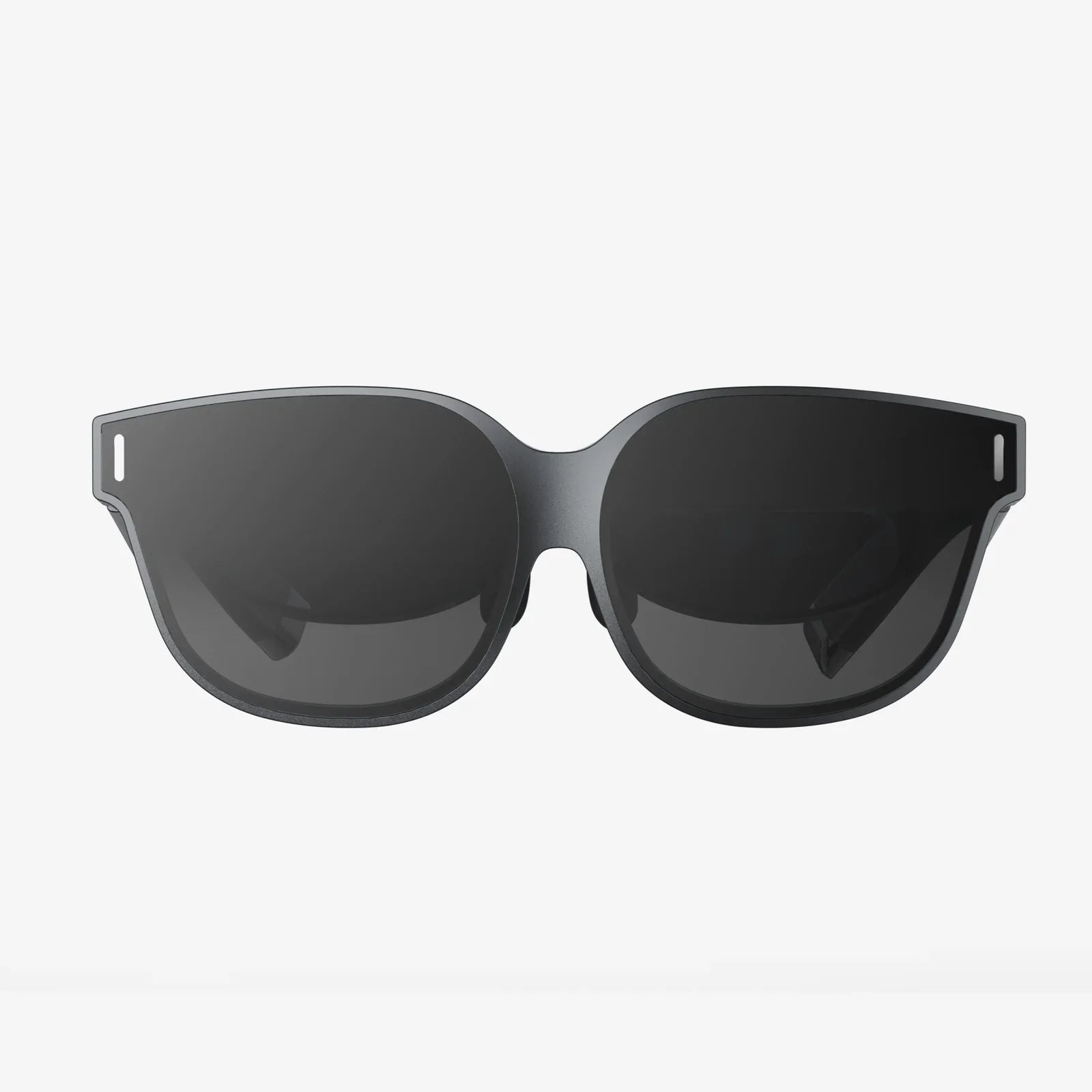
Imagine a world where your vision is not just a window to reality but a dynamic, interactive canvas. A world where information floats effortlessly before your eyes, where digital assistants are seamlessly integrated into your field of view, and where your eyewear does far more than just correct your vision. This is not a distant science fiction fantasy; it is the rapidly emerging reality of technology glasses, a revolutionary category of wearable tech poised to transform everything from how we work and play to how we connect with the world around us. The future is not just seen; it is experienced through a new lens.
Beyond Frames and Lenses: Defining the New Era of Eyewear
The term "technology glasses" encompasses a broad and exciting spectrum of devices. At its core, it refers to any eyewear that integrates advanced technological features beyond simple vision correction. This integration can be passive, actively interactive, or a sophisticated blend of both. The common thread is the enhancement of human capability, merging the physical and digital realms in a form factor that is as personal and ubiquitous as the smartphone. We are moving beyond the era of glasses as mere medical aids or fashion accessories into an age where they are powerful computational platforms worn on the face.
A Spectrum of Innovation: From Passive Protection to Active Augmentation
Not all technology glasses are created equal. Their functionalities can be broadly categorized, each serving a distinct purpose and offering unique benefits.
Blue Light Filtering Lenses: The Digital Shield
Perhaps the most widespread and accessible form of technology glasses today are those equipped with specialized lenses designed to filter high-energy visible (HEV) blue light. Emitted in significant quantities by digital screens like those on computers, tablets, and smartphones, prolonged exposure to blue light has been linked to digital eye strain, sleep cycle disruption, and potential long-term retinal damage. These lenses feature a subtle tint or a clear coating that selectively blocks or absorbs a portion of this blue light spectrum. The result is a reduction in glare, decreased eye fatigue after long hours in front of a screen, and a less intrusive impact on the body's natural production of melatonin, the hormone responsible for regulating sleep. For the millions of people in modern digital workplaces, these glasses act as a crucial first line of defense, a simple yet effective technological intervention for a digitally-induced problem.
Smart Glasses and Augmented Reality (AR): The Overlaying of Realities
This category represents the cutting edge of the field. Smart glasses are essentially wearable computers that incorporate a heads-up display (HUD) or an optical head-mounted display (OHMD) to project information directly into the user's line of sight. The most advanced iterations utilize Augmented Reality (AR), which superimposes computer-generated images, data, and animations onto the real world, allowing the user to interact with both simultaneously.
Imagine a mechanic seeing a schematic diagram overlaid on the engine they are repairing, with step-by-step instructions guiding their hands. Envision a surgeon having vital signs and 3D anatomical models projected onto their eyewear during a complex procedure. Think of a tourist walking through a historic city, with their glasses identifying landmarks and providing historical context as they gaze upon them. The applications extend to navigation, with arrows and directions painted onto the street in front of you, and to remote collaboration, where an expert can see what a field technician sees and annotate their view in real time to guide them. This seamless fusion of data and reality has the potential to revolutionize countless industries and redefine personal computing.
Vision Correction and Enhancement: The Next Generation
Even traditional prescription lenses are being transformed by technology. Innovations here include:
- Autofocal Lenses: Researchers are developing lenses that can automatically adjust their focus based on where the user is looking, mimicking the natural flexibility of a young eye. This technology promises to eliminate the need for separate reading glasses or bifocals for those with presbyopia.
- Electrochromic Lenses: These are lenses that can change their tint automatically in response to ambient light conditions, darkening outdoors and clearing indoors, all without the need for a separate pair of prescription sunglasses.
- Embedded Sensors: Future concepts involve lenses with microscopic sensors that can monitor health metrics like glucose levels through tear film analysis or track intraocular pressure for glaucoma patients, turning glasses into a non-invasive health monitoring device.
The Engine Behind the Lens: Core Technologies Powering the Revolution
The magic of technology glasses is made possible by a convergence of several sophisticated technologies packed into a remarkably small form factor.
Waveguide and Optical Display Systems
This is the crucial technology that makes AR possible. Instead of a bulky screen, systems like waveguides use microscopic gratings or holographic optical elements to "bend" light from a tiny projector at the temple of the glasses and pipe it directly to the retina. This creates the illusion that the image is floating in space several feet away, all while remaining transparent so the user can still see the real world. Different methods, such as diffractive waveguides and reflective waveguides, are in a race to achieve the perfect blend of wide field of view, high resolution, brightness, and optical efficiency.
Micro-Powered Everything
Powering a computer on your face requires immense efficiency. These devices rely on miniaturized system-on-chips (SoCs) similar to those in smartphones, but designed for ultra-low power consumption. They are paired with small, high-density batteries often integrated into the temples. Innovations in battery technology, including potential future use of solar charging or kinetic energy harvesting from movement, are critical to achieving all-day battery life.
Sensing the World: Cameras, LiDAR, and Inertial Measurement Units (IMUs)
To understand and interact with the environment, technology glasses are equipped with a suite of sensors. High-resolution cameras capture the world for object recognition and video recording. Depth sensors, like miniature LiDAR scanners, map the environment in 3D, allowing digital objects to interact realistically with physical surfaces. IMUs, which include accelerometers and gyroscopes, track the precise movement and orientation of the user's head to stabilize the AR imagery and ensure it stays locked in place in the real world.
The Invisible Interface: Voice and Gesture Control
Traditional input methods like touchscreens and keyboards are impractical for glasses. Instead, the primary interface is voice commands through integrated microphones and sophisticated natural language processing. This is often supplemented by subtle gesture control, where cameras track hand movements near the face, allowing users to swipe through menus or select items with a flick of the wrist. Some prototypes are even exploring neural interfaces or detecting silent, subvocal commands for completely private control.
Navigating the Hurdles: Challenges on the Path to Ubiquity
Despite the incredible promise, the widespread adoption of advanced technology glasses faces significant obstacles.
The Form Versus Function Conundrum
The greatest challenge is miniaturization. Early prototypes were often bulky, awkward, and drew unwanted attention. For consumers to adopt them en masse, they must be indistinguishable from regular, stylish eyewear—lightweight, comfortable, and available in a variety of designs. Engineers must balance battery life, processing power, display brightness, and sensor capability against the rigid constraints of size, weight, and heat dissipation. It is a monumental task of integration.
The Privacy Paradox
Glasses with always-on cameras and microphones understandably raise profound privacy concerns. The potential for surreptitious recording or data collection is a major societal and ethical issue. Manufacturers must address this with clear physical indicators like recording lights, robust privacy controls that give users complete ownership of their data, and transparent policies. Building trust is not an option; it is a prerequisite for survival in this market.
Battery Life: The Perennial Limitation
Running powerful processors and bright displays consumes energy rapidly. While blue light glasses have no such issue, advanced AR glasses struggle to deliver a full day of use on a single charge. Until battery technology sees a fundamental leap forward, or power efficiency improves dramatically, this will remain a key constraint on their utility.
Defining the "Killer App"
Beyond the tech enthusiasts and specific professional applications, what will drive the average consumer to buy a pair? The smartphone found its killer app in connectivity, the web browser, and the app store ecosystem. Technology glasses need their own defining, must-have application—be it a revolutionary social media experience, an indispensable productivity tool, or a new form of immersive entertainment—to cross over into the mainstream.
A Glimpse Into the Crystal Ball: The Future Shaped by Technology Glasses
The trajectory of this technology points toward a future where technology glasses become as normalized as smartphones are today. We can anticipate a world where your glasses are your primary computing device, replacing your phone, your wallet, and your keys. They will recognize faces and provide contextual information in social situations, translate foreign languages in real time as you read a menu or listen to a conversation, and offer immersive training and education experiences that were previously impossible. They could fundamentally change accessibility, providing auditory descriptions of the world for the visually impaired or real-time captioning for the hearing impaired. The boundary between our digital identities and our physical presence will blur, creating a continuous, contextual, and ambient computing experience.
The journey from simple eye protection to intelligent visual interfaces represents one of the most significant shifts in personal technology we are likely to witness. Technology glasses are more than a product; they are a new platform, a new sense, and a new way of being in the world. The question is no longer if they will become a central part of our lives, but when, and how we will choose to use this profound power to augment our own humanity. The world is about to look very different.
Share:
Wearable Augmented Reality Smartglasses: The Next Digital Revolution is on Your Face
How Does Augmented Reality Work: The Magic of Merging Realities