


- by wangfred
Technology Used in AR: The Digital Layer Reshaping Our Reality
- by wangfred
Imagine a world where digital information doesn’t just live on a screen but is woven into the very fabric of your reality. Directions float on the street in front of you, historical figures act out scenes on the empty park bench you’re passing, and a new piece of furniture appears in your living room before you even buy it. This is the promise of Augmented Reality (AR), a technological marvel that is rapidly moving from niche novelty to mainstream utility. But this magic doesn’t happen by incantation; it’s powered by a sophisticated and interconnected stack of hardware and software, a symphony of technology used in AR working in perfect, real-time harmony to augment your perception of the world.
Before any digital content can be placed, the system must understand the environment. This is the first and most critical step, achieved through a suite of advanced sensors that act as the eyes and ears of the AR device.
The most obvious sensor is the camera. However, in advanced AR systems, it's rarely just one standard camera. Systems often employ multiple cameras with different specifications. A standard RGB camera captures the color and texture of the real world, providing the video feed onto which digital objects are composited. But understanding a 2D image is not enough; depth perception is crucial.
This is where specialized depth-sensing technology comes into play. Several methods exist:
Cameras can struggle with fast motion, causing blurring or a loss of tracking. This is complemented by the IMU, a micro-electromechanical system that contains a combination of accelerometers, gyroscopes, and magnetometers. These components track the device's precise rotational movement (gyroscope), linear acceleration (accelerometer), and orientation relative to the Earth's magnetic field (magnetometer). This data is vital for understanding the device's movement and orientation even when the camera feed is temporarily compromised, ensuring digital objects don't jitter or float away.
Light Detection and Ranging (LiDAR) scanners have become a cornerstone of high-end AR. By firing out thousands of laser points per second and measuring their return time, LiDAR creates a incredibly detailed, real-time 3D point cloud of the environment. This provides instant depth information and a rich geometric understanding of the space, allowing for incredibly accurate occlusion (where real-world objects pass in front of digital ones) and persistent placement of AR content.
Raw sensor data is meaningless without interpretation. This is where the computational heavy lifting occurs, powered by advanced processors and sophisticated algorithms.
SLAM is the revolutionary algorithm at the heart of all modern AR. It solves two complex problems at once: it localizes the device (figuring out its own position and orientation within an unknown space) while simultaneously mapping that space (building a 3D model of the environment). As you move your device, SLAM continuously compares incoming sensor data (visual features from the camera, depth points, IMU data) with its growing map to pinpoint its exact location and refine its understanding of the world. This dynamic, real-time cartography is what allows a digital dinosaur to stay rooted to a specific spot on your floor as you walk around it.
This field of artificial intelligence enables machines to interpret and understand visual data. Key computer vision tasks in AR include:
The CPU acts as the general manager, coordinating all the tasks—sensor input, running SLAM algorithms, and managing the operating system. The GPU is the specialized artist. Its massively parallel architecture is perfectly suited for the immense number of calculations required for rendering complex 3D graphics at high frame rates (typically 60fps or higher) and for processing visual data for computer vision tasks. A smooth, stutter-free AR experience is entirely dependent on the power and efficiency of these processors.
Modern systems-on-a-chip (SoCs) now include specialized cores dedicated to machine learning operations. These Neural Processing Units (NPUs) or AI accelerators are incredibly efficient at running the neural networks that power advanced computer vision features like real-time object recognition, gesture tracking, and semantic understanding of scenes (e.g., recognizing that a chair is for sitting or a lamp provides light), all while being power-efficient enough for mobile devices.
Once the environment is understood and the digital object is rendered, it must be displayed to the user. The technology used here defines the intimacy and immersion of the AR experience.
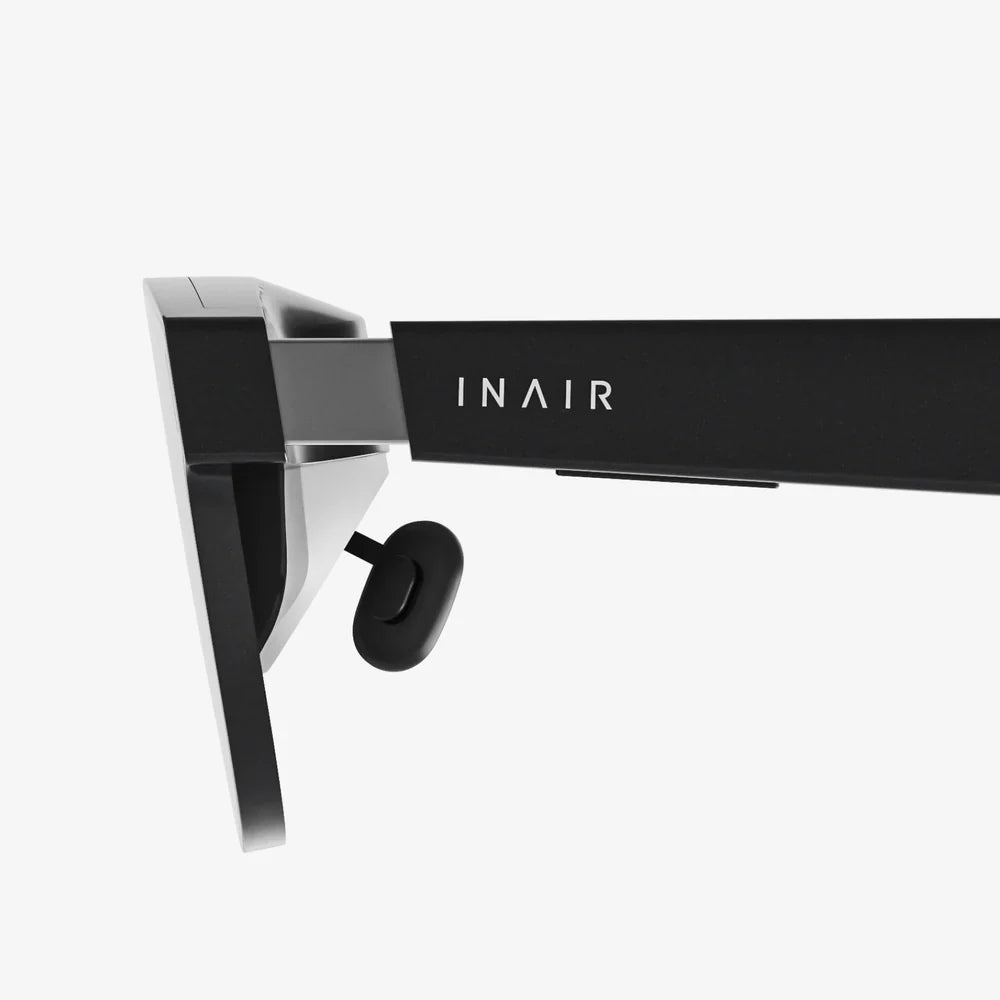
Used in smart glasses and helmets, these displays allow the user to look directly at the real world through transparent lenses. Digital content is projected onto this transparent surface, mixing light from the real environment with light from a micro-display. This is often achieved using waveguides—thin, transparent glass or plastic components that use diffraction or reflection to pipe light from a projector on the side of the glasses into the user's eye. This method offers a more natural and comfortable view but can struggle with contrast in bright environments.
Common in smartphone and tablet-based AR, this method uses the device's camera to capture the real world. The processor then composites the AR elements into this video feed in real-time, and the final combined image is shown on the device's screen. While it can offer more vibrant and controlled digital visuals, it creates a mediated experience—you are looking at a screen, not the world directly—which can feel less immersive and can suffer from latency issues if not optimized perfectly.
This approach bypasses a personal display altogether. Instead, digital content is projected directly onto physical surfaces in the environment—a wall, a table, or even a person. This can create compelling shared experiences without requiring everyone to wear a device. Advanced systems can even use depth sensing to correct for the geometry of the projection surface, preventing distortion, a technique known as projection mapping.
An emerging and futuristic technology, retinal projection (or scanning) aims to draw images directly onto the user's retina using low-power lasers. This method promises incredibly high resolution, a large field of view, and the ability to create images that appear in perfect focus regardless of the user's own eyesight. It represents a potential paradigm shift for wearable AR displays.
While many AR experiences are processed on the device (on-device processing), the cloud plays an increasingly vital role. 5G connectivity, with its high bandwidth and ultra-low latency, enables complex AR experiences that offload heavy rendering or data-intensive tasks to powerful cloud servers. This allows for more detailed models, persistent AR worlds that multiple users can interact with simultaneously, and real-time access to vast databases of information, all without overwhelming the limited battery and processing power of a headset or phone.
The technology used in AR is advancing at a breathtaking pace. We are moving towards more compact, powerful, and socially acceptable wearables. Key areas of development include:
The seamless magic of a well-executed AR experience belies the immense technological complexity happening beneath the surface. It is a beautiful convergence of optics, sensor technology, processing power, and intelligent software, all working in concert to expand our reality. This is not just a new screen; it's a new layer of human-computer interaction, and the technology that powers it is quietly building the foundation for the next great computing platform, one that will fundamentally change how we work, learn, play, and connect with the world around us.