Step through the looking glass and into a world entirely of ones and zeros, a realm where the only limit is imagination. This is the promise of virtual reality, a technological frontier that has captivated science fiction and scientific minds for decades. But what sorcery lies behind the headset? What intricate symphony of hardware and software conspires to trick our senses so completely, convincing us we are scaling Everest, exploring the depths of the ocean, or walking on Mars? The journey from a concept to a convincing, immersive experience is powered by a breathtaking array of sophisticated technologies, each a critical piece in the puzzle of constructing a new reality.
The Gateway to Another World: Display and Visual Technology
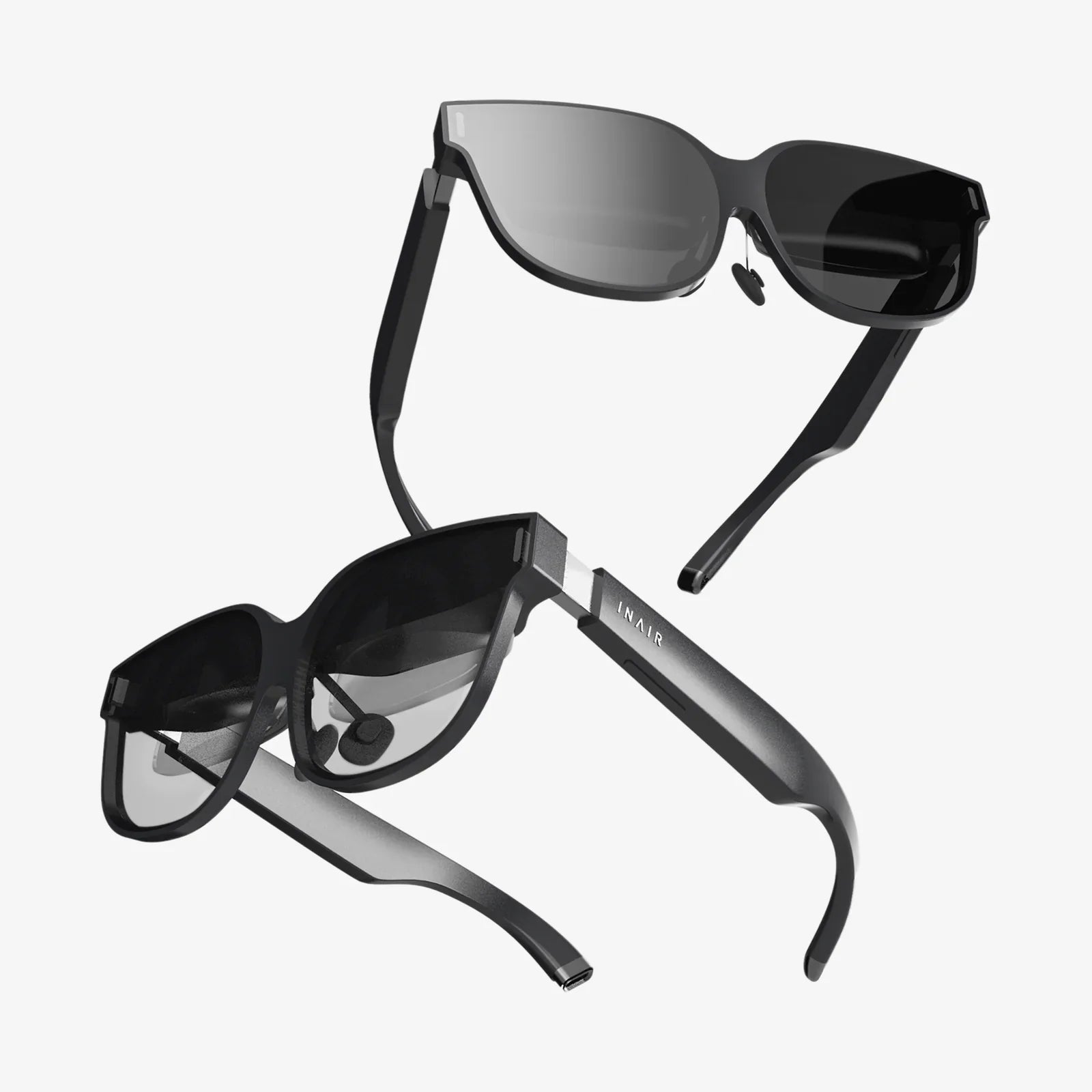
At the very heart of the virtual reality experience lies the visual component. It is the primary conduit through which we perceive the digital world, and its fidelity is paramount to achieving immersion. The technology used here is a complex dance of optics, screens, and computational power.
Modern head-mounted displays utilize high-resolution organic light-emitting diode (OLED) or liquid crystal display (LCD) panels. These panels are positioned mere centimeters from the user's eyes, requiring incredibly high pixel densities to prevent the dreaded 'screen-door effect,' where the gaps between pixels become visible and shatter the illusion. To further enhance clarity and field of view, specialized lenses are placed between the screens and the eyes. These lenses, often Fresnel lenses for their thinness and light-weight properties, warp and focus the image from the flat panel into a wide, panoramic view that fills the user's peripheral vision.
However, simply displaying a static image is not enough. A critical technological hurdle is mitigating motion sickness, a common ailment in early virtual reality systems. This is largely addressed by two key features: high refresh rates and low persistence. A high refresh rate, typically 90Hz or higher, ensures the image is updated with extreme rapidity, matching the quick movements of the human head. Low persistence means each pixel is illuminated for only a fraction of a second per frame before being briefly shut off. This prevents the smearing or blurring of the image during rapid head motion, a primary contributor to simulator sickness. Together, these technologies create a stable, fluid, and convincing visual landscape.
Knowing Where You Are: Precision Tracking Systems
For a virtual world to feel responsive and real, the system must know precisely where the user is looking and how they are moving. This requires a robust and accurate tracking technology, which can be broken down into rotational tracking (where you are looking) and positional tracking (where you are in space).
Rotational tracking is handled by an inertial measurement unit (IMU), a miniature device containing a gyroscope, accelerometer, and magnetometer. The gyroscope measures angular velocity, the accelerometer measures linear acceleration, and the magnetometer acts as a digital compass, correcting for drift. The IMU provides incredibly fast data on head orientation, but it cannot accurately track movement through space over time. This is where positional tracking comes in.
There are two primary technological approaches to positional tracking:
-
Outside-In Tracking: This method uses external sensors or base stations placed in the room. These devices emit lasers or other signals that are picked up by sensors on the headset and controllers. By calculating the time it takes for the signals to travel, the system can triangulate the exact position of the user with millimeter accuracy. This method is renowned for its high precision, making it a favorite for professional and enterprise applications.
-
Inside-Out Tracking: A more recent and consumer-friendly advancement, this technology embeds cameras directly onto the headset itself. These cameras continuously observe the physical environment, tracking the movement of fixed points and objects in the room to deduce the headset's own position in space. This eliminates the need for external hardware setup, offering greater freedom and ease of use, though it can sometimes be less precise in rapidly changing or feature-poor environments.
Extending Your Digital Self: Controller and Haptic Technology
Our hands are our primary tools for interacting with the physical world, and replicating this interaction is crucial for virtual reality. Input devices, most commonly controllers, are equipped with the same tracking technology as the headset, allowing them to be represented accurately within the virtual space. Buttons, triggers, thumbsticks, and touchpads provide a familiar interface for manipulation.
The true magic, however, lies in haptic technology. Basic haptics use simple vibration motors, similar to those in game controllers, to provide rudimentary feedback for events like collisions or weapon fire. Advanced systems, however, are pushing the boundaries of tactile sensation. Some controllers now use linear resonant actuators (LRAs), which can produce a much wider range of precise and nuanced vibrations, simulating the feeling of touching different textures or the recoil of a tool.
The frontier of haptics extends beyond the hands. Full-body haptic suits, vests, and gloves are emerging, embedded with an array of actuators that can simulate everything from a gentle breeze and light rain to the impact of a punch or the rumble of an explosion. This technology, known as kinesthetic feedback, seeks to engage the body's sense of touch and proprioception on a much deeper level, closing the loop between what the user sees and what they feel, thereby deepening the sense of physical presence within the simulation.
The Brain of the Operation: Computational Power and Software
All the advanced hardware is useless without the immense computational power required to drive it. Rendering two high-resolution, high-frame-rate images simultaneously—one for each eye—is an extraordinarily demanding task for a graphics processing unit (GPU). This process is compounded by the need for complex lighting, shadows, and physics simulations to make the world believable.
Software plays an equally vital role. The core software that makes everything work is the runtime and engine. The runtime acts as the bridge between the hardware and the software application, managing communication, tracking data, and final image output. It often includes features like asynchronous spacewarp, a clever technique that generates synthetic frames to maintain a smooth framerate even when the GPU is struggling, preventing discomfort.
Most virtual experiences are built atop powerful game engines. These engines provide developers with the tools to create 3D environments, script interactions, manage assets, and, most importantly, render the scene. They handle the complex mathematics of stereoscopic rendering, ensuring the images for the left and right eye are correctly offset to create a convincing 3D effect with proper depth perception. The engine is the canvas and the brushset for building entire worlds from scratch.
Hearing the Illusion: Spatialized Audio Technology
While vision is primary, sound is the unsung hero of immersion. Standard stereo audio is insufficient for virtual reality; a sound must change dynamically based on the user's head position and orientation. The technology that enables this is known as spatialized or 3D audio.
Using a process called head-related transfer function (HRTF), audio software can simulate how sound waves interact with the human head, pinnae (outer ears), and torso. By applying these personalized acoustic filters to a sound, the system can trick the brain into perceiving that sound as coming from a specific point in 3D space—above, below, behind, or in front. This means if an object falls to the floor in the virtual world, you can hear it hit the ground in the correct location relative to you, even if you turn your head. This auditory cue is incredibly powerful for selling the reality of the experience and is essential for situational awareness in both games and professional simulations.
Building the World: 3D Modeling and Asset Creation
The virtual worlds themselves are constructed from millions of digital assets. 3D artists use sophisticated modeling software to create every object, character, and structure. These models are not just shells; they are composed of polygons, textures, materials, and shaders that define how they look and react to light.
Textures are 2D images wrapped around the 3D model to give it color, detail, and surface properties like roughness or metallic sheen. Advanced techniques like photogrammetry are increasingly used, where hundreds of photographs of a real-world object are processed by algorithms to generate a photorealistic 3D model. This allows for an unprecedented level of detail and authenticity, importing pieces of our reality directly into the virtual one. The creation of these assets is a monumental task, requiring vast teams of artists and significant storage and processing resources to manage the immense data involved.
The Future is Now: Emerging and Enhancing Technologies
The evolution of technology used in virtual reality is relentless, with several cutting-edge developments poised to redefine the experience. Eye-tracking technology, using tiny cameras inside the headset to monitor pupil position, is a game-changer. It enables Foveated Rendering, a technique where the GPU renders only the area where the user is directly looking in full resolution, while the peripheral areas are rendered at a lower quality. This dramatically reduces the computational load without the user perceiving any difference, allowing for higher fidelity graphics on less powerful hardware.
Another frontier is varifocal technology, which aims to solve the vergence-accommodation conflict—a disconnect between where the eyes converge and where they focus that can cause eye strain. These systems would dynamically adjust the focus of the headset's lenses based on what the user is looking at, matching the natural behavior of the human eye and providing a more comfortable and visually accurate experience. Furthermore, research into neural interfaces and brain-computer interaction hints at a future where we may navigate virtual spaces not with controllers, but with thought alone, representing the ultimate fusion of human and machine.
This intricate tapestry of interlocking technologies—from the micro-second precision of the IMU to the world-building power of the game engine—works in seamless concert to achieve a single goal: the suspension of disbelief. It is a testament to human ingenuity, a field where advancements in optics, acoustics, computer science, and human physiology converge. The headset is merely a window; it is the complex machinery behind it that builds the universe on the other side, inviting us not just to see a new world, but to step inside and truly become a part of it.


Share:
What Is Head Tracking Spatial Audio: The Ultimate Immersive Sound Experience
Mobile Working Platform: The Future of Work is Here and It's On the Move