


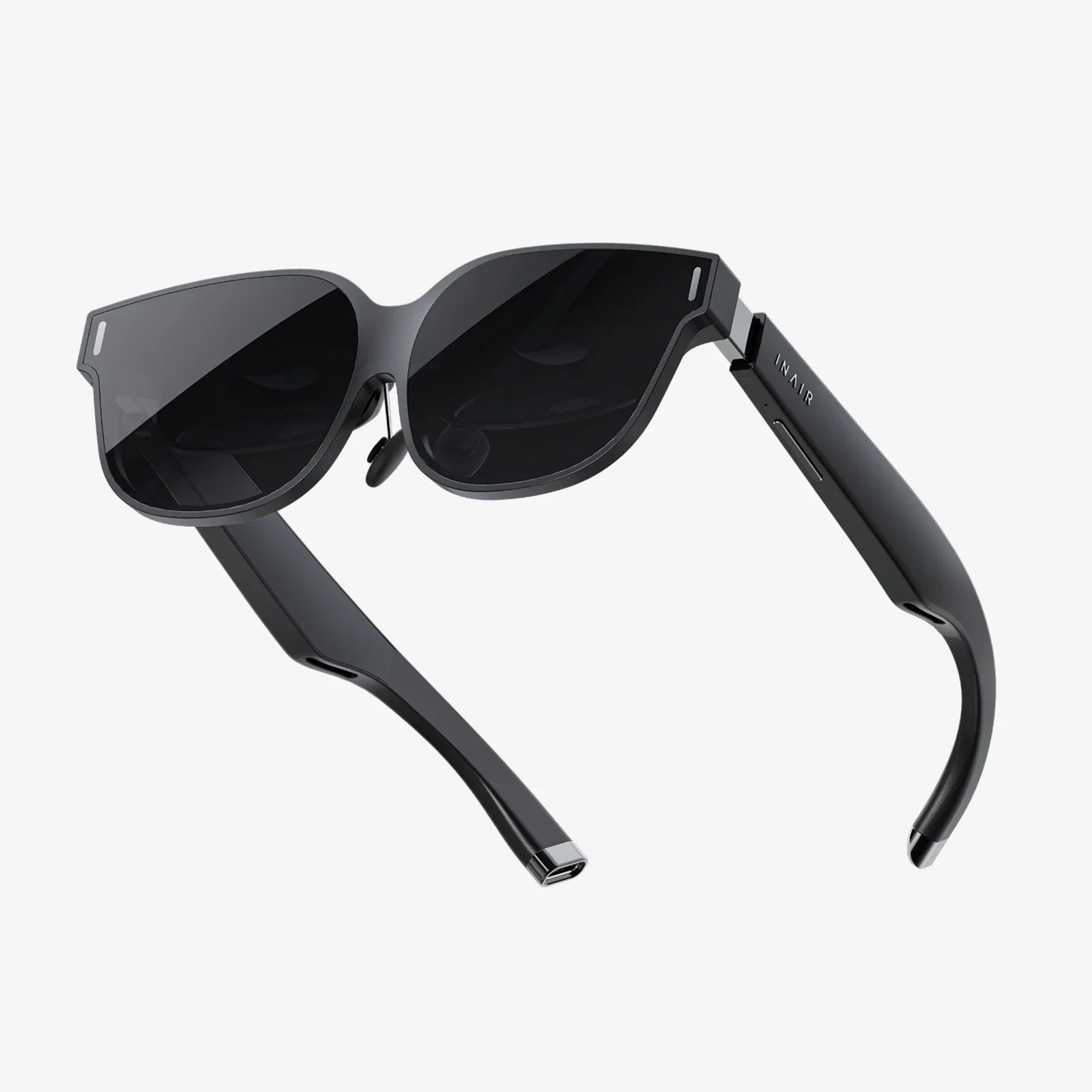
You’ve seen the headlines, watched the futuristic commercials, and perhaps even strapped on a headset yourself. The worlds of augmented reality and virtual reality are no longer the stuff of science fiction; they are rapidly becoming integrated into our daily lives, from how we work and learn to how we play and connect. But in the buzzword-filled landscape of modern technology, a critical question often gets blurred: what exactly sets them apart? Understanding the difference between augmented reality and virtual reality is not just academic pedantry—it’s the key to unlocking their immense potential and navigating the future of digital immersion. One enhances your world; the other replaces it entirely. This is the journey from seeing more to being elsewhere.
Defining the Realms: Core Concepts and Philosophical Underpinnings
At its most fundamental level, the distinction between AR and VR is a philosophical one, concerning the relationship between the user, the digital world, and the physical world.
Virtual Reality (VR): The Digital Occlusion
Virtual Reality is an immersive, simulated digital experience that completely replaces the user’s real-world environment with a computer-generated one. By blocking out all external visual and auditory stimuli, VR transports the user to a fully artificial landscape. This could be a realistic simulation of a far-off location, a fantastical game world, or a abstract digital workspace. The primary goal of VR is to create a convincing sense of presence—the undeniable feeling of "being there" in the virtual environment. This often requires specialized equipment like head-mounted displays (HMDs) with dedicated screens, motion tracking sensors, and controllers to navigate and interact within this fabricated universe.
Augmented Reality (AR): The Digital Enhancement
Augmented Reality, by contrast, does not seek to replace reality but to augment it. AR overlays digital information—images, text, data, 3D models—onto the user’s view of their real-world surroundings in real-time. Instead of occlusion, the principle is superimposition. The physical world remains the central stage, and digital elements are layered on top of it, creating a composite view. This allows users to interact with both the real and the digital simultaneously. While AR can be experienced through dedicated glasses, it is most widely accessible today through the cameras and screens of smartphones and tablets, which act as a window into an enhanced reality.
The Technological Chasm: How They Achieve Their Magic
The philosophical differences between AR and VR necessitate profoundly different technological approaches. The hardware and software requirements for building a new world are not the same as those for enhancing an existing one.
Virtual Reality Technology Stack
VR technology is built around the concept of immersion through isolation.
- Headsets: VR headsets are essentially high-resolution screens housed in a box worn on the head. They use lenses placed between the screen and the eyes to focus and reshape the picture for each eye, creating a stereoscopic 3D image that fills the user’s entire field of view (FOV).
-
Tracking Systems: To sell the illusion of presence, the virtual world must respond naturally to the user’s movements. This is achieved through sophisticated tracking systems:
- Outside-in Tracking: Uses external sensors placed around the room to monitor the position of the headset and controllers.
- Inside-out Tracking: Cameras and sensors on the headset itself scan the environment to track its position relative to the room, eliminating the need for external hardware.
- Computational Power: Rendering two high-resolution, high-frame-rate images (one for each eye) for a fully detailed 3D world demands significant graphical processing power. This is why many high-end VR systems are tethered to powerful computers or consoles, though standalone headsets with integrated processors are becoming increasingly capable.
Augmented Reality Technology Stack
AR technology is built around the concept of integration and context-awareness.
-
Sensors and Cameras: The cornerstone of AR is understanding the real world. This requires a suite of sensors:
- Optical Cameras: Capture the live video feed of the environment.
- Depth Sensors: Use technologies like LiDAR or structured light to map the geometry of the space, understanding the distance to objects and surfaces. This allows digital objects to be placed realistically on a table or behind a real-world chair.
- IMUs (Inertial Measurement Units): Accelerometers, gyroscopes, and magnetometers track the device’s orientation and movement in space.
- Processing and Computer Vision: The raw sensor data is processed in real-time by advanced algorithms and computer vision software. This software identifies flat planes (floors, walls), recognizes objects and images, and understands the spatial geometry of the environment—a process known as simultaneous localization and mapping (SLAM).
-
Display Technologies: AR uses various methods to blend the digital and physical:
- Optical See-Through: Used in smart glasses. These have transparent lenses that allow the user to see the real world directly, while miniature projectors or waveguides display digital images onto the lenses, making them appear in the real world.
- Video See-Through: Used in smartphones and some headsets. The device's camera captures the real world, and software composites the digital elements onto the video feed, which is then displayed on the screen.
A Spectrum of Experience: From AR to VR and the Middle Ground
While AR and VR are often presented as a binary choice, they exist on a spectrum of immersive technologies. Between the purely real and the purely virtual lies a continuum of experiences often referred to as Mixed Reality (MR) or Extended Reality (XR).
Mixed Reality is a more advanced form of AR where digital objects are not just overlaid but anchored to and interact with the real world in a believable way. A virtual character in MR might jump off your real desk and hide behind your real sofa, understanding the physics and occlusion of your environment. This represents a significant leap from simple AR overlays, requiring more advanced sensors and spatial understanding.
At the far end of the spectrum, closer to VR, are experiences that begin with a real-world capture. For instance, using 360-degree cameras to create a photorealistic virtual tour of a real estate property. It’s a virtual environment, but it’s one that is a direct recording of reality, blurring the lines between the two paradigms.
Real-World Applications: Solving Problems in Different Ways
The choice between AR and VR is dictated by the problem you need to solve. Their applications highlight their unique strengths.
Virtual Reality Applications: The Power of Total Immersion
- Training and Simulation: VR is unparalleled for training in high-risk or high-cost scenarios. Pilots train in flight simulators, surgeons practice complex procedures, and soldiers prepare for combat missions—all within a safe, controlled, and repeatable virtual environment where mistakes have no real-world consequences.
- Gaming and Entertainment: This is VR’s most famous application. It offers unparalleled immersion, placing the player directly inside the game world, whether exploring alien planets, solving puzzles in a haunted mansion, or creating 3D art in a virtual studio.
- Therapy and Rehabilitation: VR is used for exposure therapy to treat phobias (fear of heights, flying, public speaking) by gradually exposing patients to triggers in a controlled setting. It’s also used for physical rehabilitation, turning exercises into engaging games.
- Remote Collaboration and Telepresence: While AR overlays data, VR can create a shared virtual space where geographically dispersed teams can meet as lifelike avatars, interact with 3D models, and collaborate as if they were in the same room.
Augmented Reality Applications: The Power of Contextual Information
- Industrial and Field Work: AR is transforming maintenance and repair. A technician wearing AR glasses can see diagnostic data overlaid on machinery or follow animated repair instructions superimposed directly onto the equipment they are fixing, freeing their hands from manuals or tablets.
- Retail and E-commerce: "Try before you buy" is revolutionized by AR. Users can see how a piece of furniture would look in their living room at scale, try on virtual glasses or makeup, or visualize a new car in their driveway, all through their phone screen.
- Navigation and Wayfinding: AR can project arrows and directions onto the live view of a city street, making navigation intuitive. Indoors, it can guide you to a specific product in a vast supermarket or a gate in a complex airport.
- Education and Learning: AR brings textbooks to life. A student can point their phone at a diagram of the human heart to see a beating 3D model emerge, or explore the solar system with planets hovering over their desk, creating interactive and memorable learning experiences.
The Future Trajectory: Convergence and Divergence
The future of AR and VR is not necessarily one of competition, but of coexistence and convergence. We are already seeing hardware platforms that aim to bridge the gap. Some advanced headsets offer a "passthrough" feature, using their external cameras to display a video feed of the real world, effectively allowing them to function as both VR and AR devices. This hints at a future where a single device could span the entire spectrum of immersion.
Technological advancements will continue to push both fields forward. For VR, the pursuit is更高的分辨率higher resolution, wider fields of view, more realistic haptic feedback, and lighter, more comfortable form factors to deepen immersion and reduce fatigue. For AR, the holy grail is a pair of socially acceptable, lightweight glasses that can deliver high-quality, all-day AR experiences, which requires breakthroughs in display technology, battery life, and processing efficiency.
Ultimately, the choice between AR and VR will become less about the hardware and more about the software and the intended experience. The digital and physical realms, once separate, are becoming intertwined. We are moving towards a future where we will fluidly slip between enhanced and fully virtual realities, using the right tool for the right task, often without a conscious thought about the technology making it all possible. The boundary is not a wall, but a permeable membrane, and we are learning to cross it at will.
This isn't just about choosing a headset; it's about choosing your reality. Will you augment your own, adding a layer of digital magic to the world you already know? Or will you escape it entirely, diving headfirst into realms limited only by imagination? The difference between augmented reality and virtual reality is the difference between holding a magnifying glass to the universe and stepping through a doorway into another one. And as the technology evolves, that doorway is swinging wide open, inviting us all to see what's on the other side.
Share:
Future AR Glasses and Generative AI: The Next Great Digital Revolution
Future AR Glasses and Generative AI: The Next Great Digital Revolution