


Imagine a world where the line between the digital and the physical isn't just blurred—it's beautifully, seamlessly erased. A world where your morning run takes you through a fantastical landscape superimposed on your local park, your work meeting is a holographic collaboration with colleagues across the globe, and your medical check-up is conducted by a specialist who can see your vital signs floating beside you. This is not a distant sci-fi fantasy; it is the tangible, rapidly approaching future being forged by the parallel evolution of Virtual Reality (VR) and Augmented Reality (AR). The trajectory of these immersive technologies points toward a fundamental shift in human-computer interaction, poised to redefine every facet of our existence, from how we work and learn to how we connect and perceive reality itself.
The Convergence of Realities: From Silos to a Spectrum
For years, VR and AR have been discussed as distinct entities. Virtual Reality offers a complete digital immersion, transporting the user to a fully synthetic environment, typically experienced through a headset that occludes the physical world. Augmented Reality, by contrast, layers digital information—images, data, animations—onto the user's view of their real-world surroundings, often through glasses or a smartphone screen. The future, however, lies not in their separation, but in their inevitable convergence into a spectrum of experiences often referred to as Mixed Reality (MR) or, more broadly, XR (Extended Reality).
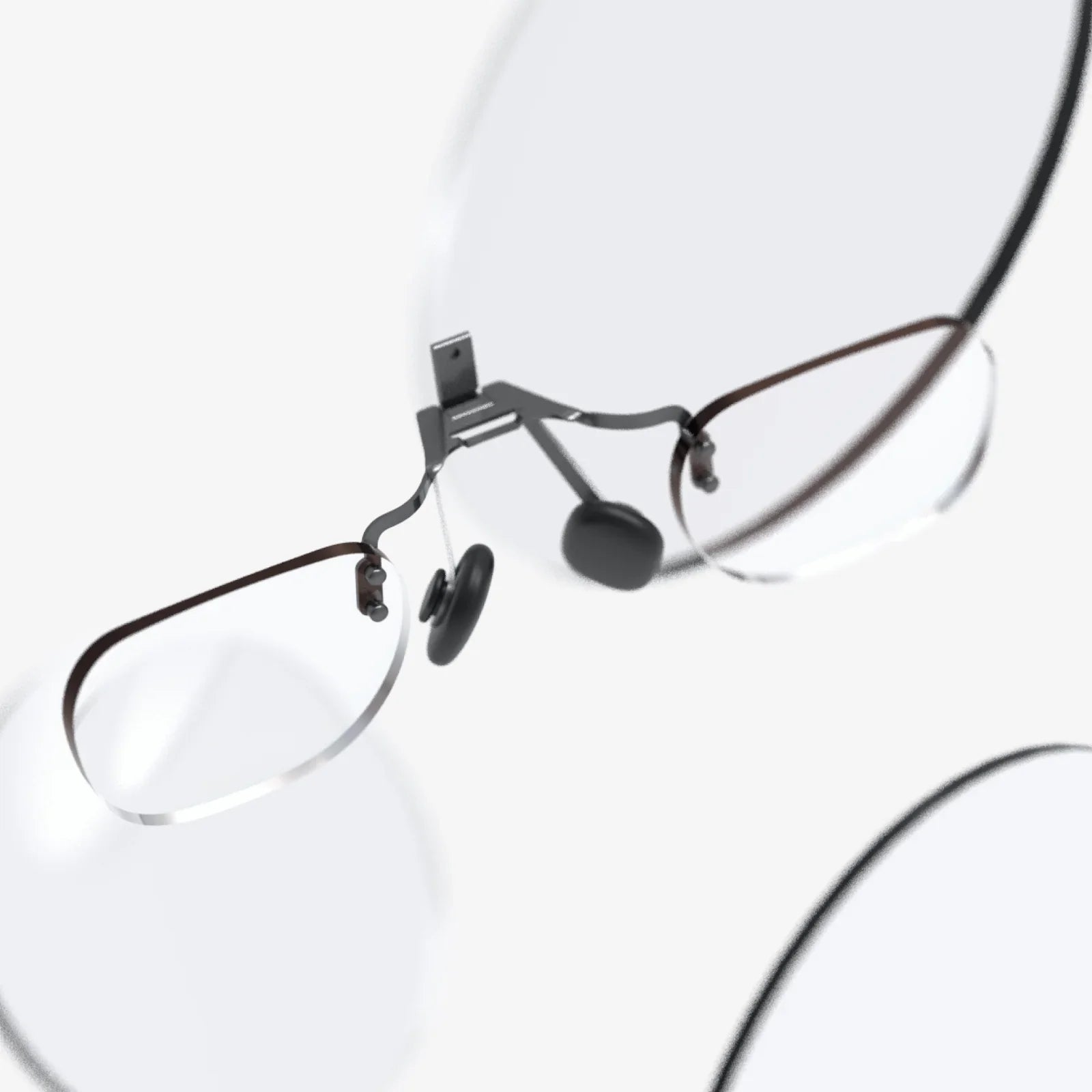
Future devices will be capable of dynamically shifting along this spectrum. A single pair of sleek, socially acceptable glasses might allow you to see contextual information about a restaurant (AR), then instantly transform your living room into a virtual cinema for a movie night (VR) by digitally occluding your surroundings. This hardware fusion will be powered by staggering advancements in:
- Photorealistic Rendering: Leveraging real-time ray tracing and cloud-based rendering farms to generate visuals indistinguishable from reality.
- Precise Spatial Mapping: Advanced LiDAR, depth sensors, and machine learning will enable devices to understand and interact with the physical world with atomic precision, allowing digital objects to convincingly obey the laws of physics—occluding behind real furniture and casting accurate shadows.
- Neural Interfaces: Moving beyond handheld controllers, the next frontier of interaction is neural input. Non-invasive sensors, initially for reading basic brainwave patterns for focus or relaxation, will evolve toward more direct control, allowing us to manipulate digital objects with thought and intention, making interfaces truly intuitive.
The Architectural Shift: The Spatial Web and Persistent Worlds
The true revolution of the VR/AR future is not just in how we see the world, but in how the world is structured digitally. We are moving from a internet of pages and sites to an internet of places and spaces: the Spatial Web. This will be a foundational layer of information and experience draped over our physical reality, accessible only through AR/VR interfaces.
Imagine pointing your device at a historical monument and seeing a reenactment of its history unfold before your eyes. Or walking into a factory and seeing performance metrics, instructions, and warnings overlaid directly on the machinery. This requires a new digital architecture built on:
- WebXR Standards: Open standards that will allow 3D content and experiences to be seamlessly accessed from any device, much like we access websites today.
- Digital Twins: Highly detailed, real-time virtual replicas of physical objects, systems, and even entire cities. These will be crucial for simulation, remote operation, and complex data visualization in fields like urban planning, manufacturing, and logistics.
- Persistent AR: Digital content that is permanently anchored to a specific location in the real world. A virtual art installation in a public square or a navigational arrow painted on the road would remain in place for all to see, creating a shared layer of collective experience and information.
Transforming Industries: Beyond Entertainment
While gaming and entertainment were the initial drivers, the future impact of VR and AR will be most profoundly felt across core industries, reshaping them from the inside out.
Healthcare and Medicine
The potential for saving lives and improving outcomes is immense. Surgeons will use AR overlays during complex procedures, displaying vital signs, 3D scans of organs, and procedural guidance directly in their field of view. Medical students will practice surgeries in risk-free VR simulations that are anatomically perfect. For patients, VR is already proving to be a powerful tool for pain management, physical rehabilitation, and treating phobias and PTSD through controlled exposure therapy.
Education and Training
Learning will transition from passive absorption to active experience. Instead of reading about ancient Rome, students will walk its streets in VR. Mechanics will learn to repair complex engines by following interactive AR instructions overlaid on the physical components. This "learning by doing" in simulated environments drastically improves knowledge retention and skill acquisition while eliminating the risk and cost associated with training on real-world equipment.
Remote Work and Collaboration
The concept of the office will be radically redefined. With high-fidelity avatars and spatial audio, remote meetings will cease to be a grid of faces on a screen and will instead become a gathering in a virtual boardroom, a creative workshop, or a design studio. Colleagues from across the planet will be able to interact with 3D models, prototypes, and data visualizations as if they were physically present, unlocking a new era of productivity and global teamwork that transcends geographical limitations.
Retail and Commerce
Try before you buy will take on a new meaning. Customers will use AR to see how a new sofa fits in their living room, how a pair of glasses looks on their face, or how a car's dashboard feels before stepping into a showroom. Virtual stores will allow for browsing and purchasing from anywhere, offering an experience far richer than today's 2D e-commerce sites.
The Human and Societal Implications
This technological upheaval brings with it a host of profound questions and challenges that society must grapple with.
The Privacy Paradox
Always-on AR glasses equipped with cameras and microphones represent the most pervasive surveillance apparatus ever conceived. They will continuously scan and interpret our environments, our interactions, and even our biometric responses. The data collected—where we look, for how long, our emotional reactions—will be incredibly intimate and valuable. Establishing robust ethical frameworks and regulations to prevent a dystopian future of corporate and governmental oversight is paramount. Who owns the data collected about your living room? How is it used? The answers to these questions will define the boundaries of our digital lives.
The Digital Divide 2.0
There is a significant risk that immersive technologies could exacerbate existing social and economic inequalities. Access to high-speed connectivity and advanced hardware will be necessary for full participation in the future economy, education, and social spheres. Without deliberate effort to ensure equitable access, we risk creating a society split between those who can afford to augment their reality and those who cannot.
Identity, Reality, and Mental Health
As we spend more time in immersive digital spaces, questions of identity and authenticity will come to the fore. How will our sense of self evolve when we can project ourselves as idealized avatars? What are the psychological effects of constantly mediating our experience through a digital layer? While these technologies offer incredible tools for connection and therapy, they also present risks of addiction, social isolation, and a detachment from the physical world and its inherent constraints. Nurturing digital literacy and mindfulness will be essential for maintaining mental well-being.
The Path Forward: Building an Inclusive and Ethical Future
The shape of this future is not predetermined by technology alone; it is a canvas upon which developers, policymakers, and users must paint. The focus must be on human-centric design—creating experiences that enhance our lives without exploiting our attention or data. This requires:
- Prioritizing Accessibility: Designing from the ground up for people with diverse abilities, ensuring these powerful tools are inclusive.
- Championing Open Standards: Preventing a future dominated by walled gardens and proprietary ecosystems that stifle innovation and choice.
- Fostering Digital Literacy: Educating the public on how to critically engage with these technologies, understand data privacy, and protect their mental space.
The journey into this blended reality is already underway. It promises a world of unprecedented convenience, connection, and understanding. But it also demands our vigilant participation to ensure it evolves into a future that reflects our collective values and aspirations, enhancing our humanity rather than replacing it. The ultimate success of virtual and augmented reality won't be measured in polygons or pixels, but in its ability to deepen our connection to each other and to the world we share, unlocking human potential in ways we are only beginning to imagine.
Share:
What Is a Good VR Headset for PC: The Ultimate Buyer's Guide
What Is Augmented Reality Remote Support: The Ultimate Guide to Visual Assistance