


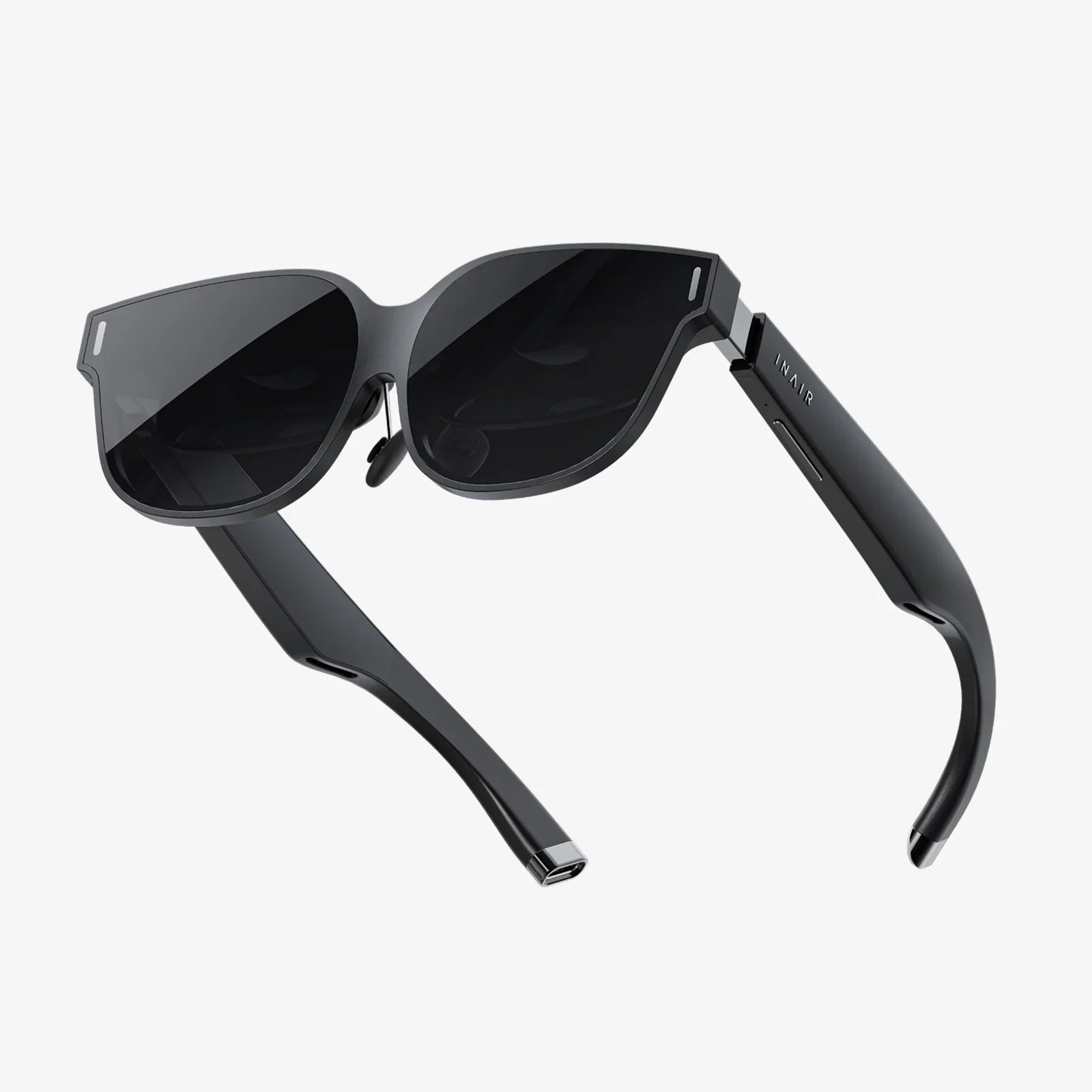
Imagine a world where digital information doesn't just live on a screen in your hand but is seamlessly woven into the fabric of your reality. Directions float on the pavement before you, a recipe hovers next to your mixing bowl without a smudge, and a virtual colleague sits across your real kitchen table. This is the promise of augmented reality (AR), a technology long confined to high-end enterprise applications and futuristic concept videos. But a seismic shift is underway. The hunt for the most budgeted AR glasses 2025 is not just a search for a cheap gadget; it's a quest for the device that will finally democratize this transformative technology, moving it from a niche luxury to a mainstream utility. The coming year is poised to be the tipping point, and for the first time, your gateway to the metaverse won't require a mortgage.
The Driving Forces Behind the Price Plunge
Why is 2025 shaping up to be the year of the budget AR headset? The answer lies in a perfect storm of technological maturation, manufacturing evolution, and intense market competition. For years, the high cost of AR was driven by exotic components and low-volume, bespoke manufacturing. Today, those barriers are crumbling.
First, the core components have seen dramatic improvements in both performance and cost. Micro-display technologies, particularly microLED and advanced LCoS (Liquid Crystal on Silicon), are now being produced at higher yields and smaller scales. These tiny, incredibly bright displays are the engines of the AR experience, and their economies of scale are finally kicking in. Similarly, the waveguides—the intricate, transparent lenses that project images onto your retina—are becoming cheaper to manufacture using nanoimprint lithography and other mass-production techniques, moving away from expensive, hand-polished glass.
Second, the processing power required for compelling AR is no longer locked inside the glasses themselves. The proliferation of powerful smartphones with robust connectivity options like Wi-Fi 6E and Bluetooth LE Audio allows for a design paradigm known as "tethered" or "companion" AR. The glasses become a sleek, lightweight display terminal, while the smartphone in your pocket acts as the brains of the operation, handling the intense number crunching for spatial tracking, object recognition, and rendering complex graphics. This offloading slashes the cost, weight, and power consumption of the glasses dramatically, making the most budgeted AR glasses 2025 possible.
Finally, the software ecosystem is maturing. Operating systems and developer kits are becoming more standardized, reducing the cost and complexity for manufacturers to build compelling products. As more developers create AR applications for a growing audience, the value proposition of owning a pair of glasses increases, justifying further investment and competition in the hardware space, which in turn drives prices down.
What to Expect: Defining "Budget" and Features in 2025
The term "budget" is relative, but in the context of the 2025 AR market, it points to a sweet spot significantly below the four-figure price tags of today's leading consumer models. Expect a fierce battle in the $200 to $500 range. This is the price bracket that has historically seen mass adoption of new consumer electronics, from MP3 players to smart speakers.
But what do you get for your money? The most budgeted AR glasses 2025 will likely share a common set of characteristics focused on core functionality over high-end luxuries.
- Design: Think more like standard eyeglasses or sleek sunglasses, not a bulky helmet. Lightweight polymer frames and minimalistic aesthetics will be the norm to encourage all-day wearability.
- Display: Monocular or binocular displays with a standard field of view (around 20-30 degrees) sufficient for displaying notifications, basic information, and simple 3D models. Resolution will be adequate for readability but won't compete with dedicated high-end VR/AR headsets.
- Audio: Integrated bone conduction or miniature directional speakers that provide private audio without earbuds, allowing you to stay connected to your environment.
- Interaction: Touch-sensitive temples for swipe and tap controls will be standard. Basic hand-tracking gestures for dismissing notifications or selecting items may appear on higher-end budget models. Voice assistants will be a primary input method.
- Connectivity: Heavy reliance on a wired or wireless connection to a smartphone for processing. Standalone functionality will be minimal, perhaps limited to basic media playback.
- Battery Life: All-day battery life is a key goal, achieved through efficient displays and the offloading of processing to the phone. Expect 4-8 hours of active use, often with a compact charging case.
The Killer Apps for the Budget-Conscious User
High-end AR promises holodecks and immersive telepresence. The budget segment, however, will thrive on practicality and enhancing daily routines. The applications that will drive adoption for the most budgeted AR glasses 2025 are less about fantasy and more about function.
Contextual Information and Navigation: This is the low-hanging fruit. Imagine walking through a new city with turn-by-turn directions painted onto the street, reviews and ratings floating above restaurants, and public transit schedules displayed at the bus stop. This hands-free, heads-up information layer is immensely practical and doesn't require a powerful GPU.
Remote Assistance and Collaboration: A expert technician can see what you see through your glasses and draw arrows and circles directly into your field of view to help you fix a appliance, assemble furniture, or troubleshoot a router. This "see what I see" functionality has enormous potential for customer support, training, and even helping family members with tech support.
Media Consumption and Productivity: This is the "portable multi-monitor setup." Budget AR glasses can project a massive, virtual screen in front of you for watching movies on a plane, reviewing a document while referencing real-world materials, or having a video call while keeping your hands free. It’s a private theater or office that fits in your glasses case.
Fitness and Health: Real-time workout metrics like heart rate, pace, and reps can be displayed in your periphery. For mindfulness, guided breathing exercises with visual cues could appear in a corner of your vision. This constant, glanceable feedback is far superior to looking down at a watch or phone screen.
Navigating the Trade-Offs: Where Will Budget Models Compromise?
To reach these attractive price points, manufacturers will have to make calculated compromises. Understanding these trade-offs is crucial for setting realistic expectations.
The most significant limitation will be the field of view (FOV). High-FOV waveguides are complex and expensive. Budget models will likely have a smaller, letterbox-style display that sits in the upper or lower portion of your vision, suitable for displaying information but not for immersive, cinematic experiences.
Processing power and standalone functionality will be minimal. These glasses will be companions, not independents. A weak smartphone or poor Bluetooth connection will result in a laggy, low-fidelity experience. They will also lack advanced sensors like LiDAR scanners found on premium models, limiting their ability to understand and interact with complex environments.
Finally, build quality and style options may be limited. While the goal is to look like normal glasses, budget frames might feel more plasticky and offer fewer customization options for prescriptions and tints compared to their premium counterparts.
A Buyer's Mindset for 2025
As the market floods with options claiming to be the most budgeted AR glasses 2025, a savvy approach is essential. Look beyond the marketing hype and focus on the core value proposition.
Prioritize comfort and wearability above all. The best AR glasses are the ones you forget you're wearing. If they are uncomfortable, they will stay in the drawer. scrutinize the claimed battery life and real-world reviews. Assess the strength of the companion app and the supported software ecosystem. A pair of glasses with ten great apps is better than one with a hundred mediocre ones.
Most importantly, align your expectations with the technology's current stage. You are buying a glimpse of the future—a incredibly useful peripheral that adds a layer of convenience and context to your life. You are not buying a fully realized magic window into the metaverse. That device is still a few years and a few thousand dollars away.
The true magic of the affordable AR revolution arriving in 2025 won't be found in any single spec sheet or flashy promotional video. It resides in the quiet, gradual way these devices will begin to stitch the digital and physical worlds together for millions, not just millionaires. It’s the power to have the right information appear at the exact moment you need it, to connect with others in a more present and meaningful way, and to unlock new layers of understanding from the world around you—all without breaking the bank. The future is about to become transparent, accessible, and surprisingly affordable.
Share:
Why My Smart View Won't Work: A Comprehensive Troubleshooting Guide
Why My Smart View Won't Work: A Comprehensive Troubleshooting Guide