


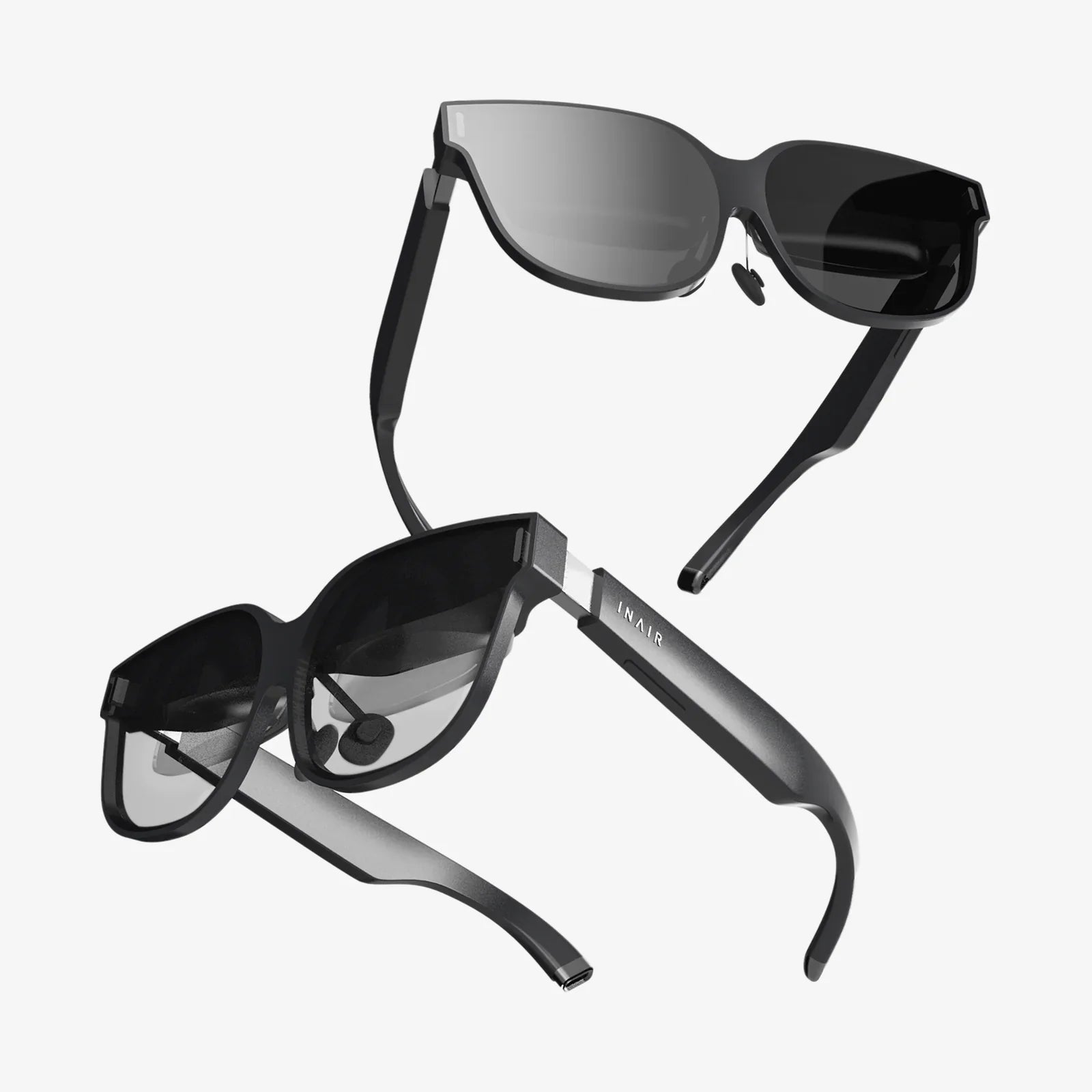
Imagine a world where digital information doesn’t live on a screen in your hand, but is seamlessly woven into the very fabric of your reality. Directions float on the sidewalk ahead of you, the name of a new acquaintance appears discreetly in your field of vision during a handshake, and a complex engine schematic hovers over the actual machinery you’re repairing. This is the promise, and increasingly the reality, ushered in by the most popular wearable technology smartglasses. This isn't a distant future concept; it's a technological revolution happening right before our eyes, fundamentally altering our relationship with information and with each other.
Beyond Novelty: The Core Technologies Powering Modern Smartglasses
The journey from clunky, limited prototypes to the sleek, powerful devices of today has been driven by breakthroughs across several technological fronts. Understanding these core components is key to appreciating the sophistication of modern smartglasses.
Optical Engine and Waveguides
At the heart of any smartglass is its display system, the method by which digital images are projected into the user's eyes. Early attempts often used small screens and complex systems of prisms, resulting in a limited field of view and a bulky form factor. The most popular wearable technology smartglasses today primarily utilize one of two advanced systems: MicroLED projectors coupled with waveguide technology, or variations of Liquid Crystal on Silicon (LCoS).
Waveguides are transparent pieces of glass or plastic etched with microscopic patterns. They act like magical conduits, capturing light from a tiny projector at the temple and "piping" it across the lens and directly into the eye. This allows for a bright, clear image that appears to float in the real world, all while keeping the lenses relatively thin and transparent. The quality of these waveguides directly impacts the brightness, clarity, and field of view of the digital overlay, making it a critical area of innovation.
Spatial Computing and Sensor Fusion
For digital content to feel like it's truly part of the real world, the device must understand the environment with incredible precision. This is the domain of spatial computing. The most popular wearable technology smartglasses are packed with a suite of sensors that act as their eyes and ears:
- High-Resolution Cameras: Used for computer vision, allowing the device to identify objects, read text, and scan QR codes.
- Depth Sensors (Time-of-Flight/LiDAR): These sensors fire out infrared light and measure the time it takes to return, creating a detailed 3D map of the surroundings. This is essential for placing digital objects behind real-world obstacles.
- Inertial Measurement Units (IMUs): Comprising accelerometers and gyroscopes, these track the precise movement and rotation of your head in real-time.
- Microphones and Speakers: Enable voice control and spatial audio, where sound seems to come from a specific point in your environment.
The magic of sensor fusion is the software that combines all this data simultaneously. It's what allows a virtual dinosaur to convincingly hide behind your real couch, or for a navigation arrow to stay pinned to a specific street corner as you move your head.
On-Device Artificial Intelligence (AI)
All the sensor data in the world is useless without the intelligence to process it. This is where onboard AI processors come in. They handle the immense computational load of understanding the environment, running voice assistants, and recognizing objects and gestures instantly, without needing a constant cloud connection. This ensures responsiveness and protects user privacy. The ability to process natural language commands or recognize a user's hand pinching to select a virtual object is all powered by specialized AI chips.
A Spectrum of Form and Function: Enterprise vs. Consumer Focus
The smartglasses landscape is broadly split into two distinct categories, each with different design priorities and use cases.
The Enterprise Powerhouse
Currently, the most mature and widespread adoption of the most popular wearable technology smartglasses is in enterprise and industrial settings. Here, the primary goals are functionality, durability, and return on investment (ROI). These devices are designed as tools to make workers more efficient, accurate, and safe.
- Design: Often bulkier to accommodate larger batteries and more powerful processing. They are built to withstand harsh environments like factory floors, warehouses, and field service sites.
-
Key Applications:
- Remote Expert: A field technician can stream their point-of-view to an expert thousands of miles away, who can then annotate the technician's real-world view with arrows and instructions.
- Digital Work Instructions: Complex assembly or repair manuals are overlaid directly onto the machinery, reducing errors and training time.
- Logistics and Warehousing: Hands-free order picking with visual cues that lead directly to items, dramatically increasing fulfillment speed and accuracy.
- Design and Prototyping: Architects and engineers can visualize and interact with 3D models at full scale before anything is physically built.
The Consumer Contender
The consumer market represents the future and the ultimate ambition for many of these technologies. The focus here is overwhelmingly on aesthetics, comfort, and social acceptance.
- Design: The holy grail is a form factor that is indistinguishable from traditional eyewear—lightweight, stylish, and with all-day battery life. This is the biggest technical challenge.
-
Key Applications:
- Augmented Navigation: Turn-by-turn directions mapped onto the streets, with floating reviews and information about restaurants as you walk by.
- Contextual Information: Real-time translation of foreign language signs, or pulling up a person's LinkedIn profile when you meet them at a networking event (with appropriate privacy controls).
- Immersive Entertainment: Watching a movie on a virtual giant screen in your living room, or playing games where characters battle on your coffee table.
- Content Creation: Capturing photos and videos from a first-person perspective, hands-free, for social media or life-logging.
The Hurdles on the Road to Ubiquity
Despite the exciting progress, significant challenges remain before smartglasses become as commonplace as smartphones.
The Battery Life Conundrum
High-resolution displays, powerful processors, and constant sensor data processing are incredibly energy-intensive. Squeezing a battery that can last a full day into the slender arms of a pair of glasses, without generating excessive heat, is a monumental task that continues to drive innovation in battery chemistry and power management software.
The Social Acceptance Question
Technology is not adopted in a vacuum; it exists within a social context. The concept of being recorded by someone wearing glasses, or the unease of talking to someone whose eyes are partially obscured by a display, presents a real social barrier. Norms around usage (e.g., a "recording" light) and designs that prioritize eye contact will be crucial for widespread public adoption.
Privacy in an Augmented World
This is perhaps the most critical issue. Devices with always-on cameras and microphones raise profound questions about surveillance, data collection, and consent. Robust, transparent, and user-centric privacy frameworks are not an optional feature; they are a prerequisite for a future where augmented reality is everywhere. Who owns the data collected about the people and places you encounter? How is it stored and used? These questions must be answered clearly.
Glimpsing the Future: What Lies Ahead?
The trajectory of the most popular wearable technology smartglasses points toward a future that feels like science fiction. We are moving toward devices with:
- True All-Day Form Factor: Glasses that are light, stylish, and you forget you're wearing them.
- Photorealistic Augmentation: Digital objects that are visually indistinguishable from real ones, with perfect lighting and occlusion.
- Neural Interfaces: Moving beyond voice and gesture to control interfaces with subtle neural signals or even thoughts, making interaction more intuitive and seamless.
- The AR Cloud: A persistent, shared digital layer over the entire world. This would allow anyone to leave a virtual note pinned to a physical location, or experience the same AR art installation in a public park.
This evolution will blur the lines between our digital and physical lives, creating new paradigms for communication, creativity, and collaboration. It will redefine industries from retail to real estate and create entirely new forms of art and storytelling.
The path from our current screens to a world illuminated with contextual, helpful information is being built today, lens by lens, pixel by pixel. The next time you put on a pair of sunglasses, take a moment to imagine the potential of what they could become. The future is not something we enter; it's something we create, and it's looking brighter—and far more intelligent—through a new lens.
Share:
Android XR Smartglasses Are Poised to Redefine Our Digital and Physical Realities
Virtual Frames Glasses: The Future of Eyewear Shopping is Here