


Imagine a world where an engineer in Munich can reach into a virtual engine block, turn a component with a colleague in Tokyo, and feel the precise resistance of a virtual thread, all while a third team member in Detroit annotates the procedure in real-time. This is not a glimpse into a distant future; it is the reality being built today in advanced virtual assembly environments. The pursuit of this seamless, collaborative, and hyper-realistic experience has ignited a race to create the single most critical tool for this revolution: the headset. But what exactly transforms a standard virtual reality device into the most wanted headset in assembly VR? It is not merely about specs on a page; it is about becoming a flawless window into a new dimension of work, an instrument of precision that disappears from the user's consciousness, leaving only the task at hand.
The Unforgiving Demands of the Professional Realm
Consumer virtual reality thrives on excitement and entertainment, often forgiving minor latencies or graphical simplifications. The professional assembly and design space offers no such grace. Here, the stakes are measured in millions of dollars, project timelines, and human safety. A misaligned part due to visual lag or an inaccurate torque simulation can have catastrophic real-world consequences. Therefore, the most wanted headset is not an upgraded gaming peripheral; it is a professional-grade instrument engineered for zero tolerance error.
The Pillars of Perfection: Deconstructing the Ideal Headset
The quest for the ultimate assembly VR headset rests on several non-negotiable pillars. Each must be perfected and harmonized with the others to create a tool that feels like a natural extension of the engineer's mind and hands.
Visual Fidelity: The Pursuit of Pixel-Perfect Clarity
In assembly work, the devil is in the details—a microscopic crack in a turbine blade, the subtle wear on a gear tooth, the exact readout of a virtual caliper. The headset's display system is the user's only conduit to this information.
- Resolution and Pixel Density: The display must offer exceptionally high resolution and pixel density (pixels per inch) to eliminate the screen-door effect and render fine text, schematics, and part details with absolute clarity. Users must be able to read the smallest serial number or instruction without squinting or moving their head awkwardly.
- Optical Stack and Lens Clarity: Advanced pancake lenses or similar innovative optical designs are crucial. They must provide a large, distortion-free sweet spot, edge-to-edge clarity, and minimal god rays or glare, which can obscure critical visual data, especially when examining shiny or metallic virtual surfaces.
- Field of View (FoV): A wide, human-like field of view is essential for spatial awareness. A narrow FoV feels like looking through binoculars, hindering a user's ability to perceive their surroundings and collaborate with objects and teammates in their peripheral vision.
Precision Tracking: The Illusion of Presence
If visual fidelity is the eyes, then tracking is the proprioception—the sense of where one's body is in space. For assembly tasks, this must be flawless.
- Inside-Out Tracking Fidelity: While external base stations offer high accuracy, the professional world demands flexibility and ease of setup. Therefore, the most wanted headset likely employs a supremely accurate inside-out tracking system. Multiple high-frame-rate cameras must track the user's hands, controllers, and the environment with sub-millimeter precision, without any jitter or drift.
- Controller and Hand Tracking: Users must have the option for both ultra-precise, ergonomic controllers that mimic tools and perfect bare-hand tracking. The ability to seamlessly switch between a power grip, a pinch, and a precise pointing gesture is vital for intuitive interaction with complex virtual assemblies.
Ergonomics and Comfort: The Forgotten Interface
A headset can have the best specs in the world, but if it's unbearable to wear for an eight-hour work shift, it is useless. Comfort is a feature, not an afterthought.
- Weight Distribution: The device must be lightweight and use a counter-balanced design (like a top-strap or rear battery pack) to remove pressure from the cheeks and forehead. The goal is to make the headset feel like a well-fitting hat, not a vise.
- Materials and Ventilation: Breathable, hygienic materials are a must. Active or passive ventilation is critical to prevent lens fogging during long sessions and to keep the user cool and focused.
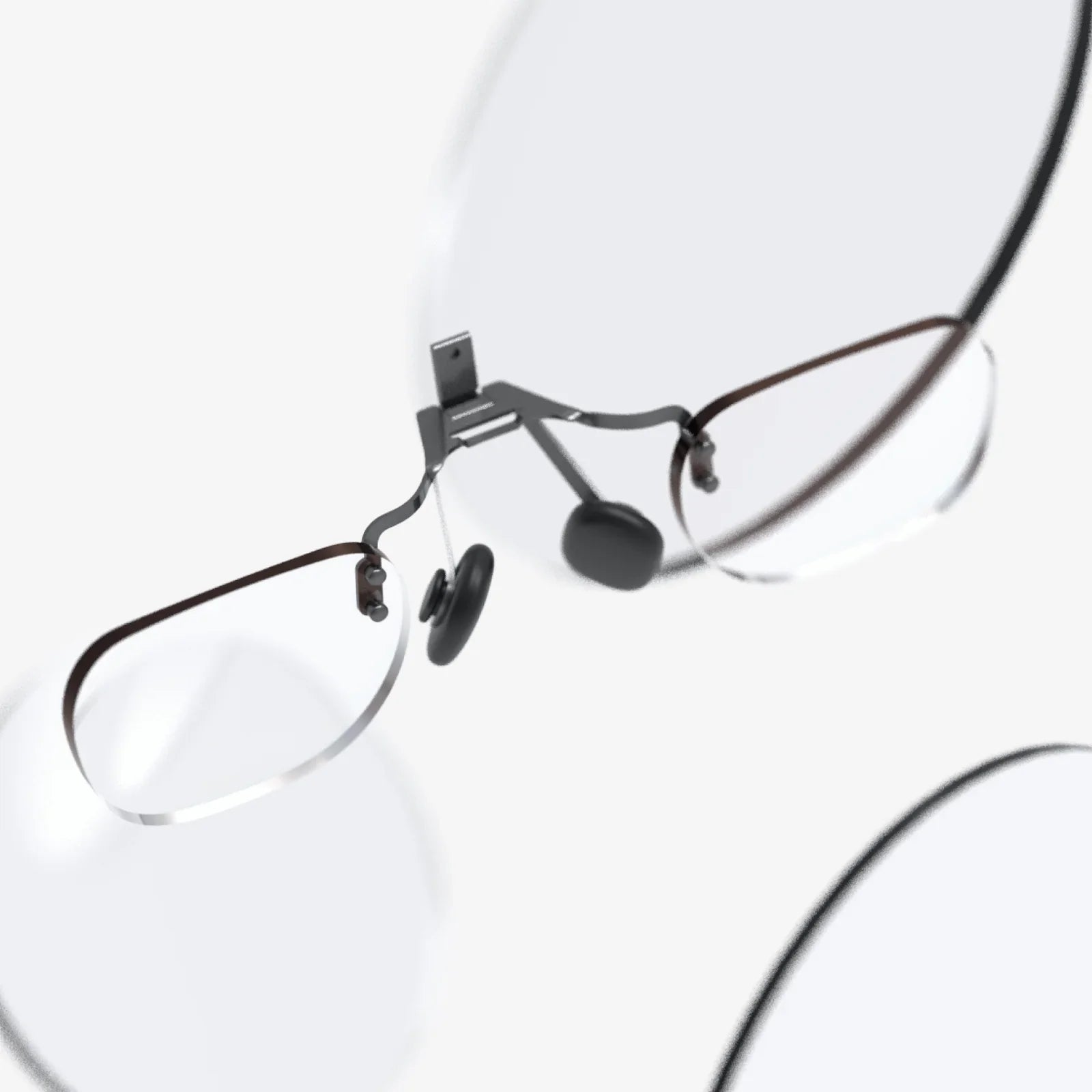
- Interchangeable Components: Different users have different needs. Foam facial interfaces should be easily swappable for different sizes and materials, and the device should accommodate prescription lens inserts so users don't need to wear glasses underneath.
Auditory and Haptic Feedback: Completing the Sensory Loop
Immersion is a multi-sensory experience. What you hear and feel is as important as what you see.
- Spatial Audio: High-quality, integrated spatial audio allows users to identify the direction of a colleague's voice, the location of a warning chime from a specific machine part, or the subtle sound of a virtual component clicking into place.
- Advanced Haptics: This goes beyond a simple buzz. The most wanted headset would support controllers and wearables that deliver nuanced haptic feedback—simulating the texture of a surface, the resistance of a spring, or the jarring vibration of a misaligned part being forced. This tactile information is invaluable for assembly validation.
Seamless Software and Ecosystem Integration
The hardware is nothing without the software to drive it. The headset must be a seamless gateway, not a locked garden.
- Native Support for Professional Platforms: It must work flawlessly out-of-the-box with major computer-aided design (CAD), product lifecycle management (PLM), and virtual prototyping software. Complicated driver setups or compatibility workarounds are unacceptable in a corporate IT environment.
- Collaboration-First Features: The operating system should be built around multi-user collaboration. Features like persistent virtual spaces, easy avatar creation, intuitive annotation tools, and seamless screen-sharing are not bonuses; they are core requirements.
- Wireless Freedom with Computational Power: A tethered cable is a constant safety hazard and an impediment to movement in a virtual workspace. The ideal headset must offer a high-performance wireless solution with low-latency compression that doesn't sacrifice visual quality. Alternatively, it must have enough onboard processing power to run complex simulations independently, untethered from a powerful computer.
Beyond the Hardware: The Ripple Effect of Adoption
The arrival of a headset that truly meets all these criteria would do more than just please engineers; it would fundamentally reshape industries.
Supercharging the Digital Thread
The "digital thread" is the concept of a seamless flow of data throughout a product's lifecycle, from design to manufacturing to maintenance. The most wanted headset would be the ultimate interface for this thread. A maintenance technician could don the headset and see the real physical engine in front of them, overlaid with AR instructions, historical performance data, and highlighted components that need replacement, all pulled directly from the digital twin.
Democratizing Design and Assembly
Complex design reviews today often require flying experts from around the world to a single physical prototype. With a perfect collaborative VR system, these reviews can happen daily, with stakeholders from every discipline represented in the virtual space. This democratizes the process, saves immense costs, and dramatically accelerates iteration cycles. A factory worker on the assembly line could potentially provide feedback to a designer before a part is ever physically manufactured.
Redefining Training and Safety
Training for complex, dangerous, or rare procedures can be conducted risk-free. Trainees can practice assembling, disassembling, and troubleshooting million-dollar equipment without the fear of causing damage. They can make mistakes and learn from them in a consequence-free environment, building muscle memory and confidence that translates directly to the physical world.
The Invisible Crown: When the Tool Disappears
The ultimate goal for the most wanted headset in assembly VR is a paradoxical one: to become invisible. The technology itself should recede into the background, becoming so intuitive, comfortable, and reliable that the user's entire cognitive load is focused on the creative or analytical task, not on the device enabling it. It becomes a true window, not a screen. A tool, not a toy. It is the key that unlocks a new paradigm of human collaboration and ingenuity, where distance is irrelevant and the only limit is imagination. The companies and engineers who recognize this are not just shopping for a piece of hardware; they are investing in the very foundation of their future competitive advantage, waiting for the one device that can finally bridge the gap between the digital ideal and the physical reality.
This relentless pursuit of the perfect blend of sight, sound, and touch is what separates a promising prototype from the industry's holy grail. The headset that finally delivers on all fronts won't just be another product on a shelf; it will be the catalyst that moves immersive technology from the lab to the factory floor, forever changing how we build, maintain, and understand the complex machines that power our world. The race is on, and the reward is nothing less than the future of manufacturing itself.
Share:
Lightweight VR Headset: The Unseen Revolution Reshaping Our Digital Lives
VR Headset with Headphones: The Ultimate Immersive Experience Unveiled