


Imagine a world where digital information doesn’t just live on a screen but is seamlessly woven into the very fabric of your reality. Where directions float on the pavement in front of you, historical figures reenact events on the very ground they occurred, and complex machinery reveals its internal workings through a transparent digital skin. This is not a distant science fiction fantasy; it is the promise and rapidly evolving reality of Augmented Reality (AR) technology. This ultimate guide will serve as your compass, navigating the fascinating landscape of AR, from its fundamental principles to its transformative potential, equipping you to understand and engage with one of the most significant technological shifts of our time.
Defining the Digital Layer: What Exactly is Augmented Reality?
At its core, Augmented Reality is a technology that superimposes a computer-generated overlay of information—be it images, sounds, text, or 3D models—onto a user's view of the real world. Unlike Virtual Reality (VR), which creates a completely immersive, artificial digital environment that replaces reality, AR enhances the real world by adding a digital layer to it. The key differentiator is that AR experiences are grounded in and interact with the user's immediate physical environment in real-time.
The goal of AR is to create a unified, interactive, and, most importantly, useful coexistence of digital and physical realities. This digital layer can provide contextual information, offer step-by-step guidance, unleash creative expression, or simply provide entertainment, all while the user remains present and engaged with their actual surroundings.
The Engine Room: How Augmented Reality Technology Works
The magic of AR is powered by a sophisticated symphony of hardware and software components working in perfect harmony. The process can be broken down into a few critical steps:
1. Sensing and Perception
An AR device must first understand its environment. This is achieved through a suite of sensors, most commonly cameras, but also including LiDAR scanners, depth sensors, radars, and IMUs (Inertial Measurement Units). These sensors act as the device's eyes, continuously capturing the surrounding world. The camera captures the 2D visual field, while depth sensors and LiDAR measure the distance to objects, creating a precise 3D map of the space. The IMU, which includes accelerometers and gyroscopes, tracks the device's precise movement, orientation, and rotation through space.
2. Processing and Scene Understanding
The raw sensor data is then processed by powerful algorithms. This is where the real computational heavy lifting occurs. Using a technique called SLAM (Simultaneous Localization and Mapping), the system constructs the 3D geometry of the environment while simultaneously pinpointing the device's exact location within that map. This allows the device to understand not just what it's looking at, but its own position relative to every surface and object. Object recognition algorithms can also identify specific items, like a chair or a piece of machinery, further enriching the device's understanding of the scene.
3>Rendering and Alignment
Once the environment is mapped and understood, the system renders the digital content. This could be a 3D model, a text annotation, or an animated character. Crucially, this rendering must be perfectly aligned and anchored to the real world. Using the data from the SLAM process and the IMU, the AR system calculates the correct perspective, scale, and occlusion (where real-world objects appear in front of digital ones) to make the overlay appear physically present. This persistent alignment is what sells the illusion and makes the experience believable and interactive.
4>Display and Interaction
The final step is presenting this composite view to the user. This can be done through various displays, from the screen of a smartphone to immersive optical see-through glasses. Interaction methods are equally diverse, ranging from touchscreens and voice commands to hand-tracking and gesture control, allowing the user to manipulate and engage with the digital elements naturally.
Beyond the Hype: The Multifaceted Applications of AR
The true power of AR lies not in the technology itself, but in its profound utility across a staggering range of sectors. It is a versatile tool solving real-world problems and creating new opportunities.
Transforming Enterprise and Industrial Work
Perhaps the most significant adoption of AR is happening in industrial settings. Here, it is revolutionizing workflows:
- Assembly and Maintenance: Technicians can see digital instructions overlaid directly onto the equipment they are repairing, highlighting the next part to install or providing animated guidance for complex procedures. This reduces errors, slashes training time, and improves first-time fix rates.
- Design and Prototyping: Engineers and designers can project full-scale 3D models of products into a physical space, allowing them to evaluate ergonomics, fit, and design long before costly physical prototypes are built.
- Logistics and Warehousing: Warehouse workers can use AR smart glasses to see the most efficient picking routes and have item locations and quantities visually highlighted, dramatically accelerating order fulfillment.
Revolutionizing Retail and E-Commerce
AR is bridging the gap between online shopping and the in-store experience. Customers can use their smartphones to see how a new sofa would look in their living room, how a pair of glasses fits their face, or how a shade of paint appears on their wall at different times of day. This “try before you buy” capability reduces purchase hesitation and minimizes returns, creating a more confident and satisfying consumer journey.
Redefining Education and Training
AR brings learning to life. Instead of reading about the solar system, students can watch planets orbit around them in their classroom. Medical students can practice complex surgical procedures on detailed, interactive 3D holograms of human anatomy without risk. This interactive, visual, and spatially-aware form of learning greatly enhances comprehension and retention.
Enhancing Navigation and Wayfinding
Imagine walking through a new city and having arrows painted onto the sidewalk showing you the way, or looking at a complex subway station and seeing signs floating above the correct corridor. AR navigation integrates directions directly into your field of view, making it more intuitive and context-aware than looking down at a 2D map.
Unleashing New Forms of Entertainment and Gaming
The success of global phenomena demonstrated the mass-market potential of AR gaming, turning parks and city streets into digital playgrounds. Beyond gaming, AR is enabling immersive art installations, interactive museum exhibits, and new forms of storytelling where narratives unfold in your own environment.
The Hardware Spectrum: From Smartphones to Smart Glasses
AR experiences are delivered through a range of devices, each with its own strengths and trade-offs between mobility, immersion, and power.
Smartphone and Tablet-Based AR
This is the most accessible and widespread form of AR today. By leveraging the built-in cameras, sensors, and processing power of mobile devices, it offers a low-barrier entry point for millions of users. The experience is often referred to as "magic window" AR, as users view the augmented world through the device's screen. While convenient and powerful, it lacks hands-free functionality and full immersion.
Standalone AR Smart Glasses
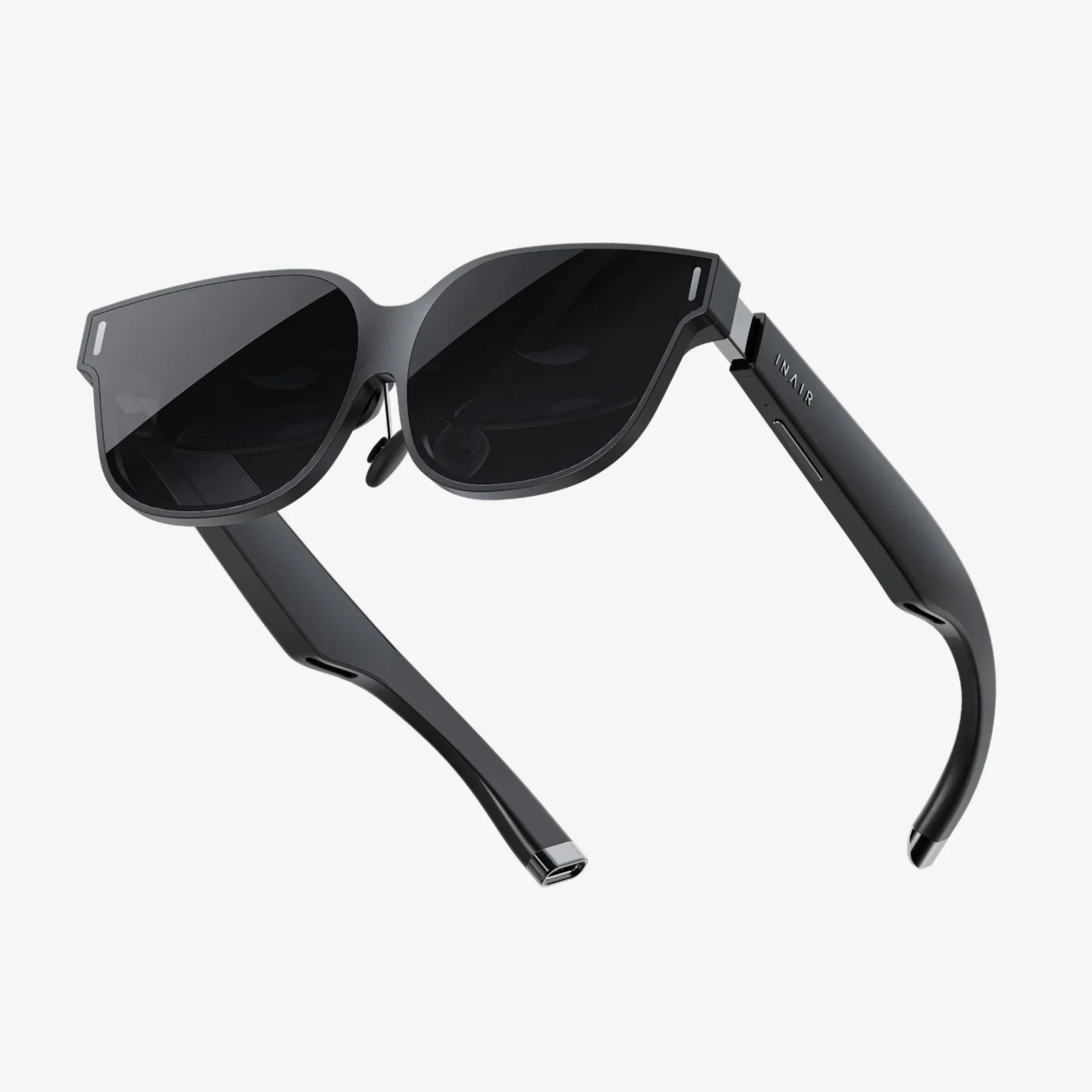
These wearable devices represent the next evolutionary step. They feature transparent waveguides or micro-displays that project digital imagery directly into the user's field of view, allowing them to see the digital overlay while maintaining a clear view of the real world. They contain their own processors, batteries, and sensors, offering a truly mobile and untethered experience. Current generations are primarily focused on enterprise and niche applications, balancing field of view, battery life, and form factor.
Tethered AR Headsets
These are more powerful, high-end systems often connected to a external computer or console. They prioritize high-fidelity graphics and robust tracking for complex simulations, advanced design visualizations, and research and development purposes. They offer the most immersive and powerful AR experience but sacrifice mobility and are not intended for all-day, everyday use.
Challenges and Considerations on the Road to Ubiquity
Despite its rapid progress, AR technology still faces several hurdles on its path to becoming a ubiquitous, everyday tool.
- Hardware Limitations: For smart glasses to become mainstream, they must become lighter, more comfortable, more power-efficient, and socially acceptable to wear. Achieving a wide field of view with high resolution in a small form factor remains a significant engineering challenge.
- User Experience (UX) and Interaction: Designing intuitive interfaces for a spatially-aware medium is a new frontier. How do users interact with floating menus? How do we avoid digital clutter and information overload? Establishing best practices for AR UX is an ongoing process.
- Privacy and Security: AR devices, with their always-on cameras and sensors, collect vast amounts of data about the user and their environment. This raises critical questions about data ownership, security, and how this information is used and stored. Establishing clear ethical guidelines and robust security frameworks is paramount.
- Digital Divide and Accessibility: As with any advanced technology, there is a risk of creating a new digital divide between those who have access to AR tools and those who do not. Ensuring the technology is developed with accessibility in mind from the outset is crucial.
The Future is Augmented: What Lies Ahead?
The trajectory of AR points toward a future where the digital and physical worlds are inextricably linked. We are moving towards the concept of the AR Cloud—a persistent, shared, digital copy of the real world. This would allow AR experiences to be persistent and multi-user; a digital sculpture placed in a town square by one person could be seen and interacted with by anyone else days later.
The evolution towards spatial computing will see our environment itself become the interface. We will interact with data and applications not on isolated screens, but all around us, using natural gestures and voice commands. This will be further accelerated by advancements in Artificial Intelligence, which will allow AR systems to understand context and intent at a much deeper level, proactively offering the right information at the right time.
In the long term, the convergence of AR with other technologies like 5G/6G connectivity, brain-computer interfaces, and haptic feedback will create experiences that are truly seamless, responsive, and indistinguishable from magic. The boundary between what is real and what is digital will become increasingly blurred, not to escape our world, but to enhance our understanding, capability, and connection within it.
The overlay has begun. The familiar world you see every day is on the verge of becoming an infinite canvas for information, storytelling, and utility. This isn't about replacing reality with a virtual escape; it's about arming our perception with a dynamic, contextual, and intelligent layer that amplifies human potential. From the surgeon's operating theater to the child's classroom, from the factory floor to your living room, Augmented Reality is poised to redefine how we work, learn, play, and connect. The ultimate destination is a world where the line between the digital and the physical finally dissolves, leaving us not with a screen to stare at, but with a richer, smarter, and more astonishing reality to experience.
Share:
Augmented Reality Definition Simple Explanation: The Digital Layer on Your World
Advantages and Disadvantages of Telecommuting and Having a Virtual Office: A Comprehensive Guide for the Modern Professional