


Imagine a world where the line between your screen and your surroundings blurs into nothingness, where digital information doesn't just live on a device but is painted onto the very fabric of your reality. This isn't a distant sci-fi fantasy; it’s happening right now, in your pocket and soon, on your face. Welcome to the captivating realm of augmented reality—a technology poised to revolutionize everything from how we play to how we work and learn. But what exactly is it? Let's peel back the digital layer.
Demystifying the Jargon: A Truly Simple Augmented Reality Definition
At its absolute core, augmented reality (AR) is a technology that superimposes a computer-generated image or information on a user's view of the real world. Think of it as a high-tech lens or a heads-up display for your life. Unlike Virtual Reality (VR), which creates a completely artificial digital environment to immerse you in, AR takes your existing, real-world environment and adds to it.
The simplest augmented reality definition is this: It's a blend of the real world and the digital world. It doesn't replace your reality; it enhances it. It adds a layer of interactive, computer-generated sensory input—which can be sound, video, graphics, or GPS data—onto your perception of the physical space around you.
AR vs. VR: Understanding the Crucial Difference
It's easy to confuse AR with its technological cousin, Virtual Reality (VR), but the distinction is fundamental.
- Virtual Reality (VR): VR is all about immersion. It blocks out the physical world entirely and transports you to a simulated, computer-generated reality. You need a dedicated headset to experience it, and when you put it on, your real surroundings disappear. You're in a new world.
- Augmented Reality (AR): AR is about integration. It keeps the real world as the central stage but brings digital elements onto it. You are always aware of and present in your actual environment. The digital content simply augments or adds context to what you're already seeing.
A simple analogy: VR is like being teleported to a fantasy movie set. AR is like having a fantasy movie character walk into your living room and sit on your sofa.
How Does It Actually Work? The Magic Behind the Screen
The seemingly effortless overlay of digital content onto your world is powered by a sophisticated blend of hardware and software. Here’s a simplified breakdown of the process:
- Sensing the World: First, the device (like your smartphone or a pair of smart glasses) needs to understand its environment. It uses cameras, sensors, gyroscopes, and accelerometers to scan the physical space. It identifies flat surfaces like tables and floors, measures distances, and understands lighting conditions.
- Processing and Alignment: This captured data is processed in real-time by sophisticated software algorithms. This is the brain of the operation. It creates a digital map of the space and calculates exactly where and how to place the digital object so it looks natural. This involves complex tasks like simultaneous localization and mapping (SLAM), which allows the device to understand its own position within the environment while also mapping that environment's geometry.
- Projection and Display: Finally, the digital content is rendered and projected onto your view. On a smartphone, this is done directly on the screen, with the camera feed acting as the backdrop. On smart glasses, more advanced systems like waveguides or micro-projectors beam the light directly onto the lenses and into your eyes, making the digital elements appear as part of the world.
The Two Main Paths to Augmentation: Marker-Based and Markerless AR
AR systems primarily use two different methods to anchor digital content to the real world:
1. Marker-Based AR (Recognition-Based)
This is one of the earlier and simpler forms of AR. It relies on a specific visual object or "marker"—often a QR code, a special image, or a printed symbol—to trigger the digital display. The device's camera scans for this predefined marker. Once it recognizes it, it uses the marker's position and orientation to correctly place the 3D model or animation on top of it.
Simple Explanation: Think of the marker as a digital anchor. The AR system says, "Ah, I see the anchor! I will now place the dinosaur right here on top of it." It's very precise but requires prior setup (printing the marker).
2. Markerless AR (Location-Based or Surface-Based)
This is the more advanced and now more common form of AR, thanks to powerful modern processors. It doesn't need a special marker. Instead, it uses the environment itself as the anchor.
- Surface Detection: The device uses its sensors to detect horizontal planes (like the floor) or vertical planes (like a wall). You can then place a virtual piece of furniture on your floor or a virtual painting on your wall, and it will stay locked in place as you move around.
- Geolocation AR: This uses GPS, compass, and accelerometer data to pin digital content to a specific geographic location. For example, you could point your phone at a street and see historical photos or restaurant reviews floating over the buildings.
Simple Explanation: The AR system looks at your room and says, "I see a flat floor. The user wants to see a virtual chair here," and it uses the complex map it built of your room to keep the chair in the right spot.
Beyond the Phone: The Hardware That Powers AR
While smartphones brought AR to the masses, the technology is evolving into more seamless form factors:
- Smartphones and Tablets: The most accessible gateway. They use the camera for input and the screen for output. Powerful and ubiquitous, but the experience is limited to the confines of the screen.
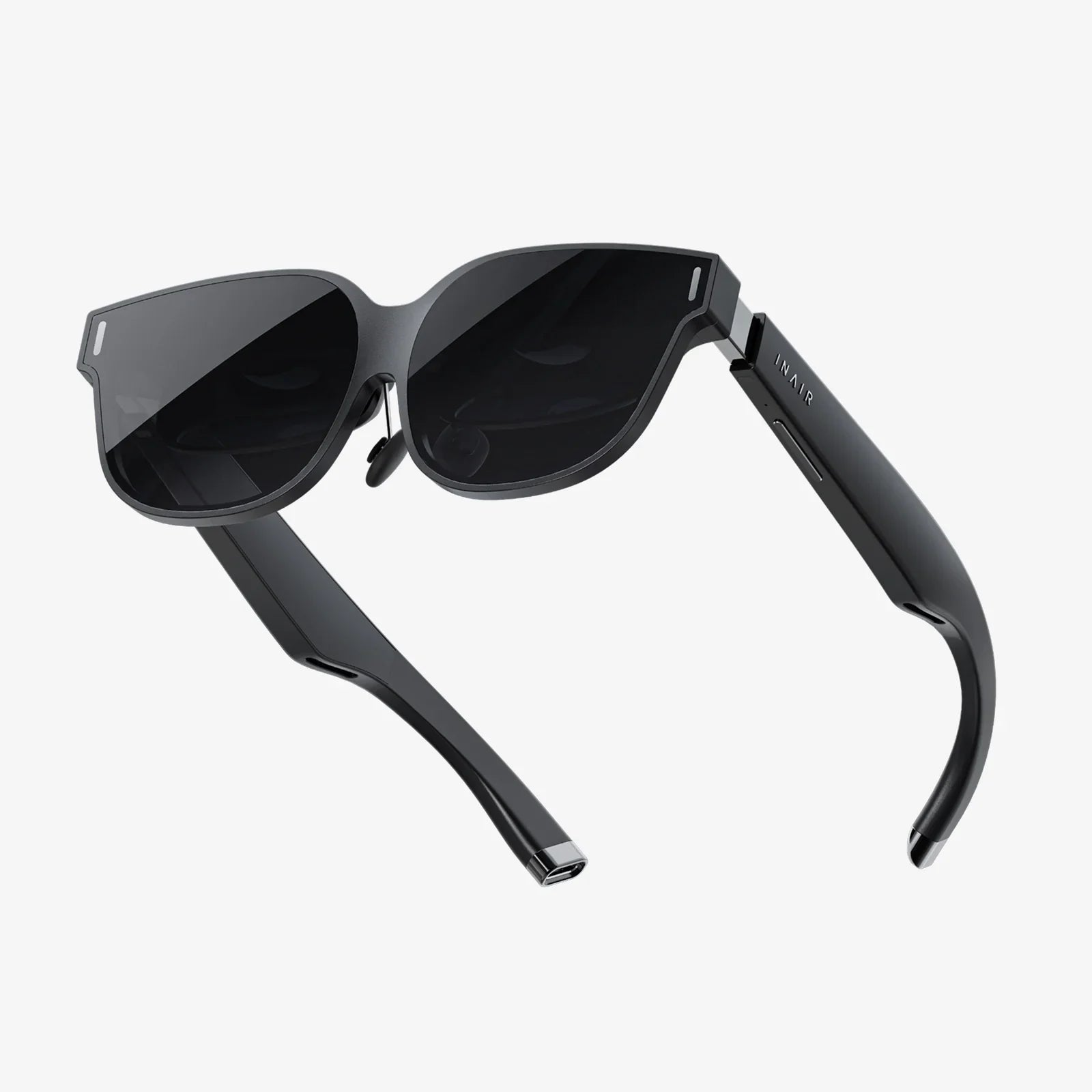
- Smart Glasses and Headsets: The future of AR. These wearable devices project information directly into your field of vision, allowing you to interact with digital content hands-free. They aim to be as ordinary and essential as a pair of eyeglasses.
- Specialized AR Systems: Used in industrial, medical, and military applications. These can include head-mounted displays with advanced tracking systems for complex tasks like guiding surgery or repairing machinery.
Augmented Reality in Action: It's Already Here
You might be surprised how integrated AR already is into our daily lives. Here are some common applications:
- Gaming and Entertainment: The most famous example is the game that had millions of people chasing digital creatures in their local parks. AR games overlay gameplay onto your surroundings, turning your home into a dungeon or your backyard into a battlefield.
- Retail and E-Commerce: Try before you buy, digitally. See how a new sofa would look in your living room, "try on" glasses or makeup, or visualize what a new paint color would do for your walls. This is revolutionizing online shopping and reducing return rates.
- Education and Training: Textbooks come alive. Students can point their device at a diagram of the human heart and see a beating, interactive 3D model. Medical students can practice procedures on virtual patients. Mechanics can see repair instructions overlaid on the actual engine they are working on.
- Navigation and Maps: Instead of looking down at a blue dot on a map, AR navigation apps use your camera to show arrows and directions painted onto the street in front of you, making it intuitive to find your way.
- Social Media Filters:
The most widespread use of AR for many people. Those fun dog ears, flower crowns, and background-changing effects on social media stories are all powered by markerless AR technology that tracks your face and movements in real-time.
The Future is Augmented: What's Next?
We are standing on the brink of an AR revolution. As the hardware becomes smaller, more powerful, and more socially acceptable (think normal-looking glasses instead of bulky headsets), AR will shift from a novelty on our phones to an indispensable part of our perceptual toolkit.
We are moving towards a world of ambient computing, where information is available contextually in our field of view without us ever having to look down at a device. Your glasses could show you the name of a person you just met, translate a street sign in a foreign language in real-time, or give you a recipe without getting your phone covered in flour.
The potential is staggering, from transforming remote collaboration to creating new forms of art and storytelling. However, this future also brings important questions about privacy, data security, and the potential for digital spam cluttering our physical vision. The challenge will be to build an AR future that enhances human connection and capability without overwhelming or isolating us.
So the next time you use a filter or place a virtual chair in your room, remember—you're not just playing with a cool feature. You're peering through a keyhole into a future where the digital and physical are forever intertwined, a world where the only limit to what you can see and do is the imagination of the developers coding your new reality. The layer is here, and it's only getting richer.
Share:
Future of Human Computer Interaction: Beyond Screens and Keyboards
The Ultimate Guide to Augmented Reality AR Technology: Navigating the Digital Overlay of Our World