


Imagine a world where your computer doesn't just wait for your command but anticipates your need, where your environment responds to your presence, and where the barrier between your digital and physical life dissolves into a seamless, intuitive flow. This isn't a distant science fiction fantasy; it is the rapidly approaching future of human-computer interaction (HCI), a revolution poised to fundamentally redefine our relationship with technology. We are on the cusp of moving beyond the static screens and physical keyboards that have defined the digital age for decades, stepping into an era of ambient, intelligent, and profoundly personal interfaces.
The End of an Era: Moving Beyond the Graphical User Interface
For over half a century, the dominant paradigm of HCI has been the Graphical User Interface (GUI). The familiar desktop, icons, mice, and windows democratized computing, making it accessible to billions. Yet, the GUI is inherently limiting. It requires users to translate their intentions into a series of precise, mechanical inputs—clicks, scrolls, and keystrokes—within a confined two-dimensional space. This is a conversation where we must speak the language of the machine, navigating its world on its terms.
The future of HCI inverts this relationship. The next great leap is not a faster processor or a higher-resolution screen, but a more natural, human-centric mode of interaction. The goal is to create technology that understands our language, interprets our context, and responds to our behavior in the real world. This shift is being powered by a convergence of several transformative technologies, each breaking down a different part of the old interaction model.
The Rise of Natural and Invisible Interfaces
The first major pillar of the new HCI is the move towards interfaces that feel natural and, eventually, invisible. We are already witnessing the early stages of this transition.
Voice and Conversational AI
Voice assistants gave us a first taste of a screen-less future. The next generation of conversational AI moves far beyond simple command-and-control. Powered by large language models, future systems will engage in fluid, contextual, and multi-turn dialogues. They will understand nuance, remember previous conversations, and even perceive emotional tone. Interaction will become a true conversation, allowing us to brainstorm, compose, and query information in a way that mirrors human discussion, freeing us from the tyranny of the keyboard.
Gesture and Motion Control
While touchscreens brought a tactile element to computing, they still confine us to a flat surface. The next step is to liberate our hands, allowing us to interact with digital information in the space around us. Advanced sensor systems, including cameras, LiDAR, and radar, can now track the subtlest movements of our hands and fingers with incredible precision. This enables us to manipulate 3D models, navigate menus, and control devices with intuitive gestures—pinching, dragging, and rotating virtual objects as if they were physically present. This is not just about showmanship; it is about creating a more intuitive and embodied way to work with complex digital information, from engineering designs to medical visualizations.
Eye Tracking and Attentive Systems
Perhaps the most profound step towards invisible interfaces is the ability for technology to know where we are looking. Eye-tracking technology can determine our focus and attention with remarkable accuracy. This enables a new class of "attentive" user interfaces. A document could automatically scroll as you reach the bottom of a page. A car's dashboard could highlight crucial information only when you glance at it. In a shared augmented reality space, your device could understand which real-world object you are examining to provide relevant contextual data. This creates a frictionless flow where the system responds to your gaze, reducing cognitive load and making interactions feel almost telepathic.
Spatial Computing: The Merging of Real and Digital
If natural interfaces are the "how" of future interaction, spatial computing is the "where." This represents the evolution of computing from something we look at to something we look through and eventually live within.
Augmented Reality (AR) and Virtual Reality (VR)
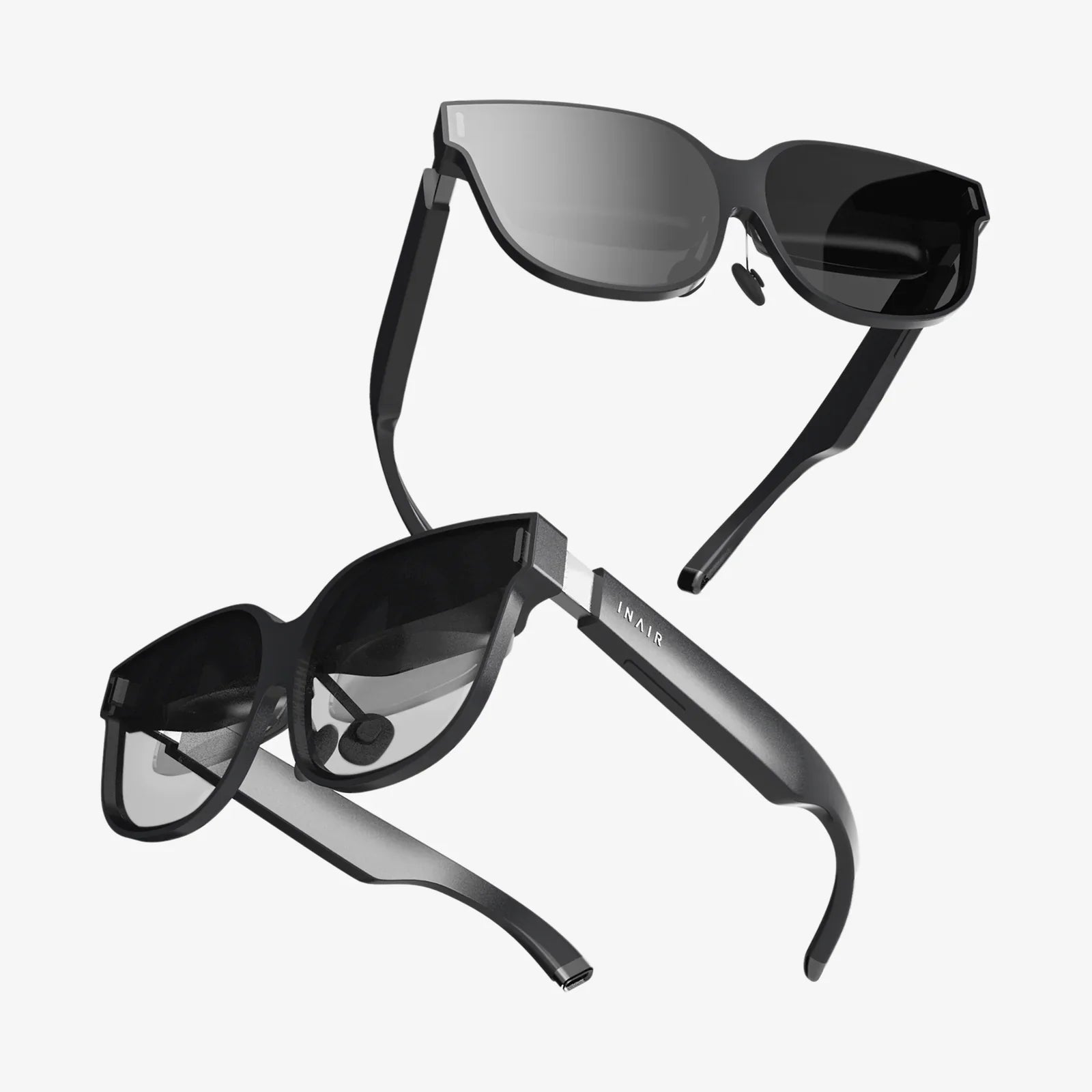
VR immerses us completely in a digital world, offering unparalleled opportunities for training, simulation, and remote collaboration. Its HCI challenges are unique, focusing on locomotion, haptic feedback, and presence. AR, however, has the broader ambition of overlaying digital information onto our physical reality. Through AR glasses and eventually contact lenses, digital artifacts—from navigation arrows on the street to schematics overlaying a broken engine—will be anchored seamlessly in our environment. Interaction becomes about manipulating these persistent digital objects that coexist with our physical world. We will tap virtual buttons floating in the air, resize digital screens on our real walls, and leave virtual notes for colleagues in a specific location.
The Metaverse and Persistent Digital Spaces
Beyond overlays, spatial computing envisions persistent, shared digital worlds—often called the metaverse. The HCI challenge here is monumental: how do we navigate, build, and socialize in vast, boundless digital spaces? The solutions will likely combine all the aforementioned modalities—voice, gesture, and gaze—into a unified interaction language. Your digital avatar might be controlled by your real-body movements, your voice communicated in real-time with spatial audio, and your creations made through intuitive hand gestures. This shifts HCI from a solitary activity to a shared, collaborative, and embodied experience.
The Intelligent and Proactive Partner: The Role of AI
Underpinning all these new interaction paradigms is artificial intelligence, acting as the indispensable intermediary. AI is the engine that makes voice recognition accurate, gesture tracking robust, and gaze prediction possible. But its role is far greater than just interpretation.
Future HCI will be dominated by proactive and anticipatory computing. Instead of reacting to our commands, our devices will use contextual awareness—knowing our location, schedule, habits, and even physiological state—to anticipate our needs and offer information or functionality before we even ask. Your car might pre-load your meeting route as you get in the door because it knows your calendar. Your home system might suggest a recipe based on the groceries it saw you bring in and your stated health goals.
This shifts the computer's role from a passive tool to an active assistant or collaborator. It will be less like a calculator and more like a co-pilot, helping us navigate an increasingly complex world by filtering information, surfacing insights, and automating mundane tasks, all through a continuous, ambient dialogue.
Bio-Sensing and Affective Computing: The Final Frontier
The most intimate and revolutionary frontier of HCI involves technology that reads not just our commands, but our bodies and emotions. This field, known as affective computing, aims to create systems that can recognize, interpret, and respond to human emotions.
Wearable and embedded sensors will monitor a wealth of physiological data: heart rate variability, skin conductance, brainwave patterns (via non-invasive EEG), and subtle facial micro-expressions. By analyzing this data, a system could understand user frustration, confusion, focus, or excitement in real-time.
The applications are profound. An educational program could slow down if it detects a student's confusion. A mental wellness app could suggest a breathing exercise when it detects signs of anxiety. A car could alert a driver showing signs of drowsiness. This represents the ultimate goal of empathetic computing—technology that understands not just what we say, but how we feel, adapting its behavior to support our cognitive and emotional state. This moves interaction from the level of explicit instruction to implicit, physiological communication.
The Inevitable Challenges: Privacy, Ethics, and the Human Factor
This incredible future does not arrive without significant risks and challenges. The very technologies that promise seamless integration and proactive assistance also raise monumental questions about privacy, security, and ethics.
An always-on, ambient computing environment that sees what we see, hears what we hear, and knows how we feel requires an unprecedented level of trust. The data collected is the most intimate possible: our behavior, our environment, our attention, and our emotions. Who owns this data? How is it stored and used? How do we prevent pervasive surveillance, either by corporations or governments? The development of robust ethical frameworks, transparent data policies, and perhaps new legal rights to "cognitive liberty" will be just as important as the technological breakthroughs themselves.
Furthermore, we must guard against digital alienation. As the virtual and physical blend, will we become more disconnected from the tangible world and from each other? Will constant technological mediation enhance or diminish the human experience? The goal of HCI must remain firmly centered on human augmentation and well-being, not replacement or addiction. Designers will bear the immense responsibility of creating experiences that are empowering, equitable, and fundamentally humane.
A Future Shaped by Human Needs
The trajectory is clear. Human-computer interaction is evolving from a deliberate, command-based dialogue to a continuous, contextual, and intelligent partnership. The interfaces of the future will be multimodal, combining voice, gesture, gaze, and touch seamlessly. They will be spatial, blending digital information with our physical reality. And they will be empathetic, responding to our emotional and physiological states.
This is not a future where technology becomes more complex; it is a future where it becomes simpler, more intuitive, and more powerful by fading into the background of our lives. The ultimate interface is no interface at all—it is a harmonious flow of information and action between humans and machines, where technology amplifies our human capabilities without demanding our constant conscious attention. The revolution will be quiet, intuitive, and all around us, transforming every aspect of how we live, work, and connect.
The devices of tomorrow won't be things we pick up and put down, but intelligent companions woven into the fabric of our daily existence, understanding our world as we do and empowering us within it in ways we are only beginning to imagine. The next time you reach for your phone or tap a keyboard, remember—that's the past. The future is already looking back at you, waiting for a glance, listening for a whisper, and ready to understand not just your words, but your intent.
Share:
Virtual Meet People: The Digital Revolution in Human Connection
Augmented Reality Definition Simple Explanation: The Digital Layer on Your World