


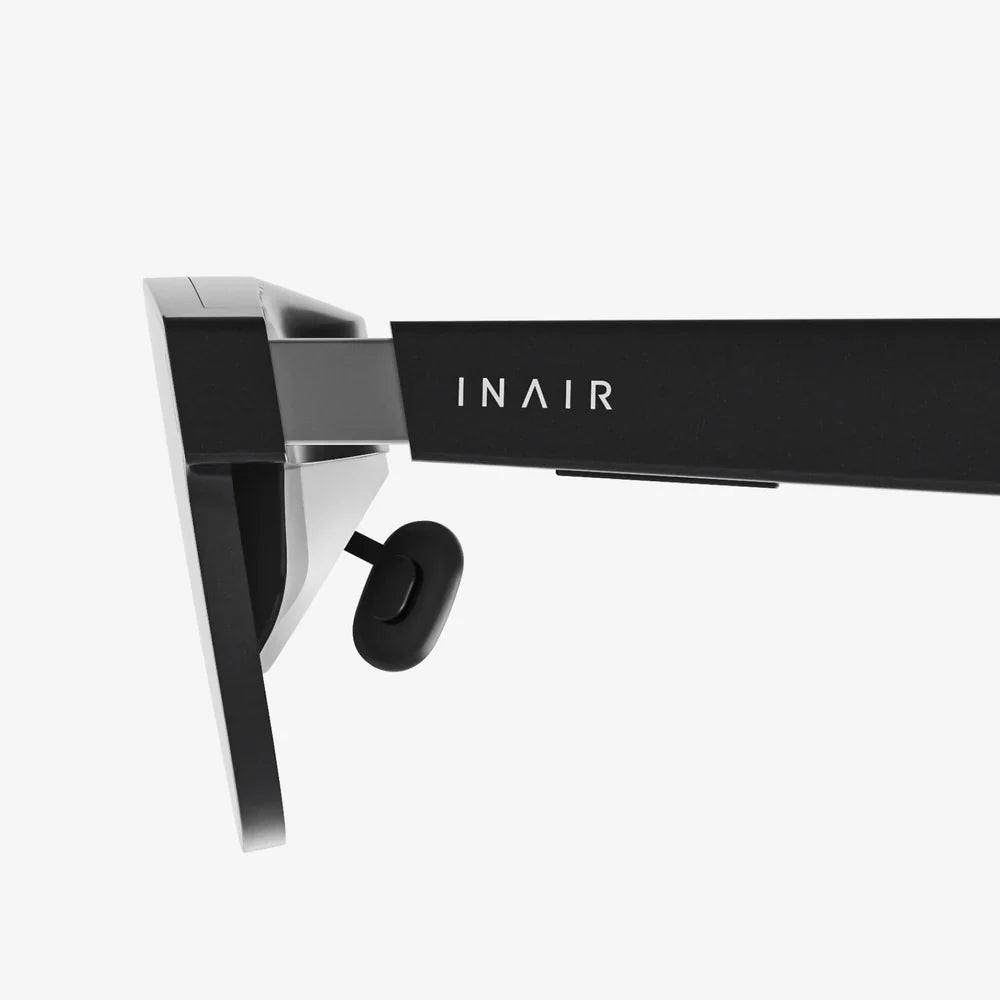
Imagine a world where digital information doesn’t live on a screen in your hand or on your desk, but is woven seamlessly into the very fabric of your reality. Where directions float effortlessly on the road ahead, foreign languages are instantly translated as subtitles on a person’s speech, and a historical monument comes alive with holographic recreations of its past. This is the promise of augmented reality (AR), a technology poised to revolutionize how we work, learn, and connect. For years, however, this incredible potential has been shackled by a critical, physical limitation: the hardware itself. Bulky, heavy, and obtrusive headsets have confined AR to the realms of industry and niche enthusiast groups, creating a stark barrier to mainstream adoption. The key to unlocking this future, it turns out, isn't just more powerful processors or brighter displays; it's a relentless pursuit of minimalism. It is the quest to create the thinnest AR glasses possible, transforming them from a conspicuous piece of technology into an invisible gateway to a new layer of existence.
The Tyranny of Bulk: Why Thinness is the Ultimate Benchmark
The evolution of personal technology has followed a clear and consistent trajectory: miniaturization. From the room-sized computers of the mid-20th century to the powerful smartphones we carry in our pockets, the goal has always been to pack more capability into a smaller, lighter, and more elegant form factor. Wearable technology, by its very nature, faces an even higher bar. It isn't just carried; it is worn. It becomes an extension of our personal style and, more importantly, our physical being. A device that is heavy, poorly balanced, or socially awkward will be rejected, no matter how impressive its technical specifications.
Early AR and VR headsets were victims of this tyranny of bulk. They were engineering marvels, but they were also helmets—cumbersome apparatuses that isolated the user from their environment and the people around them. They screamed "technology" in contexts where subtlety is paramount. This is the fundamental problem that the drive for thinner AR glasses aims to solve. Thinness is not a vanity metric; it is the primary enabler for:
- All-Day Comfort: Heavy glasses cause pressure points on the nose and ears, leading to fatigue and making them unsuitable for prolonged use. Thinner, lighter designs distribute weight more evenly, disappearing on the face and becoming as comfortable as premium prescription eyewear.
- Social Acceptability: For AR to become a ubiquitous tool for communication and information retrieval, it must be socially invisible. Glasses that look like ordinary eyewear allow the user to engage naturally in conversations, make eye contact, and move through the world without being perceived as distracted or disconnected. They normalize the technology.
- Practical Utility: Bulky headsets are confined to specific, controlled environments. Thin glasses can be worn anywhere—on the morning commute, in a business meeting, at a coffee shop, or while walking through a museum. This drastically expands the number of use cases and moments where AR can provide value.
Therefore, the pursuit of the thinnest AR glasses is not merely an engineering challenge; it is the central crusade to transition AR from a novel gadget into an indispensable and integrated part of our daily lives.
Deconstructing the Form Factor: The Anatomy of Thin AR Glasses
To understand how companies are achieving these remarkably slim profiles, it's essential to break down the core components of an AR glasses system and see how each is being miniaturized and reimagined.
The Optical Heart: Waveguides and Beyond
At the core of any AR glasses is the optical system—the technology that projects digital images into the user's eyes while allowing them to see the real world. This is the single biggest determinant of the device's thickness and weight. The older approach of using half-silvered mirrors or bulky combiners is entirely incompatible with a thin form factor. The solution that has emerged as the industry standard for sleek glasses is the waveguide.
Think of a waveguide as a incredibly thin, transparent pane of glass or plastic that acts as a conduit for light. Tiny projectors, often based on Laser Beam Scanning (LBS) or MicroLED technology, are mounted on the temples of the glasses. They shoot photons into the edge of the waveguide. Through a process of total internal reflection and diffraction (often managed by nanoscale surface gratings), this light "bounces" through the waveguide until it is directed out towards the user's eye, painting a bright, sharp image onto their retina. The key advantage is that the entire display system is essentially flat, allowing the lens of the glasses to remain as thin as a regular pair of sunglasses or prescription lenses.
The evolution of waveguides is a story of increasing efficiency and clarity. Early designs suffered from low brightness, a narrow field of view (FoV), and visual artifacts like rainbow effects. Advances in manufacturing, particularly in etching diffraction gratings with nanometer precision, have led to more efficient designs like polarized waveguides and holographic waveguides. These advancements allow for brighter images, wider fields of view, and better transparency, all while maintaining that critical, razor-thin profile.
The Power and Processing Dilemma
Rendering complex 3D graphics, running computer vision algorithms to understand the environment, and processing camera feeds requires significant computational power and energy—resources traditionally provided by a large, hot, and power-hungry processor. Embedding this into the thin arms of glasses is a monumental challenge.
The industry has largely converged on a two-part solution: a split architecture. The glasses themselves house the absolute essentials: the waveguides, projectors, cameras, sensors, and a small battery. The vast majority of the heavy computational lifting is offloaded to a companion device—most commonly a smartphone or a dedicated small compute puck that can be carried in a pocket. This device acts as the brain, processing data and rendering the AR experience, then wirelessly streaming the visual output to the glasses, which act as a sophisticated display.
This elegant solution is what makes the current generation of thin AR glasses possible. It allows the form factor on the face to remain minimal and lightweight, leveraging the powerful computer we already carry with us. Future advancements in ultra-low-power, specialized AI chips (ASICs) may eventually allow more processing to be done on the device itself, but for now, the split architecture is the key to achieving a slim profile.
Battery Life: The Invisible Constraint
Powering the micro-displays, sensors, and wireless modules is a constant battle against physics. Batteries are dense, and users expect all-day battery life. The solution is, again, a multi-pronged approach. Glasses are using incredibly efficient micro-displays like MicroLEDs, which offer high brightness for very low power draw. Designers are also employing sophisticated power gating, where sensors and components are only activated when needed. Furthermore, the split architecture plays a crucial role here too; by offloading the most power-intensive tasks, the glasses' own small battery can be reserved solely for the display and wireless systems, significantly extending usage time. Some prototypes are even exploring alternative energy harvesting methods, such as capturing solar energy or kinetic energy from movement, though these are still in early research stages.
The Technologies Making the Impossible, Possible
The race to create the thinnest AR glasses is fueled by breakthroughs in several fields, often operating at the microscopic level.
- MicroLED Displays: These are considered the holy grail for AR displays. Each pixel is a microscopic, self-illuminating LED, eliminating the need for a separate backlight. This results in displays that are incredibly bright, energy-efficient, and capable of achieving extremely high pixel densities (PPI), all while being minuscule in size.
- Nanotechnology: The precision required to etch the diffraction gratings onto waveguides is measured in nanometers. This reliance on nanofabrication techniques, borrowed from the semiconductor industry, is what allows for the creation of optically perfect and efficient waveguides that are thinner than a coin.
- Advanced Materials: The use of new polymer composites, meta-materials, and super-lightweight metal alloys is crucial for building frames that are both incredibly thin and durable enough to withstand daily wear and tear.
A World Transformed: The Impact of Invisible Computing
When AR glasses finally achieve a form factor indistinguishable from regular eyewear, their impact will permeate every facet of society. The applications are boundless, but a few key areas stand out:
- Enterprise and Manufacturing: Technicians will have schematics and instructions overlaid directly on the machinery they are repairing. Warehouse workers will see optimal picking routes and item information flash before their eyes, streamlining logistics to an unprecedented degree.
- Healthcare: Surgeons could have vital patient statistics, 3D scans, and guidance systems projected into their field of view during procedures without ever looking away from the operating table. Medical students could learn anatomy through interactive 3D holograms of the human body.
- Education: History lessons could transform into immersive walk-throughs of ancient Rome. Biology students could dissect virtual frogs or explore the inner workings of a cell. Learning would become a dynamic, interactive, and spatial experience.
- Navigation and Tourism: City streets would come alive with contextual information. Walking tours would be guided by holographic historians, and language barriers would dissolve with real-time translation subtitles.
- Social Connection and Remote Work: Video calls could evolve into holographic avatars of colleagues sitting across the table from you, creating a sense of presence that flat screens cannot replicate.
The Challenges on the Horizon
The path to perfect, ubiquitous thin AR glasses is not without its obstacles. Beyond the hardware challenges, there are significant hurdles in display performance (achieving a wide field of view and high resolution in a tiny package), user interface (developing intuitive and private ways to interact with the digital layer), and content ecosystem (building the immersive applications that will drive adoption). Furthermore, critical questions around privacy, data security, and social etiquette must be addressed before these devices can be welcomed into the mainstream.
The dream of perfect augmented reality has always been a pair of ordinary-looking glasses that grant us superhuman perception. For decades, it felt like science fiction. Today, it is on the cusp of science fact. The relentless innovation focused on creating the thinnest AR glasses is the final, crucial push to move this transformative technology from the lab and the factory floor onto the faces of billions. It is the process of making the extraordinary look ordinary, and in doing so, forever changing our ordinary reality.
We stand at the precipice of a fundamental shift in human-computer interaction, where the line between our digital and physical selves will finally blur into irrelevance. The next time you see someone wearing a sleek pair of glasses, look again. They might not just be seeing the world as it is, but as it could be—a universe of information, connection, and possibility, all hidden in plain sight.
Share:
Digital Products Explained: Your Guide to the Tech That Powers Modern Life
Voice AI Hardware Acceleration: The Silent Revolution Powering Our Conversational Future