


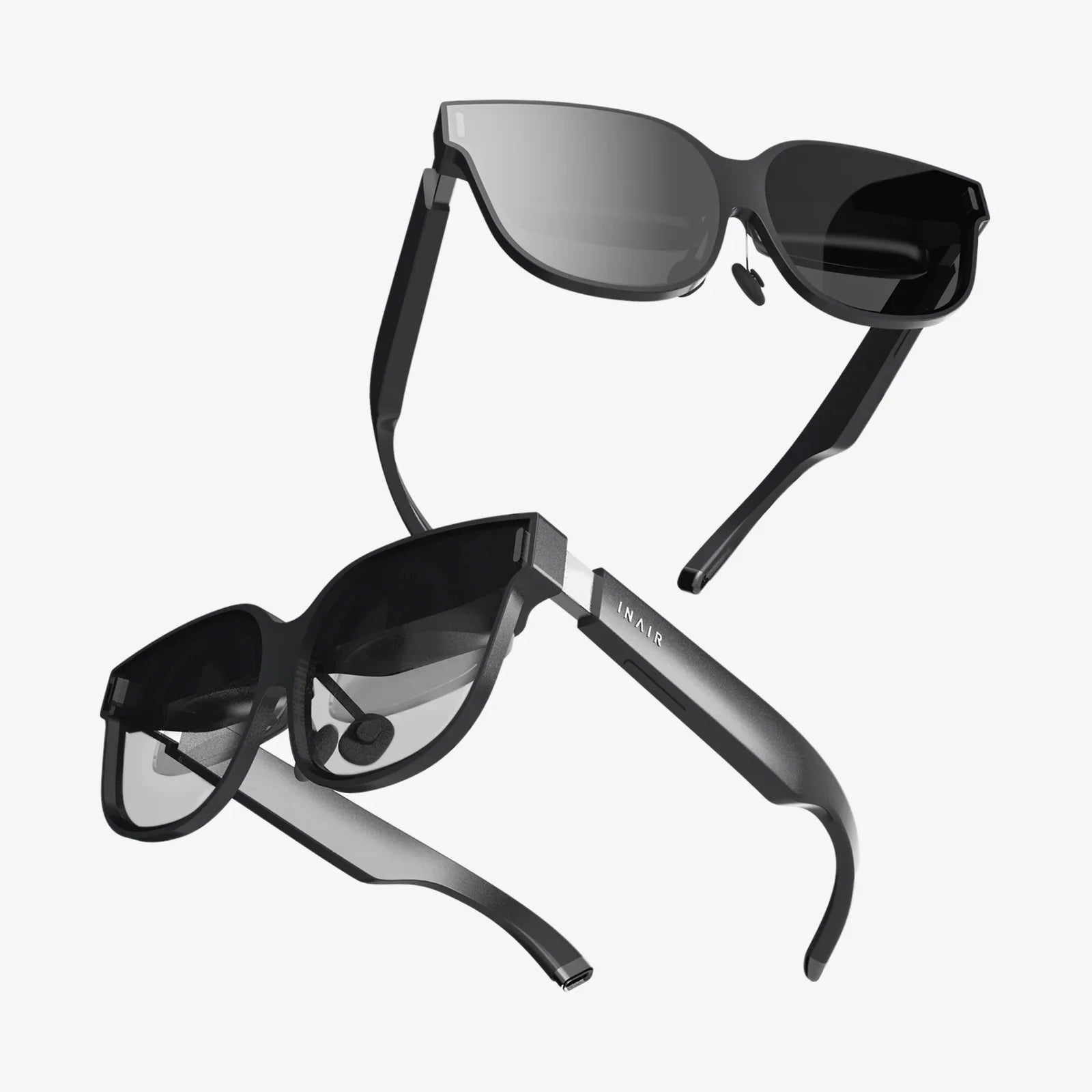
Imagine stepping through a portal into another world, a universe crafted from light and code where the only limit is imagination. This is the promise of Virtual Reality, a technology that has captivated futurists and innovators for decades. But not all VR experiences are created equal. The term itself is a broad church, encompassing a spectrum of technologies that offer vastly different levels of immersion, interaction, and application. Understanding the distinctions between the three primary types of VR—fully immersive, semi-immersive, and non-immersive—is crucial for grasping not just the present state of the technology, but its profound potential to reshape everything from entertainment and education to healthcare and heavy industry. This journey through the layers of the virtual will reveal how each type serves a unique purpose, building bridges between our physical reality and infinite digital possibilities.
The Foundation: Defining the Virtual Realm
Before dissecting the three types, it is essential to establish a common understanding of what Virtual Reality aims to achieve. At its core, VR is a simulated digital environment that replaces the user's real-world surroundings with a computer-generated one. This environment can be a photorealistic replication of a real place, a fantastical landscape, or an abstract data visualization. The key differentiator from watching a video on a screen is the sense of presence—the psychological phenomenon where the user's brain is tricked into believing it is actually within the virtual space. This is achieved through a combination of hardware and software designed to engage the primary senses, primarily sight and sound, and increasingly touch.
The concept is far from new. The seeds were planted in the 1960s with early head-mounted displays and flight simulators. However, it is the recent convergence of powerful graphics processing, high-resolution displays, sophisticated motion tracking, and accessible development platforms that has propelled VR from science fiction into a tangible, rapidly evolving field. This evolution has naturally given rise to different approaches to creating presence, categorized by their level of immersion and the technology required to achieve it.
Fully Immersive Virtual Reality: The Gold Standard of Presence
When most people envision VR, they are thinking of fully immersive virtual reality. This type represents the most complete attempt to shut out the physical world and transport the user entirely into a digital one. It is the most technologically complex and, when executed well, the most psychologically powerful form of VR.
Core Characteristics and Technology
Fully immersive VR is defined by two critical hardware components: a head-mounted display (HMD) and precise motion tracking. The HMD is a helmet or pair of goggles that houses two small high-resolution displays, one for each eye, creating a stereoscopic 3D effect that gives depth to the virtual world. These displays fill the user's entire field of view, eliminating any visual reference to the real world. The HMD also contains built-in headphones for spatial 3D audio, which reinforces the sense of place—a sound coming from the left in the virtual world will be heard from the left.
The second pillar, motion tracking, is what makes the experience interactive and believable. This involves a system of external sensors, cameras, or internal outward-facing cameras that monitor the position and orientation of the HMD and, typically, handheld controllers. As the user moves their head and hands, their movements are reflected instantly and accurately within the virtual environment. This 1:1 tracking allows users to lean, crouch, walk around (within a defined safe area), and manipulate virtual objects with their hands. More advanced systems even incorporate eye-tracking and haptic feedback suits to engage more senses.
Applications and Impact
The applications for fully immersive VR are vast and growing. In gaming and entertainment, it offers unparalleled levels of engagement, allowing users to not just play a game but to inhabit it. Beyond entertainment, it is revolutionizing training simulations. Surgeons can practice complex procedures on virtual patients without risk, astronauts can prepare for spacewalks, and mechanics can learn to repair new engines long before a physical prototype exists. In therapy, it is used to treat phobias, PTSD, and anxiety disorders through controlled exposure in a safe environment.
Limitations and Considerations
The primary limitations are cost, accessibility, and physical constraints. High-end fully immersive systems require a powerful computer to run, representing a significant investment. The physical space required for room-scale experiences is a luxury not everyone has. Furthermore, some users experience simulator sickness, a type of motion sickness caused by a disconnect between visual movement and the body's vestibular sense. Finally, by its very nature, this type of VR isolates the user from their immediate physical surroundings, which can be a safety concern and a social barrier.
Semi-Immersive Virtual Reality: The Power Station of Simulation
Semi-immersive virtual reality offers a middle ground, providing a strong sense of immersion but without completely disconnecting the user from their physical environment. It often forgoes the all-encompassing HMD in favor of large, high-resolution projection systems or multiple large-screen monitors. The user remains aware of their surroundings but is deeply engaged with the digital simulation in front of them.
Core Characteristics and Technology
The classic example of semi-immersive VR is a flight simulator. A pilot sits in a physical mockup of a cockpit cabin, complete with real controls, instruments, and a seat that may move hydraulically to simulate motion. Instead of a windshield, however, they are surrounded by large projection screens or monitors that display a realistic, computer-generated view of an airport, sky, and terrain. The user interacts with the simulation through the physical controls, and the system provides visual and auditory feedback based on their actions.
This type of VR relies less on convincing the brain it is somewhere else and more on providing a highly realistic and responsive training or design tool. It often employs motion platforms to add physical motion cues, enhancing the realism. While some semi-immersive systems may use VR headsets, the defining factor is that the user's primary connection to the virtual world is through a screen-based system they look at, rather than a display they are inside of.
Applications and Impact
Semi-immersive VR is the workhorse of industrial and professional applications. Its primary domain is in simulation and training for complex, high-value machinery: not just aircraft, but also ships, construction equipment, and military vehicles. It allows for safe, repeatable, and cost-effective training in scenarios that would be too dangerous, expensive, or logistically impossible to conduct in the real world. Architects and urban planners use semi-immersive "CAVE" (Cave Automatic Virtual Environment) systems, where projectors are directed between walls of a room-sized cube, to walk clients through lifelike 3D models of unbuilt structures. This provides a much better sense of scale and space than a flat blueprint or even a 3D model on a monitor.
Limitations and Considerations
While more accessible than full flight simulator cabins, high-end semi-immersive systems are still substantial investments primarily suited for institutional use. They are generally not a consumer product. The immersion, while powerful, is not total, as the user is always consciously aware of the screen or projection surface. It is a window into another world, rather than a doorway through which you step.
Non-Immersive Virtual Reality: The Ubiquitous Digital Workspace
At the far end of the spectrum lies non-immersive virtual reality. This may seem like a contradiction in terms, but it is arguably the most common and widely used form of VR today. It describes a 3D simulated environment that is accessed and controlled through a standard computer screen, using familiar interfaces like a mouse, keyboard, and touchscreen. The user remains fully aware of their physical surroundings and has no false sense of being transported elsewhere.
Core Characteristics and Technology
Any video game played on a monitor or television that features a 3D virtual world is a form of non-immersive VR. From exploring vast continents in massive multiplayer online games to building complex machinery in engineering simulation software, the user navigates and interacts with a digital world from a third-person perspective or through a first-person view confined to a rectangle on their desk. The "virtual reality" here is the world itself, not the method of viewing it. The interaction is indirect; you move a mouse to make a character turn, rather than turning your own head.
Applications and Impact
The applications are endless because the technology barrier is virtually nonexistent. This is the VR of video games, architectural design software (like CAD), and many scientific modeling applications. A doctor examining a detailed 3D model of a patient's heart on their monitor, rotating it and zooming in to plan a surgery, is using non-immersive VR. It is an incredibly powerful tool for visualization, design, and entertainment that leverages the ubiquitous presence of the personal computer. It requires no special hardware, making it accessible to billions of people.
Limitations and Considerations
By definition, it lacks the sense of presence and scale that defines more immersive types. The experience is observational rather than experiential. You are controlling an avatar or a camera within a world, but you are not “in” it. It does not engage the body or the spatial senses in the same way, meaning it cannot be used for applications that require physical practice or the psychological impact of true presence.
Choosing the Right Reality: A Matter of Purpose
The choice between these three types of VR is not a matter of which is objectively better, but which is most appropriate for the task at hand. Each occupies a vital niche.
- Fully Immersive VR is chosen when the goal is embodied experience, emotional impact, or physical skill transfer. It is for tasks where "being there" is everything.
- Semi-Immersive VR is selected for high-fidelity training and visualization where users need to interact with complex physical controls or see a vast amount of visual detail on a large scale, but without the need for total isolation.
- Non-Immersive VR is the tool for accessibility, widespread collaboration, and detailed manipulation of 3D models or environments where presence is secondary to precision and access.
In many professional pipelines, these types are used sequentially. An engineer might design a new car part in non-immersive CAD software, evaluate its aesthetic and ergonomic properties in a semi-immersive projection room, and finally use a fully immersive VR system to conduct a virtual walk-around and inspection of the full-scale assembled vehicle.
The Blurring Lines and The Future of Immersion
The boundaries between these categories are not rigid. Technology is constantly evolving, pushing the capabilities of each type while blurring the lines between them. Standalone VR headsets are making fully immersive systems more accessible and wireless. Augmented Reality (AR) and Mixed Reality (MR), which overlay digital content onto the real world, represent a parallel evolution that challenges the definition of a purely "virtual" reality. Furthermore, the rise of the metaverse—a persistent network of shared virtual spaces—proposes a future where these different types of VR might converge into a seamless continuum of digital interaction.
We are moving towards a future where we will fluidly transition between realities based on our needs. You might attend a virtual meeting using a non-immersive desktop client to share 3D models, then strap on a headset for a fully immersive collaborative design session with colleagues across the globe, and later use a semi-immersive AR display in your physical workspace to see instructions overlaid on a machine you are repairing.
The journey into the virtual is just beginning. From the profound isolation of a fully immersive headset to the collaborative power of a shared simulation on a screen, these three types of virtual reality are not competing visions of the future, but complementary tools in a new digital toolbox. They are building blocks for a world where our physical and digital lives are increasingly intertwined, offering new depths of understanding, new scales of creativity, and new frontiers for human experience. The real question is no longer if you will step into a virtual world, but which one you will choose to build first.
Share:
Human Computer Interaction Virtual Reality: The Dawn of a New Digital Epoch
Virtual Reality Full Set Price - A Comprehensive Guide to Costs and Considerations