


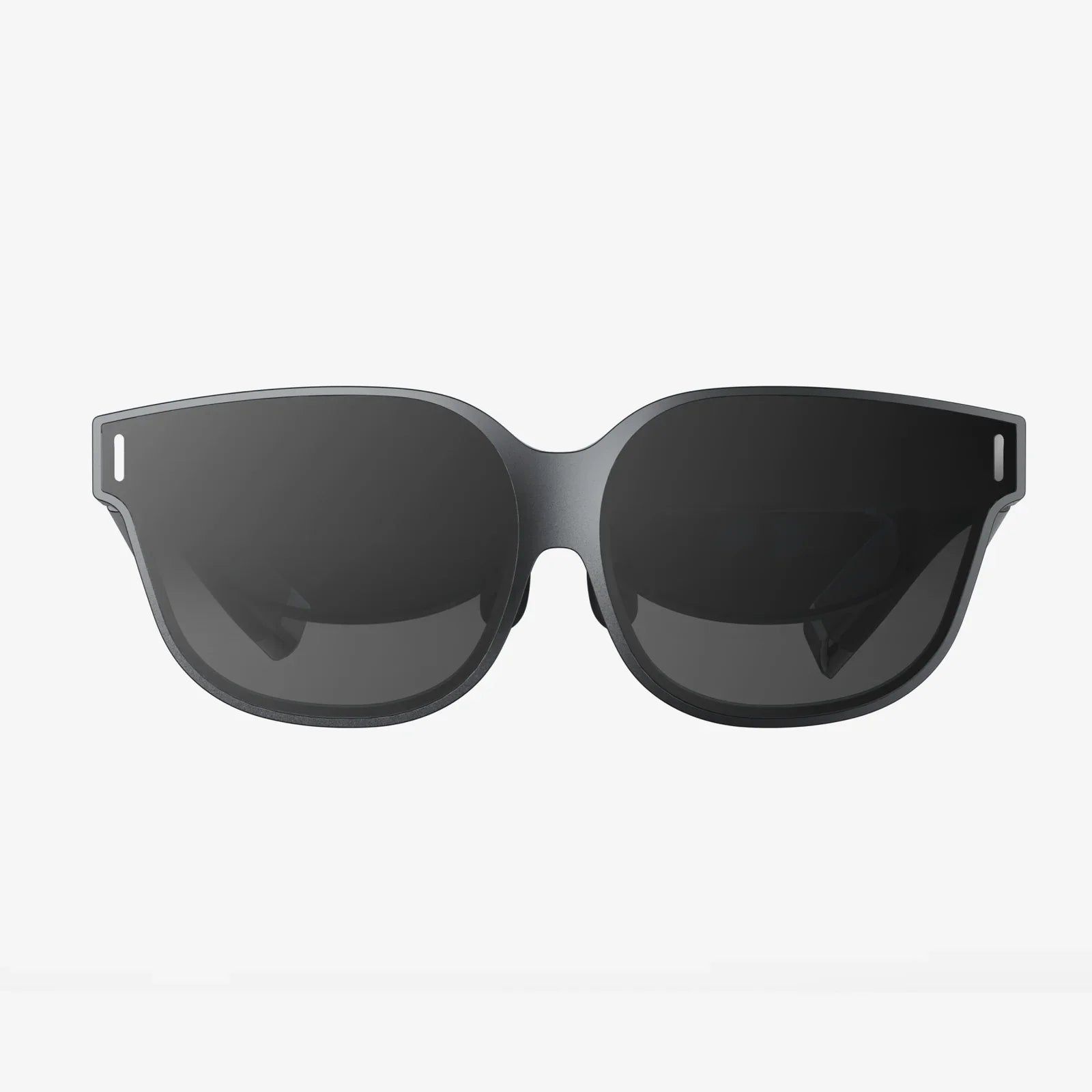
Imagine a world where information flows as effortlessly as sight, where digital assistants perceive your environment in real-time, and the boundary between the physical and virtual realms dissolves into a seamless, intuitive experience. This is not a distant science fiction fantasy; it is the imminent future being built by the pioneers of wearable artificial intelligence, and it will be delivered through a form factor as familiar as your own eyeglasses. The race to dominate this new frontier of human-computer interaction is already underway, with 2025 poised to be a watershed year. The conversation is no longer about if these devices will become mainstream, but which vision of the future will ultimately win the day and find a permanent place on our faces.
The Evolution of a Revolution: From Novelty to Necessity
The concept of smart glasses is not new. For over a decade, various iterations have attempted to capture the public's imagination, often landing somewhere between a promising prototype and a commercial curiosity. Early devices were frequently hampered by a critical trifecta of shortcomings: bulky and socially awkward designs, limited battery life that crippled functionality, and a lack of a compelling, everyday use case that justified their constant presence. They were solutions in search of a problem, often failing to move beyond niche applications in enterprise and gaming.
The pivotal shift occurring now, accelerating towards 2025, is the convergence of several transformative technologies. Artificial intelligence and machine learning have matured from cloud-based data processors to nimble, on-device neural networks capable of real-time analysis. Micro-display technology has advanced to project stunningly clear and bright images onto lenses that are virtually indistinguishable from standard prescription eyewear. Battery technology and power-efficient chipsets have finally reached a point where all-day wear is a realistic engineering goal, not a pipe dream. This convergence has dismantled the old barriers, allowing developers to focus not on what is technically possible, but on what is meaningfully useful.
Defining the 2025 AI Glasses: More Than Just a Screen
As we look towards the products of 2025, it is crucial to understand what separates true AI glasses from their simpler predecessors. These are not merely heads-up displays that show notifications. The core differentiator is contextual, ambient intelligence.
- Multi-Modal AI Assistants: Moving beyond simple voice commands, these devices will integrate a constant stream of visual and auditory data. They will see what you see, hear what you hear, and process it all instantaneously to offer proactive, context-aware assistance.
- Seamless Authentication and Digital Identity: Your glasses will become a key to your digital world, using biometrics like iris scanning to seamlessly log you into devices, unlock doors, and authorize payments with a glance.
- Real-Time Translation and Transcription: Imagine conversing with someone in a foreign language and seeing their words translated as subtitles in your field of view in near real-time, or having every meeting and conversation automatically transcribed and summarized.
- Enhanced Perception and Memory: AI glasses will act as a cognitive prosthesis, identifying objects, people, and places, retrieving relevant information, and even helping those with visual or auditory impairments navigate the world with greater confidence.
The Architectural Battle: Standalone vs. Companion Devices
A fundamental strategic divide is shaping the market, creating two distinct philosophies towards the user experience.
On one side are the standalone devices. These are all-in-one systems, featuring their own processors, cellular connectivity, and batteries. They function as completely independent entities, akin to a smartphone on your face. The advantage is ultimate freedom—no tethering to another device is required. The trade-off is often added weight, thermal management challenges, and higher cost due to the miniaturization of complex components.
On the other side are the companion devices. These glasses are designed to work in symphony with your smartphone or home computer, acting as a sophisticated peripheral display and sensor array. The heavy computational lifting is handled by the paired device, allowing the glasses themselves to be significantly lighter, more affordable, and closer in form to traditional eyewear. The trade-off is a dependency on having your other device with you and sufficiently charged.
By 2025, we expect this line to blur, with many devices offering a hybrid approach—functioning as a sleek companion for most tasks but having enough onboard intelligence to handle core AI features independently when away from a primary device.
The Critical Pillars of Success in 2025
For any contender to rise to the top of the market, excellence in four key areas is non-negotiable.
1. Design and Social Acceptance
This remains the single greatest hurdle. For AI glasses to achieve mass adoption, they must be something people are proud to wear. The technology must be invisible. This means frames crafted from premium, lightweight materials, a vast array of styles to suit personal taste, and lenses that cater to prescription needs without compromise. The goal is to create a product that looks so good, its technological capabilities become a surprising bonus, not its defining, awkward feature.
2. The AI Ecosystem and Developer Support
The hardware is merely a vessel; the soul of the device is its software and AI. The most successful platforms will be those that foster vibrant developer communities, enabling the creation of apps and experiences we haven't even conceived of yet. An open, well-documented software development kit (SDK) is crucial. Furthermore, the built-in AI assistant must be incredibly powerful, private, and personalized, learning user habits and preferences to become truly indispensable.
3. Battery Life and Performance
The benchmark for 2025 will be "all-day intelligence." Users will not tolerate devices that die by lunchtime. This requires a holistic approach: ultra-low-power displays, incredibly efficient dedicated AI processors, and smart power management that understands context—for example, conserving battery when you're simply walking but ramping up processing power when you need real-time translation. The industry is also exploring innovative solutions like solar-charging coatings or kinetic energy harvesting from movement.
4. Privacy and Security by Design
A device that sees and hears everything presents arguably the greatest privacy challenge ever created. Winning consumer trust is paramount. This means implementing "privacy by design" principles: physical camera shutters, obvious recording indicators, and most importantly, robust on-device processing. Sensitive data should never need to leave the glasses to be processed in the cloud unless explicitly requested by the user. Transparent data policies and user-controlled permissions will be a major selling point.
Beyond the Hype: Transformative Use Cases Emerging by 2025
While the features are impressive, the true impact of AI glasses will be measured in how they change our daily lives.
- The Demise of the Screen: We will begin to untether from our smartphone and monitor screens, allowing digital content to exist in our physical space. Reading messages, checking maps, and watching videos will become a hands-free, glanceable experience.
- Hyper-Productivity: For professionals, AI glasses will provide a constant, contextual flow of information. A engineer could see schematics overlaid on machinery, a doctor could have a patient's vitals displayed during an examination, and a logistics worker could receive optimized picking routes in a warehouse.
- Accessibility Revolution: For individuals with disabilities, the potential is profound. Advanced object recognition and narration can describe environments for the visually impaired, while real-time captioning can break down barriers for the hearing impaired in unprecedented ways.
- Immortalized Memories: Imagine being able to record your child's first steps from a first-person perspective, with perfect stability and audio, without ever looking through a viewfinder. The ability to capture life's moments exactly as you experienced them will redefine personal media.
Navigating the Inevitable Challenges
The path forward is not without its obstacles. The societal and ethical questions are profound. How do we prevent the emergence of a new digital divide between those who can afford this augmented reality and those who cannot? What are the etiquette rules for using such devices in social situations? How do we protect against malicious use, such as surreptitious recording or sophisticated facial recognition at a scale never before possible? The industry leaders of 2025 will be those who proactively engage with policymakers, ethicists, and the public to establish norms and regulations that ensure this technology empowers humanity without eroding our privacy and social fabric.
The landscape of 2025 is taking shape today in R&D labs and design studios across the globe. The winners will not be those with the most powerful individual component, but those who best synthesize cutting-edge AI, elegant design, robust privacy, and a compelling ecosystem into a single, seamless experience. They will offer not just a product, but a new way of seeing and interacting with the world. The glasses you wear will cease to be a tool you use and will instead become a part of how you perceive, remember, and navigate your life. The future is not in your pocket; it’s right in front of your eyes, and it’s arriving sooner than you think.
Share:
Augmented Reality Showcase: The Future of Experience is Here
What Best Describes Augmented Reality: A Portal to Our Digitally-Enhanced World