


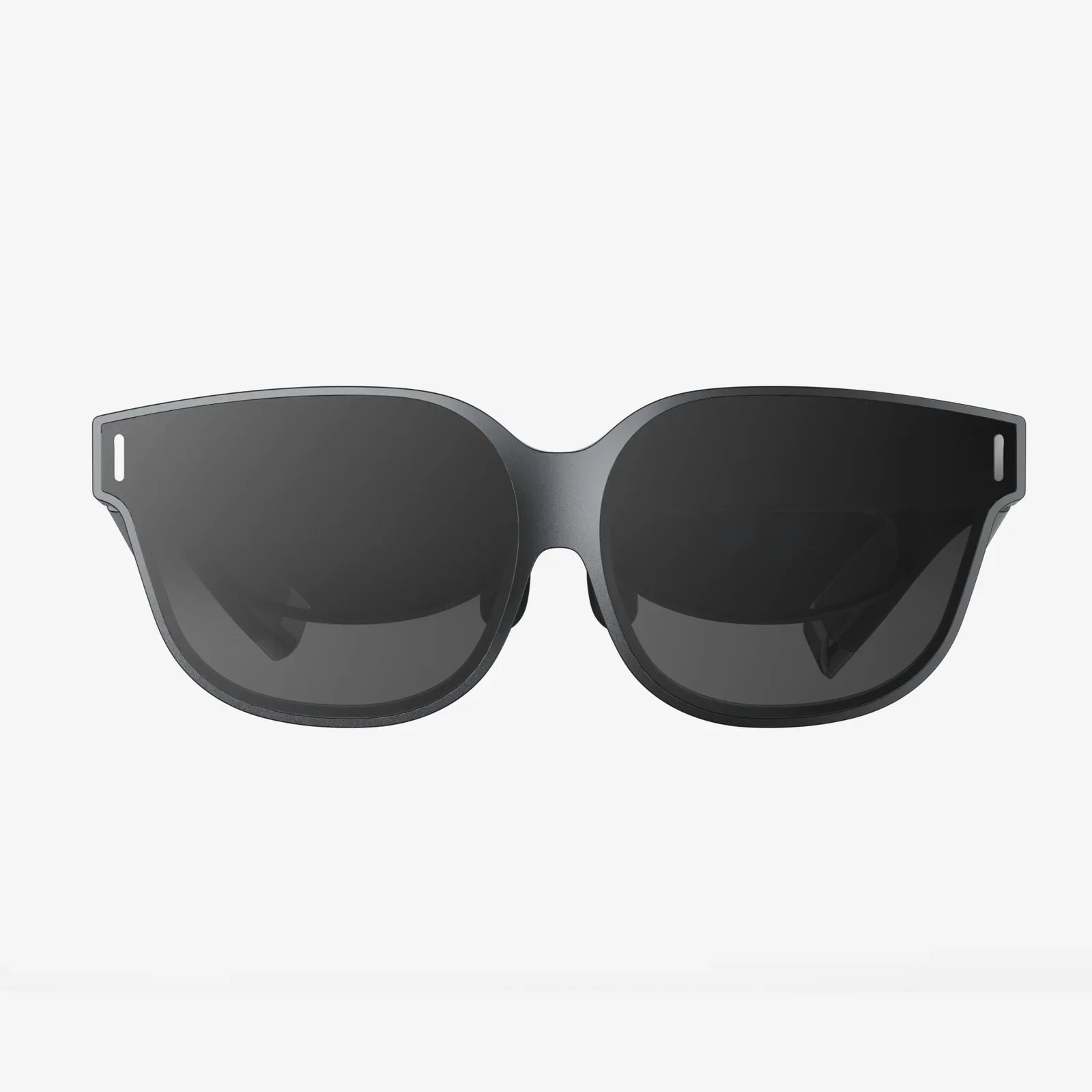
Imagine a world where the digital and physical seamlessly intertwine, where information floats effortlessly in your field of vision, and your entire workspace, social life, and creative endeavors are no longer confined to a small screen in your hand but are painted onto the world itself. This is the promise held by the top AR glasses of 2025, a promise that is finally transitioning from science fiction to tangible, wearable reality. The race to dominate your field of view is heating up, and the next twelve months are poised to deliver the most compelling, powerful, and accessible augmented reality experiences the world has ever seen. This isn't just about new gadgets; it's about the dawn of a new computing paradigm.
The Evolution of a Vision: From Prototype to Paradigm
The journey to the top AR glasses of 2025 has been a long and iterative one. Early devices were often bulky, tethered, and offered a limited field of view that felt more like a small window into the digital world than a seamless overlay. Battery life was a constant struggle, and the software ecosystems were nascent at best. However, each generation has brought significant leaps forward. The lessons learned from enterprise-focused models, which prioritized functionality over form, have been invaluable. These earlier iterations solved critical problems in logistics, manufacturing, and remote assistance, proving the core value proposition of AR. Now, in 2025, that technology is being refined, miniaturized, and consumerized. The focus has shifted from simply making the technology work to making it desirable, comfortable, and genuinely useful for everyday life. This evolution is driven by breakthroughs across multiple domains, converging to create a perfect storm of innovation.
Defining the "Top" Tier: What Separates the Best from the Rest
In a rapidly maturing market, the criteria for what constitutes the "top" AR glasses are becoming more nuanced. It's no longer just about raw technical specifications, but about the holistic experience.
Visual Fidelity and Display Technology
The most immediate differentiator is the quality of the display. The top AR glasses of 2025 boast stunning visual fidelity. Key metrics include:
- High Resolution and PPI (Pixels Per Inch): Text is razor-sharp, and virtual objects are rendered with incredible detail, eliminating the screen-door effect that plagued earlier models.
- Expansive Field of View (FoV): Perhaps the most crucial improvement. A wide FoV (approaching or exceeding 50 degrees) allows digital content to fill a significant portion of your natural vision, creating a truly immersive experience where virtual objects feel present in your space rather than confined to a small box.
- Advanced Waveguide and Light Engine Technology: These are the core optical systems that project images onto the lenses. Innovations in materials like holographic and diffractive waveguides, coupled with micro-LED light engines, result in brighter, more vibrant, and more energy-efficient displays that are clearly visible even in bright sunlight.
Form Factor and Wearability
Technology that isn't comfortable is technology that gets left in a drawer. The leading devices in 2025 understand this intimately. They are designed to be worn for extended periods, often weighing less than 100 grams. They resemble stylish sunglasses or contemporary eyewear, moving far away from the geeky, robotic aesthetics of the past. Materials are lightweight, durable, and often flexible for a custom fit. This focus on wearability is non-negotiable for achieving mainstream adoption.
Spatial Intelligence and Environmental Understanding
The magic of AR isn't just about overlaying graphics; it's about having those graphics understand and interact with the real world. This is enabled by a sophisticated array of sensors:
- High-Fidelity Depth Sensing: Using LiDAR, stereoscopic cameras, or other advanced time-of-flight sensors, the glasses create a detailed 3D map of your environment in real-time.
- Simultaneous Localization and Mapping (SLAM): This technology allows the glasses to understand their precise position within a mapped space, ensuring virtual objects stay locked in place on a table or wall, even as you move your head.
- Computer Vision: Onboard AI processors can identify surfaces, objects, and even text, allowing for context-aware interactions. The glasses can recognize a product on a shelf and display reviews or recognize a poster and offer to play its trailer.
Processing Power and On-Device AI
To handle the immense computational load of spatial mapping, high-end graphics rendering, and real-time AI analysis, the top AR glasses feature dedicated, next-generation processors. These chips are marvels of efficiency, delivering desktop-level performance while sipping power to preserve battery life. Crucially, much of this processing is now done on-device. This is vital for two reasons: it reduces latency (lag), which is critical for a seamless experience, and it enhances privacy, as sensitive visual data from your surroundings doesn't need to be sent to the cloud for analysis.
Intuitive Input Modalities
How do you interact with a interface that floats in the air? The best solutions are multi-modal. Voice commands powered by advanced natural language processing are a given. But more importantly, 2025's top models feature highly refined hand and gesture tracking. Using inward-facing cameras to track your fingers, they allow you to manipulate virtual objects with pinch, drag, and tap gestures that feel natural and intuitive. Some models also incorporate innovative wearable accessories, like rings or wristbands, which provide haptic feedback and even more precise input control.
Battery Life and Power Management
All-day battery life remains a holy grail. While we may not be fully there yet, the leading glasses offer a compelling solution. The primary unit is designed to be incredibly power-efficient, often providing 4-6 hours of active use. This is frequently supplemented by a sleek, pocketable battery pack that can double or triple that uptime, ensuring you can get through a full workday or a long flight without disconnecting.
The Software Ecosystem: The True Battleground
The hardware is only half the story. The ultimate success of any AR platform hinges on its software and ecosystem. The top AR glasses of 2025 are gateways to rich, interconnected digital worlds. This includes:
- Robust Operating Systems: Dedicated, spatially-aware OSes that serve as the foundation, managing apps, system-level features, and the seamless blending of digital and physical.
- App Stores and Developer Support: A thriving marketplace of applications is essential. We are seeing an explosion of spatial apps for productivity (virtual monitors, 3D design), social connection (avatars sharing your space), gaming (board games on your table, immersive adventures in your park), and navigation (directions painted onto the street).
- Cross-Platform Compatibility: The winning ecosystems will likely be those that allow your digital assets and experiences to move with you across devices, from your glasses to your phone to your laptop, creating a continuous flow of information.
Beyond the Hype: Transformative Use Cases
What will we actually do with these devices? The applications are boundless:
Revolutionizing Productivity
Imagine having multiple large, high-resolution virtual monitors arrayed around you in any coffee shop or airport lounge. Your digital workspace is no longer tied to a physical location. Architects and engineers can examine 3D models at full scale, and mechanics can see repair instructions overlaid directly on the engine they are fixing.
Redefining Social Connection
Social media will evolve from feeds on a screen to shared experiences in space. You could watch a movie with a friend's avatar sitting on your couch, leave a virtual note for your family on the kitchen counter, or attend a concert where digital effects are superimposed over the real-stage.
Enhancing Daily Navigation and Learning
Walking through a new city, historical facts and arrows guiding your path appear on the buildings themselves. Learning a new skill like cooking or playing an instrument becomes intuitive with instructions and guides overlaid directly on the ingredients or fretboard.
Privacy, Security, and the Ethical Dimension
The power of always-on, always-sensing glasses raises significant questions. The industry leaders in 2025 are addressing these concerns head-on with features like physical camera shutters, clear privacy indicator lights, and granular controls over what data is collected and stored. A strong ethical framework, emphasizing user control and transparency, will be a key marker of a truly top-tier product, distinguishing it from those that prioritize data extraction over user trust.
The Road Ahead: A Glimpse into the Future
The top AR glasses of 2025 represent a monumental leap, but they are still a stepping stone. We can already anticipate the trends that will define the next generation: even more miniaturized optics, perhaps eventually evolving to contact lenses; longer-lasting biometric sensors for health monitoring; and deeper integration with neural interfaces for more direct control. The line between the digital self and the physical self will continue to blur.
Choosing the right pair of AR glasses in 2025 is less about picking a device and more about choosing a portal into a new layer of reality. It's a decision that hinges on which digital ecosystem aligns with your life, which design feels like an extension of yourself, and which vision of the future you want to step into. The technology has finally arrived, not as a clunky prototype, but as a polished, powerful, and profoundly transformative tool ready to reshape our reality from the ground up. The world is about to get a whole lot more interesting.
Share:
Make 2D Image to 3D: The Ultimate Guide to Converting Flat Photos into Immersive Models
Best Image to 3D Model AI: The Definitive Guide to Photorealistic Digital Twins