


- by wangfred
Top AR: The Future of Reality is Already Here
- by wangfred
Imagine a world where digital information doesn’t just live on a screen but is painted onto the very fabric of your reality. Where instructions for repairing a complex engine float directly in your field of vision, where historical figures seemingly stand before you to recount their stories, and where the couch you’re thinking of buying is already in your living room, perfectly scaled, before you even click ‘purchase’. This is not a distant science fiction dream; this is the world being built today by top Augmented Reality (AR) technology. It’s a silent revolution, moving from novelty apps to powerful enterprise tools and profound consumer experiences, and it’s poised to change everything.
For many, their first encounter with AR was a playful filter on a social media platform or a mobile game that had virtual creatures scampering through city parks. While these applications captured the public's imagination, they only scratched the surface of what the technology can achieve. Top-tier AR today is about utility, precision, and seamless integration.
At its core, AR is a technology that superimposes a computer-generated image, video, or 3D model onto a user's view of the real world, providing a composite, interactive experience. Unlike Virtual Reality (VR), which creates a completely artificial environment, AR enhances the real world by adding a digital layer to it. This distinction is crucial. AR doesn't seek to replace our reality but to augment it, making us more informed, efficient, and connected to the data that surrounds us.
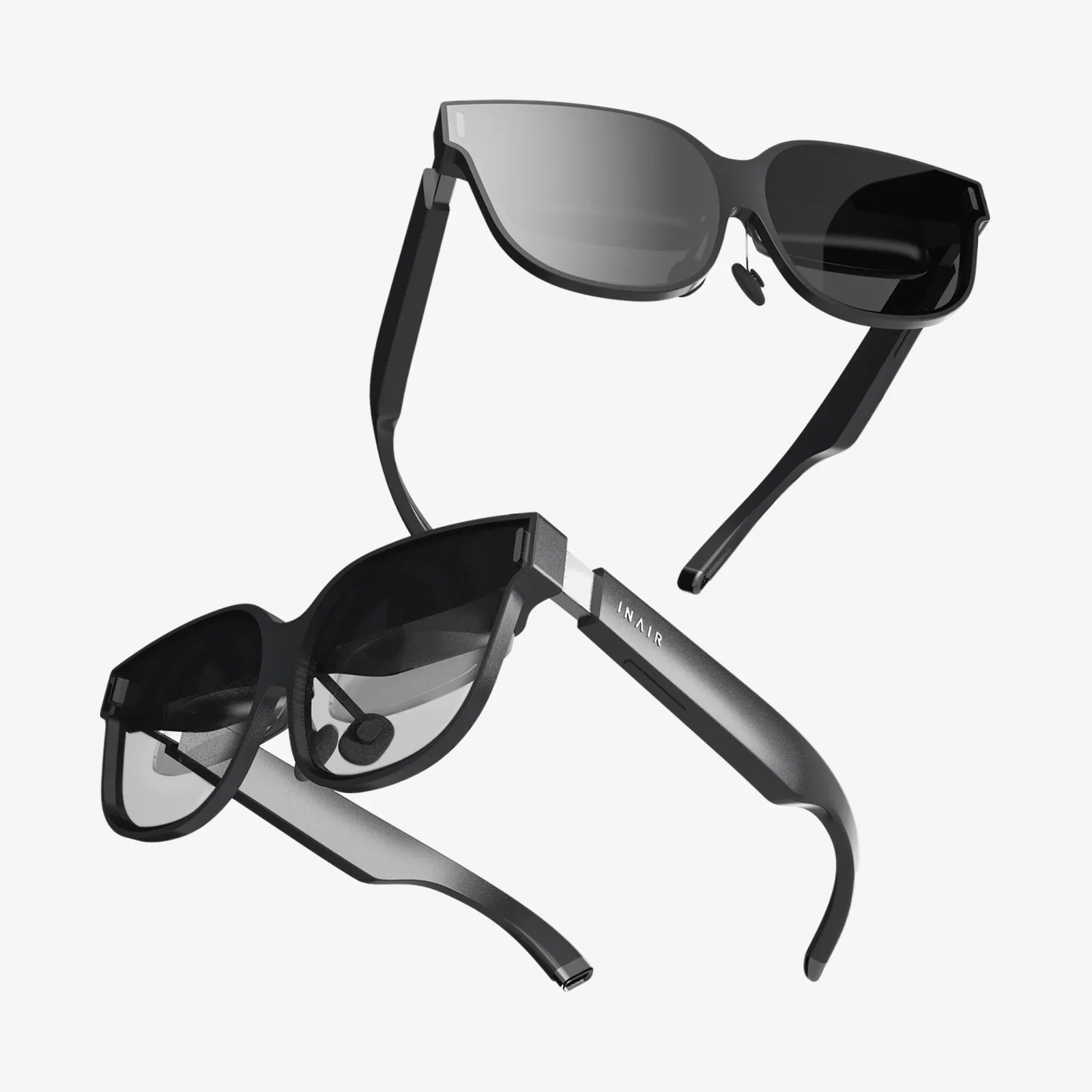
The hardware enabling these experiences has evolved dramatically. We are moving beyond smartphones and tablets—which act as a rudimentary window into AR—toward more sophisticated wearables. These include smart glasses that project information directly onto the lenses, allowing for hands-free operation, and advanced head-mounted displays (HMDs) used for complex industrial tasks. The evolution of these devices, driven by improvements in processing power, battery life, and display technology, is what is unlocking the true potential of top AR applications.
The magic of a seamless AR experience is powered by a complex symphony of underlying technologies. For the digital layer to convincingly stick to the physical world, the system must have a profound understanding of its environment.
This is the foundational technology for most top AR experiences. SLAM algorithms allow a device to simultaneously map an unknown environment and track its own location within that space in real-time. Using data from cameras, sensors, and inertial measurement units (IMUs), the device constructs a digital map of the room, understanding the position of walls, floors, tables, and other objects. This is why a virtual character can convincingly hide behind your real sofa—the AR system knows the sofa is there.
Beyond just mapping surfaces, advanced AR systems need to understand the geometry and content of a scene. Depth-sensing cameras, such as time-of-flight sensors, project infrared light to measure the distance between the camera and every object in its field of view, creating a detailed depth map. This allows virtual objects to occlude and be occluded by real-world objects, a critical factor for immersion. Scene understanding takes this further, using AI to recognize specific objects—is that a chair, a lamp, or a television?—and understand their properties and relationships.
Artificial Intelligence is the brain that gives AR its context. Machine learning models are trained on vast datasets to perform instant object recognition, text translation, and spatial analysis. This enables features like instantly identifying a machine part and displaying its technical specifications or translating a restaurant menu in real-time by simply pointing your device's camera at it. AI makes AR intelligent and responsive rather than just a simple visual overlay.
While consumer applications are flashy, the most significant and immediate impact of top AR technology is happening within enterprises. Businesses are adopting AR to solve real-world problems, drive efficiency, reduce errors, and empower their workforce.
This is arguably the most mature and valuable application of AR today. Technicians wearing AR smart glasses can have digital work instructions, schematic diagrams, or a live video feed from a remote expert overlaid onto the physical equipment they are servicing. Instead of constantly looking back and forth between a manual and a machine, the information is contextually presented right where they need it. This hands-free guidance drastically reduces repair times, minimizes errors, and allows less experienced workers to perform complex tasks with expert-level precision. It also enables a new paradigm of remote collaboration, where an expert located thousands of miles away can see what a field technician sees and provide visual annotations directly into their field of view.
In medicine, the stakes are incredibly high, and AR is rising to the challenge. Surgeons are using AR headsets to overlay critical patient information—such as MRI or CT scan data—directly onto their body during procedures. This provides a kind of "X-ray vision," allowing for more precise incisions and navigation around vital structures. Medical students use AR to practice procedures on hyper-realistic digital holograms of human anatomy, gaining valuable experience without risk. Furthermore, AR is being used to improve patient outcomes by providing interactive, 3D visualizations of medical conditions and treatment plans, helping them understand complex information.
Architects and interior designers are using AR to step inside their blueprints long before a single brick is laid. They can walk through full-scale, holographic models of buildings, assessing spatial relationships, lighting, and flow. Clients can see a proposed design superimposed onto an empty lot or an existing room, making it far easier to give feedback and make decisions. On construction sites, workers can use AR to see where hidden elements, like electrical conduits or plumbing, are located behind walls, and to ensure that structures are being built exactly to the digital model's specifications, preventing costly mistakes.
The retail sector is being transformed by AR's ability to bridge the gap between online shopping and the in-store experience. "Try before you buy" has taken on a new meaning. Customers can use their smartphones or AR mirrors to see how clothes will look on them, how sunglasses fit their face, or how makeup will appear on their skin. For home goods, the ability to place virtual furniture, appliances, and decor into your actual living space to check for size, style, and fit has dramatically reduced purchase hesitation and product return rates. This is not just a gimmick; it's a powerful tool that builds consumer confidence and closes sales.
While enterprise leads the way, the long-term vision for AR is its seamless integration into our daily lives. The smartphone may be the gateway, but the future lies in elegant, ubiquitous wearable technology.
Imagine walking through a foreign city while turn-by-turn directions are painted onto the sidewalk in front of you. Or looking at a restaurant to instantly see its reviews and daily specials floating beside its entrance. Glancing at a landmark to have its history narrated to you. This contextual layer of information, available on demand, will fundamentally change how we interact with our environment, making us more connected and informed about the world around us.
AR has the potential to be the next major platform for social connection. Instead of flat video calls, we could have holographic representations of loved ones sitting across from us on the couch, able to interact with shared digital objects. Collaborative gaming and storytelling will become deeply immersive, blending the physical play space with digital characters and worlds. This technology could erase the feeling of distance, creating a profound sense of presence and shared experience.
AR holds immense promise for making the world more accessible. Real-time captioning for the hearing impaired could be displayed near the person speaking. Translation could happen instantly, breaking down language barriers as you read signs or converse with someone. In education, abstract concepts in science, history, and art can become tangible, interactive 3D models that students can explore from every angle, transforming learning from a passive to an active experience.
For all its promise, the path to a world powered by top AR is not without significant hurdles that developers, companies, and society must overcome.
The ultimate AR device—socially acceptable glasses with all-day battery life, a wide field of view, high-resolution displays, and powerful processing—remains the holy grail. Current devices often force a trade-off between capability and form factor. Achieving the necessary technical specs in a package that people will actually want to wear all day is the single biggest challenge facing the industry.
AR devices, by their very nature, are equipped with cameras and sensors that constantly scan their environment. This raises profound questions about privacy, data ownership, and security. Who has access to the continuous video feed of a user's life? How is location and environmental data stored and used? Establishing clear ethical guidelines and robust security frameworks is not just a technical necessity but a prerequisite for mainstream public adoption.
There is a risk that advanced AR could create a new digital divide between those who can afford the technology and those who cannot. Furthermore, the social acceptance of wearing cameras on our faces and interacting with a digital layer invisible to others presents a unique social challenge. Norms around etiquette and use in public spaces will need to be developed organically as the technology spreads.
The journey into this augmented future is already underway, and it’s accelerating faster than most realize. This is no longer about chasing virtual creatures in the park; it’s about building an intelligent layer over reality that enhances human potential, breaks down barriers to information, and redefines how we work, learn, and connect. The devices will get smaller, the digital images more photorealistic, and the integration more seamless. The boundary between what is real and what is digital will continue to blur, not to obscure our reality, but to make it richer, more informative, and infinitely more empowering. The world is about to get a major software update, and you’re going to want to see it for yourself.