


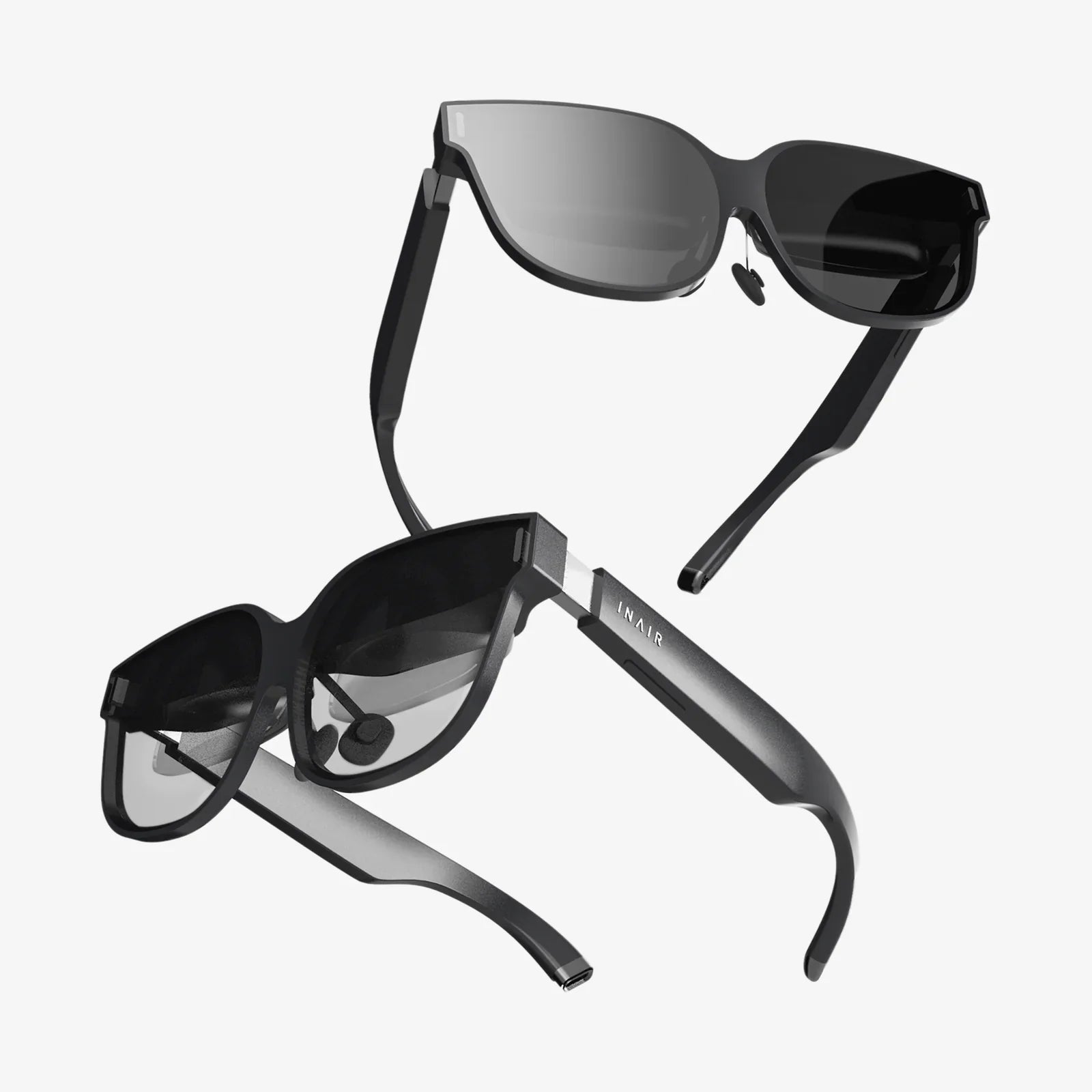
The digital frontier is expanding at a breathtaking pace, and at the vanguard of this revolution are the top AR VR companies, quietly building the frameworks and experiences that will redefine human interaction, work, and play. This isn't just about donning a headset for a fleeting gaming experience; it's a fundamental shift in how we perceive and interact with information, a merging of the physical and digital worlds that promises to be as disruptive as the advent of the smartphone. The race to own this next computing platform is fiercely contested, not by a single monolithic entity, but by a diverse ecosystem of established tech giants, ambitious startups, and specialized innovators, each contributing a critical piece to the immersive puzzle. Understanding who these players are, their unique strategies, and the core technologies they are betting on is essential to glimpsing the future they are constructing around us.
The Titans of Tech: Established Powers Betting Big on Immersion
When discussing the top AR VR companies, one must begin with the technology behemoths for whom immersive computing represents a strategic imperative for the next decade. These corporations possess unparalleled resources, vast user bases, and deep expertise in hardware, software, and ecosystem development.
One such titan, a household name in social media and communication, has made a colossal bet on the concept of the metaverse,
a persistent network of shared virtual spaces. Their strategy is multifaceted, encompassing a family of popular standalone VR headsets focused on social connection and affordable accessibility. Their strength lies in creating a closed but highly polished ecosystem, enticing developers with a large installed base and consumers with a seamless, integrated experience. Beyond hardware, they are investing heavily in avatar technology, virtual workspaces, and a digital economy built around their platform, aiming to become the social fabric of the virtual world.
In stark contrast, a software giant known for its ubiquitous operating system has pursued a different path with its mixed reality platform. Rather than building a closed ecosystem, their strategy is partnership-centric, licensing their sophisticated operating system and reference designs to a wide array of third-party hardware manufacturers. This approach mirrors their successful PC model, aiming to standardize the software layer of the AR/VR landscape. Their flagship mixed reality headset, developed as a showcase for this platform, demonstrates a focus on enterprise and productivity, offering high-fidelity passthrough AR and integration with a suite of professional software tools. Their vision is less about escaping reality and more about augmenting it for professionals in fields like engineering, design, and medicine.
Another undeniable force is a search engine giant whose foray into AR is arguably the most widely experienced, despite the quiet shelving of its earlier, more exotic projects. Their power is not in dedicated AR hardware for consumers, but in democratizing AR through the devices already in billions of pockets: smartphones. By developing and deploying advanced AR software development kits (SDKs) and APIs for both Android and iOS, they have empowered developers to create AR experiences for navigation, search, and gaming that are accessible to anyone with a modern phone. Their strategy leverages their core strengths in mapping, artificial intelligence, and computer vision, embedding AR seamlessly into everyday applications like live-view navigation and visual search, making the technology utilitarian and invisible.
The Specialized Innovators: Hardware, Software, and Enterprise Focus
Beyond the tech titans exists a vibrant layer of companies that have carved out dominant positions through specialization, focusing on best-in-class hardware, critical software tools, or vertical market solutions.
The Hardware Pioneers
Several companies have earned their place among the top AR VR companies by pushing the boundaries of what's possible with immersive hardware. One standout is a manufacturer renowned for its high-fidelity PC-tethered VR headsets. Catering primarily to enthusiasts and professionals, their products are synonymous with cutting-edge display technology, precise inside-out tracking, and a deep commitment to the PC VR gaming and simulation market. They represent the high-end, performance-driven segment of the market, appealing to users for whom graphical fidelity and immersive accuracy are non-negotiable.
In the AR sphere, a notable innovator has made waves with its sleek, consumer-focused smart glasses. While not a full-fledged AR headset with immersive 3D overlays, their product represents a pragmatic step towards全天候 wearability, offering a minimalist design, a compact display for notifications and information, and a high-quality audio system. Their approach focuses on blending digital convenience with real-world social acceptance, a critical challenge for the industry.
For the enterprise, a different set of hardware specialists thrives. Companies like the manufacturer of a rugged, head-mounted display equipped with thermal and infrared cameras cater exclusively to industrial clients in manufacturing, field service, and logistics. Their devices are built for durability, safety, and specific job-related functions, demonstrating that the value of AR isn't always about consumer entertainment but often about solving complex industrial problems.
The Software and Platform Architects
The immersive world is built on code, and several software-focused companies are foundational to the entire industry. The most prominent is a game engine developer whose real-time 3D creation platform has become the de facto standard for building AR, VR, and MR experiences. Its power and flexibility allow creators—from indie developers to automotive giants—to design, prototype, and deploy high-fidelity interactive content. Its importance cannot be overstated; it is the canvas upon which a vast majority of immersive experiences are painted, making its developer a behind-the-scenes titan in the space.
Other software leaders include companies specializing in 3D content creation and management platforms. These cloud-based solutions allow enterprises to create digital twins of their products, facilities, and processes, which can then be visualized and interacted with in AR or VR. This enables use cases like virtual training for complex machinery, remote expert assistance where a specialist can guide a field technician by drawing annotations into their real-world view, and virtual showrooms for sales and marketing. These companies provide the crucial backend that makes enterprise AR scalable and valuable.
The Enterprise Solution Providers
A distinct category of the top AR VR companies are those that do not sell hardware or core engines but instead offer complete vertical solutions. These organizations take the available technology and tailor it to solve specific business problems, such as providing a comprehensive AR-guided assembly and inspection platform for aerospace and automotive manufacturers. They develop the custom software, integrate with existing enterprise systems (like ERP and PLM), manage deployment, and provide support. For many large corporations looking to adopt immersive technology, these solution providers are the essential bridge between raw technology and tangible business ROI.
The Disruptors and the Next Wave: Startups and Niche Players
The AR/VR landscape is continually refreshed by a steady stream of startups aiming to disrupt the status quo with novel ideas and technologies. These companies often tackle specific, thorny problems that the larger players have yet to solve perfectly.
In the realm of haptics, several startups are developing advanced feedback gloves and vests that allow users to feel virtual objects, adding a crucial layer of tactile immersion that is currently missing. Their technology ranges from pneumatic systems that simulate pressure and resistance to ultrasonic arrays that create the sensation of touch mid-air.
Other startups are focusing on the critical challenge of user avatars and digital identity, creating sophisticated motion capture technology that uses AI to translate a user's body language and facial expressions onto their digital representative in real-time, enabling truly empathetic and natural communication in virtual spaces.
Furthermore, the emergence of specialized AR creators for specific industries, such as a company solely focused on building surgical planning and medical education applications in VR, highlights the trend towards deep, vertical expertise. These niche players understand the nuanced needs of their audience better than any generalist ever could.
Core Technologies Driving the Competition
The competition among the top AR VR companies is fundamentally a race to master and innovate across several core technological domains:
- Display Technology: The quest for brighter, higher-resolution, more efficient micro-displays is paramount, especially for AR glasses. Waveguides, MicroLED, and Laser Beam Scanning are all competing to be the architecture that delivers digital imagery onto transparent lenses without sacrificing aesthetics.
- Tracking and Sensing: Accurate inside-out tracking via cameras and sensors, combined with Simultaneous Localization and Mapping (SLAM) algorithms, is what allows digital objects to stay locked in the real world. Advancements in LiDAR and depth sensing are making this more robust and precise.
- Computer Vision and AI: Artificial intelligence is the brain of AR/VR. It powers hand-tracking, understands the geometry of the environment (identifying walls, floors, tables), and enables object recognition, allowing the device to intelligently interact with the user's surroundings.
- Processing Power and Connectivity: Striking the balance between performance and power consumption is a constant battle. While some processing is done on-device, the rise of 5G and edge computing promises to offload heavy computation to the cloud, enabling thinner, lighter form factors without sacrificing experience quality.
Challenges on the Horizon
Despite the incredible progress, the path forward for all top AR VR companies is fraught with significant challenges that must be overcome for mass adoption.
The foremost hurdle remains the hardware itself. For AR, the goal is a pair of glasses that are socially acceptable, all-day wearable, powerful, and provide a compelling visual experience—a combination of attributes that has yet to be achieved. For VR, reducing size, weight, and cost while increasing comfort and convenience is key. The form factor problem
is the industry's shared nemesis.
Beyond hardware, questions of privacy, data security, and ethical design loom large. Always-on cameras and microphones mapping our homes and offices present unprecedented privacy concerns. Establishing clear norms and regulations for data collection and usage in immersive environments is a societal challenge that must be addressed in tandem with technological development.
Finally, the question of the killer app
remains, particularly for consumer AR. While enterprise use cases like training and remote assist have proven their value, the consumer market still awaits the undeniable application that makes AR glasses a must-have item, much like mobile apps did for the smartphone.
The landscape of the top AR VR companies is not a static leaderboard but a dynamic, evolving ecosystem of collaboration and competition. From the ecosystem plays of tech giants to the precision tools of specialized innovators, each entity is contributing to a collective leap forward. They are not just building gadgets; they are architecting a new layer of reality itself, one that will transform how we learn, heal, create, and connect. The future they are building is immersive, interconnected, and already beginning to take shape all around us—the only question that remains is which vision will ultimately capture the world's imagination.
Share:
Augmented Reality Degree: Shaping the Architects of Our Digital Future
Augmented Reality Degree: Shaping the Architects of Our Digital Future