


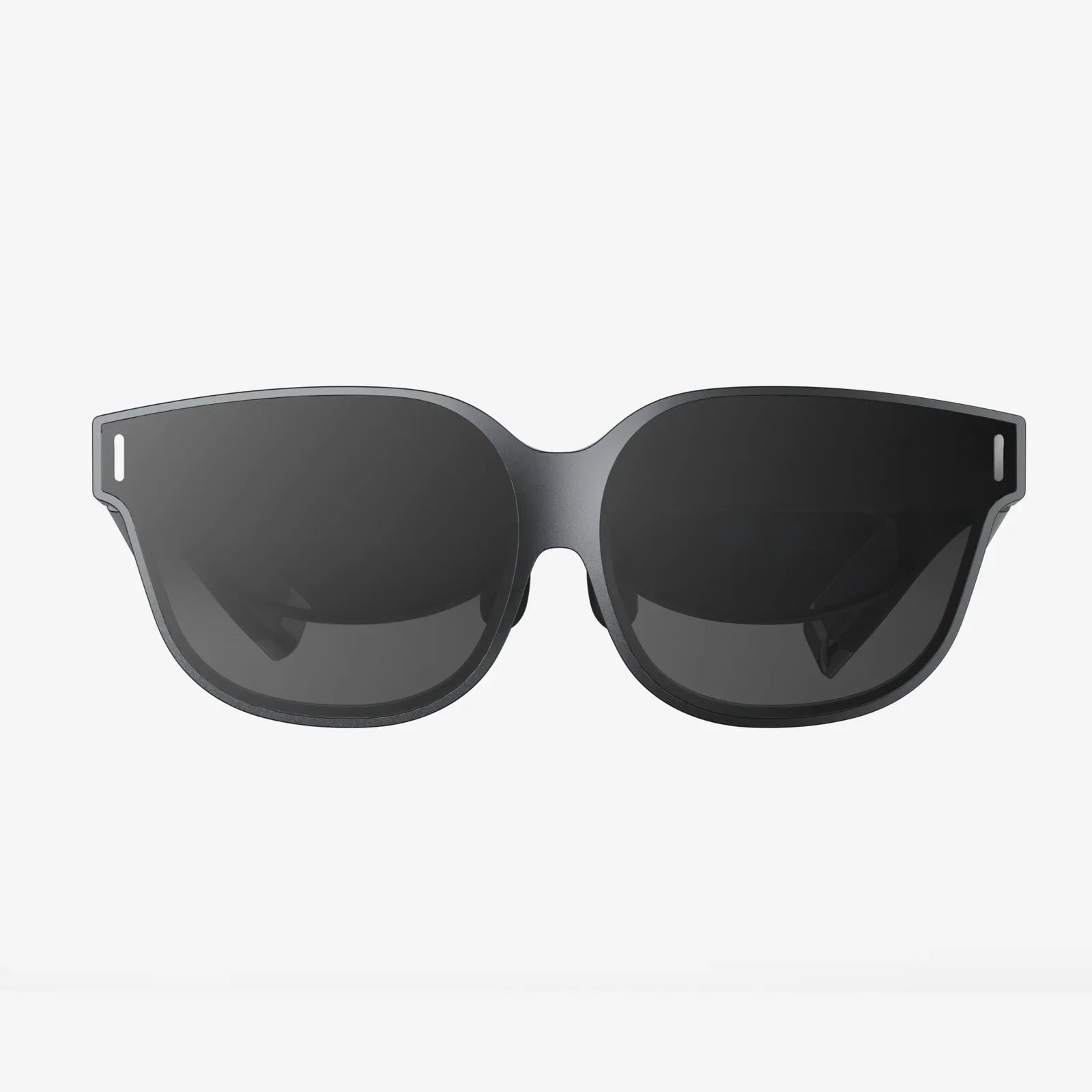
Imagine a world where your most pressing questions are answered the moment you think them, where digital information seamlessly overlays your physical reality, and a powerful, intuitive assistant is literally always at hand—or rather, on your face. This is not a distant sci-fi fantasy; it is the promise held by the top smart glasses with AI features in 2025, a watershed year where this technology transitions from niche gadgetry to a mainstream revolution. The convergence of advanced artificial intelligence, sophisticated micro-displays, and sleek, wearable design has finally reached a tipping point, offering a glimpse into a future where our digital and physical selves are inextricably and elegantly linked.
The AI Brain: Beyond Simple Voice Commands
The core differentiator in the 2025 cohort of smart glasses is no longer just the display technology, but the profound sophistication of the integrated artificial intelligence. This is no longer the simple, often frustrating voice assistant of years past. We are now dealing with on-device and cloud-powered AI models capable of true contextual understanding and proactive assistance.
These systems leverage large language models and multimodal AI, meaning they can process and cross-reference information from multiple sensors simultaneously—what the cameras see, what the microphones hear, and your specific location and context. The result is an assistant that doesn't just wait for commands but can offer genuinely helpful, timely information. For instance, if you glance at a restaurant, it might instantly overlay reviews and its menu, pulled from a vast knowledge graph, directly onto your field of view. If you're struggling to recall an actor's name during a conversation, a discreet prompt at the edge of your vision could provide the answer without you ever needing to fumble for a phone.
Furthermore, real-time translation has become near-flawless. Conversations with someone speaking a different language feel natural, with translated subtitles appearing almost instantaneously, complete with nuanced cultural context. This breaks down communication barriers in a way previously unimaginable, making international business and travel profoundly more accessible.
Seeing the World Anew: Advanced Computer Vision
The eyes of these smart glasses are powerful cameras coupled with dedicated neural processing units (NPUs) that handle complex computer vision tasks locally, ensuring speed and privacy. This enables a suite of features that augment your perception of the world.
Object and text recognition is instantaneous. Look at a complex piece of machinery, and the glasses can highlight components and provide instructional overlays for repair. Walk through a supermarket, and they can help you identify products that meet specific dietary restrictions you've set, like being gluten-free or vegan. For students and professionals, this technology is transformative; pointing your gaze at a paragraph in a foreign textbook or a technical manual can yield an immediate translation or a simplified explanation.
Another groundbreaking application is in navigation. Instead of looking down at a phone map, directions are superimposed onto the real world. A glowing path appears on the sidewalk ahead of you, and arrows indicate exactly which turn to take, making urban exploration and finding your way in unfamiliar buildings an intuitive experience. For the visually impaired, these features are even more impactful, with AI describing scenes, identifying obstacles, and reading signs aloud, offering a new level of independence.
The Form Factor: Discreet, Lightweight, and Powerful
The nightmare of bulky, obtrusive, and socially awkward headwear is finally over. The top models of 2025 prioritize a form factor that is indistinguishable from high-end traditional eyewear. Advances in micro-OLED and laser beam scanning displays project high-resolution, full-color information directly onto specially formulated lenses, creating a bright, clear image that is visible even in direct sunlight, all while being completely invisible to those around you, preserving social etiquette and personal privacy.
Battery life, a traditional pain point, has seen significant improvements. Through a combination of more efficient processors, low-power displays, and AI-driven power management that intelligently conserves energy during periods of inactivity, most devices now comfortably last a full waking day on a single charge. For heavier users, sleek magnetic charging cases provide top-ups on the go, ensuring you're never disconnected.
Comfort is paramount. Manufacturers use lightweight, durable materials like titanium and advanced polymers, with customizable nose pads and temple arms to ensure a secure and comfortable fit for a wide range of face shapes. They are designed to be worn all day, every day, becoming a natural extension of the user.
Connectivity and the Ecosystem: Your Personal Hub
Smart glasses in 2025 are no longer an island; they are the central hub of your personal area network. Seamless integration with your other devices is a given. They can act as a wireless monitor for your laptop, display notifications from your phone, or even control smart home devices with a glance and a voice command.
The underlying connectivity has also evolved. While Bluetooth remains key for short-range connections, many models now include built-in cellular connectivity (e.g., eSIM support), liberating them from the smartphone. You can make calls, stream music, and access cloud-based AI features directly from the glasses, even if your phone is left at home. This untethered freedom is a game-changer, encouraging a more present and engaged experience with the physical world, as you are no longer compelled to constantly glance at a separate device.
This creates a powerful ecosystem where the glasses serve as your primary interface, pulling data from your devices, the cloud, and the environment around you to present a unified, contextual stream of information exactly when and where you need it.
Privacy, Security, and the Ethical Frontier
With great power comes great responsibility. The ability to record audio and video so discreetly raises significant and valid privacy concerns. The leading manufacturers in 2025 have addressed this head-on with a multi-faceted approach. Physical hardware switches that disable cameras and microphones are now standard, providing a clear, tactile indicator to the user and those around them that the device is not recording. LED indicators that light up when recording are mandatory and cannot be bypassed by software.
On the software side, data processing is increasingly done on-device. Sensitive information like video feeds for object recognition is analyzed locally by the NPU and then immediately discarded, never needing to be sent to the cloud. For features that require cloud processing, robust encryption and transparent data policies are the industry norm. Users have fine-grained control over what data is collected and how it is used, embodying principles of privacy-by-design.
The ethical development of this technology remains an ongoing conversation. Establishing social norms around their use in public and private spaces, preventing misuse, and ensuring the AI acts as a benevolent assistant rather than a manipulative influence are challenges that technologists, ethicists, and policymakers continue to navigate together.
The Future is Now: Choosing Your Pair
Selecting the right pair of AI smart glasses in 2025 depends heavily on your intended use case. The market has matured to offer options tailored for different needs. Some models prioritize immersive entertainment and gaming with wider field-of-view displays, while others focus on professional applications with enhanced computer vision tools for engineers or medical professionals. Everyday users will gravitate towards the most balanced devices, offering a robust AI assistant, solid battery life, and a discreet, fashionable design.
Key considerations should include display clarity, audio quality (whether through bone conduction or micro-speakers), comfort for extended wear, the strength and specificity of the AI features, and, crucially, the privacy controls in place. Trying them on for fit and testing the user interface is highly recommended, as the experience is deeply personal.
We are standing at the precipice of a new era of computing. The top smart glasses with AI features in 2025 are more than just a product category; they are the vanguard of ambient computing, a fundamental shift in how we interact with technology. They promise to make us more knowledgeable, more connected, and more efficient, all while allowing us to look up and engage more deeply with the world around us. The future is not in your pocket; it's right before your eyes.
The gap between science fiction and reality has never been thinner, and it's now being worn on the faces of early adopters and tech enthusiasts worldwide. This isn't just about checking notifications hands-free; it's about fundamentally augmenting human intelligence and perception. The potential to enhance how we work, learn, navigate, and connect with each other is staggering, making the choice to embrace this technology one of the most compelling decisions of the decade. Will you be looking at the future, or will you be seeing through it?
Share:
Dual Monitor Virtual Desktop: The Ultimate Guide to Unlocking Unprecedented Productivity
Augmented Reality Assisted Visualization: The Future of Seeing and Interacting with Data