


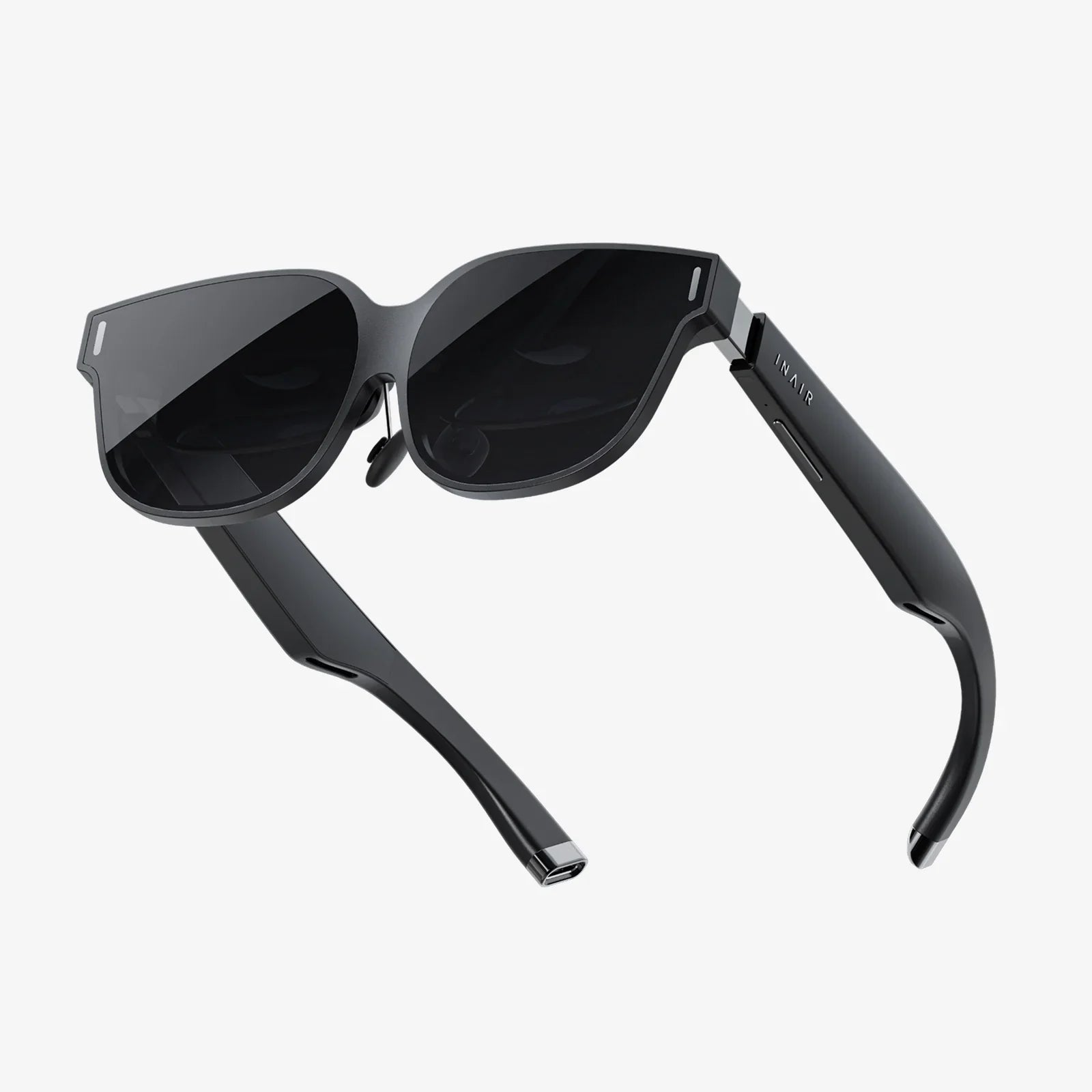
The year is 2025, and the boundary between our physical reality and the digital realm is not just blurring—it’s dissolving. We are no longer merely users of technology; we are active participants within it. The devices enabling this profound shift are the top XR glasses of 2025, a new generation of wearables that have transcended early-adopter novelty to become powerful, sleek, and indispensable portals to a blended world of information, interaction, and imagination. This isn't about escaping reality; it's about augmenting it, enhancing it, and connecting with it in ways we once only dreamed of in science fiction. The future is putting on a pair of glasses, and it’s arriving now.
The Paradigm Shift: From Prototype to Platform
To understand the top XR glasses of 2025, one must first appreciate the monumental leap they represent. The clunky, tethered, and battery-draining headsets of the past have been relegated to history. In their place stands a class of device defined by a new trifecta of design principles: all-day wearability, seamless connectivity, and intuitive intelligence. These are not gadgets you use for an hour; they are companions you wear from dawn to dusk, seamlessly integrating digital content into your daily flow without isolating you from the people and environment around you.
The driving force behind this evolution is a fundamental rethinking of the technology stack. It’s no longer just about packing more pixels into a display. It’s about a holistic synergy between cutting-edge optics, powerful on-device processing, sophisticated sensor arrays, and context-aware artificial intelligence. The result is an experience that feels less like operating a computer and more like wielding a new sense.
Defining the Elite: Key Features of 2025's Top XR Glasses
So, what exactly separates the best from the rest in this crowded and advanced field? Several critical features have emerged as the hallmarks of top-tier XR eyewear in 2025.
Photorealistic Visual Fidelity and Revolutionary Optics
The visual experience is, without a doubt, the cornerstone of immersion. The top models of 2025 have decisively overcome the screen-door effect and issues with limited field of view that plagued earlier iterations. Through the use of ultra-high-resolution micro-OLED and advanced laser-beam scanning (LBS) displays, these glasses deliver stunning, photorealistic visuals that are indistinguishable from the real world. The key innovation, however, lies in the optics.
Pancake lenses have been perfected, allowing for incredibly slim form factors. Furthermore, breakthroughs in holographic optics and light field technology are now commercially viable in flagship devices. These advanced systems project light in a way that mimics natural vision, allowing your eyes to focus naturally on virtual objects at different depths, drastically reducing eye strain and creating a profound sense of depth and presence that flat images cannot replicate.
The AI Co-Pilot: Contextual and Predictive Intelligence
Hardware is nothing without software, and in 2025, the brain of the XR glasses is a powerful, on-device AI neural processor. This isn’t a simple voice assistant; it’s a contextual, predictive co-pilot that understands your environment, your intentions, and your needs.
Using a suite of high-fidelity sensors—including LiDAR, depth sensors, and high-resolution RGB cameras—the glasses continuously map and understand the 3D space around you. The AI can identify objects, surfaces, and people (with privacy-centric anonymization). It can overlay a recipe onto your kitchen counter, highlight the exact wrench you need from a messy toolbox, or translate a street sign in real-time, not as text on a screen, but as visually integrated text seamlessly overlaid onto the real sign. It anticipates your needs, offering information before you even have to ask for it.
All-Day Form Factor and Uncompromised Comfort
The dream of glasses that look and feel like ordinary eyewear is now a reality. The leading devices in 2025 are lightweight, often weighing less than 100 grams, and are powered by a combination of innovative battery technologies. Distributed battery systems spread weight evenly across the frames, while low-power displays and efficient chipsets ensure all-day use. Many high-end models support wireless charging cases or use swappable battery cartridges in the temples for truly continuous use.
Comfort is also personal. Customizable nose pads, a variety of frame styles and materials, and prescription lens inserts from the factory ensure that these devices are accessible and comfortable for a wide range of users, finally moving beyond the one-size-fits-all approach.
Seamless Ecosystem Integration and the Spatial Web
The top XR glasses of 2025 are not isolated islands. They are the primary window into the spatial web—a persistent, interconnected layer of information and experience overlaid onto our world. They seamlessly integrate with your other devices. You can drag windows from your laptop into your physical space, take a spatial video call on your glasses while checking a document on your tablet, or have your smart home controls appear as a virtual interface on your wall.
This is enabled by robust, open standards that have finally taken hold, allowing developers to create experiences that work across different hardware platforms. The walled gardens of the past are giving way to an open, interoperable metaverse where your digital assets and identity are portable, regardless of the glasses you choose to wear.
The Competitive Landscape: How Leaders Are Differentiating
While the core technologies are converging, different manufacturers are carving out distinct niches based on their philosophy and target audience.
The Productivity Powerhouses
One major segment focuses squarely on replacing the traditional office setup. These glasses are optimized for crystal-clear text rendering, multi-tasking with countless floating windows, and immersive video conferencing where remote colleagues appear as life-like avatars or holograms in your room. They often feature advanced eye-tracking for intuitive control and productivity analytics.
The Social and Entertainment Hubs
Another segment is geared towards consumers and content creation. These models prioritize high-refresh-rate displays for flawless AR gaming, immersive 3D movie watching on a virtual cinema screen, and powerful spatial audio systems. They often come with creator-focused tools for capturing 3D photos and videos directly from your perspective, fueling the next wave of social media content.
The Specialized Professional Tools
Beyond the consumer and general business markets, a class of specialized, ruggedized XR glasses has emerged for field professionals. Surgeons use them for overlaying patient vitals and MRI data during procedures, engineers use them for visualizing complex mechanical assemblies, and field technicians receive remote expert guidance with annotations directly onto the machinery they are repairing.
Beyond the Hype: Real-World Applications Reshaping Industries
The value of these devices is proven in their application. The top XR glasses of 2025 are already driving tangible change across sectors.
- Healthcare: Medical students practice complex procedures on interactive holographic patients. Surgeons have real-time, hands-free access to critical data during operations.
- Manufacturing & Logistics: Warehouse workers see optimal picking paths and item information overlayed on shelves, dramatically improving efficiency and reducing errors. Complex assembly instructions are visualized directly on the assembly line.
- Education: History lessons transform as students walk through ancient Rome reconstructed in their classroom. Biology students can dissect a virtual frog or explore the human heart from the inside out.
- Retail: Try on clothes, visualize new furniture in your home at true-to-life scale, or see detailed specifications and reviews for a product simply by looking at it on a store shelf.
- Remote Collaboration: The concept of a "remote worker" is redefined. Colleagues from across the globe can collaborate on a 3D model as if they were standing around the same physical table, pointing, annotating, and manipulating the design together in real time.
Navigating the Challenges: Privacy, Ethics, and the Path Forward
This powerful technology does not come without significant questions. The very sensors that enable these magical experiences—always-on cameras and microphones—raise profound privacy concerns. The top manufacturers are addressing this with a hardware-first approach: physical camera shutters, microphone kill switches, and on-device processing that ensures sensitive spatial data never leaves the device without explicit user consent. Transparent data policies and user control are not just features; they are prerequisites for mainstream adoption.
Furthermore, the potential for digital addiction, the blurring of reality, and the creation of new digital divides are societal challenges that we are only beginning to grapple with. The industry leaders of 2025 are those who are engaging with ethicists, policymakers, and the public to build this new world responsibly.
The journey to 2025 has been one of relentless innovation, moving from science fiction to indispensable tool. The top XR glasses of this year represent more than a product category; they are the harbinger of a new era of human-computer interaction. They are the key that unlocks a world where our digital and physical lives are not in conflict, but in harmony, enhancing our abilities, deepening our connections, and expanding our understanding of reality itself. The device that will define the next decade of personal technology isn’t in your pocket; it’s on your face.
Share:
Difference Between Hologram and Augmented Reality: A Comprehensive Guide to Digital Realities
VR Box VR Glasses: Your Portal to Immersive Digital Realities