


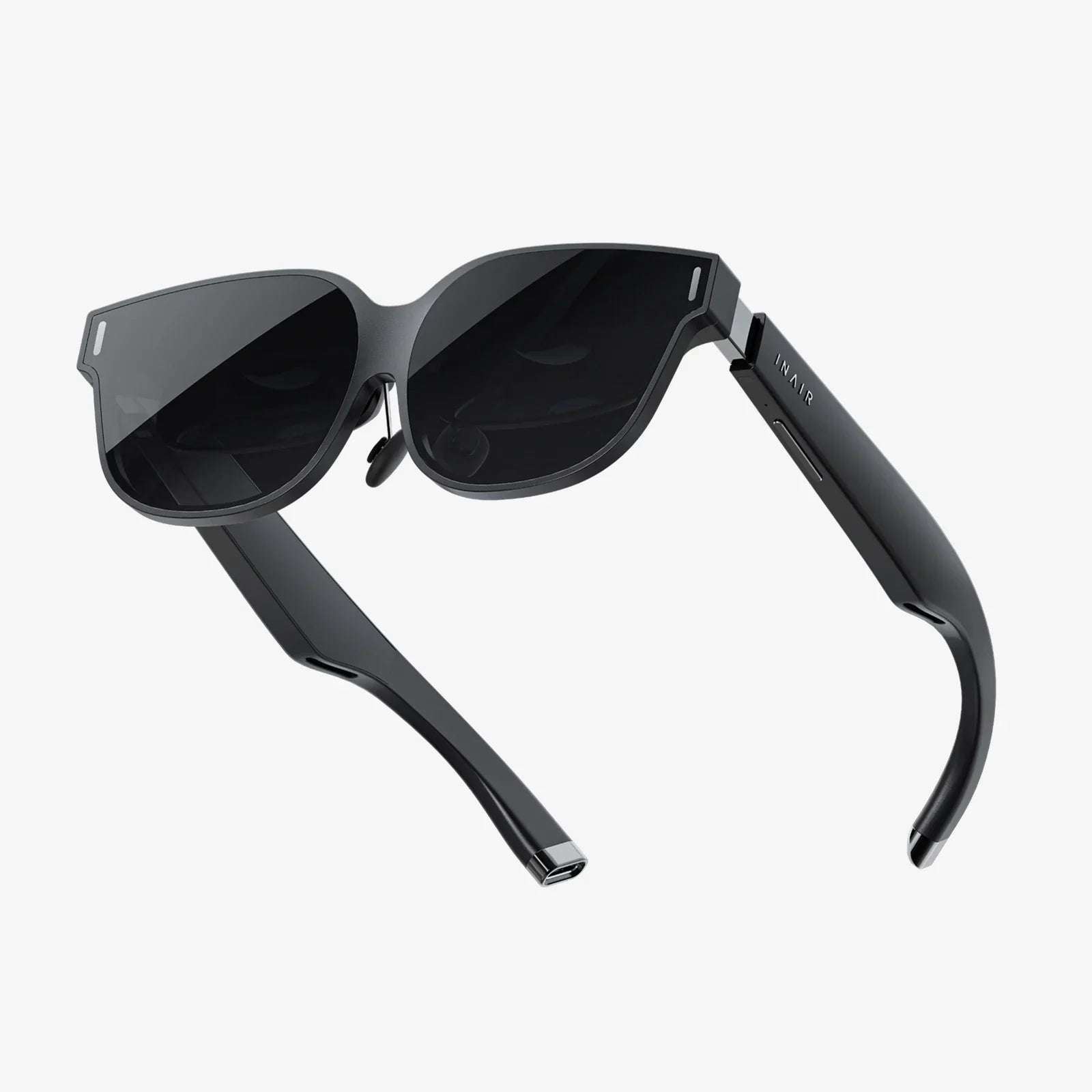
Imagine a world where the line between the digital and the physical doesn't just blur—it disappears. Where information doesn't live on a screen you hold in your hand, but is woven into the very fabric of your reality, accessible with a glance, a gesture, or a spoken word. This is the promise of Total Immersion Augmented Reality, a technological paradigm shift poised to redefine human experience itself, transforming how we work, learn, play, and connect.
The Evolution Beyond the Screen: From Pixels to Presence
For decades, our primary interface with the digital world has been the screen. We've progressed from bulky monitors to sleek, portable smartphones, but the fundamental interaction remains the same: we look at a device, separating our attention from our surroundings. Total Immersion Augmented Reality shatters this model. It represents the culmination of a journey from isolated digital displays to a future where computing is ambient, contextual, and integrated directly into our perception.
Early iterations of augmented reality were often novelties—simple overlays triggered by a phone's camera. They were a glimpse of potential, but fell short of true immersion due to clunky hardware, limited fields of view, and a lack of persistent spatial understanding. Total Immersion is different. It is characterized by several key technological pillars that work in concert to create a seamless experience:
- High-Fidelity, Wide-Field-of-View Displays: Advanced waveguides and photonic chips project digital imagery that fills the user's entire field of vision, eliminating the "screen door" effect and making virtual objects appear solid and real.
- Precise Spatial Mapping and Understanding: A combination of LiDAR, depth-sensing cameras, and simultaneous localization and mapping (SLAM) algorithms allows the device to understand the geometry of a room, its surfaces, and its objects in real-time. It doesn't just see a table; it understands it's a table, knows its dimensions, and can place a virtual object on it that obeys the laws of physics.
- Natural and Intuitive Interaction: Instead of tapping on glass, interaction is through hand gestures, eye tracking, and voice commands. The system understands subtle nuances—a pinch to select, a gaze to highlight, a spoken query—making the technology feel like an extension of the self rather than a tool to be operated.
- Persistent Digital Twins: The AR system creates and maintains a persistent digital copy of your physical environment. This means the virtual sculpture you place on your mantelpiece will still be there when you return hours or days later, exactly where you left it.
- Seamless Connectivity and Cloud Intelligence: These devices are constantly connected, pulling vast amounts of contextual data from the cloud to inform the user's experience, from real-time translation overlays on street signs to historical data about a building you're viewing.
The Architectural Layer on Reality: How It Works
At its core, Total Immersion Augmented Reality functions as an architectural layer on top of our existing world. It is an operating system for reality itself. Through a sophisticated array of sensors, the device constructs a detailed 3D map of your immediate environment. This map is not just a point cloud; it is semantically understood. The system identifies windows, doors, walls, and furniture, classifying them for potential interaction.
Once the environment is mapped, the device's display technology, often using advanced optics like holographic waveguides, projects photons directly into the user's eyes. These photons are carefully calibrated to converge at specific depths, tricking the brain into perceiving a digital object as having actual volume and occupying real space. This is combined with spatial audio, where sounds seem to emanate from specific points in the room, further cementing the illusion.
The magic, however, is in the real-time rendering and tracking. As the user moves their head, the system instantaneously adjusts the perspective and parallax of the digital objects, ensuring they remain locked in place. A virtual screen on your wall doesn't wobble or drift; it appears as fixed and stable as the wall itself. This constant, low-latency recalibration is what separates a gimmick from genuine immersion, creating a profound sense of believability that is the hallmark of this technology.
Transforming Industries and Redefining Work
The implications of this technology extend far beyond consumer entertainment. It is set to revolutionize nearly every professional field, creating new paradigms for productivity, collaboration, and expertise.
The Future of Design and Manufacturing
Engineers and designers will no longer be confined to 2D screens when creating 3D objects. They will be able to conjure life-size holograms of a new engine prototype, walk around it, peer inside it, and manipulate its components with their hands. Colleagues from across the globe can join the same persistent AR space, appearing as avatars, and collaborate on the same virtual model as if they were standing side-by-side. This eliminates the need for costly physical prototypes and dramatically accelerates the design iteration process.
Revolutionizing Medicine and Healthcare
In surgery, a surgeon could have a patient's MRI data, vital signs, and procedural guides overlaid directly onto their field of view during an operation, without ever looking away from the patient. Medical students could practice complex procedures on hyper-realistic virtual patients, gaining muscle memory and confidence without risk. For patients, AR can provide immersive visualizations of their conditions and treatments, fostering better understanding and engagement with their care plans.
Remote Assistance and Field Work
A field technician repairing a complex piece of machinery can receive remote expert guidance. The expert, seeing what the technician sees through a live feed, can draw arrows, highlight components, and display instructions directly onto the technician's real-world view. This "see-what-I-see" collaboration drastically reduces errors, saves time, and allows a single expert to support a global workforce.
Reshaping Social Fabric and Human Connection
Perhaps the most profound impact of Total Immersion Augmented Reality will be on how we socialize and communicate. The dream of telepresence—feeling as if you are truly with someone who is physically elsewhere—will become a reality.
Social interactions will move beyond flat video calls. You could invite a friend's photorealistic avatar to sit on your couch for a conversation, watch a virtual movie on a virtual screen that you both can see, or play a board game on your coffee table. Distance will become less of a barrier to shared experiences. Families separated by oceans could share a meal around the same virtual table, feeling a sense of togetherness that today's technology cannot provide.
Furthermore, this technology will enable new forms of shared public experiences. Imagine attending a live concert where spectacular holographic effects are seamlessly integrated into the performance, visible only to those wearing AR devices. Or visiting a historical site and seeing it digitally reconstructed to its former glory, with virtual guides and inhabitants explaining its history. Our shared spaces will become dynamic canvases for collective storytelling and art.
The Challenges on the Path to Immersion
Despite its immense potential, the path to widespread adoption of Total Immersion Augmented Reality is fraught with significant technical, social, and ethical challenges that must be thoughtfully addressed.
The Hardware Hurdle
Creating a device that is powerful enough to run these complex experiences, yet small, lightweight, comfortable, and socially acceptable to wear all day, is a monumental engineering challenge. Battery life remains a critical constraint, as the computational and graphical demands are immense. The form factor must evolve from today's bulky prototypes into something akin to regular eyeglasses to achieve true ubiquity.
The Privacy Paradox
An always-on, always-sensing device that maps and records your environment raises unprecedented privacy concerns. The data collected—the layout of your home, the objects you own, the people you meet—is incredibly sensitive. Robust, transparent, and user-centric data governance frameworks must be established. Questions of ownership (who owns the digital map of my living room?), consent (can someone else annotate my physical space without my permission?), and security are paramount and must be solved before society can comfortably embrace this technology.
The Digital Divide and Accessibility
There is a real risk that this powerful technology could exacerbate existing social and economic inequalities. If crucial information, services, and social interactions migrate into an AR layer, those who cannot afford the hardware or access the networks could be left at a severe disadvantage. Ensuring equitable access and designing for accessibility from the ground up will be critical to preventing a new, immersive form of digital divide.
A New Lens on Existence
Total Immersion Augmented Reality is not merely a new product category; it is a fundamental shift in the relationship between humans, computers, and the physical world. It promises to augment our intellect, extend our senses, and enrich our experiences in ways we are only beginning to imagine. It will make us more productive, more connected, and more knowledgeable.
Yet, with this power comes profound responsibility. The choices we make today—in designing the technology, crafting its regulations, and shaping its social norms—will determine whether this new layer on reality becomes a force for universal empowerment or a source of greater division. The future is not something that happens to us; it is something we build. And as we stand on the brink of this new, immersive age, we have the opportunity to build a future that enhances our humanity, rather than replacing it.
The world around you is about to gain a new dimension, one where every surface can be a interface and every moment can be enhanced with context and meaning. The gateway to this amplified existence is closer than you think, ready to unlock a universe of possibility hidden in plain sight.
Share:
How Do Smartglasses Work: A Deep Dive into the Technology Shaping Our Future
Latest Trends in Augmented Reality 2025: A Glimpse into the Pervasive Future