


- by wangfred
True AR Glasses Are Finally Here, and They Will Change Everything
- by wangfred
Imagine a world where information doesn't live on a screen in your hand, but floats seamlessly in the space around you. Directions are painted onto the street, a recipe hovers beside your mixing bowl, and a colleague's avatar sits across your desk from thousands of miles away. This is the promise of augmented reality, a dream that has tantalized technologists for decades. But for years, the hardware needed to make this vision a reality was clunky, underpowered, and socially isolating. That era is over. A new generation of wearable technology is emerging, moving beyond the prototype phase and into a tangible, consumer-ready future. These are not headsets; they are True AR Glasses, and their arrival signals a shift in human-computer interaction as profound as the advent of the smartphone.
So, what separates this new wave of glasses from the bulky, experimental devices of the past? True AR Glasses are defined by a specific set of characteristics that move them from the realm of science fiction into a viable consumer product.
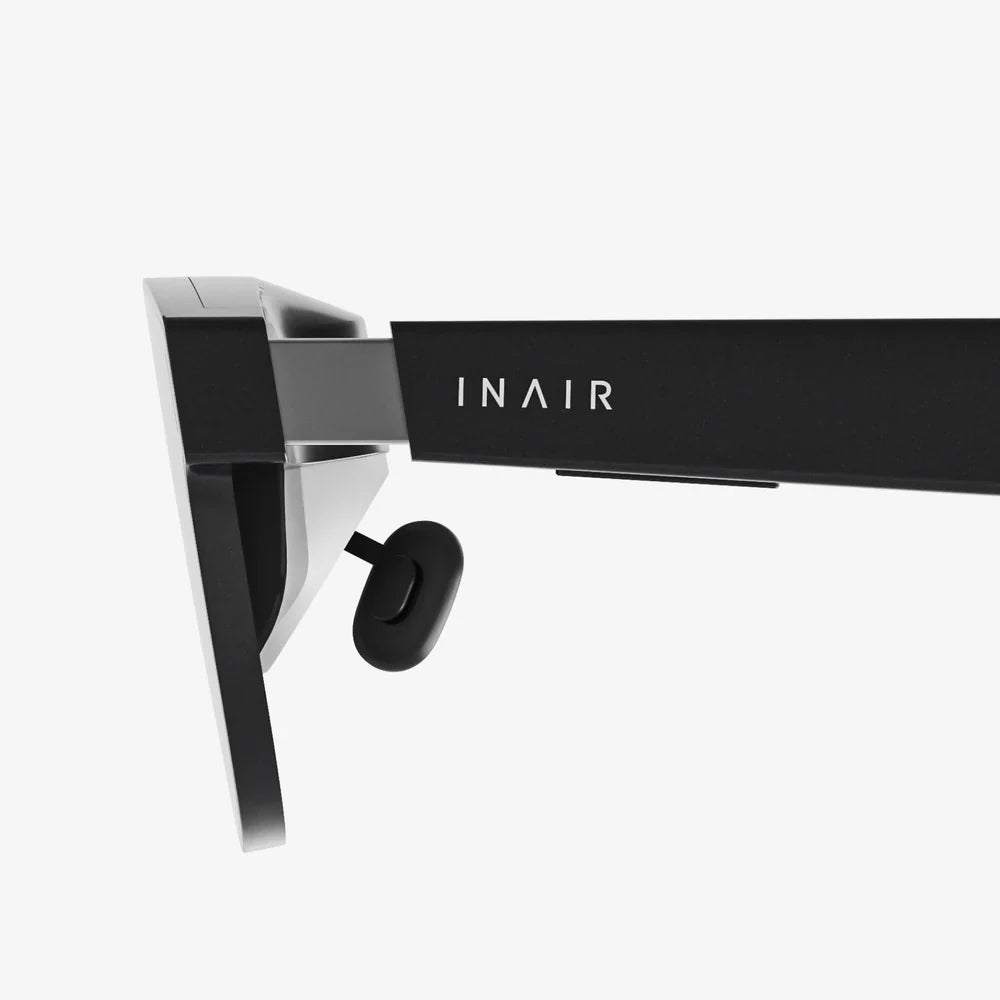
First and foremost is form factor. The ultimate goal is a pair of glasses that is indistinguishable, at a glance, from standard prescription eyewear or fashionable sunglasses. This means a lightweight design, comfortable for all-day wear, with a slim profile that doesn't obstruct the wearer's face or elicit stares. The technology must be elegantly integrated, not bolted on. Achieving this requires monumental feats of engineering, miniaturizing processors, batteries, and optical systems into a package that feels natural on the face.
The second critical pillar is visual fidelity. This encompasses two equally important aspects: the quality of the digital overlay and the preservation of the real world. The display technology must be capable of projecting bright, high-resolution, full-color graphics that are visible even in direct sunlight. Crucially, these digital elements must be spatially aware, locked convincingly onto real-world objects without jitter or lag, which requires incredibly precise tracking and low latency. At the same time, the view of the real world through the lenses must remain clear and unobstructed. Early waveguides often created a faint, ghostly image or a limited field of view; true glasses must offer a wide, optically pure view that seamlessly blends the digital and physical realms.
Finally, true AR requires contextual intelligence. The device must understand the world around it and the user within it. This is powered by a suite of advanced sensors—cameras, depth sensors, microphones, and inertial measurement units—all working in concert. This sensor array continuously maps the environment, understands surfaces, recognizes objects and people, and processes natural language. The glasses aren't just a display; they are an intelligent agent that perceives your context and provides relevant information without you having to ask. It's the difference between having to search for a website and having the right information appear precisely when and where you need it.
At the heart of every pair of AR glasses is its optical system, the technological marvel that makes the magic happen. Several competing technologies are vying for dominance, each with its own strengths and trade-offs in the relentless pursuit of that perfect blend of size, clarity, and field of view.
One of the most promising approaches for consumer-grade glasses is waveguide technology. In this system, light from a micro-display is coupled into a thin, transparent piece of glass or plastic (the waveguide). This light is then propagated through the material using a combination of reflections, often through holographic or diffractive optical elements, before being ejected out towards the user's eye. The primary advantage is the sleek form factor it enables, allowing the projector to be tucked away in the temple of the glasses. The challenge has historically been achieving a wide field of view and high brightness without optical artifacts, but recent advancements are overcoming these hurdles.
Another method is using microLED displays with freeform optics. MicroLEDs are incredibly small, efficient, and bright light-emitting diodes. Arrays of these microscopic LEDs can be placed directly in the lens line-of-sight, with complex, miniature reflective optics (often called "birdbath" optics) used to fold the light path and project the image. This can offer exceptional color and contrast but can sometimes result in a slightly bulkier design compared to the most advanced waveguides.
Beyond the display itself, a critical enabling technology is eye tracking. Built-in infrared cameras constantly monitor the position and gaze of the user's pupils. This serves multiple essential functions: it enables intuitive interface control (selecting items just by looking at them), allows for dynamic focus planes (so digital objects appear at different depths), and enables foveated rendering. Foveated rendering is a power-saving technique where the system renders the area where the user is directly looking in high resolution, while subtly reducing the detail in their peripheral vision, mimicking the human eye itself and drastically reducing the computational load.
The true measure of any technology is not its specs, but its utility. True AR Glasses are poised to become the most personal and powerful computing device we've ever owned, with applications that will reshape entire industries and daily life.
The impact on professional fields will be immediate and profound. For remote collaboration and training, AR glasses will erase the limitations of video calls. Instead of staring at a grid of faces on a screen, remote participants can be represented as photorealistic avatars or holograms, sitting in the room, able to gesture to 3D models and interact with physical objects as if they were present. A senior engineer on another continent could see what a local technician sees and annotate the machinery in real-time with arrows, notes, and warnings, drastically improving knowledge transfer and reducing errors.
In fields like medicine, a surgeon could have vital signs, ultrasound data, or pre-operative scans visually overlaid directly onto the patient during a procedure, providing a kind of x-ray vision that enhances precision and safety. For architecture and engineering, 3D blueprints and models can be brought out of the computer screen and into the physical build space, allowing teams to walk through a life-size model of a building before a single brick is laid, identifying design clashes and spatial issues instantly.
In manufacturing and logistics, workers on a complex assembly line or in a vast warehouse can receive hands-free, context-aware instructions. The glasses can highlight the exact part that needs to be picked, show the correct assembly sequence, or flag potential quality issues, streamlining operations and reducing training time for new employees.
On a personal level, the implications are equally staggering. Navigation will evolve from a blue line on a phone map to giant arrows painted onto the road, with points of interest visually tagged on buildings as you walk by. The world itself becomes labeled and discoverable.
The concept of a "second screen" will vanish, as your entertainment and information will exist in your environment. You could watch a film on a virtual giant screen on your living room wall, or have real-time sports stats and player information appear over a live game you're watching. Gaming will leap out of the television and into your home, transforming your living room into a dungeon, your backyard into a fantasy landscape, and making the whole world a potential game board.
Perhaps most intriguingly, AR glasses could enhance our social connections. Imagine having a "photographic memory" during conversations, where the glasses discreetly display the name and key details of a person you've just met. Or sharing a immersive experience with a friend, both seeing and interacting with the same digital object placed on a table between you, regardless of physical distance.
This future is not without its significant challenges and concerns. The path to widespread adoption is paved with complex questions that technologists, policymakers, and society must address together.
The most immediate hurdle is battery life and processing power. Rendering complex 3D graphics, processing multiple high-resolution camera feeds, and running machine learning algorithms for object recognition is computationally intensive. Balancing this demand with the need for all-day battery life in a tiny form factor is a monumental task. Solutions may involve a combination of ultra-efficient dedicated processors, offloading some computation to a companion device like a phone, and leveraging cloud computing for the heaviest tasks.
Then there are the profound privacy and ethical dilemmas. A device that sees and hears everything you do is a privacy advocate's nightmare. Continuous recording and environmental scanning raise critical questions about data ownership, consent, and surveillance. How do we prevent a world where everyone is silently recording everyone else? Clear and strict norms, alongside robust legislation, will be required to dictate when and how these devices can record, what data they can collect, and who has access to it. The concept of personal space and public interaction will need to be renegotiated.
Finally, there is the risk of the digital divide and social alienation. If AR becomes the primary portal to information and services, those who cannot or choose not to adopt it risk being left behind. Furthermore, a world where people are constantly immersed in a personalized digital layer could lead to a further retreat from shared physical reality and a decline in genuine, present interpersonal interaction. The technology must be designed to augment our reality, not replace it, and to enhance human connection rather than inhibit it.
True AR Glasses represent more than just a new gadget; they are the gateway to the era of spatial computing. This is a fundamental shift from interacting with a device to interacting with our environment through a device. It promises to make technology more intuitive, more contextual, and more human-centric than ever before. The barriers of screens, keyboards, and mice will fall away, allowing us to interface with digital information as naturally as we interact with a physical object.
The companies and engineers behind this revolution are not just building a product; they are building a new layer of reality itself. It is a project as ambitious as it is transformative, blending the lines between the physical and digital atoms and bits that make up our modern world. The success of this endeavor will depend not only on technological prowess but also on a thoughtful and inclusive approach to the societal and ethical questions it inevitably raises.
The dream of augmented reality has been decades in the making, hampered by technological limitations that confined it to research labs and niche industrial applications. Today, those walls are crumbling. Advances in micro-optics, semiconductor design, battery chemistry, and artificial intelligence have converged to create a perfect storm of innovation. The result is a class of device that finally lives up to the lofty promise of AR: eyewear that empowers rather than encumbers, that reveals rather than obscures, and that connects us more deeply to our world and to each other. The future is not something we will watch on a screen; it is something we will step into, and it will be visible through the lenses of the most powerful personal technology ever created.