


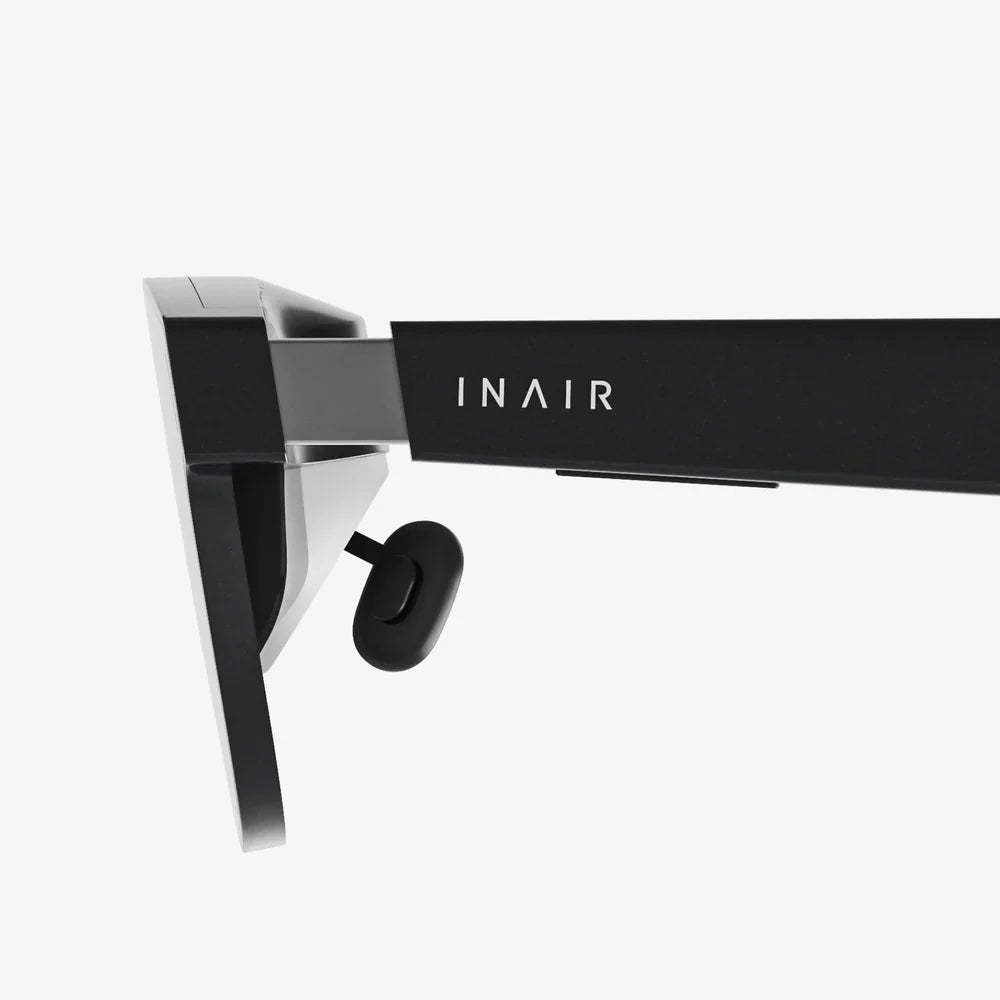
Imagine settling in for a movie night, but your partner wants to watch the big game. Instead of the familiar debate over the remote, you both simply put on a pair of specialized glasses. Instantly, you see your blockbuster film in perfect clarity, while they see the championship match, both from the same television, with full, immersive audio from your respective content. This isn't a scene from a science fiction film; it's the reality made possible by TV split screen glasses, a revolutionary technology poised to end living room conflicts and usher in a new era of personalized, shared viewing experiences.
The Core Technology Behind the Magic
At its heart, the technology behind TV split screen glasses is a sophisticated dance of optics, electronics, and software. It's a concept often referred to as time-division multiplexing. Here’s a simplified breakdown of how it works:
The television display alternates between two (or more) different video frames at an incredibly high speed—so fast that the human eye perceives it as a single, flicker-free image. For instance, Frame A (your movie) is displayed for a fraction of a second, followed immediately by Frame B (the sports game). This cycle repeats itself hundreds of times per second.
The glasses are not passive; they are active shutter devices. They sync with the television via a wireless signal, typically infrared or radio frequency. Tiny liquid crystal lenses in the glasses act as shutters, rapidly switching between transparent and opaque states. When the TV shows Frame A, the left lens of one pair of glasses and the right lens of another might become transparent, allowing that viewer to see the image. Conversely, the opposite lenses become opaque, blocking the alternate frame. This synchronization happens so rapidly that each viewer's brain seamlessly constructs a continuous, full-screen video stream intended just for them.
Beyond the Basics: Advanced Functionality
Modern iterations of this technology have moved far beyond a simple two-stream system. Advanced features now include:
- Multiple Audio Streams: The true magic is completed with independent audio. Each pair of glasses is equipped with its own high-quality wireless headphones, receiving a dedicated audio stream that corresponds perfectly to the video they are watching. This eliminates the jarring experience of hearing another program's audio in the background.
- Customizable Viewing Profiles: Users can often customize their experience through a companion app or on-screen menu, adjusting factors like audio volume, and in some systems, even basic picture settings tailored to their specific glasses.
- Expanded Viewer Capacity: While two viewers is the most common setup, the underlying technology can be scaled to support more, though this can impact overall picture brightness as the screen time is divided further.
A Multitude of Applications: Who Are These Glasses For?
This technology solves a surprising number of common household dilemmas, making it appealing to a wide range of users.
The Family Household
For families, these glasses are a game-changer. Parents can enjoy a mature film while their children watch an animated favorite, all in the same room. It allows for shared family time in the living room without the compromise on entertainment choices. It’s also a boon for homework, where one child can watch an educational program while another plays a console game.
The Avid Gamer
In the world of gaming, split screen has often been a necessary evil for local multiplayer, shrinking each player's view to a fraction of the screen. With this technology, two players can engage in a competitive or cooperative game, each enjoying a full-screen, immersive view without any split or HUD clutter from their opponent's perspective. This revitalizes the experience of couch multiplayer gaming.
The Sports Fanatic
Sports bars represent a potential commercial application, but even at home, the benefits are clear. A household with fans of different sports, or even different teams playing at the same time, no longer has to choose. Each fan can watch their preferred event in its entirety on the main living room display.
Accessibility and Language Learning
The applications extend beyond mere entertainment. For those learning a new language, one viewer could watch a film with original audio and subtitles, while another watches the same film with a dubbed track. For individuals with hearing impairments, one audio stream could be amplified or processed for clarity without affecting the experience of others in the room.
Weighing the Experience: Advantages and Limitations
Like any emerging technology, TV split screen glasses come with a compelling set of advantages alongside some important considerations.
The Undeniable Advantages
- Elimination of Viewing Conflicts: This is the primary benefit. It democratizes the television, removing a common source of household tension.
- Space and Cost Efficiency: It achieves a multi-screen experience without the need for multiple physical televisions, saving money, space, and energy.
- Enhanced Immersion: For gaming and cinema, the ability to have a full-screen view without compromise significantly deepens immersion.
- Private Viewing in a Shared Space: It allows for personal content consumption without requiring isolation in another room.
Important Considerations
- Dependency on Glasses: The experience is entirely dependent on wearing the glasses. They require charging and can be misplaced. For some users, wearing glasses for extended periods can be uncomfortable.
- Potential for Perceived Dimming: Because the screen is alternating between images, some users with a sensitivity to light may perceive a slight reduction in overall brightness compared to a standard full-time image.
- Compatibility: The technology requires specific support from the television itself or an external media device. It is not a universal feature and must be built into the ecosystem.
- Initial Investment: There is an added cost for the glasses themselves, which are often sold separately from compatible displays.
The Future of Personalized Viewing
The technology behind TV split screen glasses is a significant stepping stone towards a future of hyper-personalized media consumption. We can anticipate several evolutionary paths:
- Seamless Integration: Future iterations will likely see the technology become a standard, seamlessly integrated feature in high-end displays, with reduced cost and improved comfort for the glasses.
- Augmented Reality (AR) Overlay: The next logical step is the integration of AR. Imagine watching a football game where your glasses display real-time stats and player information over your view, while another person watching a movie on the same screen sees none of it.
- Social Viewing Enhancements: Future systems could allow viewers watching different content to still see and interact with each other through transparent overlays, merging completely separate media experiences into a shared social space.
The living room television has long been a focal point for family life, but also a point of contention. TV split screen glasses represent a profound shift, transforming the TV from a single-output device into a multi-stream portal for personalized entertainment. They champion a new paradigm where shared space no longer means shared content, finally offering a sophisticated and satisfying answer to the age-old question: "So, what do you want to watch?" By granting individual control within a collective environment, this technology doesn't just change what we see on screen; it has the potential to harmonize how we experience media together, making every night a premiere for everyone in the room.
Share:
VR Headset Market News Today: A Surge in Enterprise Adoption and the Quest for the Ultimate Form Factor
VR Headset Market News Today: A Surge in Enterprise Adoption and the Quest for the Ultimate Form Factor