Imagine stepping through your living room into a gladiatorial arena, feeling the roar of the crowd vibrate through your very being, or watching a prehistoric dinosaur stride across your kitchen table, its scales glistening under the fluorescent light. These are no longer scenes from science fiction; they are the tangible, awe-inspiring experiences made possible by two of the most disruptive technologies of our time: virtual reality and augmented reality. The line between the physical world and the digital realm is not just blurring—it's being completely redrawn, offering a glimpse into a future where our reality is whatever we choose it to be.
The Foundational Divide: Immersion Versus Integration
At their core, both VR and AR are experiences powered by technology, but they approach the concept of reality from opposite directions. Understanding this fundamental distinction is the first step toward grasping their unique potentials and applications.
Virtual Reality (VR) is the technology of complete immersion. It operates on a simple, powerful premise: to shut out the physical world entirely and transport the user to a fully digital, computer-generated environment. By wearing a head-mounted display that covers the user's entire field of vision, VR replaces reality with a simulated one. This environment can be a photorealistic recreation of a real place, a fantastical world born from pure imagination, or an abstract digital space for work or play. The key is the sensation of presence—the convincing feeling of actually being in that virtual space, a feeling achieved through a combination of stereoscopic 3D visuals, spatial audio, and, in more advanced systems, motion tracking and haptic feedback.
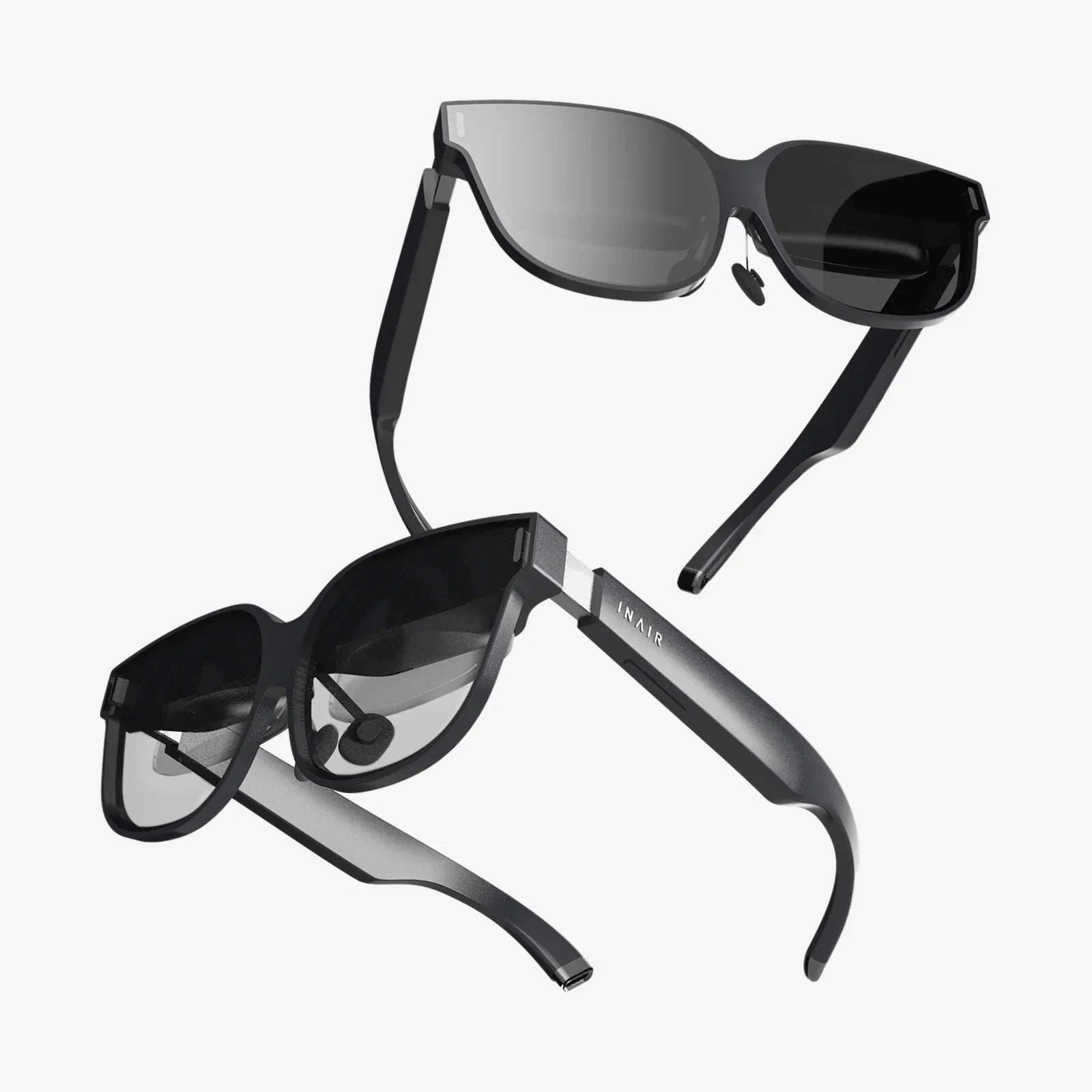
Augmented Reality (AR), in contrast, is the technology of integration. Rather than replacing the real world, AR overlays digital information—images, text, data, 3D models—onto the user's view of their immediate physical surroundings. The real world remains the foundation, but it is enhanced, or augmented, with a layer of interactive digital content. This is most commonly experienced today through the camera viewfinder of a smartphone or tablet, or through specialized eyewear that projects transparent digital images onto the lenses. AR aims to add context, information, and entertainment to your existing environment, making it a tool for both utility and creative expression within the world you already inhabit.
Beneath the Headset: The Core Technologies Powering the Experience
The magic of VR and AR doesn't happen by accident. It is the result of a sophisticated symphony of hardware and software components working in perfect harmony to trick the human brain.
The Virtual Reality Toolkit
A truly immersive VR system relies on several critical technologies:
-
Head-Mounted Displays (HMDs): These are the helmets or goggles that serve as the portal to the virtual world. High-resolution displays for each eye create a stereoscopic 3D effect, while a high refresh rate (90Hz or higher) is crucial to prevent latency, which can cause motion sickness.
-
Tracking Systems: To sell the illusion of presence, the system must know precisely where the user's head and, often, hands are located in space. This is achieved through inside-out tracking (using cameras on the headset itself) or outside-in tracking (using external sensors placed in the room) to monitor the position and orientation of the HMD and controllers.
-
Motion Controllers: These handheld devices are tracked in 3D space, allowing users to reach out, grab, manipulate, and interact with the virtual environment. They are the user's hands in the digital world.
-
Haptic Feedback: This technology provides tactile sensations, from simple vibrations in controllers to more advanced force feedback vests and gloves that simulate touch, pressure, and impact, deepening the sense of immersion.
-
Spatial Audio: 3D audio technology ensures that sounds in the virtual environment come from the correct direction and distance, changing dynamically as the user moves their head. The creak of a door behind you will sound like it's behind you, not just in your headphones.
The Augmented Reality Engine
AR technology faces a different challenge: seamlessly blending the digital with the physical. Its key components include:
-
Cameras and Sensors: The primary input device for AR is a camera that continuously scans the user's environment. This visual data is combined with inputs from other sensors like accelerometers, gyroscopes, and GPS to understand the device's position and the geometry of the surrounding world.
-
Computer Vision and SLAM: This is the brains of the operation. Simultaneous Localization and Mapping (SLAM) algorithms process the camera feed in real-time to map the environment and track the device's position within that map. Computer vision allows the system to recognize specific objects, surfaces, and planes (like a table or wall) onto which digital content can be anchored.
-
Processing Power: The complex task of analyzing the real world and rendering stable, believable digital overlays requires significant computational power, which is increasingly being handled by powerful mobile processors and dedicated AR chips.
-
Display Technologies: For smartphone-based AR, the display is simply the phone's screen. For dedicated AR glasses, more advanced systems are used, such as optical see-through displays that use waveguides and micro-projectors to beam images directly onto the retina, allowing the user to see the digital content superimposed on the real world without blocking their view.
A Spectrum of Experience: From AR to VR and the Mysterious Middle
While VR and AR are often discussed as binary opposites, they actually exist on a spectrum of immersive experiences, often referred to as the reality-virtuality continuum. At one end is the completely real environment, and at the other is a fully virtual one. Between these two poles lies a fascinating middle ground known as Mixed Reality (MR).
Mixed Reality is more than just a buzzword; it represents the pinnacle of blending the real and the virtual. In a true MR experience, digital objects are not just overlaid onto the real world; they interact with it in physically believable ways. A virtual character in MR can hide behind your real sofa. A digital ball can bounce off your real wall and land on your real floor, reacting to the laws of physics. This requires an incredibly detailed understanding of the environment, achieved through advanced depth-sensing cameras and powerful spatial computing. MR is where the lines become so blurred that the digital and physical can coexist as one unified experience.
Transforming Industries: The Practical Applications of VR and AR
Beyond gaming and entertainment, which served as the initial catalyst for consumer interest, VR and AR are proving to be powerful tools for innovation across a vast range of sectors.
Revolutionizing Healthcare and Medicine
The medical field has embraced immersive technology with remarkable results. Surgeons use VR to meticulously plan and practice complex procedures on detailed 3D models of a patient's specific anatomy, reducing risk and improving outcomes. AR is used during surgeries to project vital information, such as ultrasound data or the precise location of a tumor, directly into the surgeon's field of view, allowing them to keep their focus on the patient. Furthermore, VR is revolutionizing therapy and rehabilitation, used to treat PTSD through controlled exposure, manage pain by distracting the brain, and help stroke victims regain motor function through engaging virtual exercises.
Redefining Education and Training
Immersive technologies offer an unparalleled pedagogical tool: learning by doing, without real-world consequences. Medical students can dissect a virtual cadaver indefinitely. Engineering students can deconstruct and reassemble a jet engine. History students can take a guided tour of ancient Rome. VR and AR create memorable, engaging experiences that boost knowledge retention. In corporate training, employees can practice high-stakes scenarios, from public speaking to operating heavy machinery, in a safe, controlled virtual environment, building muscle memory and confidence.
Empowering Enterprise and Manufacturing
From design and prototyping to maintenance and logistics, AR and VR are streamlining industrial processes. Designers and engineers use VR to collaborate on 3D models in a shared virtual space, regardless of their physical location, making design reviews more intuitive. On the factory floor, AR smart glasses can guide a technician through a complex repair procedure by overlaying animated instructions and diagrams directly onto the machinery, highlighting exactly which bolt to turn and which wire to connect, drastically reducing errors and training time.
Enhancing Retail and Commerce
The try-before-you-buy concept is being completely reimagined. AR apps allow customers to see how a new sofa would look in their living room, how a pair of glasses would fit their face, or even how a new shade of paint would transform their walls—all from their smartphone. Virtual reality showrooms enable car buyers to explore every option and customization of a vehicle without setting foot in a dealership. This not only enhances customer confidence but also reduces return rates and bridges the gap between online and physical shopping.
Navigating the Frontier: Challenges and Ethical Considerations
As with any powerful technology, the rise of VR and AR brings a host of challenges that society must confront. Privacy is a paramount concern, as these devices, particularly those with always-on cameras and microphones, collect unprecedented amounts of intimate data about our environments, behaviors, and even our biometric responses. The concept of data ownership and security in these immersive spaces is still being defined.
There are also significant social and psychological questions. As virtual worlds become more compelling, what are the implications for our physical social connections? Could overuse lead to new forms of addiction or dissociation? Furthermore, the issue of accessibility remains critical—ensuring that these transformative experiences are available to people with different physical abilities and economic means, not just a privileged few. Addressing these challenges proactively is essential to ensuring that the development of the metaverse and other immersive platforms is ethical, inclusive, and beneficial for all.
The Horizon of Interaction: What Comes Next?
The evolution of VR and AR is accelerating toward a future of even more seamless and intuitive interaction. We are moving beyond controllers and toward natural user interfaces. Eye-tracking technology will allow interfaces to respond to where we are looking, enabling more lifelike avatars and foveated rendering, which drastically improves visual quality by rendering only the center of our gaze in high detail. Brain-computer interfaces, though in early stages, hint at a future where we might control digital experiences with our thoughts alone.
Ultimately, the trajectory of these technologies points toward the concept of the metaverse—a persistent, interconnected network of shared virtual spaces. This won't be a single destination but a vast ecosystem of experiences, from workrooms and social clubs to vast game worlds and digital marketplaces, all accessible through VR and AR. It promises to become a new layer of reality, a digital frontier that will reshape how we work, socialize, learn, and create.
The journey into these blended realities has already begun, and it's a path that leads not away from our world, but toward a deeper, more enriched, and infinitely more customizable human experience. The screen-based internet connected information; the immersive internet of VR and AR will connect experiences, feelings, and presence itself, offering a canvas for human creativity that is limited only by our imagination. The door between realities is now open, and stepping through it reveals not just new worlds to explore, but a new way of seeing our own.


Share:
Windows Audio Adjusting: The Ultimate Guide to Mastering Your PC's Sound
AI Tools for Recording Meetings: The Ultimate Guide to Smarter Collaboration