


- by wangfred
Undetectable AI Glasses The Invisible Revolution in Wearable Technology
- by wangfred
Imagine a world where the line between human vision and computer intelligence blurs into invisibility. A world where accessing the entirety of human knowledge, translating languages in real-time, or identifying a person across a crowded room requires nothing more than a subtle glance. This is not the distant future of science fiction; it is the emerging reality ushered in by the dawn of undetectable AI glasses. This revolutionary class of wearable technology promises to seamlessly integrate artificial intelligence into our daily perception, offering capabilities once deemed magical, all while remaining completely hidden from the outside world. The implications are as profound as they are disruptive, poised to redefine everything from social interaction to professional efficiency, all hidden behind a seemingly ordinary pair of spectacles.
The magic of undetectable AI glasses lies not in any single technological breakthrough, but in the sophisticated convergence of several advanced systems miniaturized to an astonishing degree. Unlike their bulkier augmented reality predecessors, these devices prioritize discretion above all else, embedding powerful computing into a form factor indistinguishable from standard eyewear.
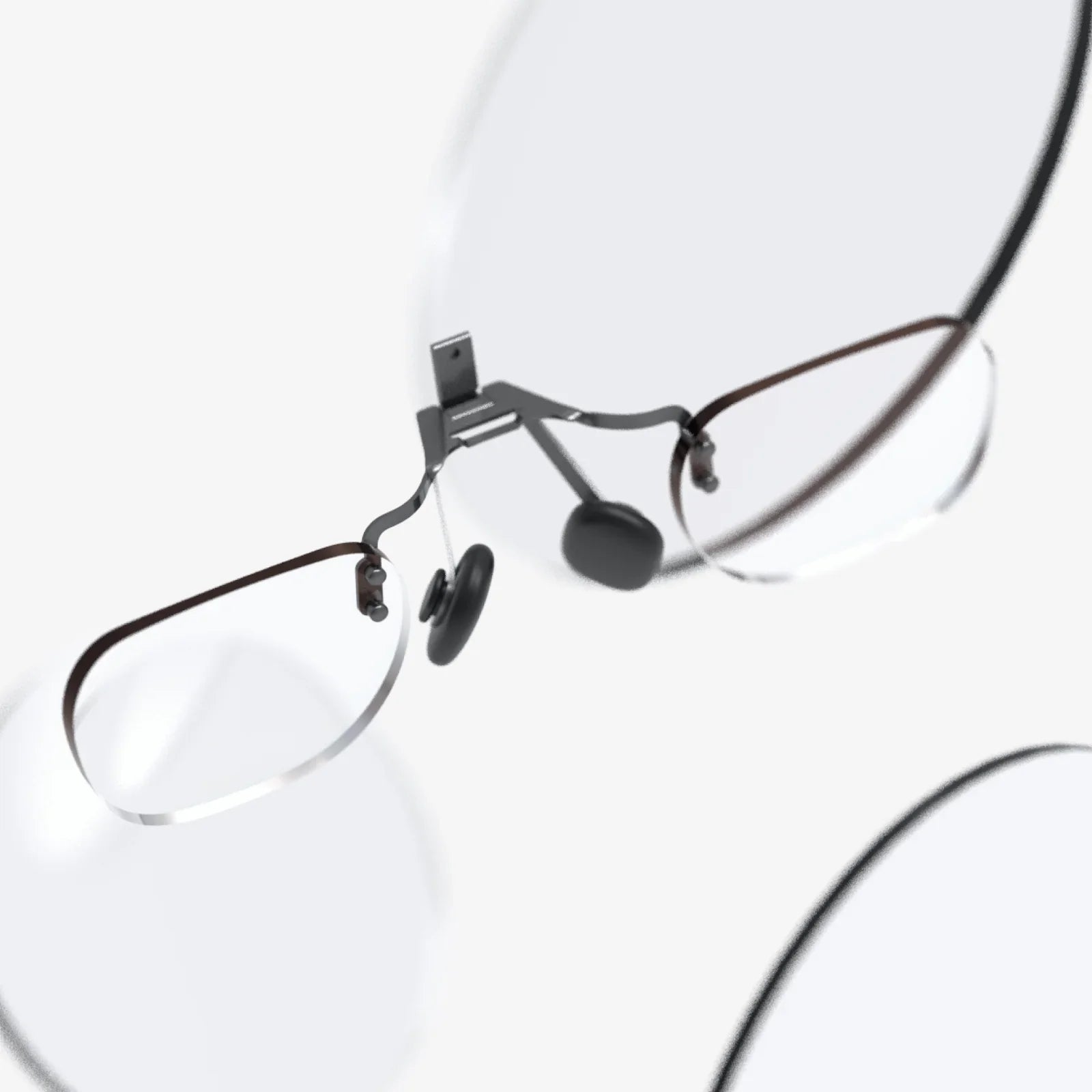
At the heart of the visual interface are incredibly small projection systems. Using technologies like micro-LEDs or laser beam scanning, these projectors fire photons onto specially engineered lenses. These are not simple pieces of glass or polycarbonate; they are optical waveguides. Think of them as fiber optic cables flattened into a lens. They contain nanostructures that bend and channel light from the projector on the temple of the glasses directly into the user’s retina. This creates the perception that text, images, or data are floating in the user’s field of view, yet this digital overlay is completely invisible to anyone else looking at the glasses. The result is a private, high-resolution heads-up display that only the wearer can see.
The true "intelligence" comes from a compact processing unit, often housed in a slightly thickened temple. This unit contains a specialized AI chipset designed for on-device machine learning. This is a critical distinction from earlier tech that relied on a constant Bluetooth connection to a smartphone for processing. By handling data locally, these glasses achieve two key goals: dramatically reduced latency for a seamless user experience, and enhanced privacy and security, as sensitive information like live video feeds doesn’t need to be streamed to the cloud.
This processor is fed by a suite of miniature sensors:
Powering such advanced tech in a small package is a significant challenge. Manufacturers use dense, high-efficiency batteries, often distributed throughout the frame to balance weight. Wireless charging is a standard feature, allowing the glasses to be placed in a charging case overnight. For connectivity, low-energy Bluetooth provides a link to a companion smartphone app for deeper settings and updates, while Wi-Fi can be used for more data-intensive tasks, though core functions remain offline.
The potential of this technology extends far beyond a tech enthusiast’s gadget. It promises to become an indispensable tool across numerous fields, augmenting human capability in ways previously unimaginable.
This is perhaps the most immediately impactful application. Undetectable AI glasses can serve as a powerful assistive device for individuals with visual or auditory impairments.
In professional settings, the hands-free, eyes-forward nature of this technology is a game-changer.
On a personal level, these glasses offer a new layer of social intelligence. The AI could provide subtle reminders of a person’s name and key details before a meeting, a feature dubbed "social memory augmentation." During a conversation, it could analyze facial expressions and offer real-time feedback on social cues, potentially aiding those with social anxiety disorders. For travelers and explorers, they could act as an invisible tour guide, providing historical context and directions without the need to hold up a phone.
The very feature that makes undetectable AI glasses so powerful—their invisibility—is also the source of deep ethical and societal concerns. The ability to record audio, video, and data without anyone's knowledge or consent opens a Pandora's box of privacy issues.
If widely adopted, the assumption of anonymity in public spaces could vanish. Every conversation in a coffee shop, every interaction on a subway, every casual glance could potentially be recorded, analyzed, and stored by someone wearing these glasses. This creates a massive asymmetry of power between the wearer and everyone around them. The concept of consent is eroded when there is no way to know if you are being recorded. This could lead to a chilling effect on free speech and behavior in public, as people self-censor under the assumption they are always being watched.
The data harvested by these devices is incredibly intimate: a continuous log of everything the user sees and hears. While companies promise on-device processing, the temptation to aggregate and monetize this behavioral data will be immense. This could lead to hyper-targeted advertising based on your real-world gaze patterns (e.g., "we noticed you looked at that car, here’s a financing offer") or more insidious forms of manipulation. Furthermore, this technology could become a potent tool for corporate espionage, industrial sabotage, or state-sponsored surveillance on an unprecedented scale.
Current laws are woefully unprepared for this technology. Wiretapping and consent laws vary wildly by jurisdiction and largely deal with audio recording; video recording in public is often legal. The combination of always-on, first-person audio and video capture will force a major legal reckoning. Socially, their use in certain contexts will likely become taboo or outright banned. Expect to see signs barring their use in changing rooms, courtrooms, private negotiations, and sensitive workplaces long before the law catches up.
Looking further ahead, the societal integration of undetectable AI glasses forces us to ask fundamental questions about human experience.
This technology represents a significant step toward the "augmented human." By outsourcing tasks like memory recall, navigation, and translation to an AI, we free up cognitive resources for higher-level thinking and creativity. However, it also raises concerns about skill atrophy. If we never need to remember a face, navigate a city, or learn a language, do we lose a part of what makes us human? Our relationship with reality itself may change, as we increasingly interact with a digital layer superimposed on the physical world.
As with any transformative technology, access will be unequal. The high cost of early adoption could create a new socio-economic divide: those who can afford AI augmentation and those who cannot. This could exacerbate inequalities in education, employment, and social capital, creating a class of "enhanced" individuals with significant advantages over others.
Navigating this future requires proactive and thoughtful governance. The development of these devices must be accompanied by a robust public dialogue and the creation of strong ethical frameworks. Key considerations must include:
The emergence of undetectable AI glasses is far more than a simple product launch; it is a cultural and technological inflection point. They offer a tantalizing glimpse into a future of superhuman capabilities and seamless information access, hidden in plain sight. Yet, this power is inextricably linked to profound risks that threaten the very fabric of personal privacy and social trust. The path we choose now—shaped by developers, policymakers, and consumers—will determine whether this technology becomes a force for universal empowerment or an instrument of unprecedented surveillance. The glasses themselves may be undetectable, but the conversation about the world they are building must be loud, clear, and unavoidable for everyone.
Share:
AR VR Market Size 2025 Statistics: A Deep Dive into the Next Digital Frontier
Glasses Free 3D Technology: A Clear Vision of the Future